
In the largest ball motion study ever conducted, the United States Bowling Congress found that the top five factors affecting ball path are all coverstock properties, including surface roughness, friction coefficient, and oil absorption rate. Core properties like RG and differential ranked below every one of them.
Put simply, how the outside of your ball grips, slides, and absorbs oil determines more about where it goes than anything happening inside the core. That finding turns the solid vs pearl bowling ball decision into a question of surface behavior, not brand loyalty or core specs.
If you have ever stood in a pro shop trying to decide between a solid, a pearl, and a hybrid without really knowing what those labels mean for your game, this guide will clear that up.
This is bowling ball coverstocks explained through motion shape, surface preparation, and how each option actually matches the lane conditions you bowl on.
The Big Three: Understanding the Differences
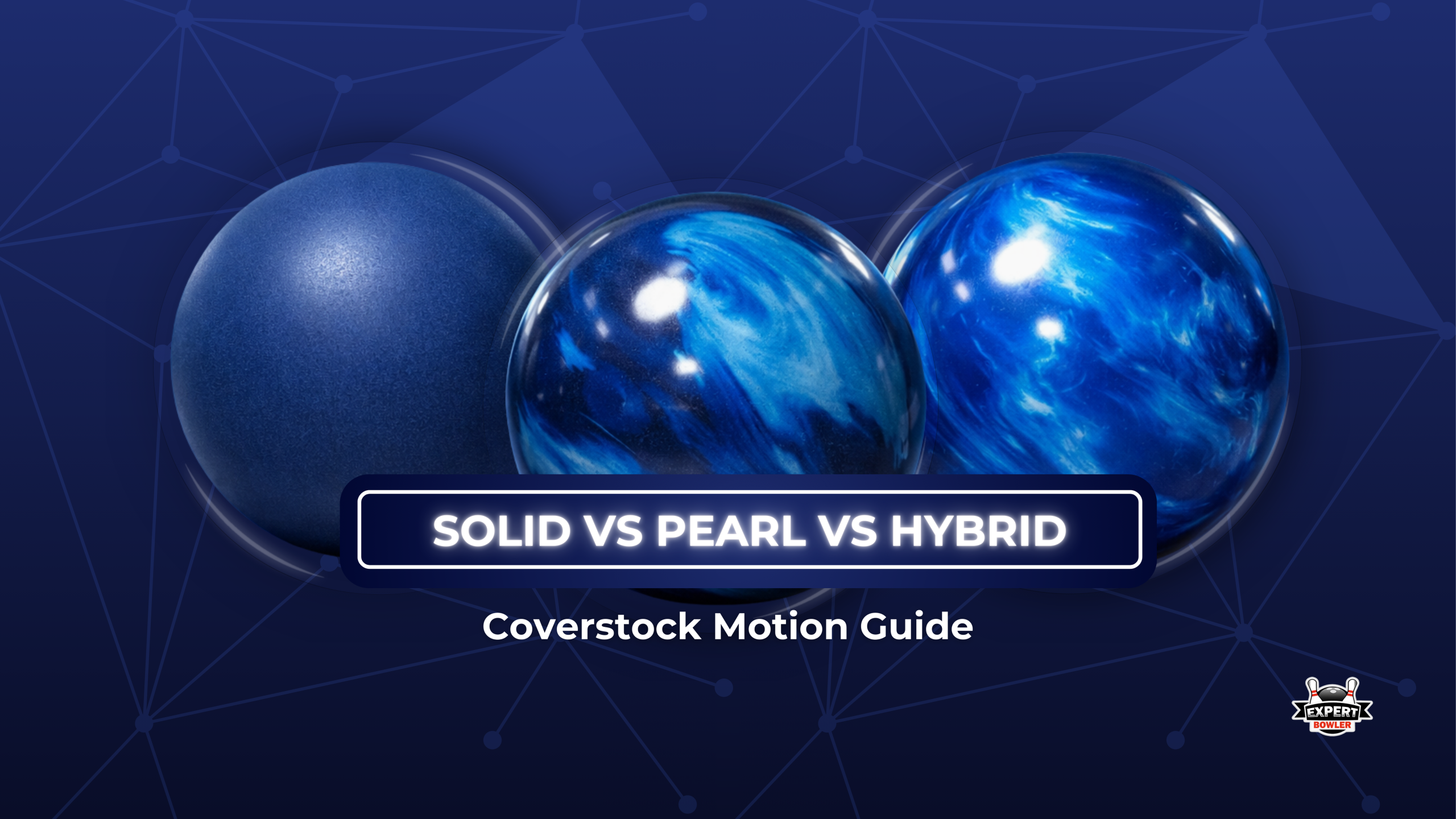
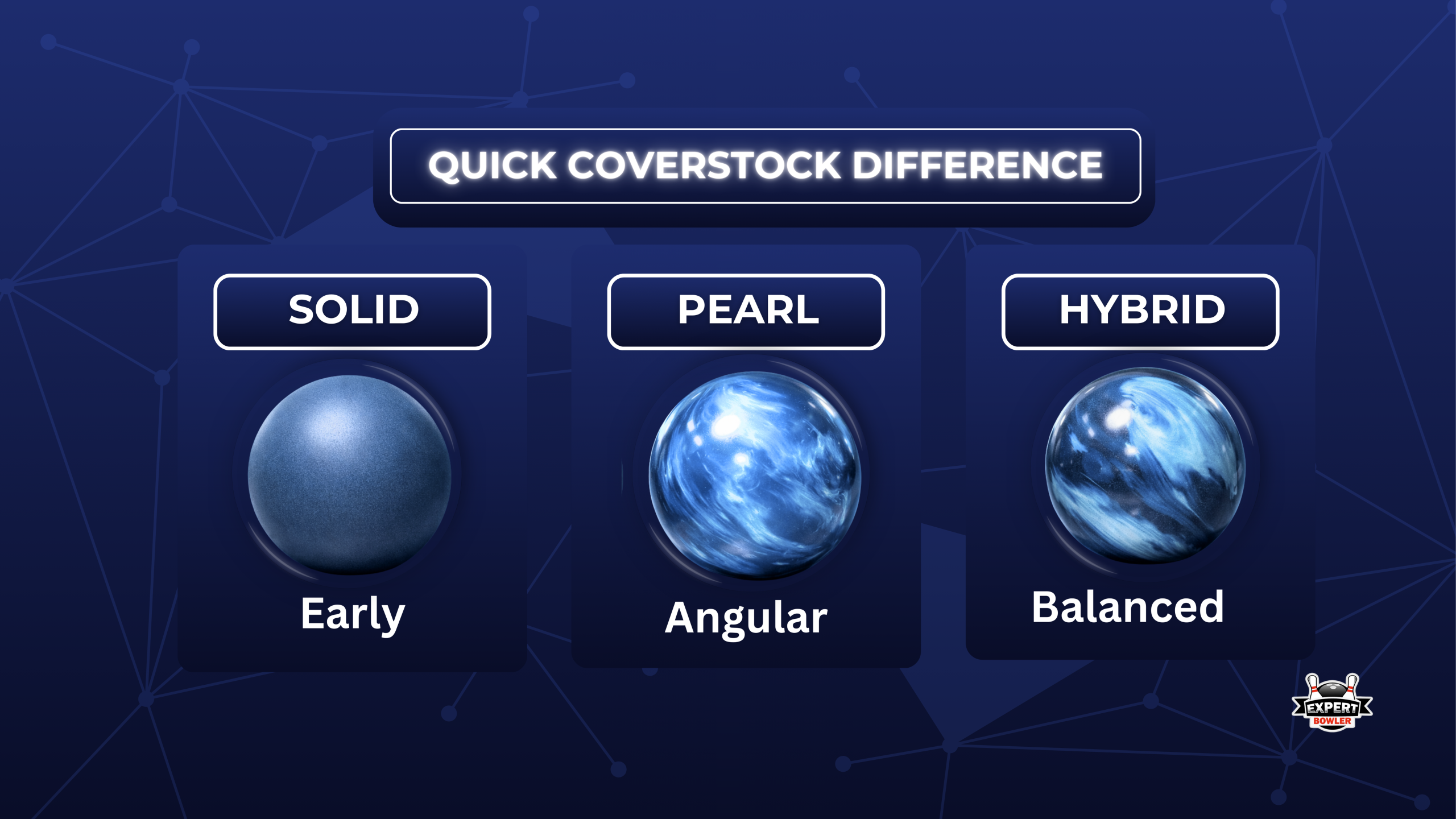
Solid, pearl, and hybrid are the three primary bowling ball coverstock types, all built on reactive urethane that revolutionized bowling in the early 1990s.
They share the same base chemistry. A polyol and an isocyanate react together and cure from liquid into a solid shell, forming microscopic pores in the surface during the process.
Those pores are why reactive balls hook. They absorb lane oil as the ball rolls, keeping the surface relatively dry so it grips the lane instead of sliding over it.
As USBC Research Engineer Nick Siefers explained in a detailed breakdown of coverstock chemistry, the difference between solid and pearl bowling balls comes down to what gets added to that base formula and how the pore structure changes as a result.
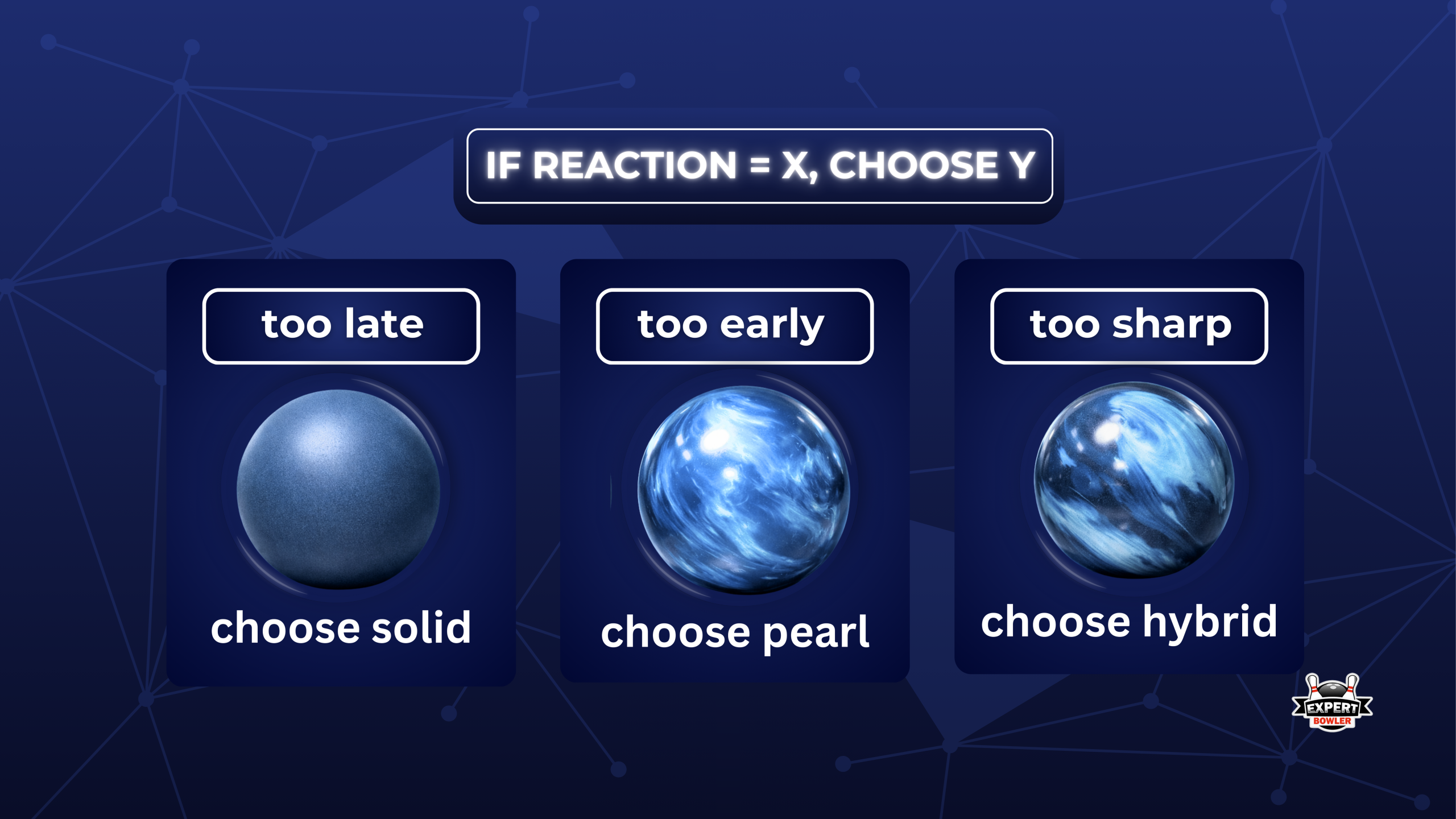
Solid Coverstocks: The Snow Tires of Bowling (Early Hook, Smooth Control)
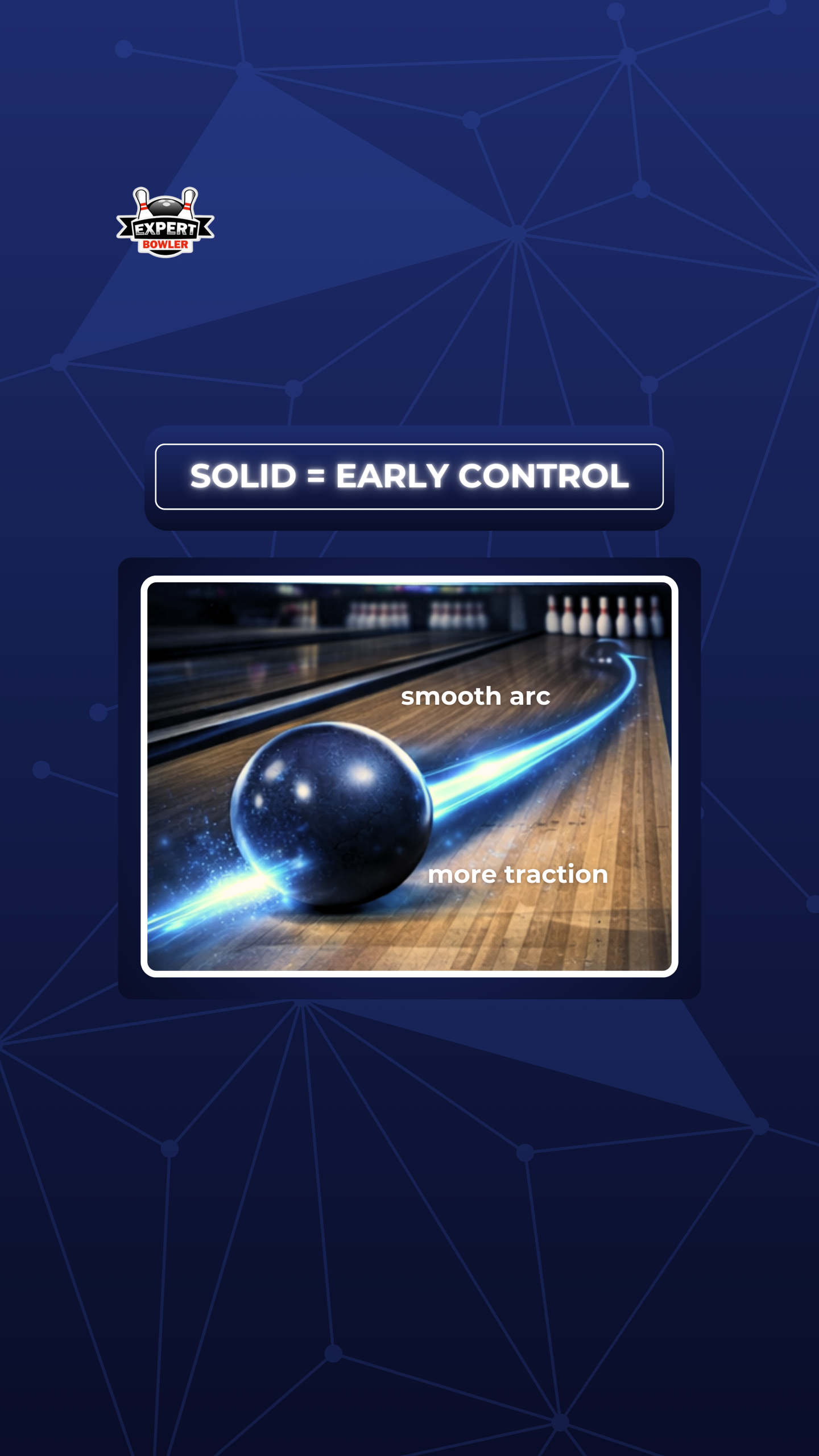
A solid reactive coverstock is the base reactive resin formula without any pearl additives. It has the greatest density of microscopic pores on the surface, meaning it absorbs oil faster and more aggressively than any other reactive type. The result is maximum traction, especially through the oiled front and midlane sections.
Those open pores dig into the oil film, absorb it, and generate friction where a smoother surface would hydroplane. That is why solids start hooking earlier than pearls or hybrids thrown on the same lane with the same layout.
The motion shape defines the smooth vs. angular motion spectrum, landing firmly on the smooth, controlled, and gradual end. The ball reads the midlane early, begins its arc sooner, and rolls into the pocket with a predictable, continuous curve rather than a sharp snap.
Manufacturers typically release solids with sanded factory finishes at 500 or 1000 grit to maximize that early traction, making them the go-to choice for heavy oil or fresh league conditions. A ball like the Hammer Black Widow 3.0 is a textbook example of a solid coverstock built for that exact role on medium to heavy oil.
The trade-off is that on drier lanes or later in a set, a solid can burn up too much energy in the front part of the lane and run out of steam before reaching the pins.
Pearl Coverstocks: The Racing Tires (Skid, Snap, Angular Backend)
Pearl reactive coverstocks start with that same base formula, but manufacturers blend in a pearl additive during the pour, usually mica or a resin particle.
That additive changes the chemistry at a microscopic level. It disrupts the pore structure during curing, so the finished shell has fewer and smaller pores across the surface.
And fewer pores means less oil absorption. The ball simply does not grip the oiled portion of the lane the way a solid does, which translates directly into less friction through the front part of the pattern.
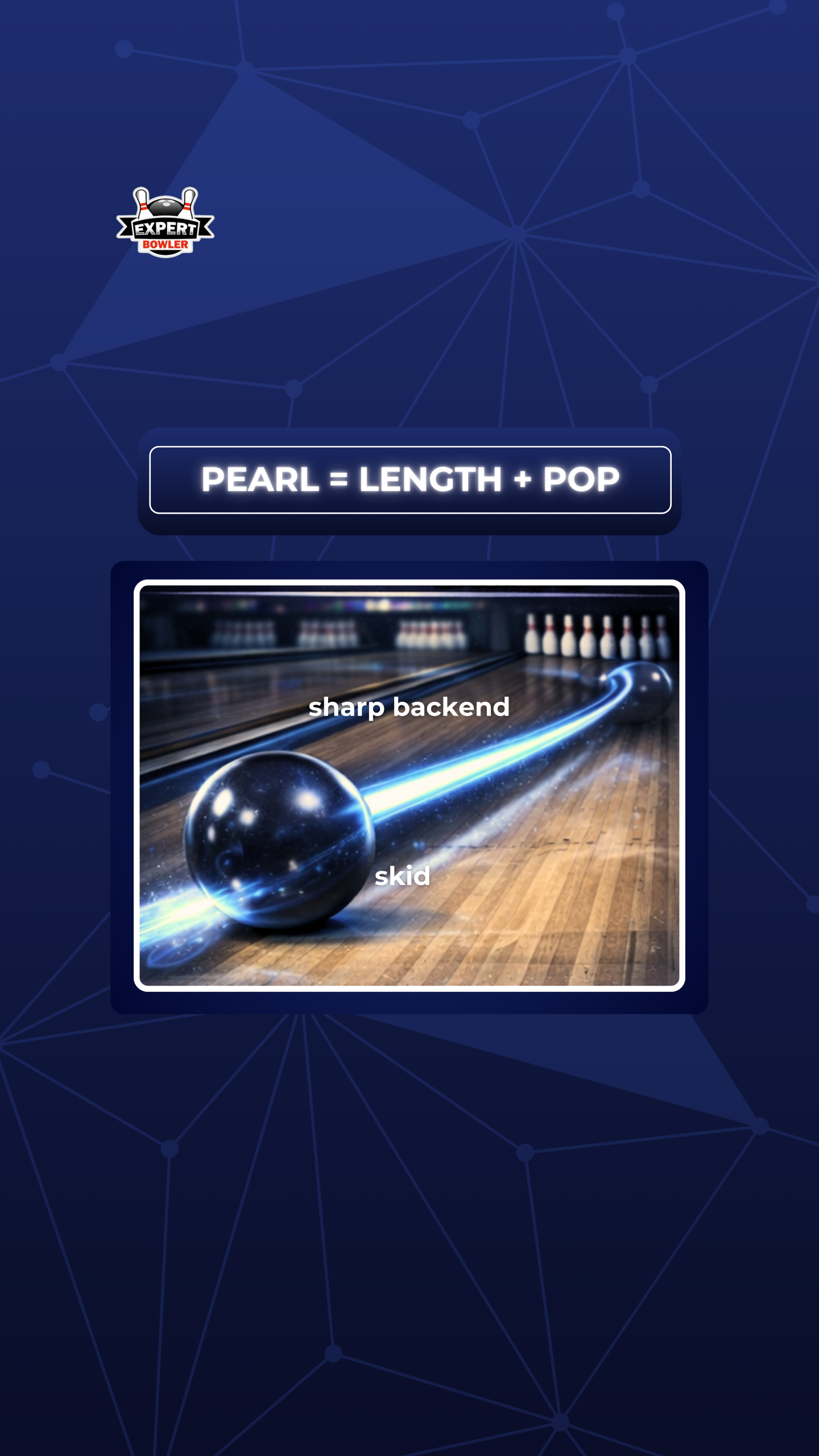
If solids are snow tires, pearls are racing slicks. A pearl coverstock glides through the oily heads with minimal resistance, and instead of burning energy early, the ball conserves it down the lane.
When it finally reaches the dryer boards at the backend, all that stored energy is released at once. The result is a sharp, angular break rather than a smooth arc.
Bowlers call that skid-and-snap motion “pop” on the backend, and it is one of the main reasons pearl equipment gets so popular once the lanes start drying out.
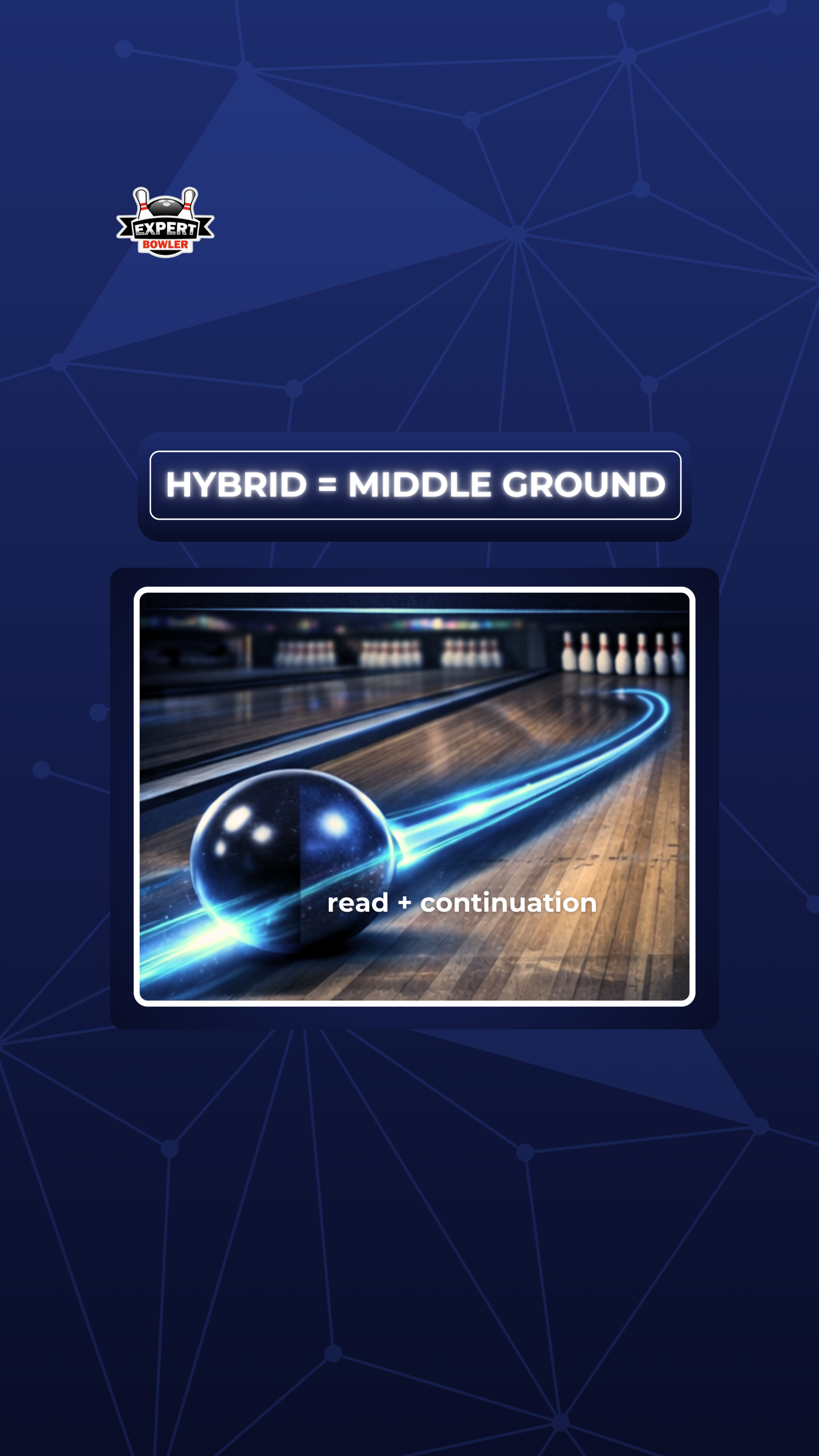
Hybrid Coverstocks: The Versatile Middle Ground
So what does the hybrid bowling ball’s meaning actually come down to?
A hybrid coverstock blends solid and pearl reactive materials into a single shell. The manufacturer combines both formulas during the pour, creating a surface with characteristics between the two extremes.
The ball typically provides more midlane read than a pure pearl while maintaining more angular backend motion than a pure solid. Hybrids are often the benchmark ball in a three-ball arsenal, the piece you throw first to read the lanes before deciding whether to go stronger or weaker.
For many league bowlers on medium house shots, a hybrid covers the widest range of conditions without constant ball changes.
But not all hybrids balance solid and pearl behavior equally. The ratio varies by manufacturer and by model. Some lean solid, producing a smoother, earlier read. Others lean pearl, giving more length and snap.
And the factory finish has more influence on the initial out-of-the-box reaction than the hybrid label itself. A sanded hybrid will look very different from a polished one, even if the formula is identical.
The Storm Hy-Road is one of the most well-known hybrid benchmarks in the sport, and the Motiv Venom Shock fills a similar role for bowlers who prefer a slightly earlier midlane read on medium conditions. Our best medium oil bowling ball reviews break down more options in that range.
It’s Not Just the Material: The Importance of Surface Grit
Everything above explains how the coverstock type sets the potential range of a ball’s reaction. But here is the part most bowlers never hear at the counter: the surface finish determines where the ball actually performs within that range.
Why a Sanded Pearl Hooks Earlier Than a Polished Solid
This sounds counterintuitive. If solids are built for early hook and pearls for length, how can a pearl out-hook a solid?
The coverstock type is the starting point. Surface grit (500/1000/2000) is the dial you turn to fine-tune the reaction.
Lower grit numbers like 500 and 1000 create a rougher surface with microscopic peaks and valleys that cut through oil and generate friction early.
Higher numbers like 2000 and 4000 create a smoother surface that lets the ball slide further before reacting.
Polish goes even further, filling in those valleys to maximize length.
Take a pearl reactive ball and sand it to 500 grit. Those microscopic peaks now bite into the oil aggressively, even though the underlying pore structure still has reduced pearl porosity.
That ball will read the lane earlier and hook more smoothly than it would out of the box.
Now take a solid and polish it to 4000 grit with a factory compound. You have filled in all that aggressive texture, creating a slick shell that slides through the heads and stores energy.
That solid will skid further and snap harder than the sanded pearl, despite being the “stronger” coverstock on paper.
This is why pro shop operators spend time adjusting surfaces when fitting equipment. If your solid hooks too early and dies at the pins, moving from 1000 grit to 2000 with a light polish can add several feet of length and sharpen the backend. If your pearl slides too far, taking it to 1000 grit gives it that earlier midlane read.
The coverstock label tells you the ball’s personality. The surface prep tells you how that personality shows up on the lane.
Which Coverstock Do You Need? (Cheat Sheet)
Now that you understand the coverstock types and the surface variable, matching equipment to conditions becomes straightforward.
The key is evaluating what the oil is doing before you commit to a ball choice, a process bowlers call “reading the lane.”
If you are still building that skill, our guide on how to read bowling lane conditions walks through the process step by step.
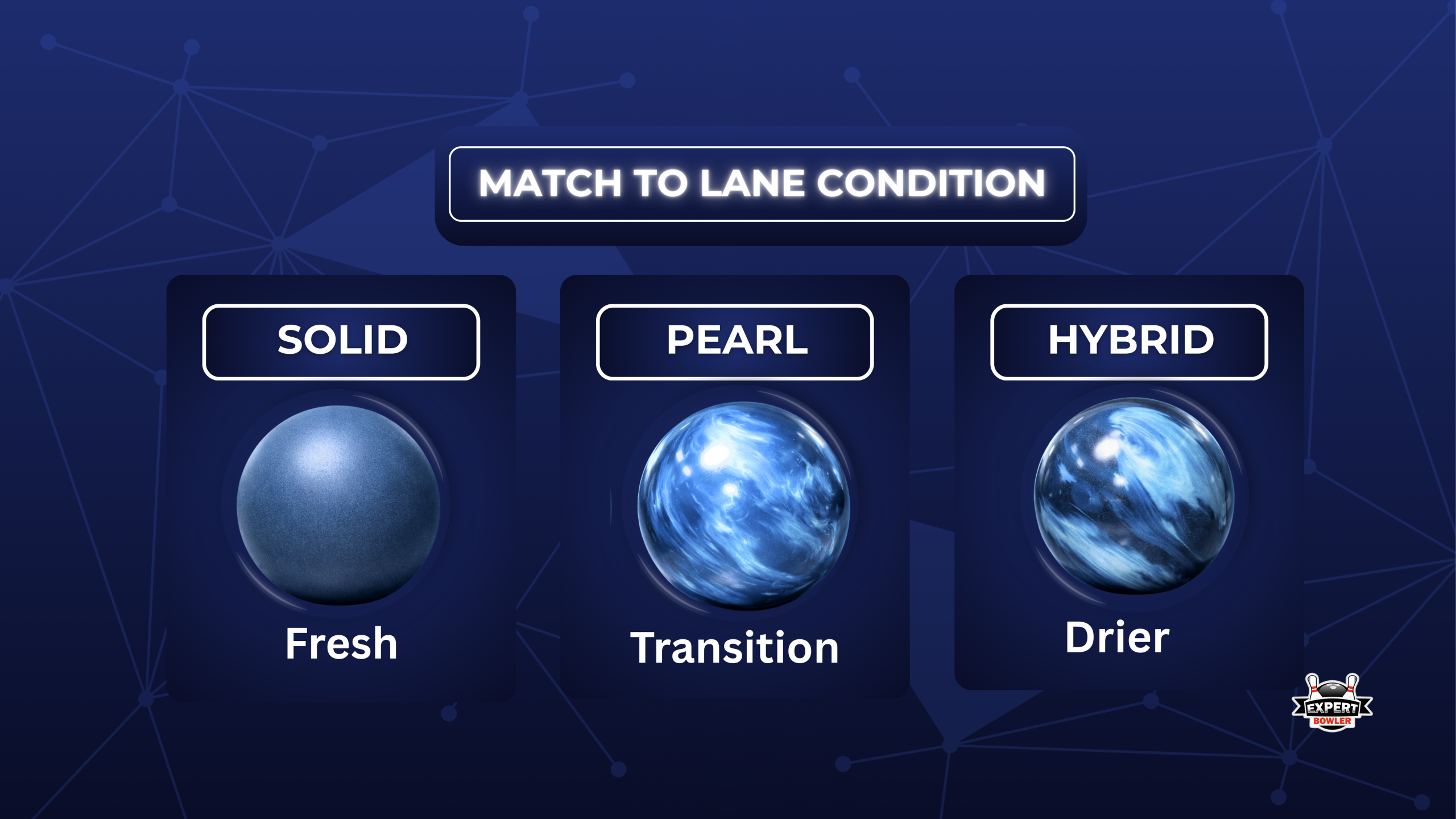
When to Throw Solid (Fresh Oil / Heavy Oil)
Pull the solid out first when the lanes are freshly oiled and the heads are loaded. Game one of the league, the first round of a tournament block, or any time the ball slides too far before it starts its move.
Solid coverstocks excel on higher volume patterns where you need early grab and controlled roll through the midlane. Higher speed bowlers who struggle to get the ball to turn over on fresh benefit from the extra traction a sanded surface provides.
Once the oil breaks down and the ball hooks too much, that is your signal to change.
When to Throw Pearl (Breakdown / Burn / Dry Lanes)
The pearl comes out when the track area has dried up, and your solid or hybrid hooks too early. Games two and three of the league, the back half of a tournament block, or any house where the oil is light to begin with.
Pearl coverstocks give you the length to get past dried-out heads and into the still-oiled midlane before the angular backend fires.
Lower speed bowlers who naturally generate a lot of early read often find that pearls match their game well because reduced friction compensates for slower ball speed.
When to Throw Hybrid (Benchmark / Transition)
When you are not sure what the lanes are doing, start with the hybrid. USBC’s arsenal building guide defines the benchmark as your most predictable ball, the one that tells you what the condition is doing based on how it reacts.
Hybrids fill that role because they read the midlane without over-hooking on fresh and still finish without sliding through the break point on transition. Medium oil house shots, the conditions most league bowlers face weekly, are where hybrids shine.
One quick note on urethane
It operates on a different principle from reactive resin, does not absorb oil the same way, and produces a much tamer, more controllable motion with an earlier and smoother hook shape.
It occupies its own category and plays a specific role in tournament bowling and on short or heavily broken-down patterns. Our Purple Hammer review covers the gold standard for that type of ball.
Frequently Asked Questions About Coverstocks
Can I polish a solid ball to make it go longer?
Yes. Polish reduces surface friction, adding length and a more angular backend. Pro shop operators do this regularly to extend a solid’s usefulness on medium conditions. You can always sand it back. For a full rundown, see our bowling ball cleaning and maintenance guide.
How often should I change my ball’s surface?
Every 15 to 30 games for competitive bowlers. Reactive coverstocks absorb oil over time, dulling the reaction. A fresh surface pad restores it. Our bowling ball cleaning and maintenance guide covers the full process.
Which coverstock type is best for a beginner?
A hybrid or pearl reactive on lighter oil is a forgiving starting point. Both types skid through the heads and produce visible backend motion, which helps new bowlers learn to read ball reaction early on.
What is the difference between reactive resin and urethane?
Reactive resin absorbs oil through microscopic pores, creating strong hook potential and a sharp backend. Urethane has a denser surface with a smoother, more controlled arc. Reactive is the league standard; urethane is a specialty tool.
Is a hybrid always better than a solid or pearl?
No. On heavy oil, a dedicated solid will outperform most hybrids. On dry lanes, a pearl gives more length and angular recovery. The right coverstock matches the condition, not the broadest label.
Building a Balanced Arsenal
Understanding bowling ball coverstock types is the foundation for every smart equipment decision. Coverstock determines how your ball interacts with the oil, how it transitions at the breakpoint, and how much energy it carries into the pins.
Surface preparation lets you fine-tune that interaction for your game and your lane conditions. Together, they account for the vast majority of what happens between the foul line and the pin deck.
Take a look at your bag. Do you have a solid for heavy oil, a pearl for the burn, and a hybrid for everything in between?
If one of those slots is empty, you are giving up scoring opportunities every time the conditions shift.
Three well-chosen pieces with the right coverstock types and surface finishes can cover nearly every situation you will face in league and local tournaments.
Ready to fill a gap? Our guide on the best benchmark balls breaks down the top options by skill level and playing style to help you pick the right one.