You know the feeling. Good shot, smooth release, ball tracks right into the pocket, and then nothing. Pins barely move, or the 10 just rocks and stays. It is maddening because you did your job. The ball did not do its.
What happened, almost every single time, is that the ball had not finished transitioning before it reached the deck. It showed up still hooking instead of rolling, and that leftover sideways energy killed your carry.
To understand why, you need to know that a bowling ball does not just roll down the lane in one continuous motion. It goes through three separate bowling ball motion phases.
The skid, hook, roll sequence in bowling applies to every single shot.
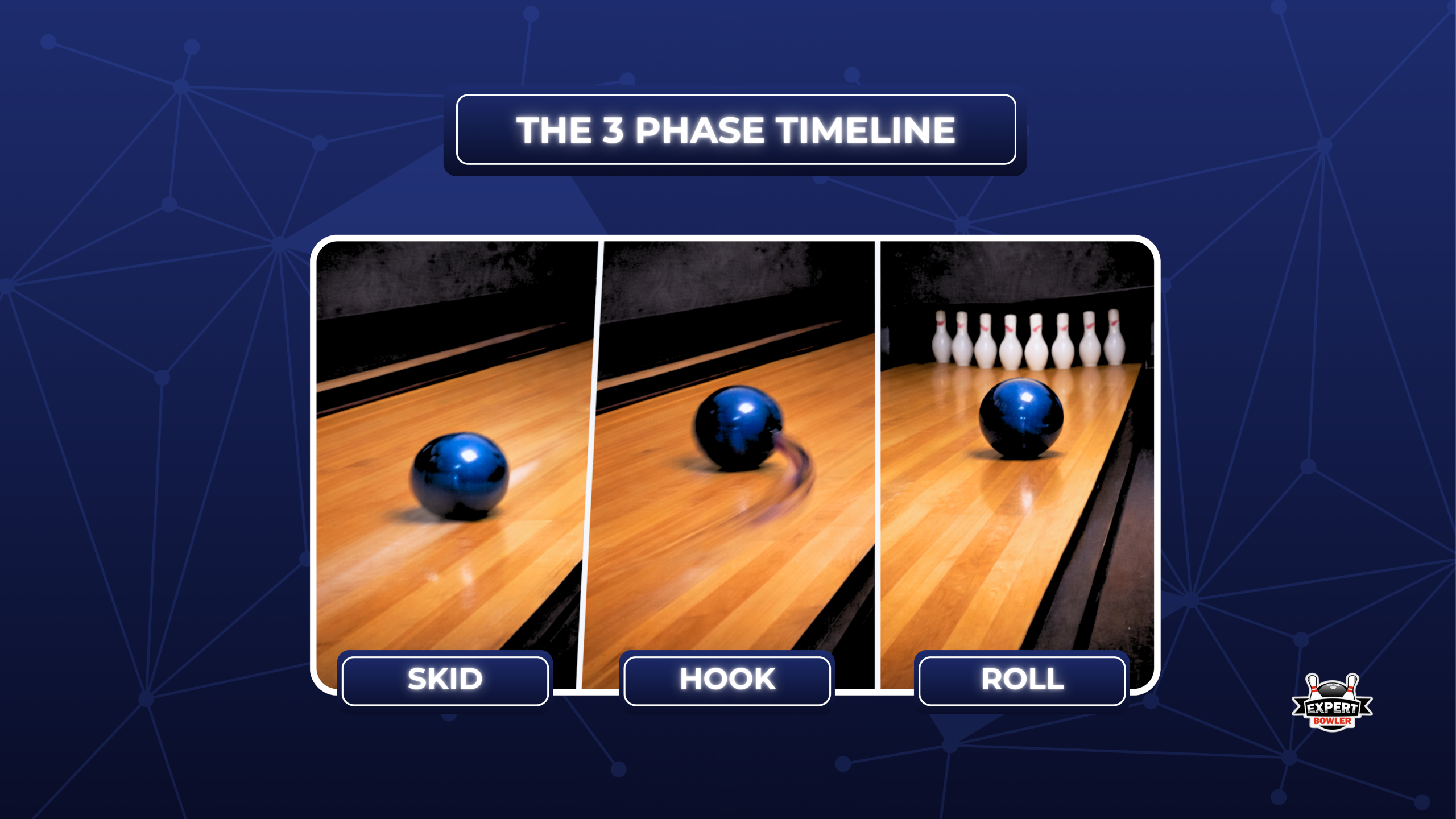
First, the ball skids through the heads where the oil is heaviest. Then it hooks through the mid-lane as friction takes over. Finally, it settles into a forward roll for the last stretch to the pins.
When those three phases line up at the right spots, you strike. When they do not, you leave pins and start guessing.
Let’s break each one down so the guessing can stop.
Phase 1: The Skid Phase (The Heads)
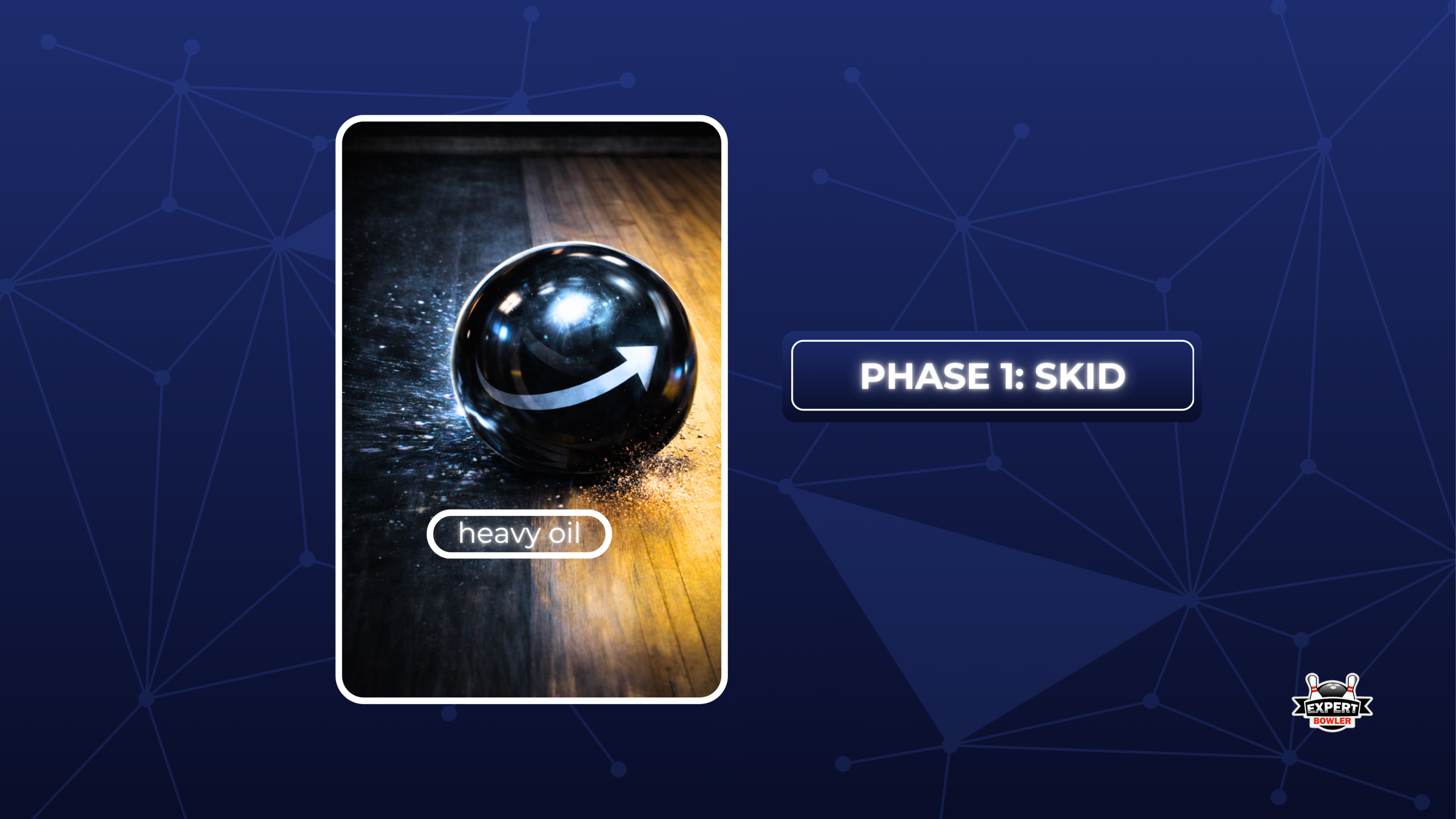
The skid phase covers the first 15 to 20 feet of the lane where oil is heaviest. The ball encounters almost no friction, so ball speed dominates. Even though it is already spinning, that spin cannot grip the oiled surface enough to change direction.
You can see this with the Logo Test. Watch the manufacturer’s logo through the heads, and you will notice it whipping sideways rather than rolling forward. That sideways spin is axis rotation, stored energy that the ball is saving for later.
How Skid Stores Energy
Skid is not wasted motion. It is all about energy retention. The ball preserves speed and rev rate, so it has both when it needs to change direction and drive through the pins. Without enough skid, the ball spends energy too early and arrives at the pocket flat.
Reading the lane conditions is one of the biggest factors in how long the skid lasts.
What Happens if It Skids Too Long?
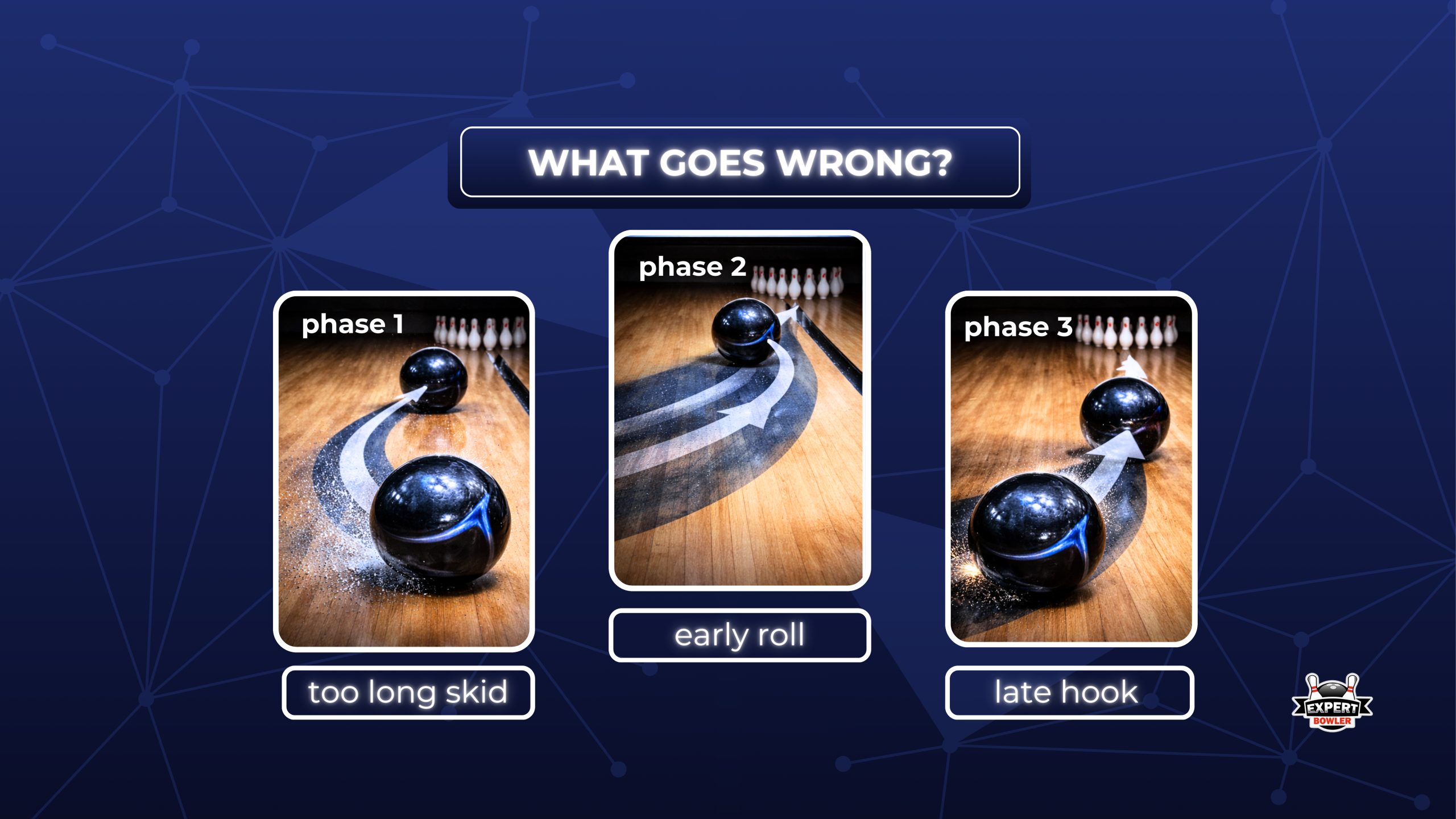
If the ball is still sliding past the range finders around 35 to 40 feet, it runs out of lane to complete all three phases. The hook gets rushed, the roll phase gets compressed, and the ball reaches the pins without enough forward rotation. The result is weak pocket hits, excessive deflection, and corner pins that barely move.
Phase 2: The Hook Phase (The Mid-Lane and Break Point)
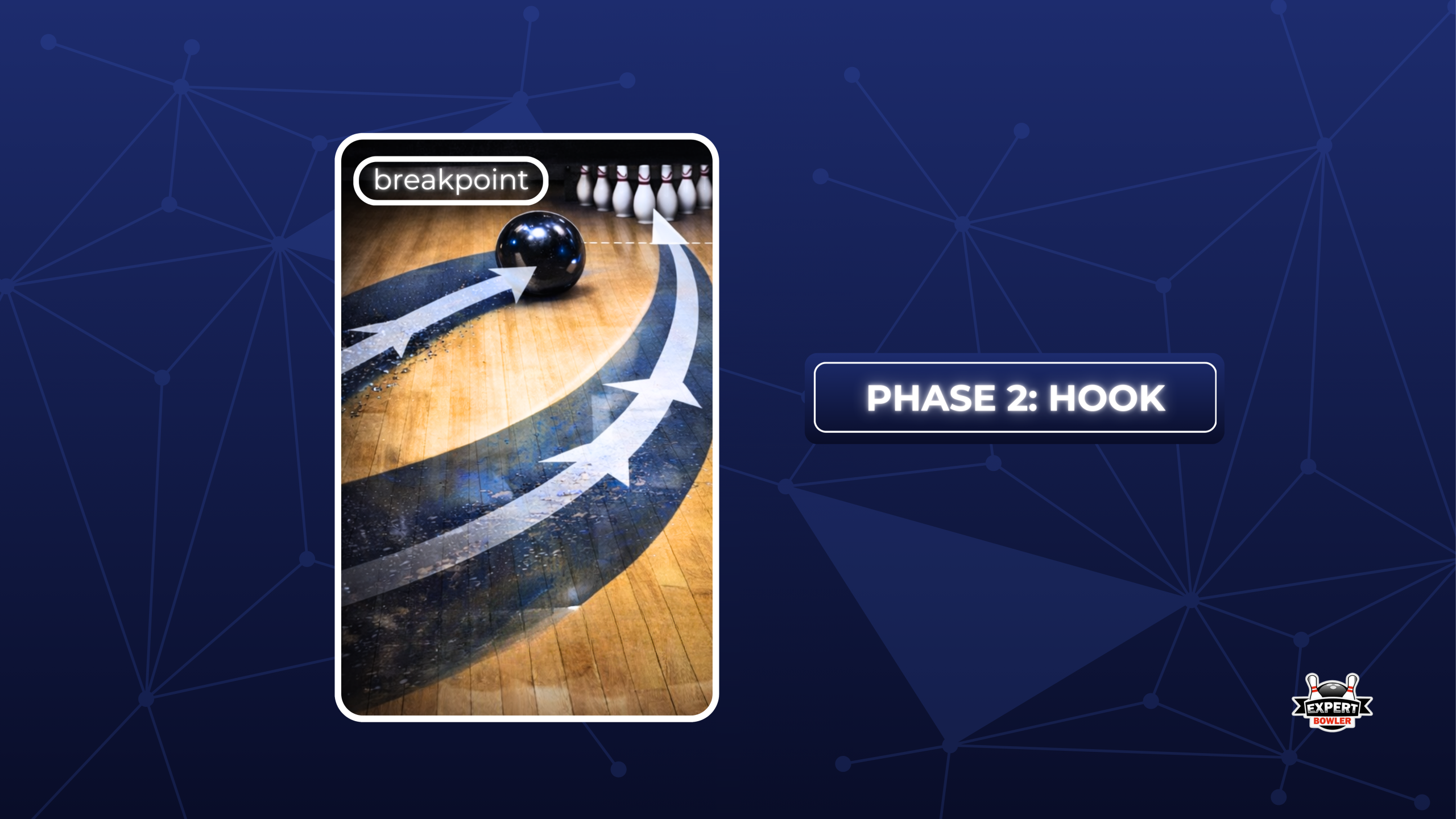
Once the ball hits increasing friction past the heads, the hook phase begins. This transition runs from the arrows through the mid-lane to the breakpoint, roughly between 15 and 45 feet. When bowlers want their bowling ball reaction explained, this is the phase that answers most of their questions.
Stored axis rotation from the skid phase now converts into a direction change as the ball’s axis shifts from side rotation toward end-over-end motion.
The Transition
The breakpoint is the board where the ball reaches its maximum direction change before settling into its final path. On a typical 40-foot house shot, a right-hander might see it around board 8 to 10 at roughly 42 to 44 feet. The USBC Ball Motion Study confirmed that this transition point is mathematically measurable, not just something coaches eyeball.
Smooth vs. Angular Hook Shapes
An “angular” ball makes a sharper, sudden direction change at the breakpoint. A “continuous” or “smooth arc” ball changes direction gradually over a longer stretch of mid-lane. Neither is inherently better. Angular works on shorter or lighter patterns. Continuous performs better on heavier oil,l where a gradual read gives the ball time to set up.
Phase 3: The Roll Phase (The Backend and Pins)
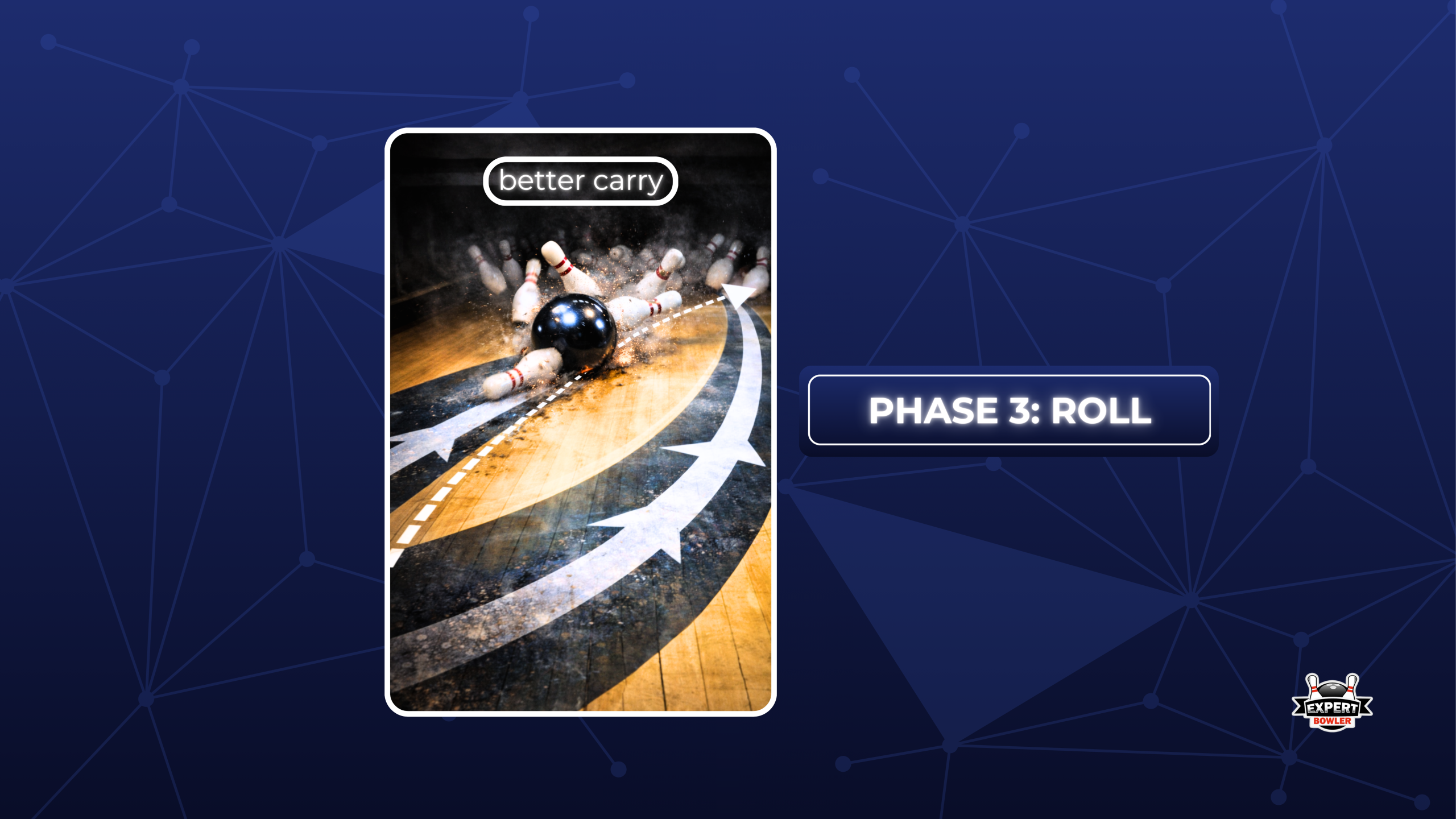
The roll phase happens in the last 15 feet. By the time the ball enters full roll, its axis rotation and axis tilt have merged into forward, end-over-end rotation. Direction changes are over. The entry angle is locked in. This final bowling ball transition is what separates flush strikes from frustrating leaves.
Picture a car drifting through a corner, tires fighting for grip. That is the hook phase. Now the car straightens, and all that sideways energy drives forward. That is roll.
Why Roll Matters for Pin Carry
Many bowlers believe the ball should still be hooking when it hits the pins, as if more hook means more power. The opposite is true. If the ball is still in its hook phase at the 1-3 pocket, sideways energy causes deflection instead of drive. You get weak hits, flat corner pins, and that maddening 10-pin that refuses to fall.
The Logo Test confirms this. If the logo is flipping end-over-end smoothly as the ball approaches the pins, it is in proper roll. If it is still wobbling with noticeable side rotation, the ball has not finished transitioning.
What Is Ball Rollout?
The ball rollout’s meaning is simple. “Rolling out” means the ball entered its roll phase too early and burned through its energy before reaching the deck. Newer bowlers choosing their first ball often run into this because entry-level equipment tends to be more aggressive than the dry house conditions call for.
Troubleshooting Your Ball Motion
Stop watching only where the ball hooks. Start reading ball motion from release to pins, front to back. USBC’s guide to reading the lane reinforces this approach. Post every shot. Hold your finish until the ball goes all the way through the pins.
You need the full picture before you make any moves. After every adjustment, watch the full ball path again. Did skid length change? Did the breakpoint shift? The answer tells you whether your move worked or whether you need another one.
Ball Hooking Too Early?
If the ball is changing direction before the arrows, it is reading the lane too soon. The roll phase starts too early, and the ball arrives flat. Here is how to diagnose the cause and fix it.
What Controls Skid Length
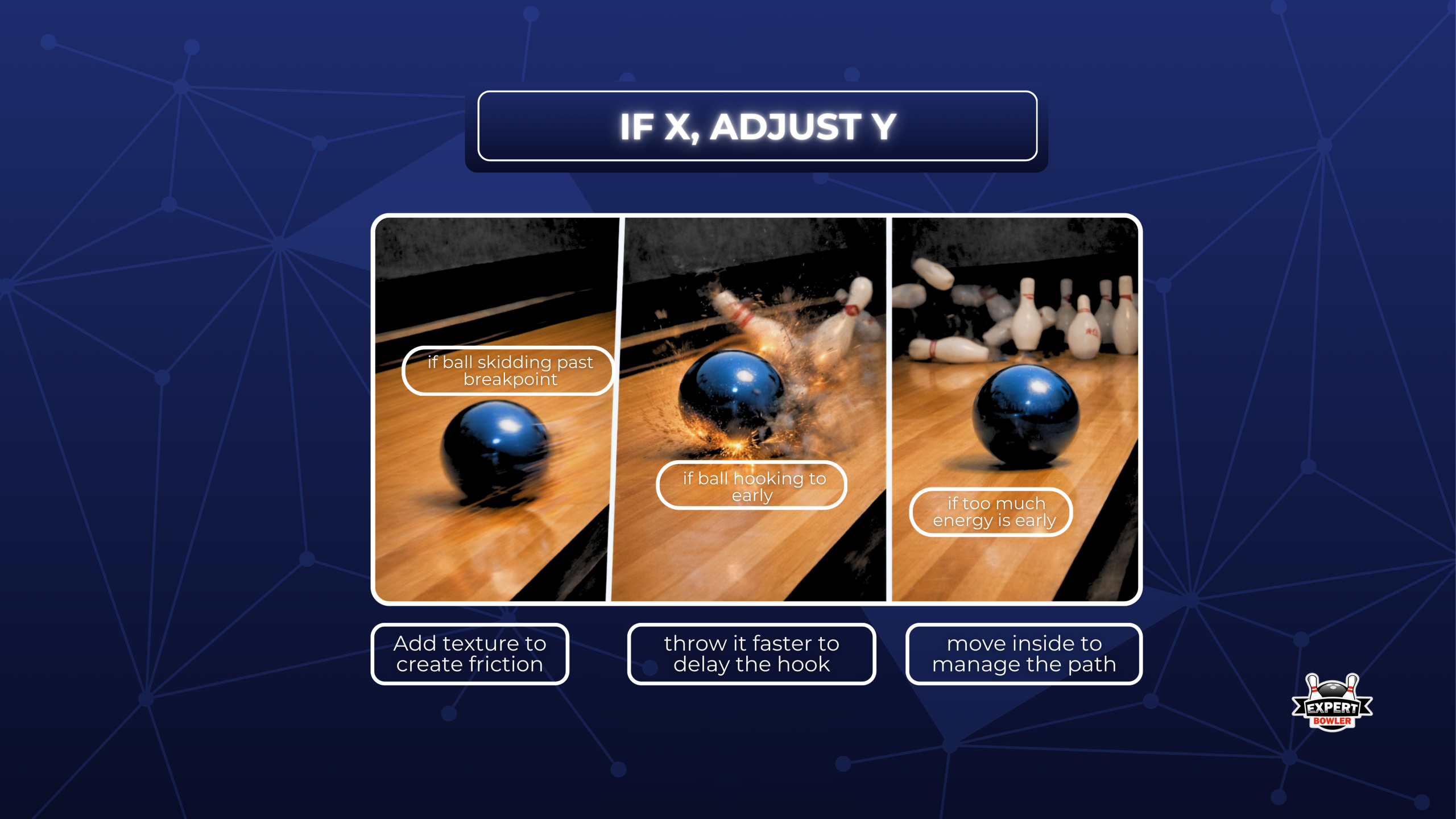
Three things control how long the skid phase lasts. Coverstock type is the biggest lever. Pearl coverstocks promote longer skid, while sanded or dull surfaces shorten it. A coverstock that started as a polished pearl will behave like a dull surface after a few weeks of league play if it is not cleaned properly.
Ball speed also plays a role. A faster release pushes the ball deeper into the heads before friction takes over. And higher axis rotation gives the ball more sideways momentum to maintain the slide.
Start by adding polish to extend the skid. Move your feet and eyes a board or two outside to find more oil. Increase ball speed slightly. If surface adjustments are not enough, a ball with a pearl coverstock or a pin-up drilling layout will create more length before the hook phase kicks in.
Skid vs. Rollout
When the ball reads the lane way too early, you get the extreme version of this problem. Heavy oil patterns can cause the ball to skid so long that it never completes its transition, and dry lanes can cause it to hook so fast that it rolls out before the pocket. Either way, the ball arrives at the pins with nothing left. Recognizing whether you have a skid problem or a rollout problem tells you which direction to adjust.
Ball Not Finishing? (Surface and Layout Fixes)
A ball that reaches the pocket but fails to drive through the pins did not complete its transition to full roll. The fix depends on what you are seeing.
Surface and Speed Adjustments
When the ball hits the pocket but deflects sideways or leaves weak corner pins, it does not complete the roll phase before reaching the deck. Slow your ball speed slightly to let it read the lane sooner. Move 2 to 3 boards inside with your feet. Take the shine off with a 2000 or 3000 grit pad to create earlier friction.
Angle Adjustments
A ball that drives through the nose or crosses over to Brooklyn neverfinishesd hooking. Open up your angle by moving your feet 2 to 4 boards left and your target 1 to 2 boards left (flip that for lefties). That extra room lets the ball complete its hook and settle into a roll before the pocket.
Why the Entry Angle Decides Pin Carry
A ball in proper roll transfers maximum energy into the pins because all of its rotational force is moving in the same direction as its path. As USBC explains in their entry angle guide, the ball’s spin rate should match its travel speed right as it enters the pin deck.
That is full roll. An entry angle of about 6 degrees produces the widest strike zone, and that angle requires the ball to be rolling, not hooking. Giving the ball more room to finish its transition is how you get there.
Matching Equipment to Conditions
Equipment choice plays into this, too. Solid reactive coverstocks read the mid-lane earlier and arc smoothly into the pocket, while pearl coverstocks push through with more length and snap at the backend. A ball like the Storm Hy-Road is a good example of a continuous, versatile shape that reads the mid-lane without being sluggish on the backend.
Keep in mind that none of these moves work as well if your ball surface has drifted from where it should be. Regular cleaning and surface maintenance keep your baseline predictable so your adjustments actually do what you expect.
Also, if you have tried surface tweaks, speed changes, and line moves and the ball still will not cooperate, it might be the wrong tool for the job. Choosing the right ball for your league environment is often the best long-term fix.
When in doubt, a conversation with your pro shop operator can help match equipment to conditions faster than trial and error.
Watch Your Ball, Then Decide
Every shot tells a story in three chapters. Skid, hook, roll. When a carry breaks down, the answer is usually hiding in one of those phases. The top half of this guide taught you what each phase looks like. The troubleshooting section gave you the adjustments. Together, they give you a system for reading ball motion and responding to what you see instead of guessing.
Watch your ball next time. Does it roll before it hits the pins? If not, try adjusting your surface or consult a pro shop. The bowlers who carry the most are not the ones who hook the most. They are the ones who know when the hook is supposed to stop.
Want more ways to sharpen your game beyond ball motion? Our 10 bowling tips to improve your score today cover quick adjustments you can put to work at your next league night.