How to Spin a Bowling Ball
By Jeroen Kooij, Publisher & Editorial Director · Beginner Bowler · Updated August 2026
Watch league bowlers for long enough and you will see many different release styles. One common feature is controlled ball motion into the pocket rather than simply throwing straight at the headpin. Learning to create and control hook can open more angles on the lane, but it is only useful when you can repeat the release and understand how the lane is reacting.
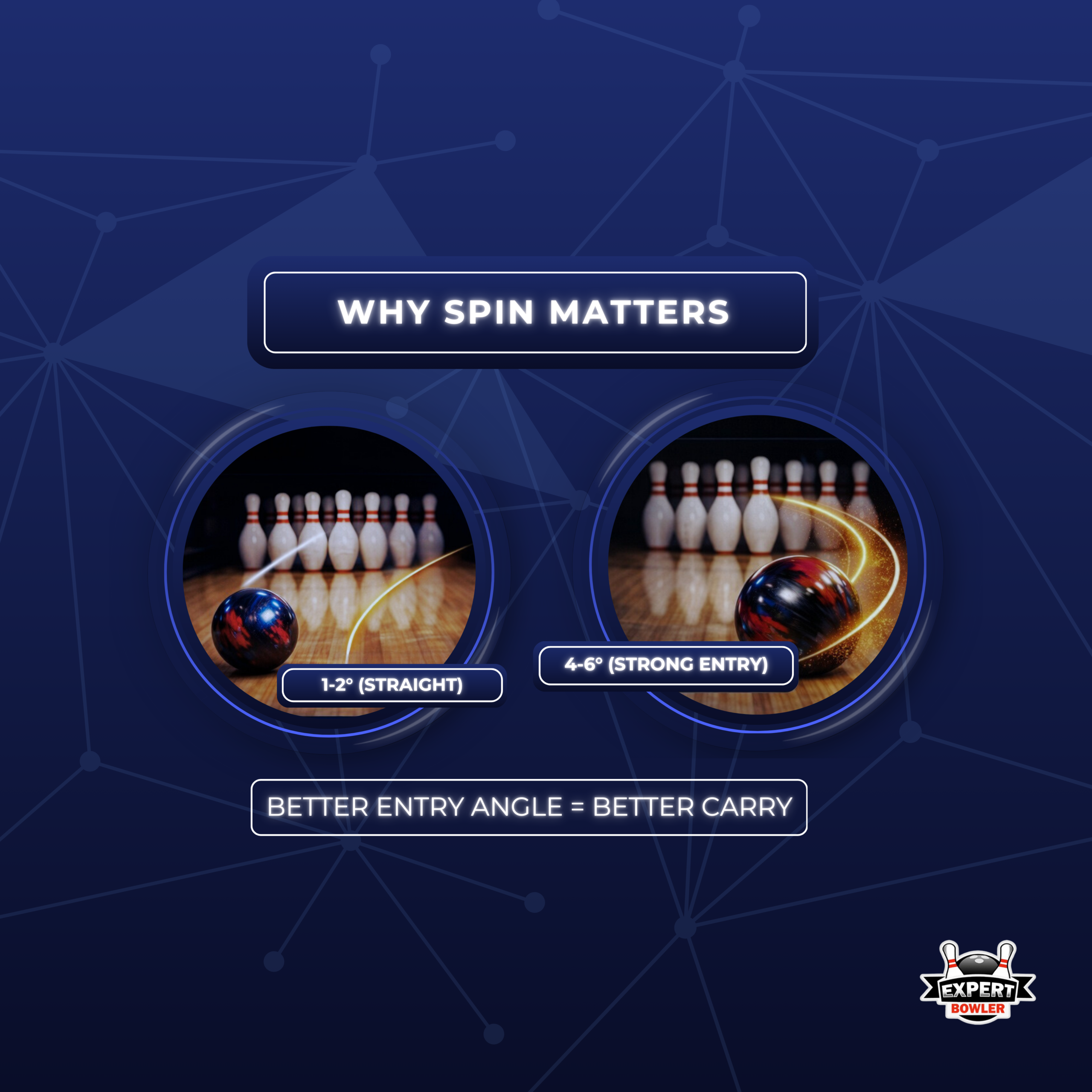
Entry angle affects how the ball drives through the pocket, but there is no single ideal number that applies to every bowler, ball, or lane condition. In general, a controlled hook can create a more useful pocket angle than a purely straight trajectory.
When your ball hooks into the pocket (between the 1 and 3 pins for right-handers, or 1 and 2 for lefties), it drives through the pin deck instead of deflecting weakly sideways.
Developing a repeatable hook can improve pocket entry and give you more control over ball motion, but any scoring improvement also depends on accuracy, spare conversion, lane play, fit, and how consistently you can repeat the shot.
The mechanics can be broken into a few useful components — grip, wrist position, release timing, and follow-through — but the difficult part is making them work together without overthinking the motion.
What we cover in this guide
- Understanding Bowling Ball Spin: Rev Rate and Axis Rotation
- The Foundation: Grip and Setup for Spin
- Mastering the One-Handed Spin: A Step-by-Step Guide
- Mastering the Two-Handed Spin: A Step-by-Step Guide
- Common Mistakes When Trying to Spin a Bowling Ball (and How to Fix Them)
- Drills to Improve Your Bowling Ball Spin
- Equipment for More Spin: Choosing the Right Ball & Fit
- Unlock Your Full Potential on the Lanes
Understanding Bowling Ball Spin: Rev Rate and Axis Rotation
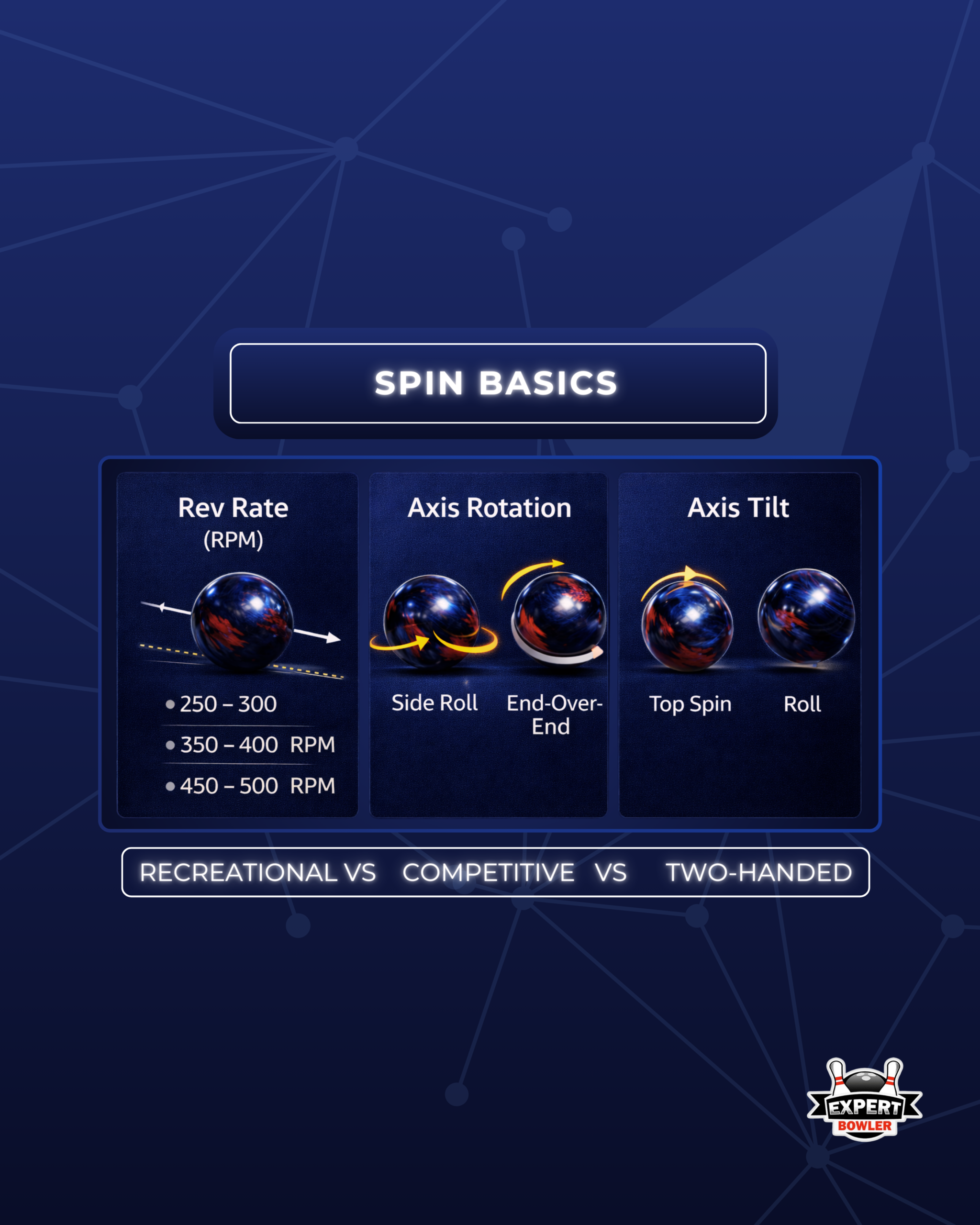
Two terms dominate bowling conversations about spin.
Rev rate measures rotation speed, usually in revolutions per minute. Higher rev rates can increase hook potential, but ball speed, surface, core dynamics, release characteristics, and lane condition all influence the actual motion. Elite two-handed players such as Jason Belmonte are known for very high rev rates, but copying a professional number is less useful than developing a repeatable release that matches your own speed and timing.
Axis rotation describes spin direction relative to the ball’s travel path. Picture the Earth spinning on its tilted axis. Releasing with your hand on the side of the ball creates side roll, where the ball spins in a different direction than it’s traveling. This stored energy converts to hook motion once the ball hits the friction in the backend of the lane.
There is also axis tilt, which describes the vertical orientation of the ball’s rotation. Tilt influences how quickly the ball transitions through skid, hook, and roll, but its effect is tied to speed, axis rotation, surface, and lane friction. Rather than chasing a target angle, treat tilt as one part of your natural release that helps explain the shape you see on the lane.
From our coaching sessions
“You do your thinking back here. If you notice you’re thinking up there, you didn’t think enough back here. So take your time. Once you set up on the approach, all you’re doing is checking.”
“You have to feel the momentum. And you can only do that by feeling. If you start thinking, you can’t feel.”
Jack Edelaar — NOC*NSF Master Coach; former national coach of the Dutch youth, junior elite and women’s teams and of the Czech national team. Said during coaching sessions with us, August 2026.
Worth reading before the technical sections below, because it sets a limit on how much of this you can usefully think about while you are throwing. Everything on this page belongs behind the approach. Once you have stepped on, the checklist is closed.
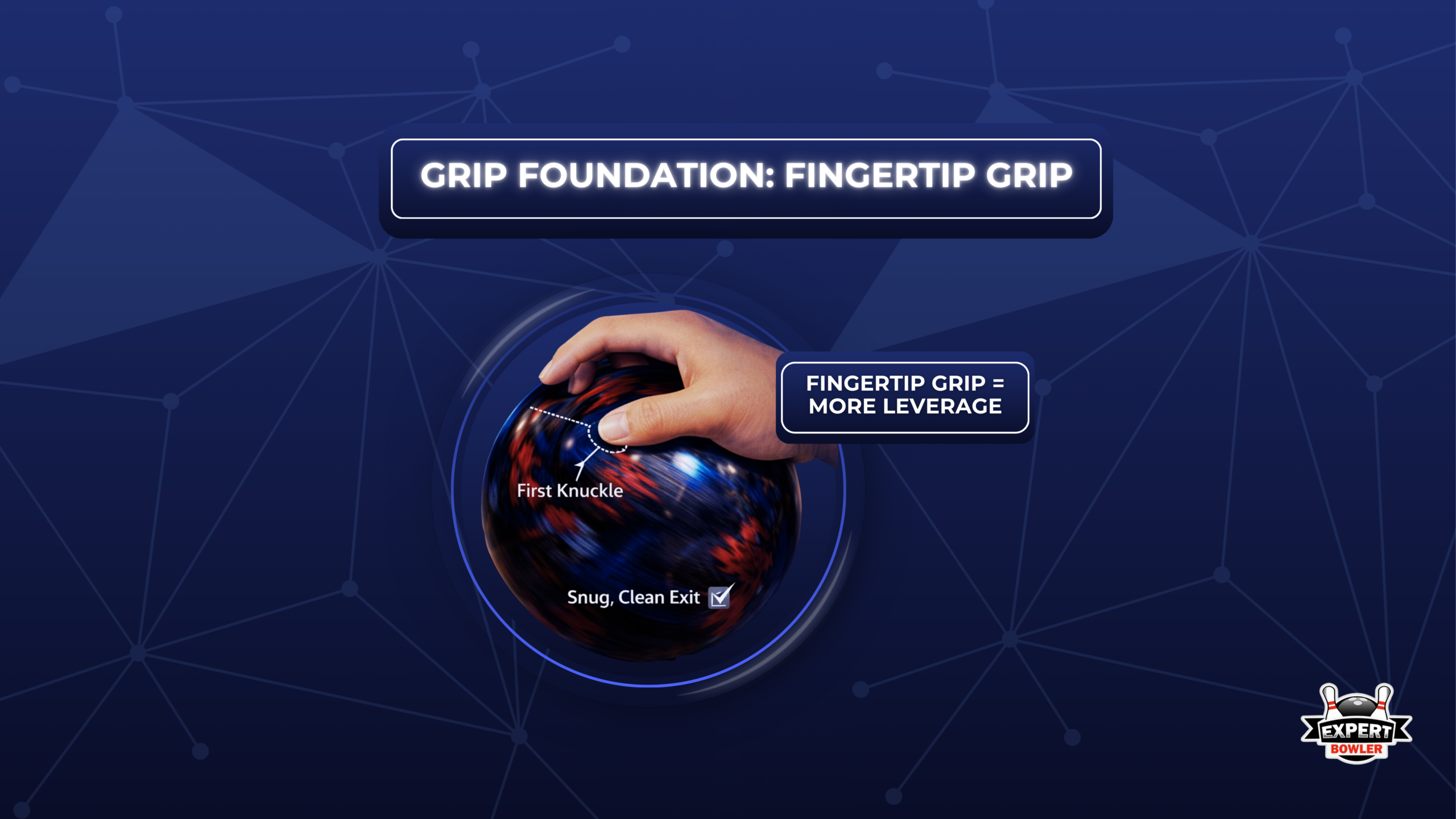
A fingertip grip is common for bowlers who want more release freedom and hook potential than a conventional house-ball grip. Your middle and ring fingers are typically inserted to around the first knuckle, while the thumb fit and pitches are adjusted to suit your hand.
The shorter finger insertion changes how the fingers leave the ball and can make it easier to create rotation without squeezing. The thumb should feel secure enough to relax the hand while still exiting cleanly.
Professional fitting can make a major difference because span, pitches, hole sizes, and grip style all affect comfort and release. A good fit does not fix technique by itself, but it removes an equipment variable that can otherwise make learning harder.
For stance, keep feet shoulder-width apart with knees slightly flexed. Lean your upper body forward just a bit. You want an athletic position, not bolt upright. Hold the ball at waist height with your non-bowling hand supporting most of the weight, keeping your bowling arm relaxed before you start the approach.
Mastering the One-Handed Spin: A Step-by-Step Guide
The one-handed release remains widely used and can offer excellent control when the timing, fit, and release are repeatable. Breaking the motion into smaller parts can make it easier to learn than trying to change everything at once.
Wrist Position: Cupped vs. Flat
Wrist position influences how the fingers and hand arrive at release, which affects rev rate and axis rotation. A firmer position can make the release easier to repeat, while more cup can increase potential rotation for bowlers who can control it.
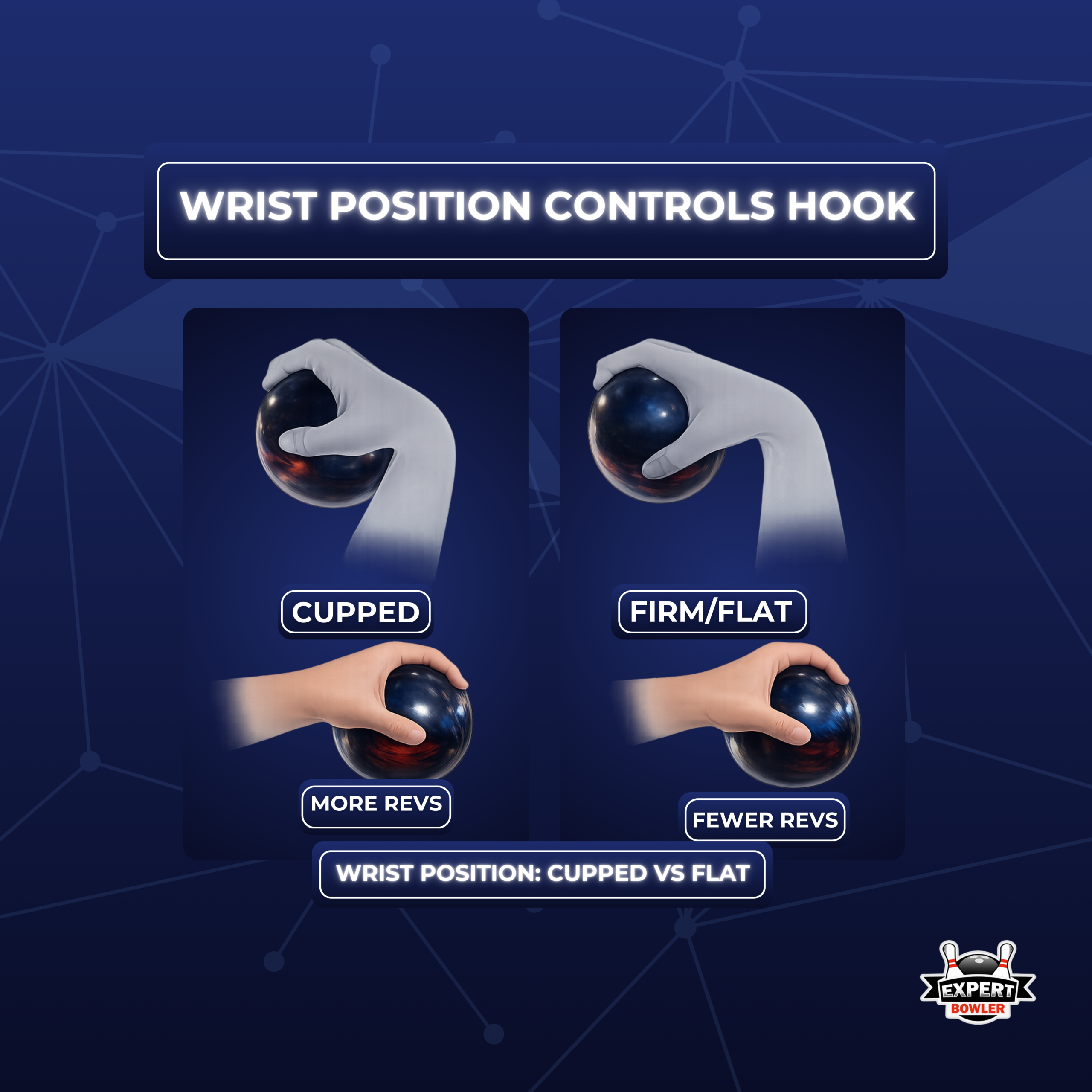
For many developing bowlers, a stable wrist is easier to repeat than an exaggerated cup. A wrist support can be useful in some cases, but it should be treated as an equipment aid rather than a substitute for fit, timing, or coaching.
The Release: “Shaking Hands” with the Ball
One common analogy is a handshake-style finish: the hand moves through release without an exaggerated twist around the side of the ball. The exact hand position varies by bowler and style, so use the analogy as a feel cue rather than a literal clock-position rule.
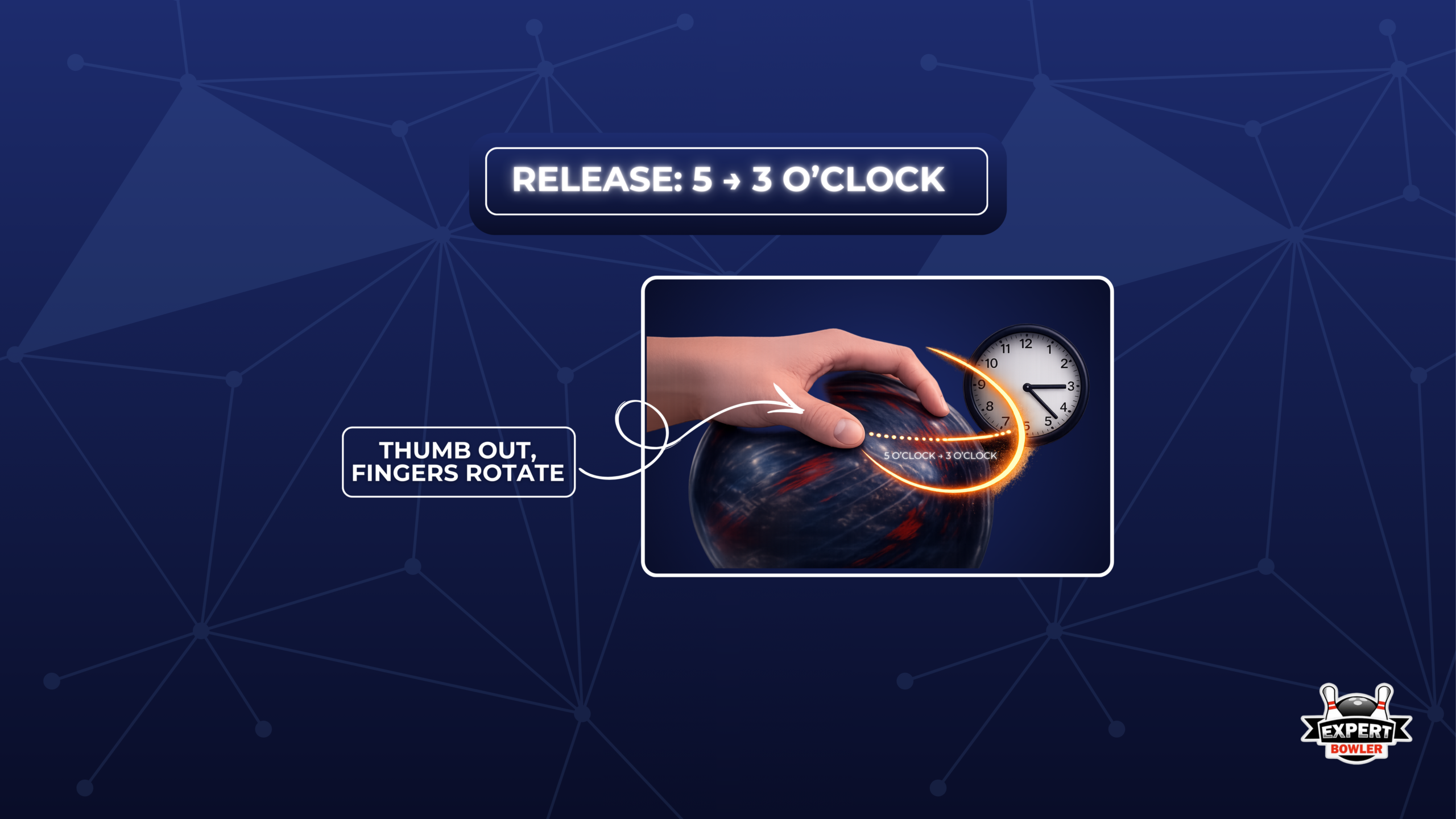
Some bowlers use images such as turning a doorknob or uncapping a bottle to create a feel for rotation. Those cues can help, but the goal is not to force the wrist around the ball. Timing, fit, and staying behind or inside the ball matter more than hitting one exact hand position.
The Follow-Through: Pointing at the Pins
The follow-through is useful feedback on what happened earlier in the delivery. A balanced finish and a repeatable arm path can help you see whether the shot matched your intention; forcing a pose after release will not fix a poor delivery.
Best Bowling Balls 2026
Reactive coverstocks help with hook development. See our picks.
Answer four quick questions and our free Bowling Ball Finder matches you to the right ball for your style, lanes and budget — plus a free buyer’s checklist, instantly.
Take the free Finder →Mastering the Two-Handed Spin: A Step-by-Step Guide
Two-handed bowling is now an established competitive style, and Jason Belmonte is its most visible example at the professional level. The style can create high rev rates, but the useful question for a beginner is whether the movement pattern fits your body and can be repeated under control.
Two-Handed Grip and Ball Position
Most two-handers do not use the thumb and support the ball with both hands through much of the approach. That changes how the ball is carried and supported, but comfort and load still depend on fit, ball weight, mobility, and the bowler’s individual movement pattern.
The Power of the Release: Uncapping the Bottle
Two-handed releases often produce higher rev rates because of the way the body and non-dominant hand support the ball through the approach. That potential is only useful when the timing, balance, and release remain repeatable.
Consistent Follow-Through for Two-Handed Bowlers
Two-handed styles often use more torso movement and knee flex than traditional one-handed deliveries, but there is substantial variation between successful bowlers. The priority is balance and repeatability rather than copying one body position.
From our coaching sessions
“One thing you’ll definitely notice is that the better bowlers all come to a stop at the moment they release the ball. Whether you throw one-handed or two-handed, you have to be still when you let go. It’s like shooting: you’re moving, you hold your breath, you go still, and then you pull the trigger.”
“Look at the principles. The better bowlers accelerate, and they come to a stop. Just be careful you don’t copy someone whose style doesn’t suit you. What you’re looking for is your own way of moving.”
Jack Edelaar — NOC*NSF Master Coach; former national coach of the Dutch youth, junior elite and women’s teams and of the Czech national team. Said during a coaching session with us, August 2026.
That gives you a way to watch professional footage without copying the wrong thing. Styles differ wildly between the players usually held up as models, so the useful question is not what their release looks like but whether the two constants are there: acceleration into the shot, and a body that has stopped moving before the ball leaves the hand.
Common Mistakes When Trying to Spin a Bowling Ball (and How to Fix Them)
The same errors show up again and again when bowlers learn their first hook shot. Recognizing these patterns in your own game gives you something specific to test and discuss with a coach.
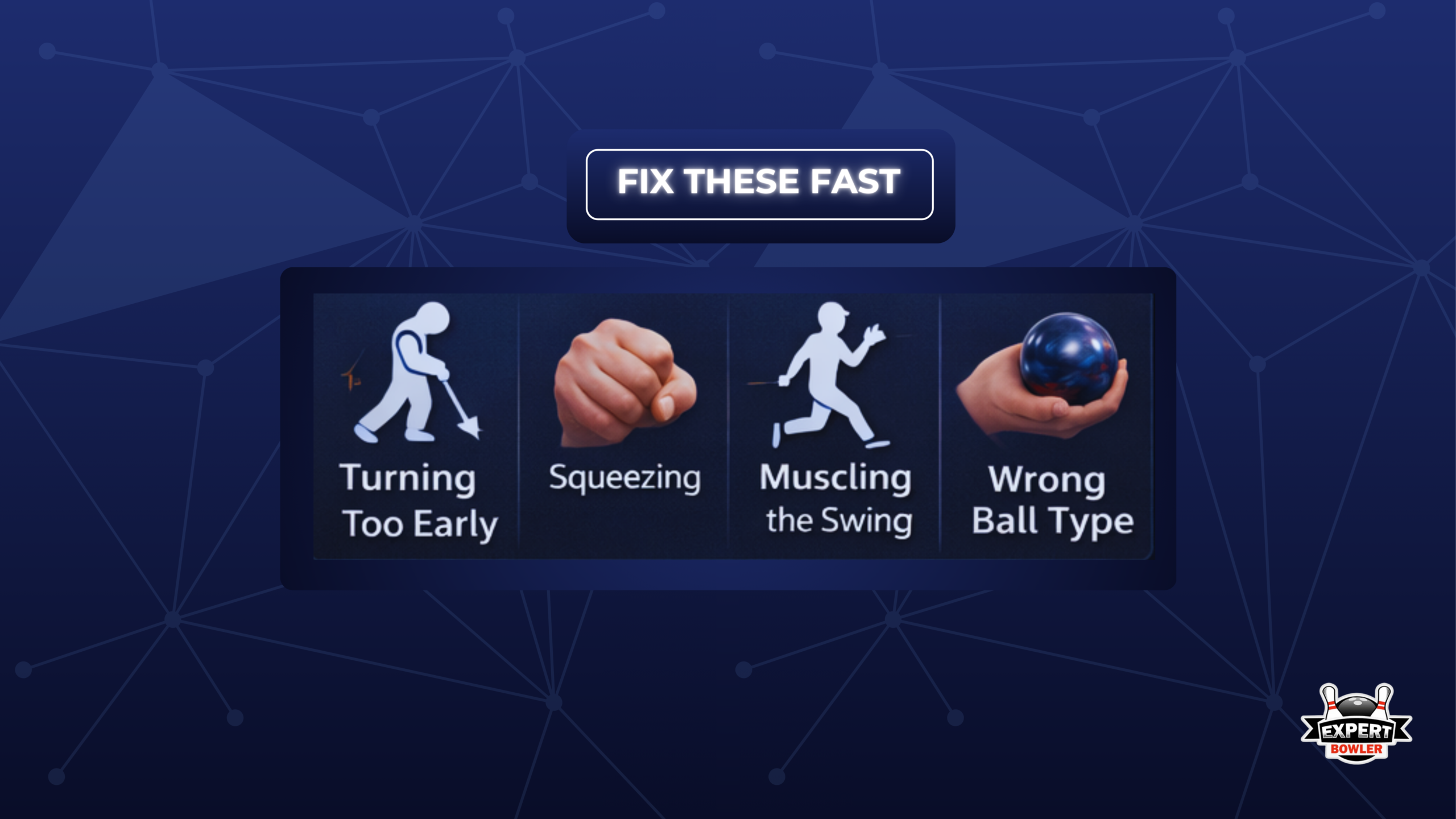
- Turning too early – When you start rotating before the swing bottom, you end up on top of the ball rather than behind it. This can put the hand on top of the ball and reduce useful leverage at release. Keep your hand behind longer and rotate only as your thumb exits.
- Squeezing the ball – Gripping too tightly creates forearm tension and inconsistent releases. The ball should feel secure without white-knuckling it. If you’re squeezing, your thumb probably doesn’t fit correctly.
- Muscling the swing – Your arm should swing freely from the shoulder like a pendulum, not be forced by your bicep. A heavily forced swing can make timing and speed harder to repeat. Let gravity do the work on the downswing.
- Wrong equipment – Trying to hook a plastic spare ball or using a weight too heavy for you makes learning unnecessarily difficult. If hook development is the goal, a properly fitted reactive ball at a controllable weight will generally give you more useful feedback than polyester.
Drills to Improve Your Bowling Ball Spin
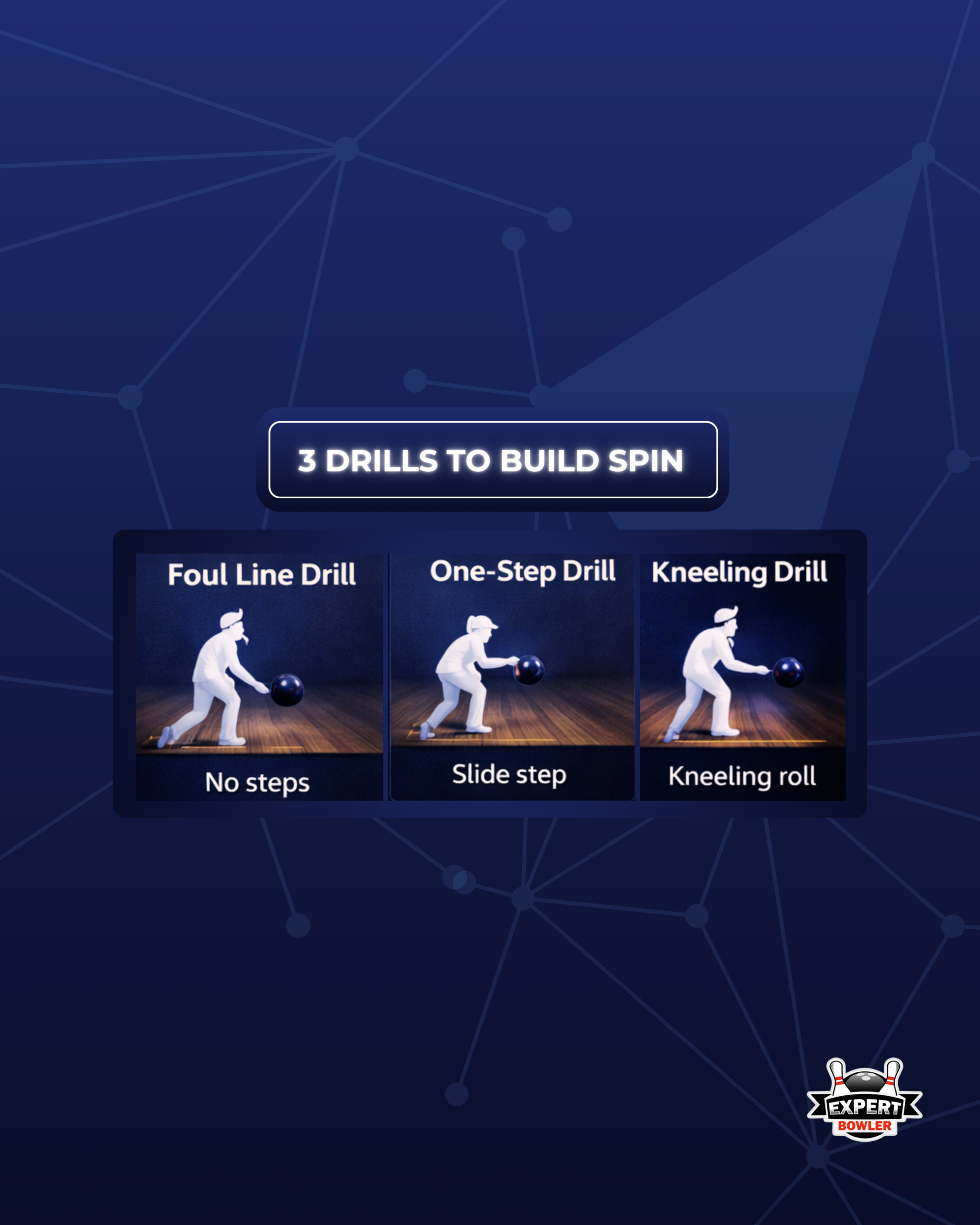
Reading about technique only takes you so far. The drills below reduce the number of moving parts so you can focus on specific elements of the release and timing.
Foul Line Drill
This removes most of the approach so you can focus more closely on the swing and release. Use a controllable ball and target the arrows rather than judging the drill only by pinfall.
One-Step Drill
Add a single slide step before release. Start from the fourth-step position with the ball already pushed away. This bridges the gap between stationary practice and full approach, helping you feel how footwork and armswing connect.
Kneeling Drill
This position can make swing-path changes easier to notice because the approach is removed. Use it only if the kneeling position is comfortable and safe for you.
Towel Drill (At Home)
This can help rehearse the hand path without ball weight, although it is only a feel drill and does not reproduce the forces of an actual release.
Light Ball Practice
Use a light object only to rehearse a relaxed rotation pattern; avoid forcing the wrist around the object or treating one exact rotation as universal.
Equipment for More Spin: Choosing the Right Ball & Fit
Technique comes first, but appropriate equipment removes obstacles. The ball you throw has a big effect on hook potential.
Coverstock has a major influence on how early the ball sees friction and how much total hook potential it has. Reactive resin creates more friction than polyester, but surface finish, core, speed, rev rate, and lane condition all affect the final motion. For learning hook, a controllable entry-level reactive ball is usually more useful than either polyester or very aggressive heavy-oil equipment.
The core design also affects motion. Symmetric cores, such as the Storm Tropical Surge, often produce a smoother and more readable shape, while asymmetric designs such as the Hammer Black Widow 3.0 can create more directional change. For a developing bowler, controllability and lane fit matter more than choosing a core type by label alone.
Get drilled by a pro shop operator who measures your hand and discusses your goals. Proper span, pitches, and hole sizes can make a clean release easier to repeat. If wrist position is difficult to control, a wrist support may help in some cases, but it should not replace fit or technique work.
Unlock Your Full Potential on the Lanes
Learning to create and control hook takes repetition. There is no useful universal timeline because fit, coordination, practice quality, coaching, and movement style all affect how quickly the release becomes repeatable.
Start with fundamentals. Get a ball that fits. Learn the grip. Practise the release without the full complexity of an approach, then add footwork back in gradually. Foul-line and one-step drills can make specific problems easier to isolate. Film yourself occasionally so you can compare what you felt with what actually happened.
Small changes can become more repeatable over time, but judge progress by what you can consistently execute rather than by a promised timeline. A controlled hook gives you more options for playing lane friction; it does not replace spare shooting, accuracy, or lane reading.
Ready to go deeper? Check out our guides on choosing your first bowling ball and understanding bowling ball oil patterns.
Related guides
- Best bowling balls 2026 — researched picks across skill levels
- How to read bowling lane conditions — the foundation of ball selection
- Best bowling shoes 2026 — slide consistency starts with your shoes
- Bowling spare shooting guide — pick up the 7-pin, 10-pin, and tricky splits
- Bowling ball cleaning & maintenance — protect your investment
Edited by Jeroen Kooij
Publisher & Editorial Director · Beginner Bowler
Jeroen sets ExpertBowler’s editorial standards and documents his own beginner development through recorded coaching sessions with NOC*NSF Master Coach Jack Edelaar. Technique guidance is separated between published sources, clearly attributed coaching lessons, and Jeroen’s own first-hand experience. Read how we research, learn, and update our content.
Editorial standards: Technique guidance is built from published bowling instruction and technical sources, then updated where clearly attributed lessons from recorded coaching sessions add useful context. We do not accept paid placements.
Updated: 2026.
Sources & references
- Published bowling instruction: USBC/Bowl.com materials and established technique references used to cross-check fundamentals
- Manufacturer documentation: official equipment specifications and technical guidance where ball construction is discussed
- First-hand coaching: clearly labelled lessons from recorded sessions with Jack Edelaar where they directly inform this article
- Linked external references: sources such as PBA, USBC and published profiles are linked directly where specific claims rely on them
- Community context: bowler discussions and owner reports may be used as supporting context, not as sole technical proof