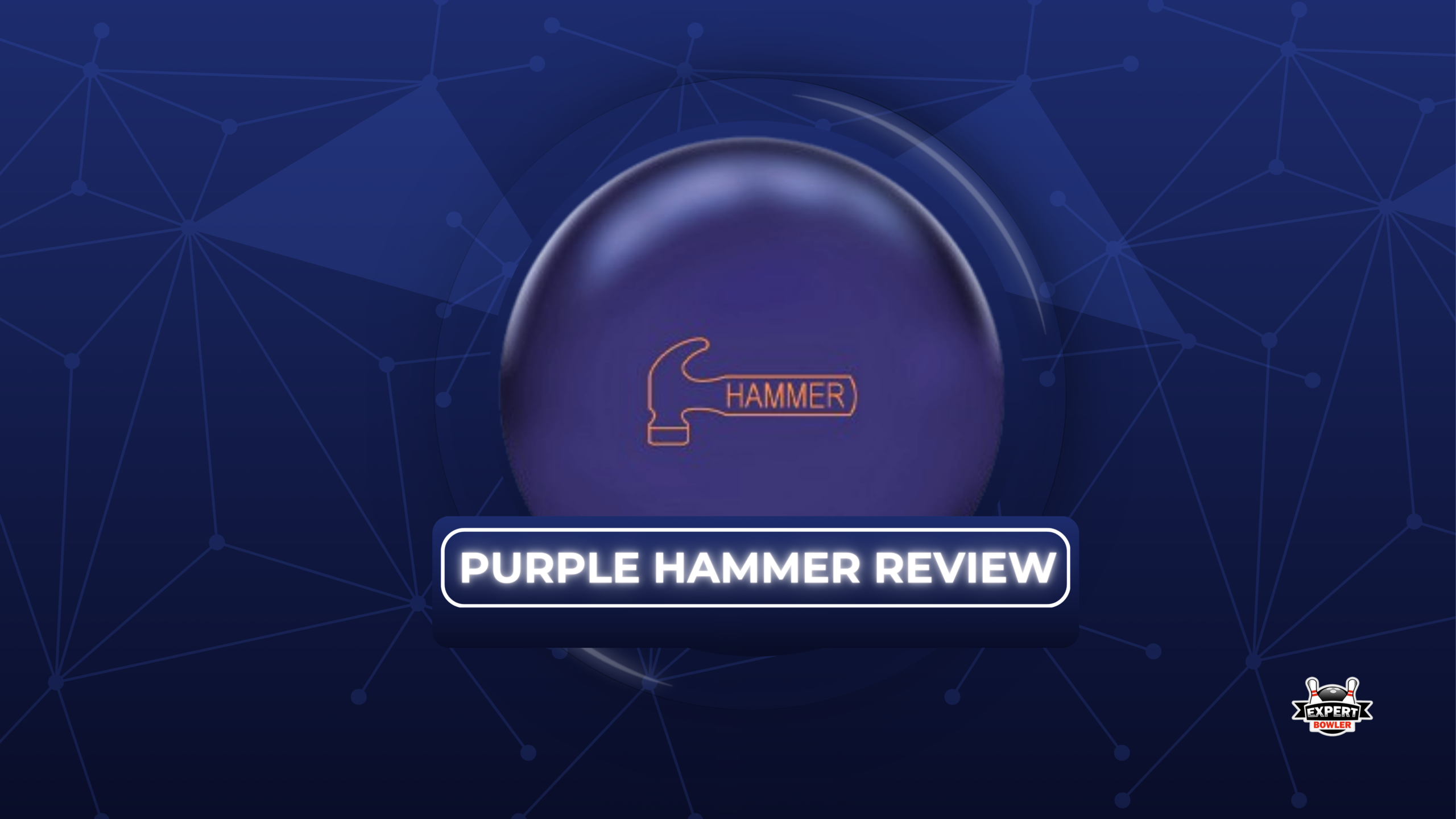
The Purple Hammer bowling ball occupies a strange space in modern bowling equipment. It costs half what premium balls do, uses outdated core technology by current standards, and it often struggles to create the same entry angle and carry that reactive resin can.
Yet tournament bowlers continue carrying it, two-handers rely on it when conditions get difficult, and league players ask about it constantly.
I have tested the current Brunswick version across multiple conditions with students ranging from strokers to two-handers, so it is time to share what we found.
What I want to give you in this Purple Hammer review is the complete picture of what the ball actually does on the lanes, who benefits from it, and when you should leave it in the bag.
This is not a universal ball, and understanding that distinction will save you money and frustration.
Quick Verdict
A strong choice for competitive bowlers, this ball delivers early read, continuous motion, and dependable performance as oil patterns begin to change.
Best for: Tournament bowlers, two-handed and high rev players (400+ RPM), managing transition and breakdown
Not ideal for: Fresh heavy oil, speed-dominant bowlers with lower revs, high-scoring house shots
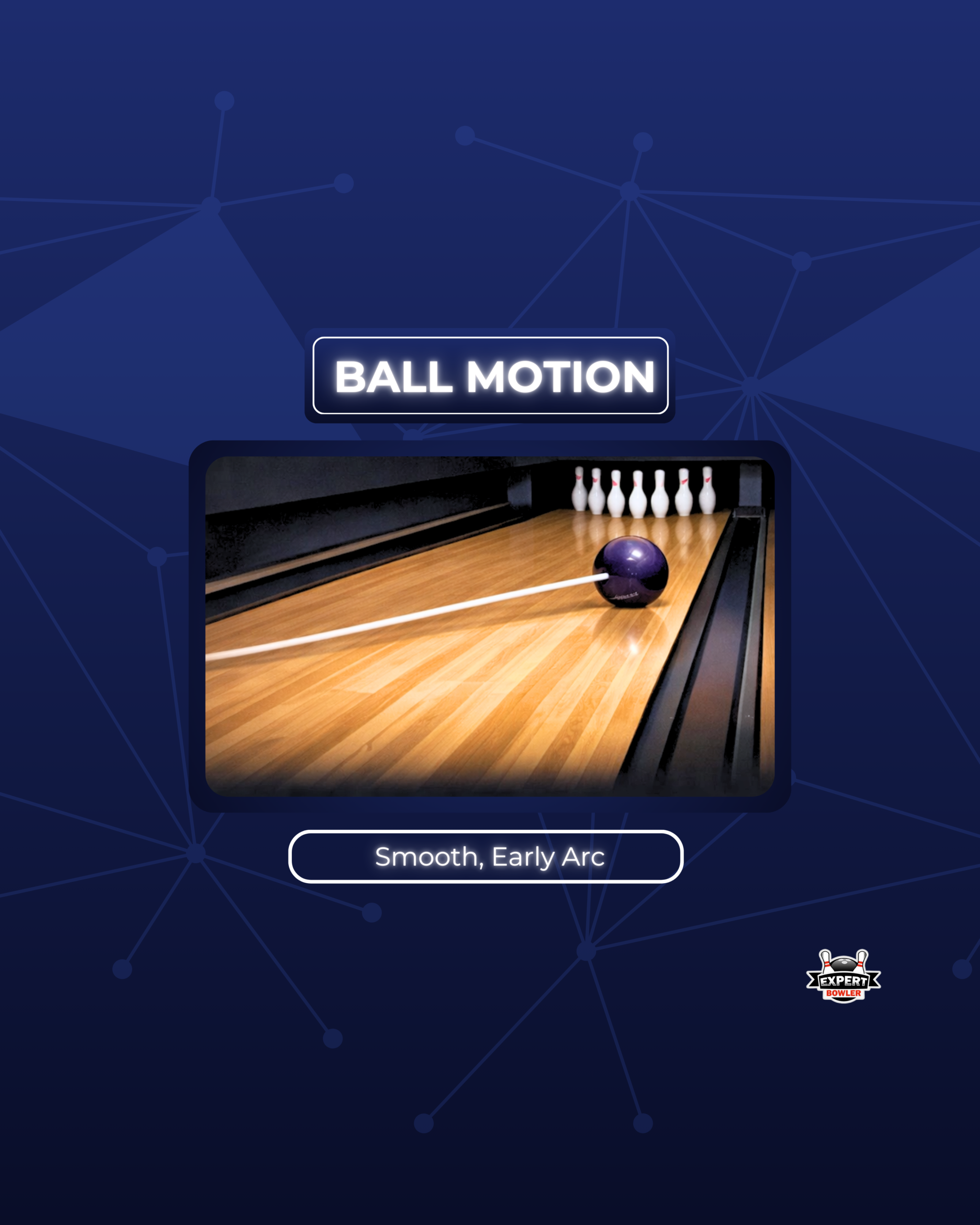
Hook shape/motion: Smooth, early, continuous arc with tighter entry angles and reduced backend snap
Best lane conditions: Transition, breakdown, sport patterns, medium to light oil volumes
The Enduring Appeal of the Purple Hammer
The Purple Hammer launched in 2016 under the original Hammer brand and developed an almost cult following among tournament bowlers. In November 2019, Brunswick acquired Ebonite International and all of its brands, including Hammer.
Brunswick continued producing the Purple Hammer, initially with green pin versions, then later updated to purple pin versions to meet refined PBA and USBC hardness specifications.
Both the Brunswick green pin and purple pin versions are legal for USBC-sanctioned play. The purple pin version is required for the PBA national tour competition for balls made after August 1, 2022.
The original EBI-made Purple Hammers from 2016-2017 (serial numbers starting with 6 or 7) are banned from USBC national tournaments, though local leagues and tournaments may adopt this rule at their discretion.
The debate around this ball continues because urethane itself divides opinions. Some tournament bowlers view it as essential for managing transition and controlling backends when the reactive becomes unpredictable.
Others see it as lane-killing equipment that conditions the pattern unfavorably and limits scoring pace.
The Purple Hammer sits at the center of this debate because it became the most recognizable urethane option in modern bowling. Understanding both perspectives helps you decide whether this ball belongs in your arsenal.
Purple Hammer Technology Breakdown
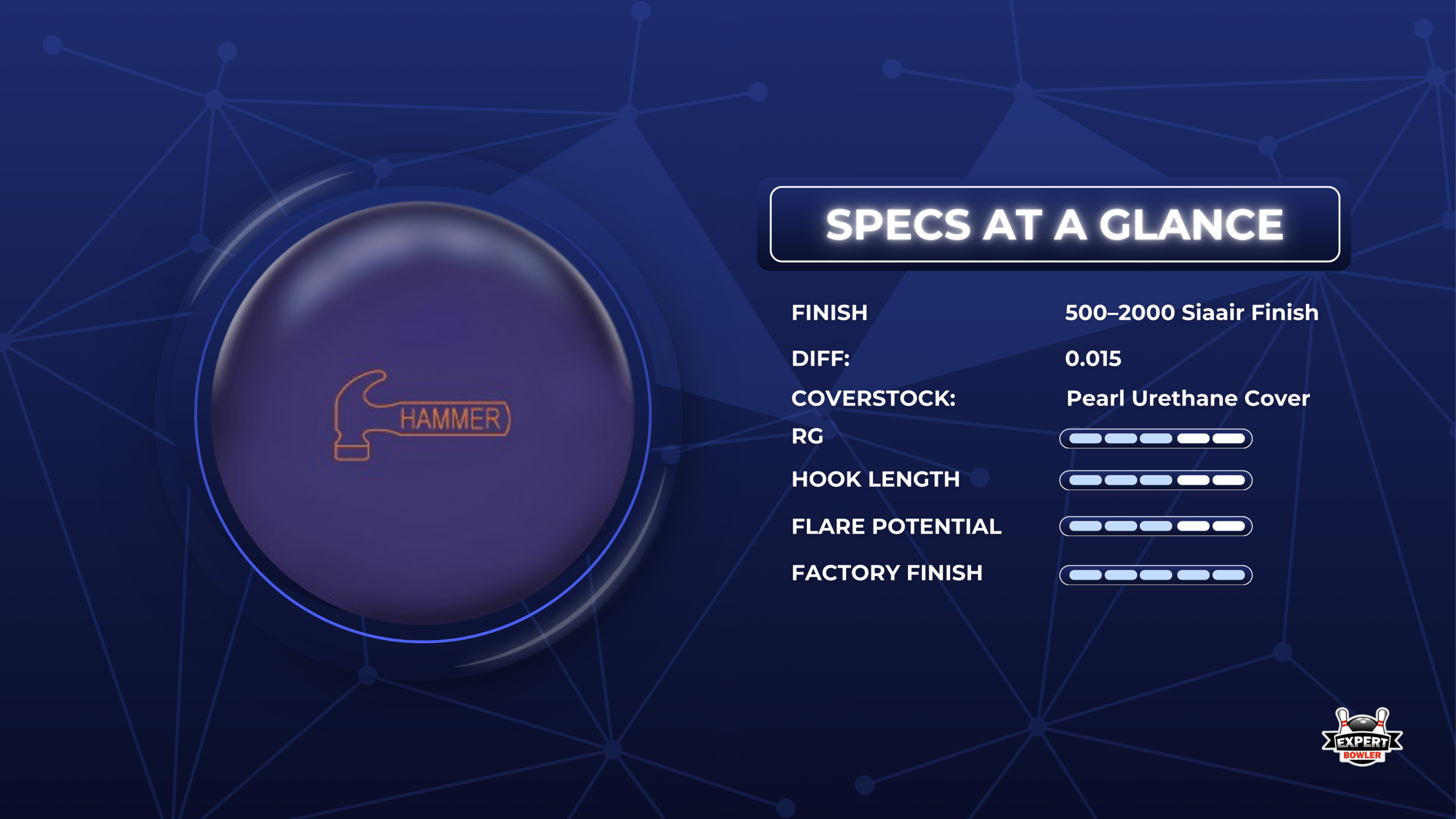
First, the numbers. We will look at a 15 lb ball.
Purple Hammer Technical Specifications
| Core | LED Symmetric |
| RG (15 lb) | 2.65 |
| Differential | .015 |
| Coverstock | Purple Pearl Urethane |
| Factory Finish | 500, 1000, 2000 Siaair |
RG: 2.65
Think of RG as how quickly the ball wants to rev up. The Purple Hammer’s extremely high RG means the mass is distributed away from the center, creating a core that resists changing direction. Translation? The ball wants to get down the lane before it starts hooking. That is exactly what you need in a urethane bowling ball to prevent it from burning up energy too early.
Differential: .015
This measures how much the ball will flare, and .015 is about as low as you will find in modern equipment. Low differential produces minimal track flare, maybe 2 inches compared to 6+ inches on premium balls. This involves smoother transitions at the breakpoint, rather than violent backend snaps that leave corner pins or blow the rack apart.
Lower flare means the ball does not burn up all its energy in the midlane, which is critical for continuation through the pins.
Purple Pearl Urethane Coverstock
The pearl additive is what separates this from solid urethane options. Solid urethane reads extremely early and can feel like it is laboring down the lane. The pearl formulation in the Purple Hammer gives you a cleaner look through the fronts, a few extra feet of length before the roll phase starts.
Best Lane Conditions for the Purple Hammer
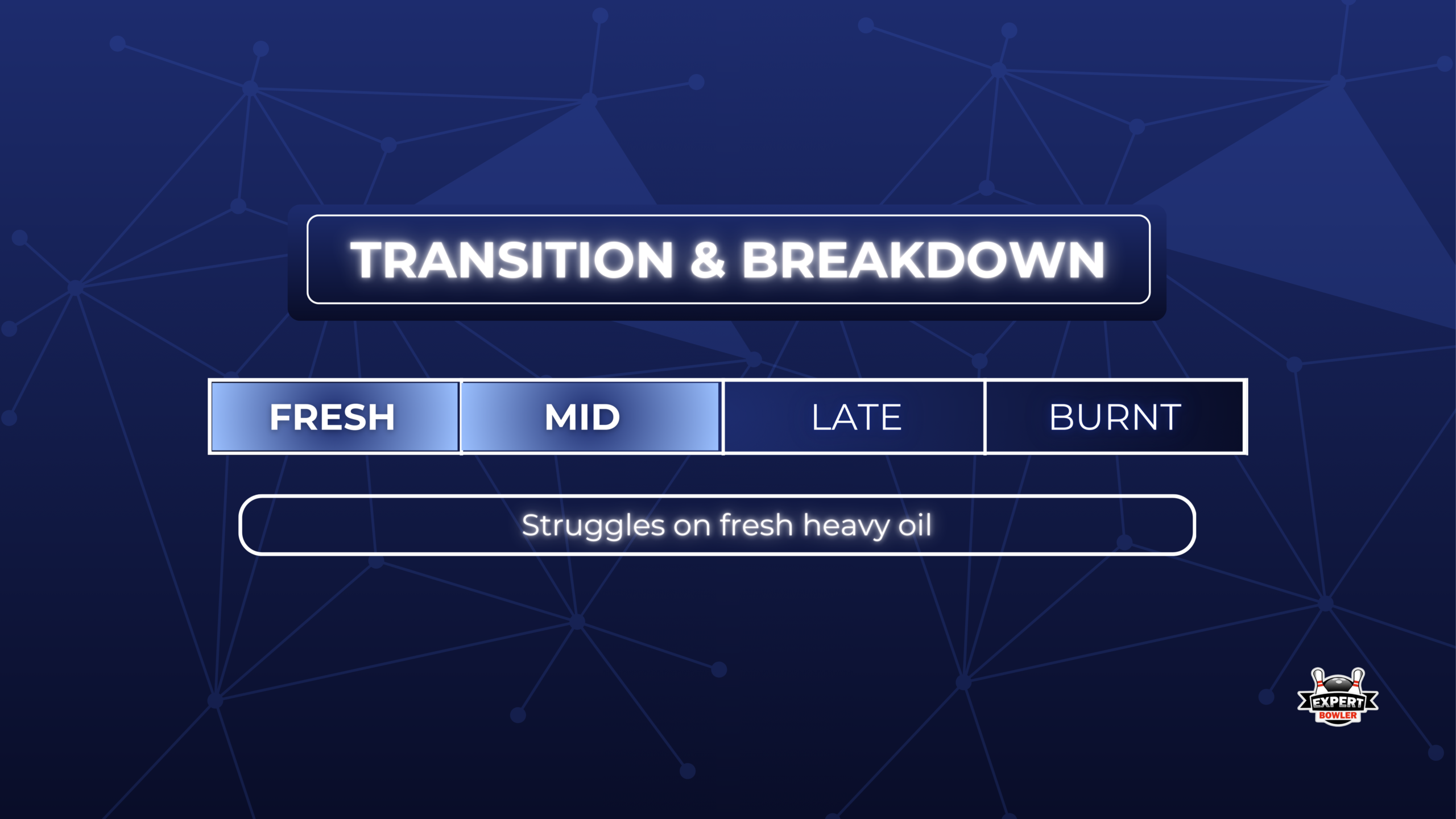
Fresh Higher Volume House Shots: This is where the Purple Hammer struggles most. On fresh patterns with 25+ mL of oil, the ball cannot generate enough entry angle or continuation to carry consistently. You will leave corner pins on good shots. Save this ball for later in your session.
Transition and Breakdown: This is where the Purple Hammer shines. After two to three games, when the track area has developed, and wet-dry has appeared, urethane’s ability to blend becomes invaluable. The Purple Hammer manages these conditions better than reactive equipment.
Sport Patterns: Flatter patterns with less side-to-side hold make this ball extremely useful. The controlled motion and predictable breakpoint help tournament bowlers manage difficult conditions. This is why PBA players keep it in their bags for specific situations.
Medium to Light Oil: Patterns in the 38-42 foot range with moderate volume suit the Purple Hammer well. You get enough friction to create motion without the ball burning up too early.
Performance on the Lanes — The Urethane Advantage
Hammer Purple Pearl Urethane
The Hammer Purple Pearl Urethane is designed to offer a more predictable and consistent ball motion than reactive resin equipment. It features an LED core and a Urethane Pearl coverstock that causes the ball to transition from skid to roll earlier on the lane, resulting in a smooth arcing motion. This design is specifically engineered for performance on light to medium oil lane conditions.

The Hammer Purple Pearl Urethane is engineered to provide a predictable and consistent ball motion, serving as a stable alternative to reactive resin equipment. By utilizing an LED core paired with a Urethane Pearl coverstock, the ball transitions from skid to roll earlier in its path. This early read creates a smooth arcing motion rather than an angular reaction, specifically suited for light to medium oil lane conditions.
- What it helps with: Minimizing side-to-side motion and maximizing forward roll for a flatter, more controlled path to the pocket.
- When it works best: On patterns where reactive equipment overreacts to friction, as this urethane coverstock is less sensitive to dry parts of the lane.
- When it’s not ideal: In high-volume heavy oil environments where the early transition can cause the ball to lose energy too quickly, or for players needing steep entry angles to carry strikes.
We conducted our most recent testing on a 40-foot house pattern with 23 mL of oil. Our initial alignment was feet at 20, eyes at 15, targeting 7 to 8 at the arrows. This is a fairly straight trajectory for most modern equipment, but with urethane, you want to minimize side-to-side motion and maximize forward roll.
The Coach Angle
The first thing I noticed was how early the ball started reading the lane compared to reactive resin. Unlike reactive that skids through the heads before making a sharp backend move, the Purple Hammer began its transition from skid to roll much earlier, creating a smooth arcing motion rather than an angular reaction.
The trade-off for this smooth motion is tighter entry angles to the pocket. Where reactive creates sharp angles that drive hard through the pins, urethane takes a flatter path. You need to be more precise with your targeting.
When I missed right into heavier oil, it read through and still came back to the pocket. When I tugged left into the friction, it did not overreact and go Brooklyn.
This is what bowlers mean when they talk about urethane blending wet and dry. Reactive sees sharp contrasts and responds with sharp changes. Urethane responds gradually over several feet.
What My Students Noticed
My stroker student, throwing 15 mph with about 320 RPM, found predictable motion playing around 18 at the arrows. Where reactive sometimes left him guessing on transition, the Purple Hammer rolled consistently.
My two-handed student, who generates somewhere around 450 RPM, lined up around the fourth arrow and wheeled the ball out to 10 at the breakpoint. The urethane gave him control over his massive rev rate in a way reactive could not match. He played a more direct line and created consistent entry angles.
After about two games, the Purple Hammer started affecting the lane surface. The urethane coverstock was pushing oil down the lane and creating carrydown in the track area. We both had to move 5 boards left to find fresher friction. That is not a flaw. That is what urethane does.
Who Is the Purple Hammer For?
The Purple Hammer is exceptional for specific situations and specific player types. It is not universal. Here’s what you need to know before going for it.
Tournament Bowlers on Sport Patterns
Sport patterns feature less side-to-side forgiveness than house shots, and transition can be severe. The Purple Hammer gives you a tool for managing that transition when reactive becomes too unpredictable.
I watched bowlers struggle through games three and four of tournament blocks with reactive equipment, fighting overreaction and erratic backends. They switched to urethane and immediately regained control.
If you compete in USBC tournaments or regional events, having quality urethane is essential.
Two-Handed and High Rev Players
If you generate 400+ RPM and find yourself standing 35 throwing out to 10 at the breakpoint, urethane allows you to move right and play straighter. This reduces deflection and increases margin for error despite tighter entry angles.
I have worked with several two-handers who improved strike percentage simply by learning when to trust urethane through transition rather than fighting their big asymmetric equipment.
Bowlers Facing Transition and Breakdown
When league bowlers have pushed oil down the lane over three games, the reactive can become jumpy and difficult to control. The Purple Hammer’s early read and smooth motion become significant advantages. You are not fighting the condition. You are managing it with predictable equipment.
When the Purple Hammer Becomes the Wrong Choice
Fresh house shots with heavy oil volume are where this ball struggles. It does not have the horsepower to get through the pattern and create the entry angle needed for consistent carry.
You will leave the corner pins. You will struggle with light hits that deflect. Save the Purple Hammer for when lanes begin to transition.
Speed-dominant bowlers with lower rev rates also need caution. If you generate 300 RPM or less with good ball speed, urethane’s early read can cause the ball to burn up energy in the midlane.
You will watch it hook early and then lose motion before it reaches the pins. You would be better served with a weak reactive or polished urethane that gives you more length.
Pros and Cons of the Purple Hammer
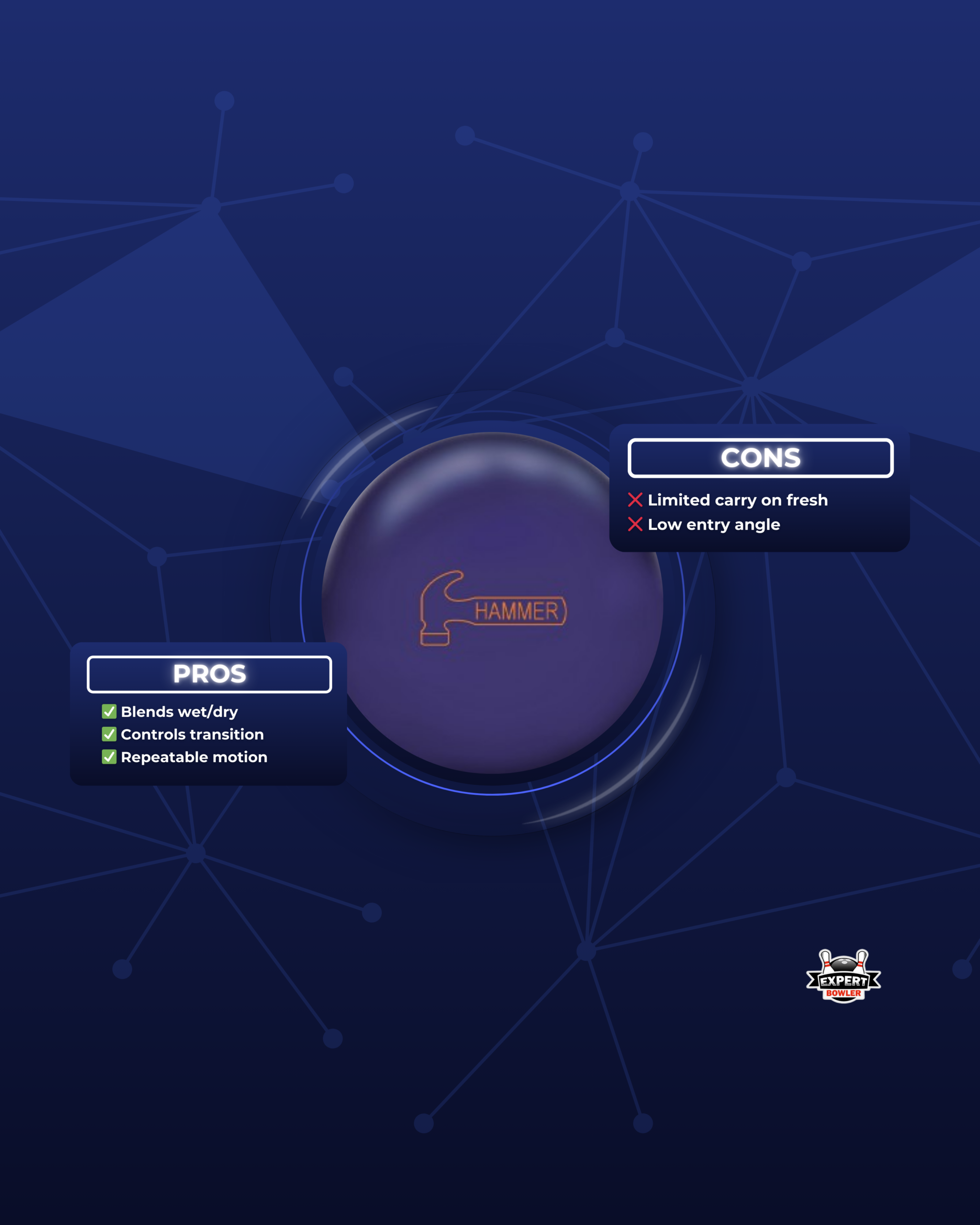
Understanding the pros and cons of the Hammer Purple Pearl Urethane helps bowlers decide if its smooth, controlled reaction fits their playing style and lane conditions.
Pros of the Purple Hammer
- Gives you control when the reactive becomes unpredictable on transition and broken down lanes
- Delivers the same predictable motion shot after shot without guessing where the ball will go
- Reduces overreaction to wet-dry transitions by blending smoothly instead of snapping violently
- Tournament proven as PBA players continue carrying it for managing difficult conditions
Cons of the Purple Hammer
- Limited carry-on heavier oil means you will struggle on fresh house shots with volume
- Lower margin for error for rev-dominant bowlers who can overpower the motion on shorter patterns
- Not ideal for high-scoring house shots where reactive’s power and entry angle produce better results
Purple Hammer vs. Reactive Resin Balls
The purple hammer vs reactive debate comes down to physics. Reactive resin coverstocks skid through oil, store energy, and release it violently at the backend. This creates significant length, sharp breakpoints, and aggressive entry angles.
You can strike from a wider range of positions, and the ball drives through pins on less-than-perfect hits. The challenge appears when conditions transition, and wet-dry areas develop. The same power that works on fresh conditions becomes unpredictable on breakdown.
The Purple Hammer operates differently. The urethane coverstock creates friction much earlier, beginning its transition from skid to roll sooner. This creates continuous motion rather than a delayed reaction.
You sacrifice backend violence for consistency. Your entry angle will be flatter, and you need more accurate targeting, but ball reaction becomes repeatable even when the lane condition is changing.
Purple Hammer vs. Other Urethane Balls
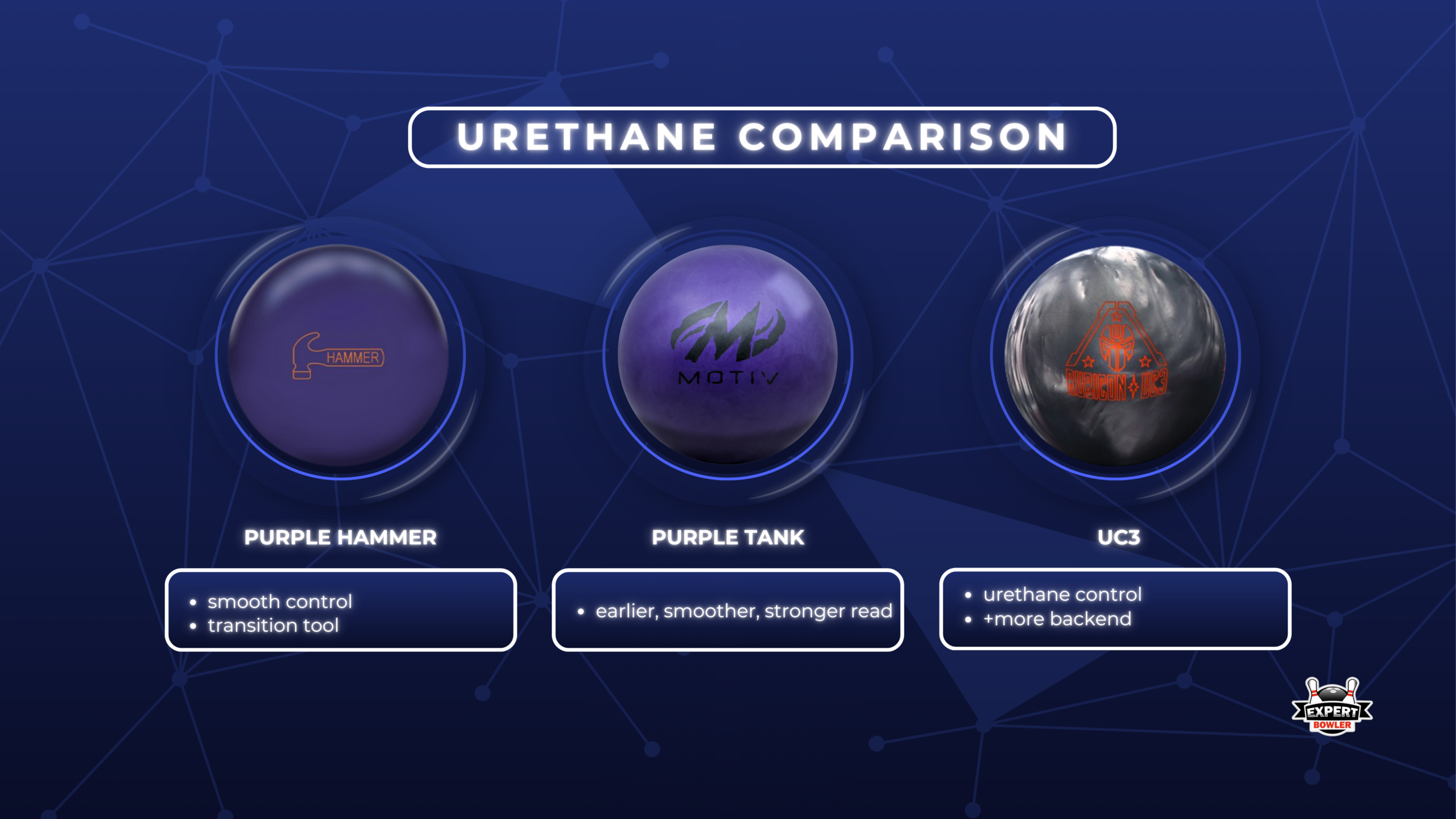
Within the urethane category, different balls offer different approaches to control. Here is how the Purple Hammer compares to other quality urethane options.
Urethane Ball Comparison
| Ball | Coverstock | Motion | Best For |
| Purple Hammer | Pearl Urethane | Smooth, controllable | Tournament transition |
| Motiv Purple Tank | Solid Urethane | Earlier, smoother | High rev control |
| Roto Grip Rubicon UC3 | Hybrid Urethane | More backend | Control with power |
Motiv Purple Tank represents traditional solid urethane. It reads the lane earlier than the Purple Hammer and creates a smoother, more continuous roll. For bowlers with very high rev rates who want maximum control, the Purple Tank is excellent. The motion is so smooth it almost looks lazy.
Roto Grip Rubicon UC3 uses modern chemistry and a stronger core that pushes it closer to hybrid territory. You get urethane control through the fronts, but significantly more backend. The UC3 is less predictable than the Purple Hammer but more powerful.
Conclusion — Is the Purple Hammer Still Worth It?
Hammer Purple Pearl Urethane
The Hammer Purple Pearl Urethane is designed to offer a more predictable and consistent ball motion than reactive resin equipment. It features an LED core and a Urethane Pearl coverstock that causes the ball to transition from skid to roll earlier on the lane, resulting in a smooth arcing motion. This design is specifically engineered for performance on light to medium oil lane conditions.
The Hammer Purple Pearl Urethane is engineered to provide a predictable and consistent ball motion, serving as a stable alternative to reactive resin equipment. By utilizing an LED core paired with a Urethane Pearl coverstock, the ball transitions from skid to roll earlier in its path. This early read creates a smooth arcing motion rather than an angular reaction, specifically suited for light to medium oil lane conditions.
- What it helps with: Minimizing side-to-side motion and maximizing forward roll for a flatter, more controlled path to the pocket.
- When it works best: On patterns where reactive equipment overreacts to friction, as this urethane coverstock is less sensitive to dry parts of the lane.
- When it’s not ideal: In high-volume heavy oil environments where the early transition can cause the ball to lose energy too quickly, or for players needing steep entry angles to carry strikes.
After months of testing the current Brunswick iteration across multiple conditions and player styles, this ball deserves its reputation, but only if you understand what you are purchasing.
The Purple Hammer will not fix mechanical problems, make you strike on heavy oil, or outperform reactive resin on fresh conditions. What it does is give you control when lane conditions become difficult to read, allows high rev players to play straighter angles, and manages transition better than reactive equipment.
If you average 150 and bowl once a week on heavily oiled house shots, you do not need this ball. But if you are pushing toward 200 average and beyond, compete in tournaments, or have experienced reactive becoming unpredictable on transition, the Purple Hammer is one of the most proven urethane bowling balls when urethane makes sense.
Last update on 2026-03-22 / Affiliate links / Images from Amazon Product Advertising API