How to Read Bowling Lane Conditions (Oil Patterns Explained)
By Jeroen Kooij, Editor · Updated 2026
You throw the same shot you did last frame. Your approach felt good, the release was clean, and you hit your target. But this time, your ball skids past your breakpoint and leaves a flat 10. The lane changed on you, and reading bowling lane conditions is the only way to stay ahead of it.
The single biggest difference between a bowler stuck at 175 and one pushing 200 is lane awareness.
Your physical game might be solid, but if you cannot read what the oil is doing, you are bowling blind.
It’s time to break down everything you need to know about bowling oil patterns and how to adjust when conditions shift.
What we cover in this guide
- Why Understanding Bowling Lane Conditions Changes Your Game
- The Basics: What is Bowling Lane Oil and Why Is It There?
- How to Identify Common Oil Patterns
- Reading the Signs: How Your Ball Tells You About the Lane
- Matching Your Equipment to the Condition
- Frequently Asked Questions
- Key Takeaways for Your Next League Night
Why Understanding Bowling Lane Conditions Changes Your Game
A common mistake among league bowlers is blaming themselves when shots stop working. They assume their release changed or their timing is off. Nine times out of ten, the lane moved on them, and they did not notice. Learning to read oil patterns separates bowlers who adapt from those who struggle.
A 2025 physics study published in AIP Advances confirmed a long-standing observation. Researchers found that bowlers and coaches typically rely on experience and instinct, which is “often imprecise and suboptimal.”
The Basics: What is Bowling Lane Oil and Why Is It There?
Every bowling center applies oil to its lanes. If you have ever noticed the slick residue on your ball after it comes back through the return, that is lane conditioner doing its job. Understanding why oil exists and how it affects your ball is the foundation for reading any pattern.
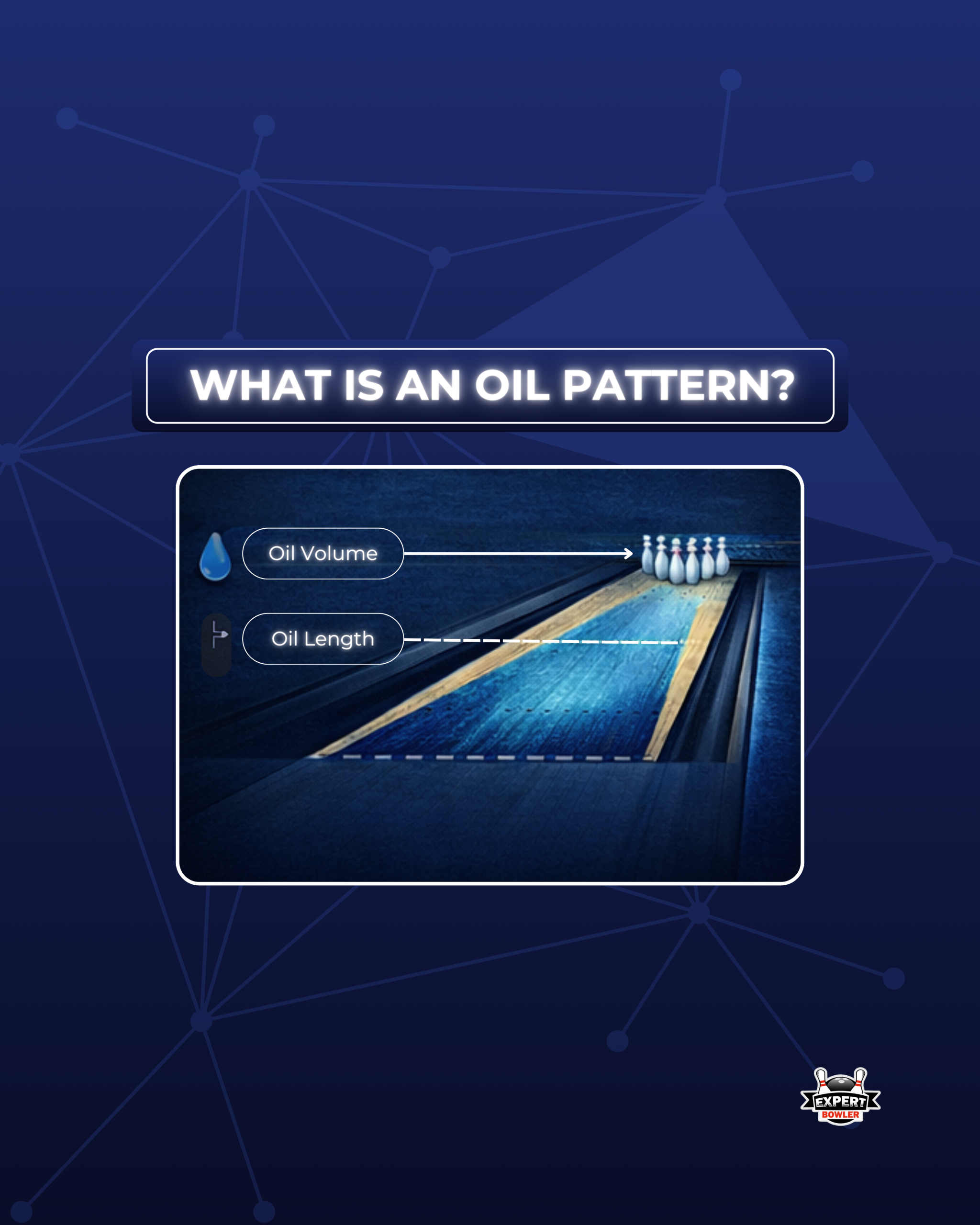
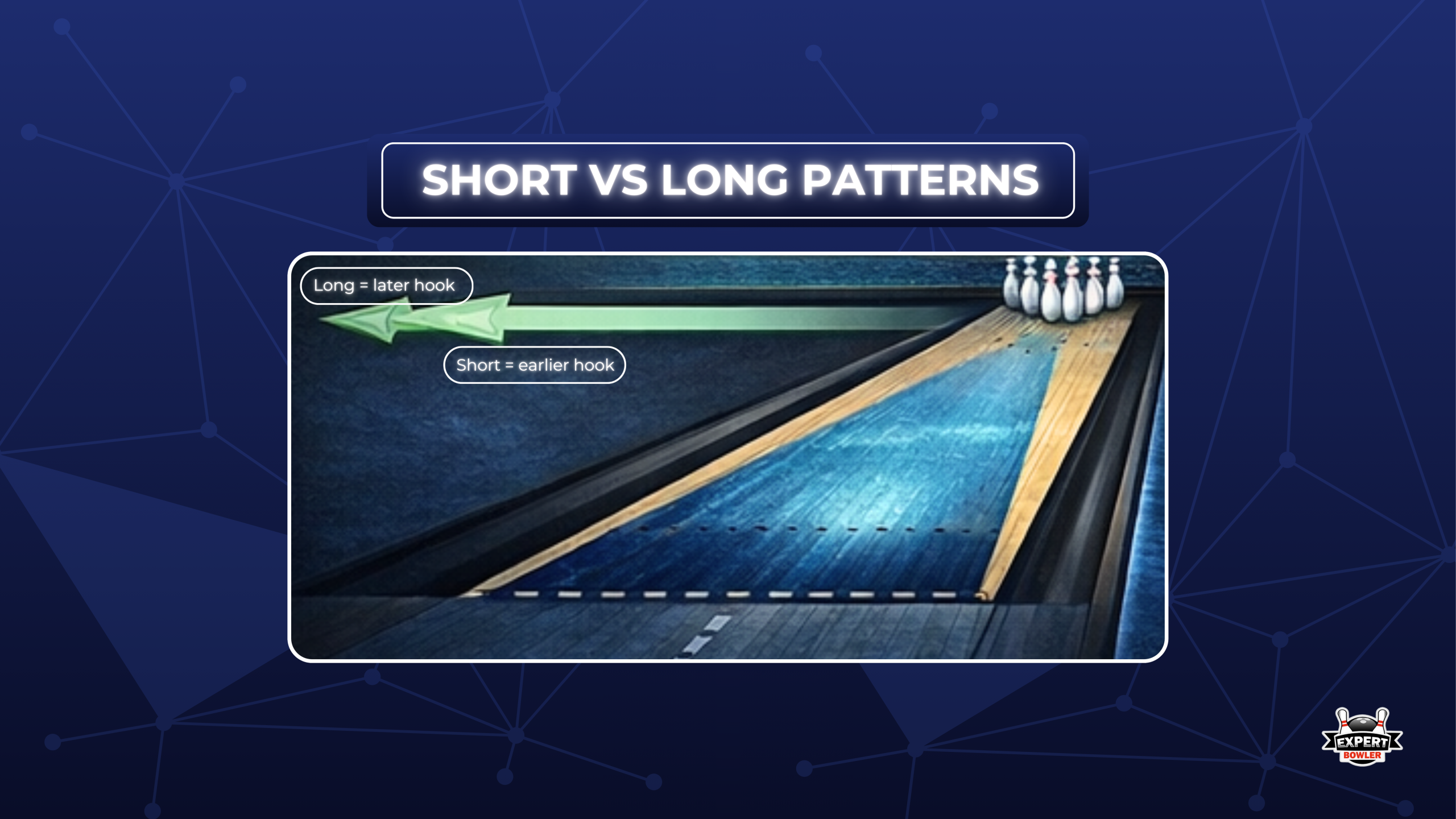
Oil serves two purposes. First, it protects the lane surface from friction damage. Second, and more important to your game, it controls ball reaction. According to USBC guidelines on oil patterns, the length of the pattern determines how much your ball can hook, while the placement of oil across the lane width determines how forgiving or demanding the shot plays.
Here is a simple way to think about it. Oil creates a skid. Dry boards create friction. Your ball slides through oil and hooks on dry. Every adjustment you make during a session comes down to finding the right balance between those two things.
If the lane is changing quickly or your strike ball is reacting too much to the friction, a dedicated spare ball for dry or changing lanes can give you a much more predictable straight-line option. That makes it easier to stay controlled when the pattern starts breaking down during the set.
The Purpose of Oil: Skid, Hook, and Roll
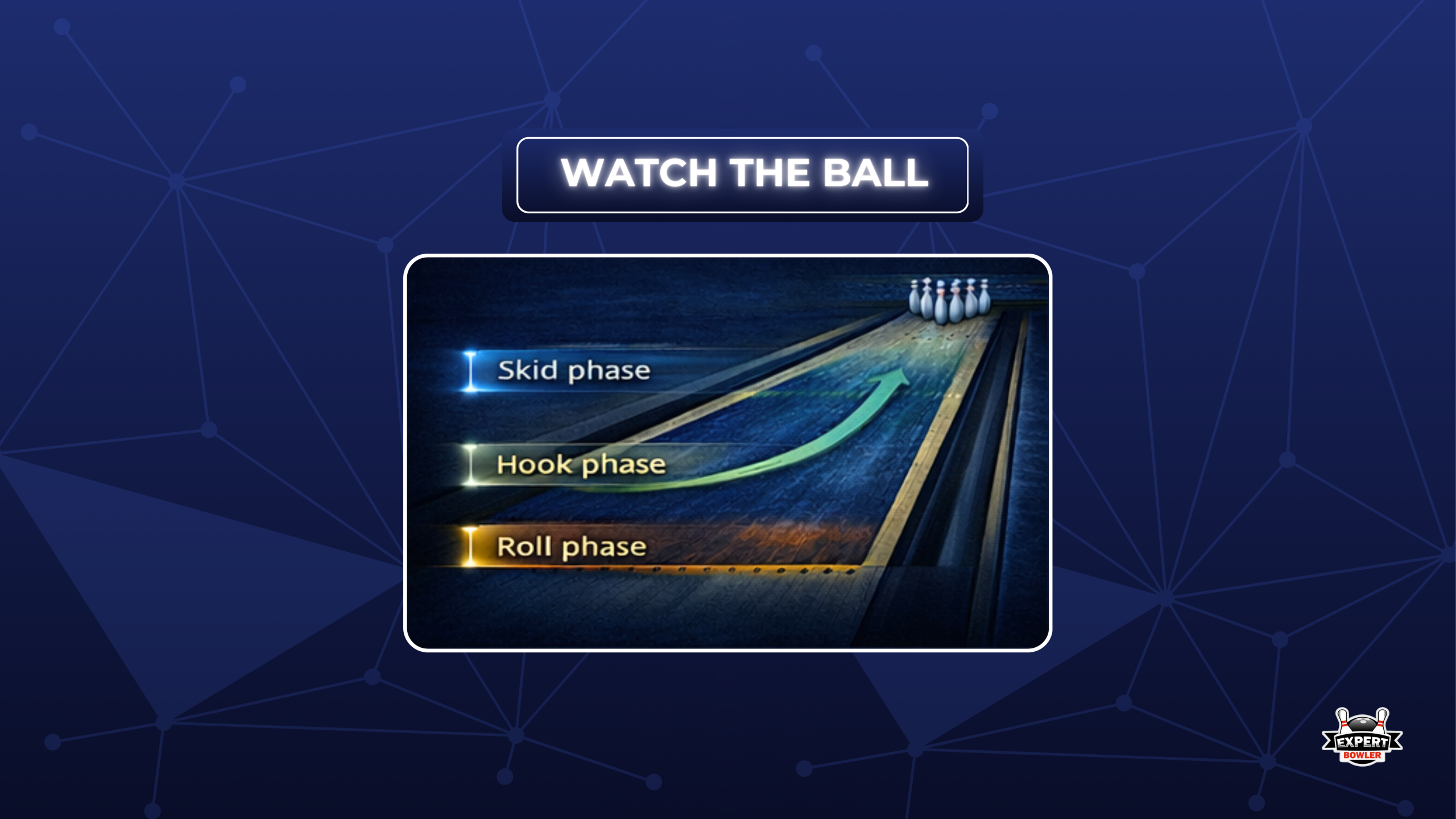
Your bowling ball travels through three phases on every shot.
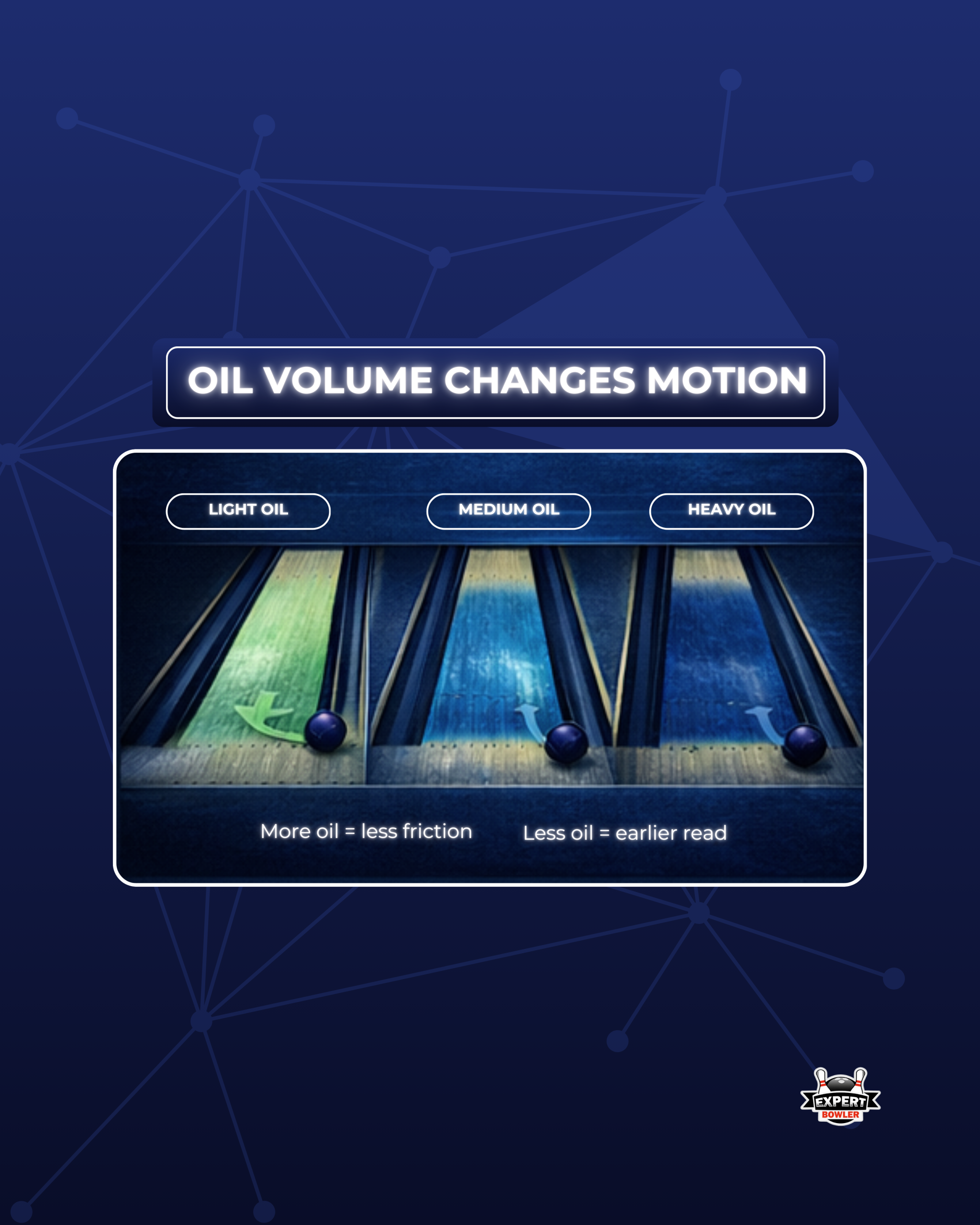
In the skid phase, your ball slides through the oiled portion of the lane. The oil reduces friction and keeps the ball traveling on its initial line. This is where the pattern holds your shot.
Once the ball reaches thinner oil, it enters the hook phase. The friction increases, and the rotation you put on the ball at release takes over. The ball changes direction toward the pocket.
Finally, in the roll phase, the ball locks into its final path and heads straight for the pins.
When a ball is reacting strangely, it helps to think about which phase went wrong. Did the ball hook too early? That points to the skid phase being cut short. Did it never really commit to the hook? That means friction came too late.
Key Areas of an Oil Pattern (Heads, Mids, Backends)
It helps to break the lane into three zones.
The heads are the first 20 feet, where the heaviest oil concentration usually sits. This protects the high-impact area where your ball lands after release.
The mids span from about 20 to 40 feet, where oil starts to taper. Your ball begins reading the lane here, and small differences in oil volume show up in ball reaction.
The backends cover the final 20 feet and typically have little or no oil. This dry area creates the friction needed for your ball to hook into the pocket.
Your breakpoint is the spot where your ball exits the oil and commits to its hook. The Rule of 31 gives you a starting estimate. Subtract 31 from the pattern length to find your approximate breakpoint board. On a 40-foot pattern, that puts your breakpoint around the 9 board.
How to Identify Common Oil Patterns
One question I get constantly is how to tell what kind of pattern you are bowling on. The truth is, most league bowlers never see a pattern sheet. You have to read the lanes through ball reaction. But knowing the general categories helps you start in the right place.
The House Shot vs Sport Shot Difference
The typical house shot runs 38 to 42 feet with an oil ratio around 8 to 1 or higher. Heavy oil sits in the middle of the lane while the outside boards stay relatively dry. This creates a forgiving condition that most league bowlers know well.
I call this the funnel effect. Miss your target to the outside, and the dry boards grab your ball and hook it back toward the pocket. Miss to the inside, and the extra oil holds your ball from over-hooking.
You have room to be slightly off and still carry. A lot of bowlers are surprised to learn that the house shot is designed to help them score. It is not cheating. It is just how recreational bowling works.
What Makes Sport Patterns So Challenging
Sport shots are a different animal entirely. According to USBC Sport Bowling guidelines, sport patterns have an oil ratio of 4 to 1 or lower. That means more oil on the outside boards and less forgiveness when you miss your target.
The PBA uses animal patterns that vary widely in length and shape. Shorter patterns like the Cheetah at 33 feet and the Wolf at 32 feet force you to play outside lines near the gutter.
Longer patterns like the Shark at 48 feet demand straighter angles with less hook. Each pattern requires a different approach, and what works on one can completely fail on another.
When league bowlers try sport shots for the first time, averages commonly drop 25 to 35 pins. The margin for error shrinks dramatically.
What are “Burned” or “Dry” Lanes?
First, what is a fresh oil pattern? This oil pattern plays very differently from a pattern that has been bowled on for two hours. It pays to pay attention to timing.
Early in league night, the lanes are fresh, and your ball will skid longer. By game three, the pattern has broken down, and your ball will grab earlier.
Signs of burned lanes include your ball hooking sooner than expected, visible track marks where the oil has been stripped away, and less hold area on the inside. If you are dealing with dry conditions, our best dry lane bowling balls guide covers the right options. For a straighter option on burned or dry lanes, see our best spare bowling balls guide.
Best Bowling Balls for Medium Oil 2026
The right ball for your oil is half the battle — see our medium-oil picks below.
Reading the Signs: How Your Ball Tells You About the Lane
Your bowling ball is constantly sending you information. The key is learning to translate what you see into the right adjustment. If you want more coaching-style lane-reading and adjustment guidance, our pro guides and techniques hub is a useful place to start.
Early Hook: What It Means and How to Adjust
If your ball grabs in the midlane and never makes it to your breakpoint, or if it hooks high into the headpin, you are seeing oil breakdown. The front part of the lane has lost its slickness, usually from multiple reactive balls passing through the same track.
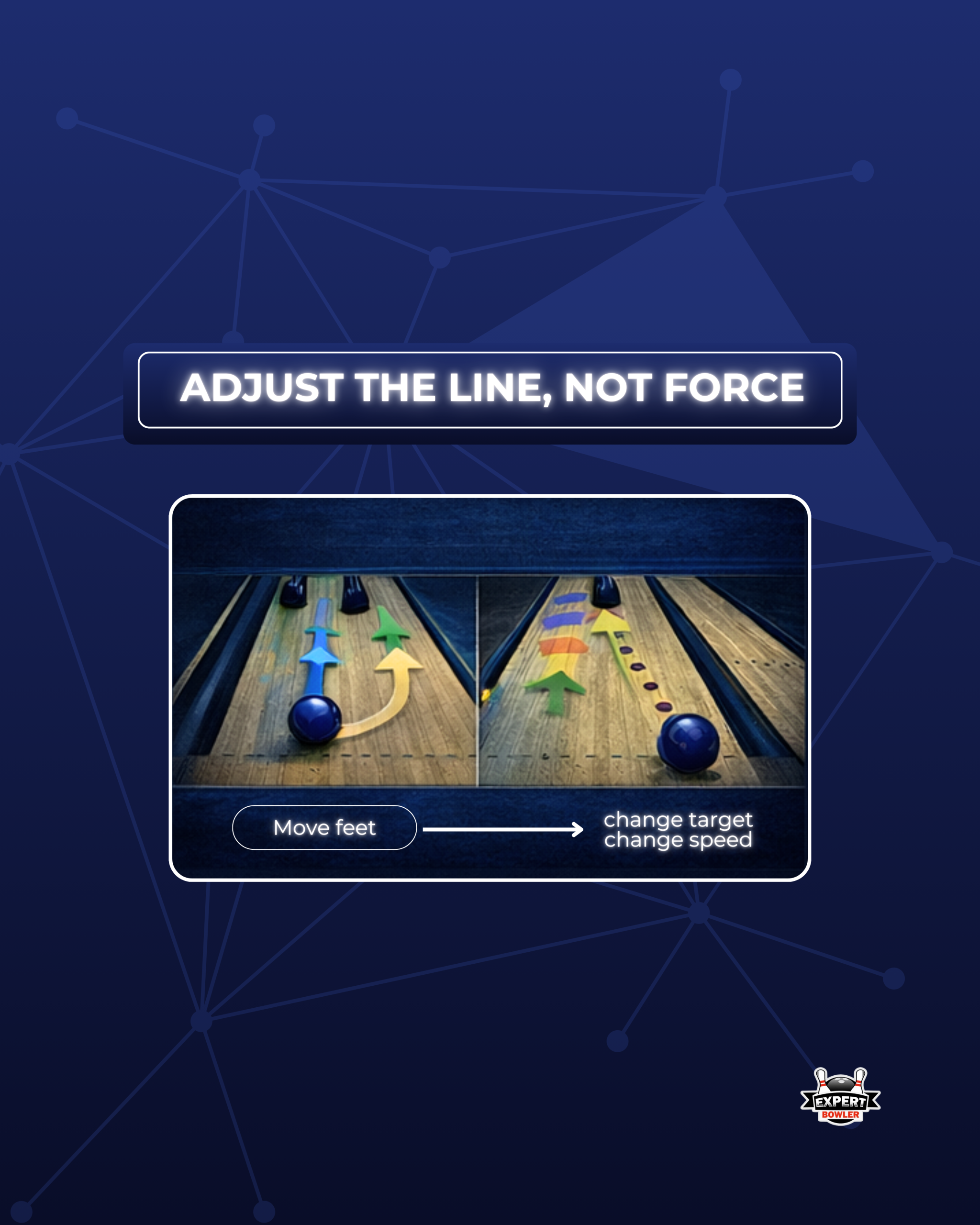
The fix is to find more oil. Move your feet a couple of boards left to get your ball into fresher territory. If that is not enough, try adding ball speed to push through the dry heads.
Some bowlers also benefit from switching to a ball with a smoother coverstock that will not read the friction as aggressively.
Late Hook (Skidding Too Far): What It Means and How to Adjust
The opposite problem is a ball that never commits to its hook. It slides past the breakpoint, enters the pocket weak, and leaves flat corners. This usually means carrydown. Oil from the front of the lane has been pushed onto the previously dry backends.
To fix this, move right to find boards with less carrydown. You can also slow down your ball speed to give the coverstock more time to read the friction.
If those adjustments are not working, switching to a ball with more surface texture often helps cut through the extra oil on the backends.
Recognizing Carry-Down and Breakdown
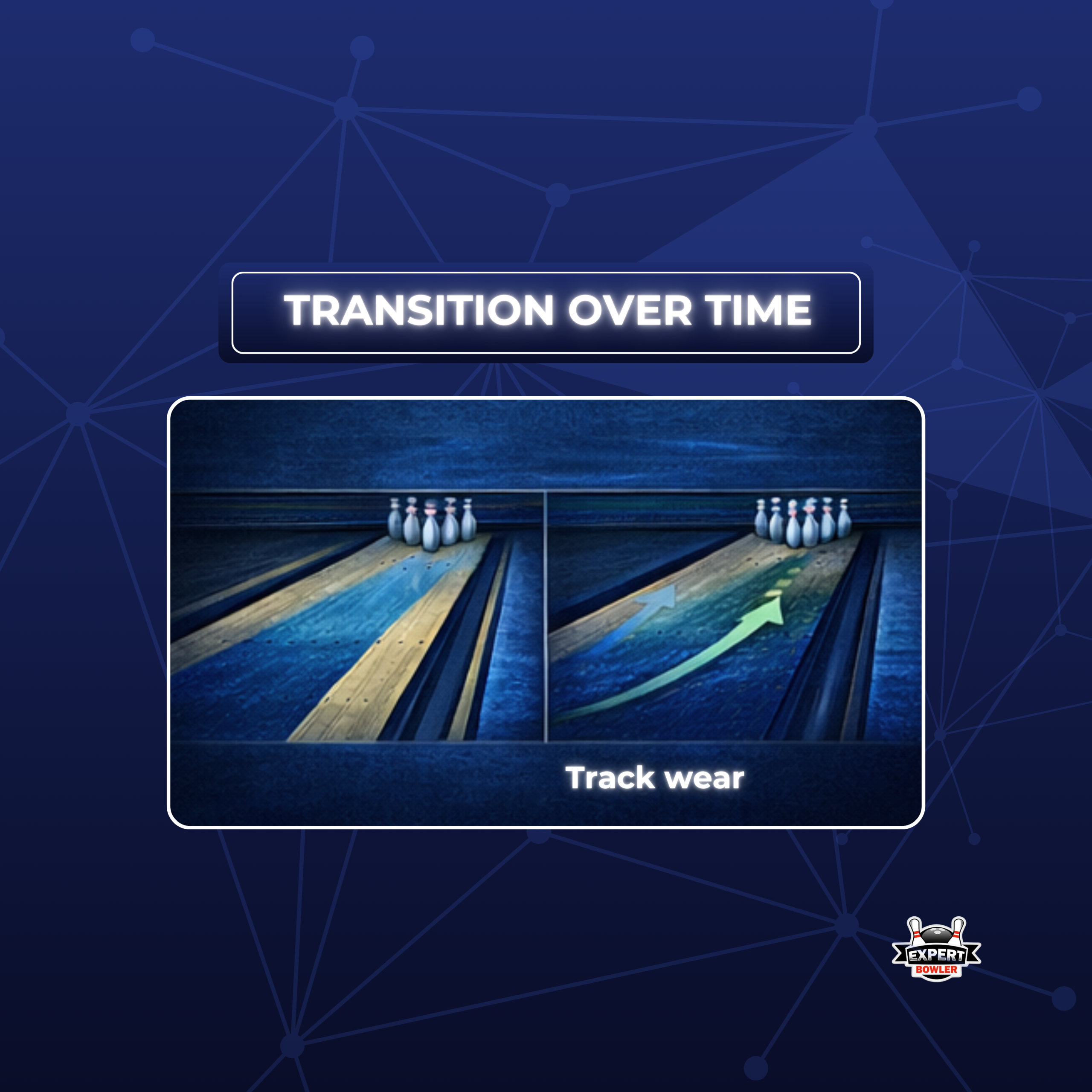
Here is something that trips up a lot of bowlers. Lane transition is usually a bowling lane breakdown and carrydown happening at the same time in different parts of the lane. The heads get stripped of oil while the backends get slick from carrydown.
A telltale sign is a ball that hooks early in the mids, then seems to check up and slide, then tries to hook again at the pins. You are seeing friction, then extra oil, then dry again.
When the lane gets this choppy, an equipment change often works better than trying to find a line that threads through all those variables.
From our coaching sessions
“There's oil down the middle and much less of it out by the edge. You want to use that oil to create a skid phase that is long enough. If the ball reaches the drier outside too early, the skid phase is too short, the ball starts hooking too soon, and you either miss the pocket or the ball has already burned up — it has lost its energy. That's why you play it through the middle first and only get out to the edge late.”
Jack Edelaar — NOC*NSF Master Coach; former national coach of the Dutch youth, junior elite and women's teams and of the Czech national team. Said during a coaching session with us, August 2026.
The practical value of that instruction is that it turns a lane reading into a decision. Once you can see where the oil sits, the question is no longer “which pattern is this” but “how long a skid phase do I need, and does my line give me one?”
Reading the lanes only gets you halfway there. You also need equipment that matches what you are seeing. A well-built arsenal that covers different conditions comes down to matching coverstock strength to oil volume.
When to Use a Ball for Heavy Oil
On heavy oil, you need a ball that can get through the slick and still store enough energy to drive through the pins. Solid coverstocks with lower grit surfaces in the 500 to 1000 range work well because they create early friction. Strong asymmetric cores help the ball make a defined move off the pattern.
For our top recommendations in this category, check out our guide to the best bowling balls for heavy oil.
When to Use a Ball for Medium Oil
Most house shots fall into the medium oil range, and this is where versatile equipment shines. Hybrid coverstocks give you enough length through the fronts while still gripping the backends. Symmetric cores produce predictable, repeatable motion that is easier to control. If you want specific recommendations for that condition, see our guide to the best bowling balls for medium oil lanes.
When a Pearl Coverstock Shines
Pearl balls are your answer for light oil, dry lanes, or lanes with heavy carrydown on the backend. The pearl additive creates a slicker surface that pushes through oil instead of absorbing it. You get more length and a sharper move at the breakpoint.
Think of a pearl ball as the closer. When your solid reactive starts hooking too early because the heads have broken down, the pearl gets you through with a cleaner look.
Frequently Asked Questions
Key Takeaways for Your Next League Night
Use your practice shots wisely. Throw a few balls to different parts of the lane to map where the oil is before the games count. Watch your ball reaction for signs of early hook or extended skid. When you need to make a move, start small. A two-board adjustment with your feet is usually enough to test whether you are on the right track.
The biggest thing I want you to take away is that lane conditions never stay the same. What works in game one will probably need adjustment by game three. The Rule of 31 gives you a starting point, but your ball tells you the rest. Treat every shot as new information about what the pattern is doing. Now that you understand how to read oil patterns, the next step is matching equipment to what you see. Our guide to the best bowling balls covers picks across skill levels, and our breakdown of the best bowling ball brands explains where each manufacturer’s lineup fits — so you can build an arsenal that handles whatever the pattern throws at you.
Related guides
- Best bowling balls 2026 — expert picks across skill levels
- How to read bowling lane conditions — the foundation of ball selection
- Best bowling shoes 2026 — slide consistency starts with your shoes
- Bowling spare shooting guide — pick up the 7-pin, 10-pin, and tricky splits
- Bowling ball cleaning & maintenance — protect your investment
Get our honest 2-page checklist — coverstock, weight, lane oil, and the 5 mistakes that cost most bowlers money. One short email every couple of weeks. No spam.

Edited by Jeroen Kooij
Editor · ExpertBowler
Editor of ExpertBowler. Responsible for editorial standards and accuracy of bowling technique, equipment, and lane play guidance. Cross-references USBC coaching materials, published bowling instruction, and verified league-bowler feedback. Read more about our editorial process.
Editorial standards: Technique advice cross-referenced with USBC coaching materials and published bowling instruction. We do not accept paid placements.
Updated: 2026.
Sources & references
- USBC coaching materials: bronze, silver, gold-level coaching curricula for technique fundamentals
- Manufacturer technique guides: official brand instructional resources and equipment documentation
- Community feedback: verified threads on BowlingForums.com and Reddit r/Bowling
- Published bowling instruction: Bowling This Month, Bowl.com instructional resources
- USBC equipment specifications: approval lists for league and tournament-grade equipment