Best Spare Bowling Balls 2026: Plastic vs Urethane + Top Picks
Most bowlers leave 2-3 makeable spares per game — not because of skill, but because they try to convert single corner pins with the same reactive ball they use for strikes. A dedicated spare ball, properly thrown straight, removes the guesswork and adds 15-30 pins to your nightly average overnight.
Seven picks below — six polyester options and one urethane for speed-dominant bowlers. Each is paired with the bowler situation it solves and the cleaner, straighter motion that polyester delivers compared to a reactive ball.
For the full strike-ball setup, see our best bowling balls hub. If you want spare shooting technique, check the bowling spare shooting guide.
Updated: May 2026 · Edited by Jeroen Kooij · See methodology below
Read this before clicking buy
Most balls on this list ship undrilled (the plastic spare balls usually arrive predrilled, the reactives never). Before you order, factor in:
- Pro shop drilling cost: a one-time fee of roughly $20–50 for any undrilled ball
- Bring your hand to the shop for fit measurements before drilling — mismatched holes mean a ball you cannot use and cannot return
- Weight check: spare balls work well at 1 lb lighter than your strike ball (more accuracy, less fatigue mid-set)
- Plastic vs urethane: match to the section that fits your release — the wrong pick will feel “wrong” from the first shot
A correctly drilled spare ball is a 10-year tool. Ten minutes of weight and fit checks before ordering saves you a return cycle.
Brunswick TZone
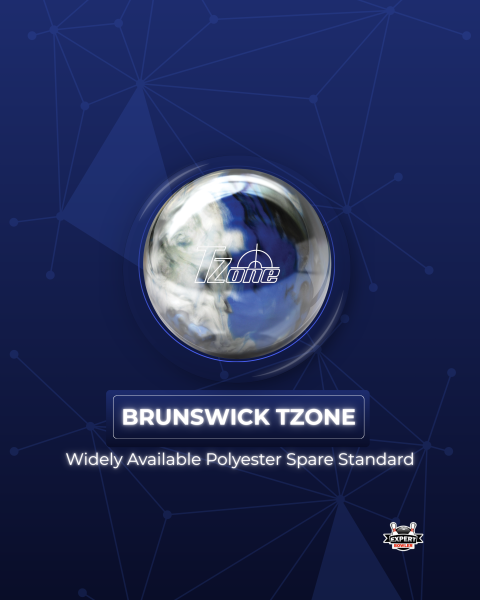
The most-stocked polyester spare ball with countless colorways — bought by more bowlers than any other model.
Check price →Storm Ice Storm
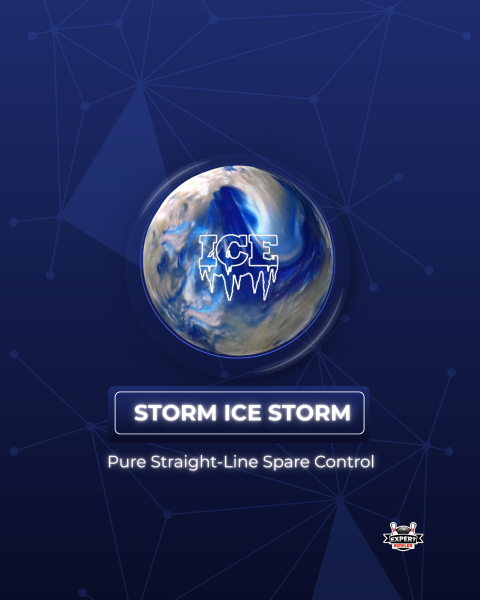
The benchmark spare ball — perfectly straight, durable, and the most consistent performance pick.
Check price →MOTIV Aspire
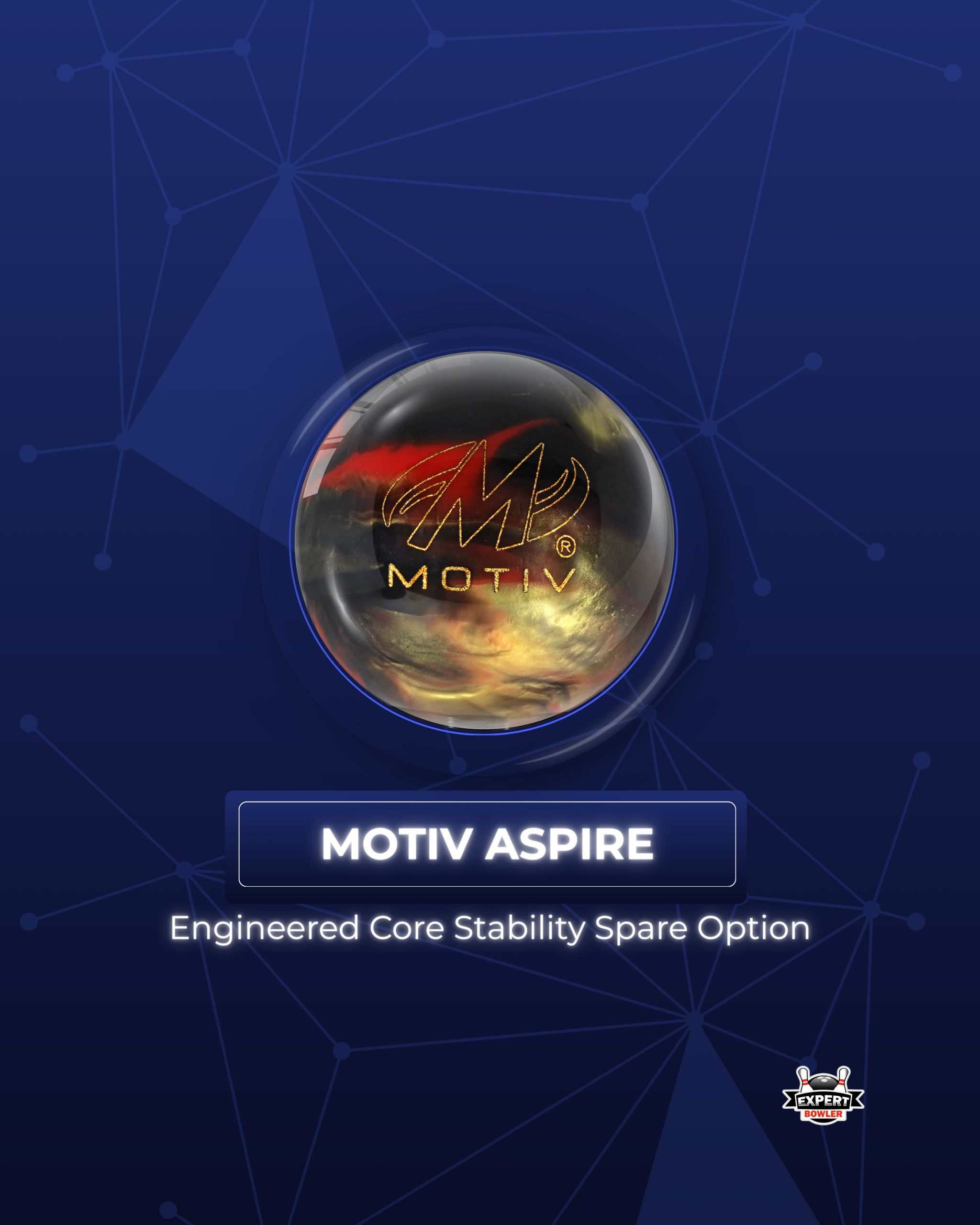
Engineered specifically for spare conversion — purpose-built for clean, repeatable straight motion.
Check price →How to use this guide
If you hook your strike ball and don’t own a dedicated spare yet, any of the polyester picks below will improve your spare percentage. The differences come down to availability, price point, and how engineered the ball is for straight motion. Use the quick-comparison table to jump straight to the right one.
Quick comparison
Answer four quick questions and our free Bowling Ball Finder matches you to the right ball for your style, lanes and budget — plus a free buyer’s checklist, instantly.
Take the free Finder →How we evaluated
Our picks come from a structured evaluation process — not marketing claims. We weigh real-world performance and multi-year owner reports to identify the products that actually deliver for bowlers.
Performance criteria
What matters most for this category — hook potential, fit, durability, lane condition match — defined before evaluation begins.
Manufacturer specifications
Published specs and technical data from the brand, read against what owners report over time.
Multi-year owner reports
Cross-referenced long-term reviews from bowlers using these products through full league seasons.
Community sentiment
Verified threads on bowling forums and Reddit — weighted toward bowlers in the target skill range.
We do not test every product ourselves on every lane condition. We rely on published specs and verified owner reports instead.
Paid placements, sponsored rankings, or manufacturer-supplied review samples that come with editorial expectations.
Best spare bowling balls of 2026
Storm Ice Storm
Who’s This For: League bowlers who want the straightest, simplest solution to corner pins and do not want to adjust for transition during a session.
Why it works: Near-zero differential, no mass bias, polyester hybrid cover at factory high polish. Nothing in this layout is trying to generate motion. The core stays in its track from release to pin, the cover skims through whatever friction the lane throws at it, and the result is the same predictable arc in frame 9 of game 3 as it was in frame 1 of game 1. For a cross-lane 10-pin line, that is the entire job.
Watch-outs: Rewards accurate alignment. If you miss your spare line by more than a board the ball does not recover — that is the design intent.
Surface Tip: Factory polish only. Any surface change increases friction and defeats the purpose.
View Storm Ice Storm on Amazon →Brunswick TZone
Who’s This For: Bowlers buying their first spare ball, replacing an old plastic, or anyone who wants easy weight matching and universal availability.
Why it works: Near-zero differential, polyester cover, factory polish, the friction profile does not shift as oil transitions through the session because the cover is not built to respond to it. The full weight range is the practical advantage here. Matching your spare ball weight to your strike ball keeps swing timing and release feel consistent between shots, and the TZone makes that easy regardless of what you throw for strikes.
Watch-outs: Low differential means no recovery on a misaligned shot. That is the trade-off, and it is the point.
Surface Tip: Keep it polished. Surface grit introduces friction and inconsistency.
View Brunswick TZone on Amazon →MOTIV Aspire
Who’s This For: Bowlers who want a spare ball that maintains a stable, centered roll even after drilling, especially in heavier weights or custom layouts.
Why it works: Drilling shifts a ball’s static balance. On a standard pancake core, that imbalance can show up as a slight lean in the roll phase, more noticeable in heavier weights or with grip configurations that remove more mass from one side.
MOTIV’s Tyro core is engineered to compensate for typical drilling imbalance and hold a centered, stable track regardless of where the holes sit. If you have ever noticed that two different spare balls with the same pancake layout roll slightly differently, this is the fix. Polyester cover keeps friction response low throughout.
Watch-outs: The Tyro core neutralises layout imbalance, not rotation. Come around the ball on spare shots, and it still moves. Commit to a lower-rotation delivery if you go this route.
Surface Tip: Clean and polish only.
View MOTIV Aspire on Amazon →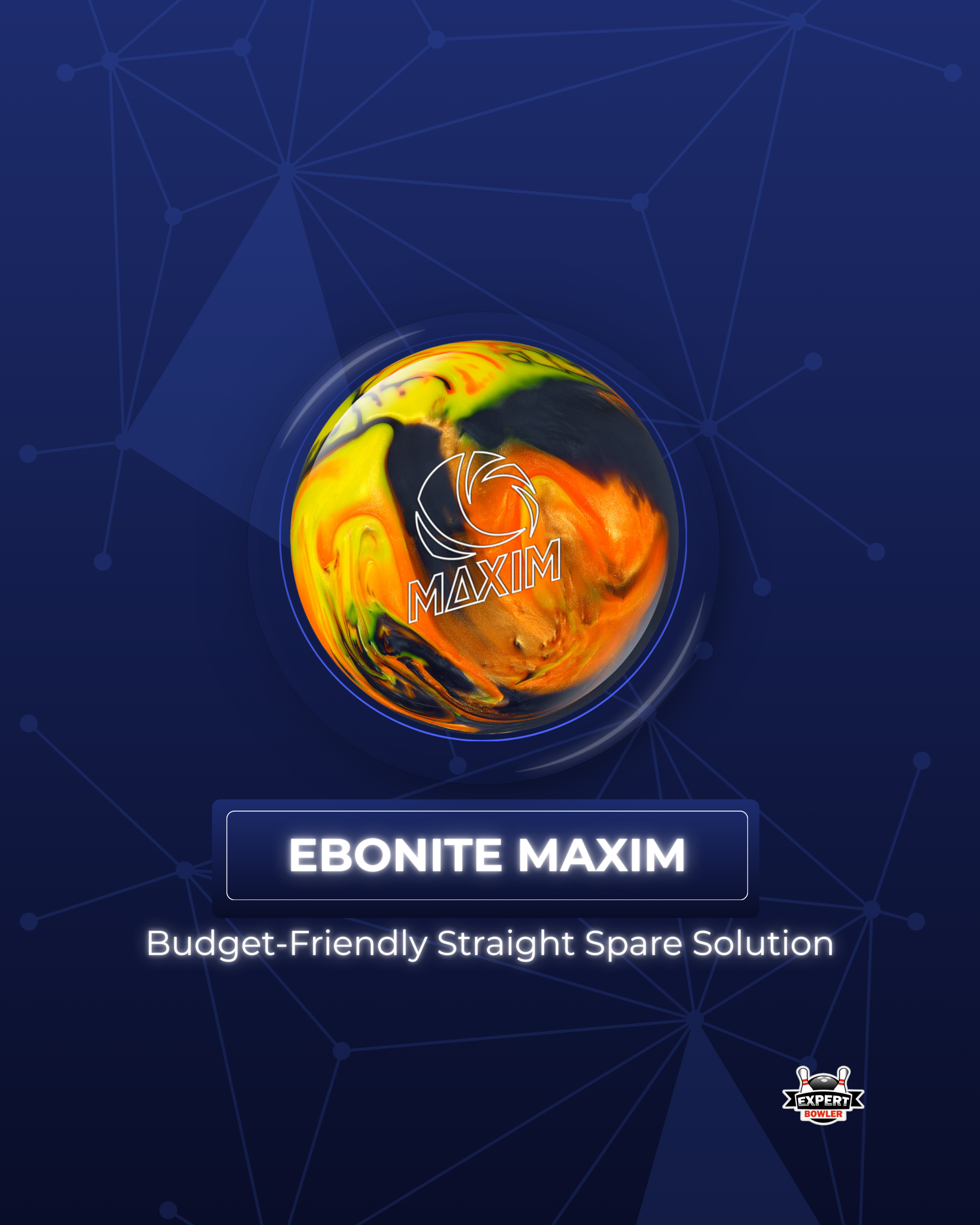
Ebonite Maxim
Who’s This For: Budget-conscious league bowlers buying a first spare ball — or anyone who needs a reliable polyester at the lowest possible price.
Why it works: The Maxim is a no-frills pancake-core polyester. Symmetric balance, low differential, and a factory-polished cover that produces a near-straight reaction across any oil pattern. It is not engineered for anything beyond going straight, which is exactly what a spare ball should do.
Ebonite has made the Maxim line for decades, and it remains one of the highest-volume polyester spare balls sold in the US. Multiple colorways at the lowest price point in the spare-ball category.
Watch-outs: The shell is thinner than the Ice Storm or TZone — store in a bag with a divider to avoid impact chipping.
Surface Tip: Factory polish only. Never sand or scuff a Maxim — it defeats the purpose.
View Ebonite Maxim on Amazon →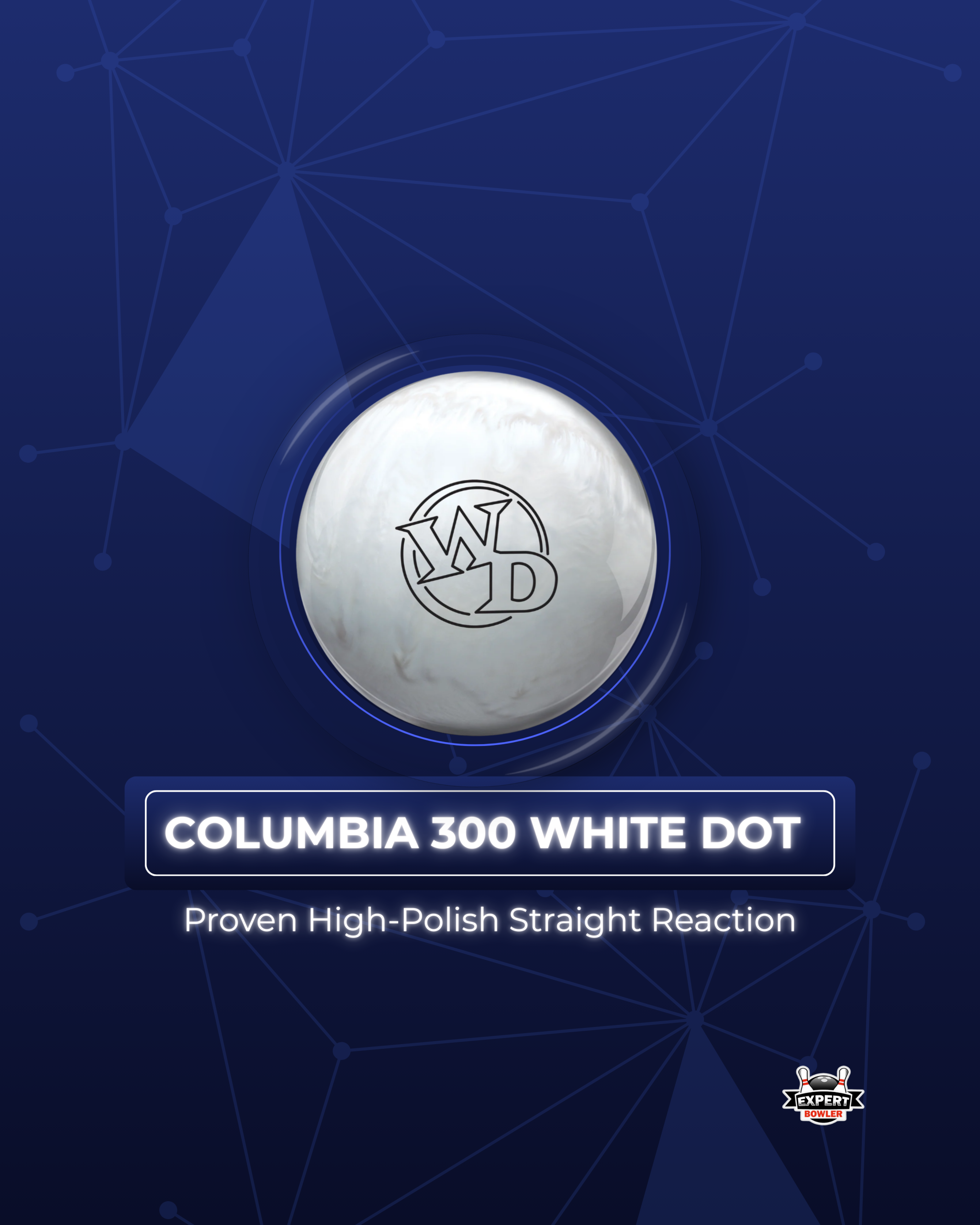
Columbia 300 White Dot
Who’s This For: A good spare bowling ball for bowlers who want a proven, long-standing design with predictable straight motion across fresh and late conditions.
Why it works: Polyester cover at factory high polish sits at a high Abralon equivalent, meaning minimal friction response across both the oil and the dry. The ball does not read the transition between oiled heads and dry backends because the cover is not designed to respond to either. Columbia 300 sells this under the “Reaction Straight” name for a reason. One reaction, fresh pair or burned-out pair, same result.
Watch-outs: Rewards accurate footwork, punishes drift. The fix for consistent misses in the same direction is alignment and walkout, not equipment.
Surface Tip: Keep factory polish.
View Columbia 300 White Dot on Amazon →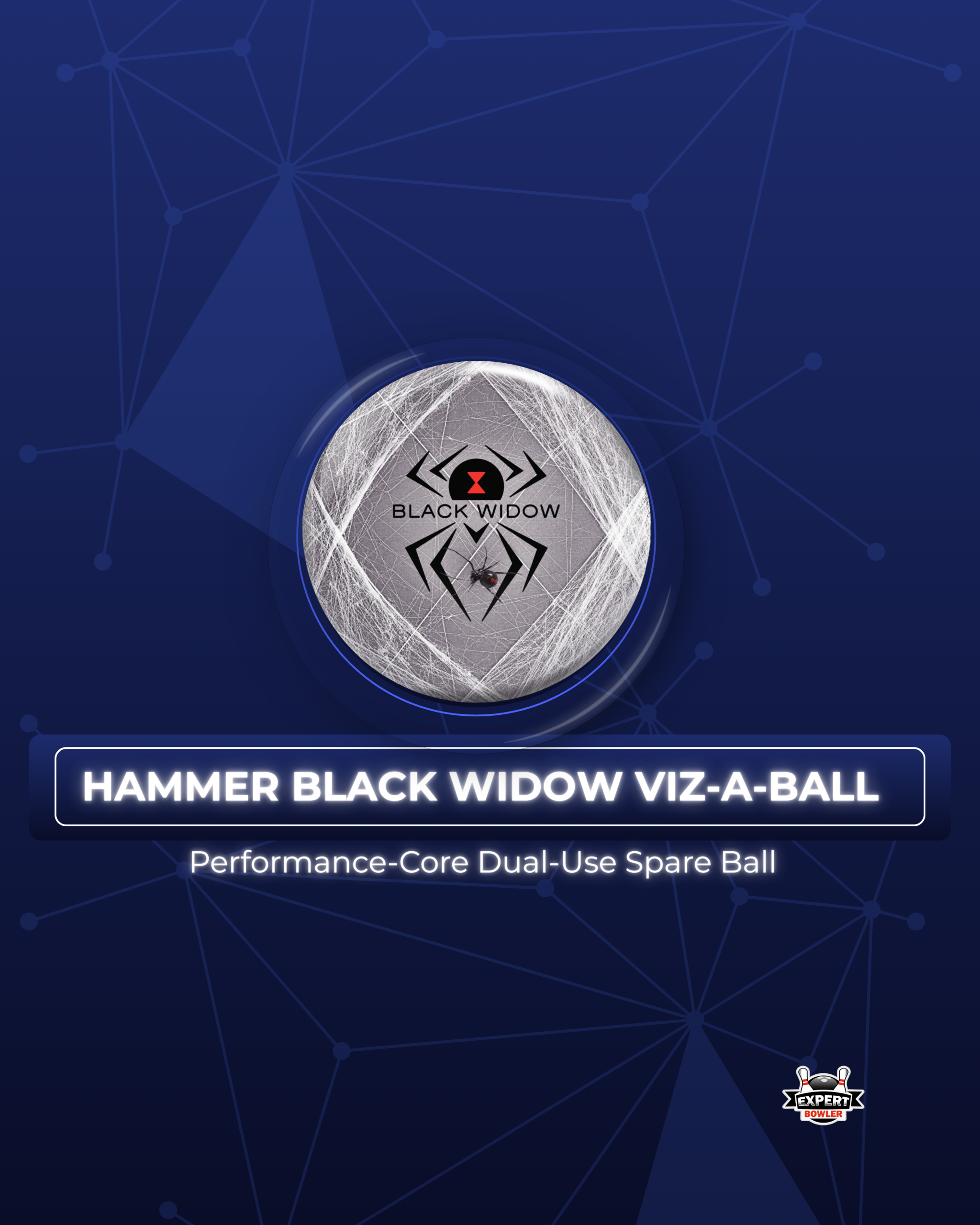
Hammer Black Widow Viz-A-Ball
Who’s This For: Bowlers who prefer the feel of a performance asymmetric core and want that familiarity inside a polyester spare ball.
Why it works: On a direct spare line, the polyester cover minimizes friction sensitivity. But when rotation is present, or the ball touches dry outside boards late in transition, the Gas Mask core can produce a more defined shape than traditional pancake-core plastic. It preserves the Widow’s feel without adding reactive resin motion.
Watch-Outs: This is not a dead-straight spare ball. Rev-dominant bowlers who come around the ball will see more motion than with a TZone, White Dot, or Ice Storm. If your only goal is maximum straightness, simpler pancake-core polyester options remain cleaner.
Surface Tip: Keep the Crown Factory Polish intact. Surface adjustments increase friction and move this closer to reactive behaviour, which defeats the purpose of using polyester for spare control.
View Hammer Black Widow Viz-A-Ball on Amazon →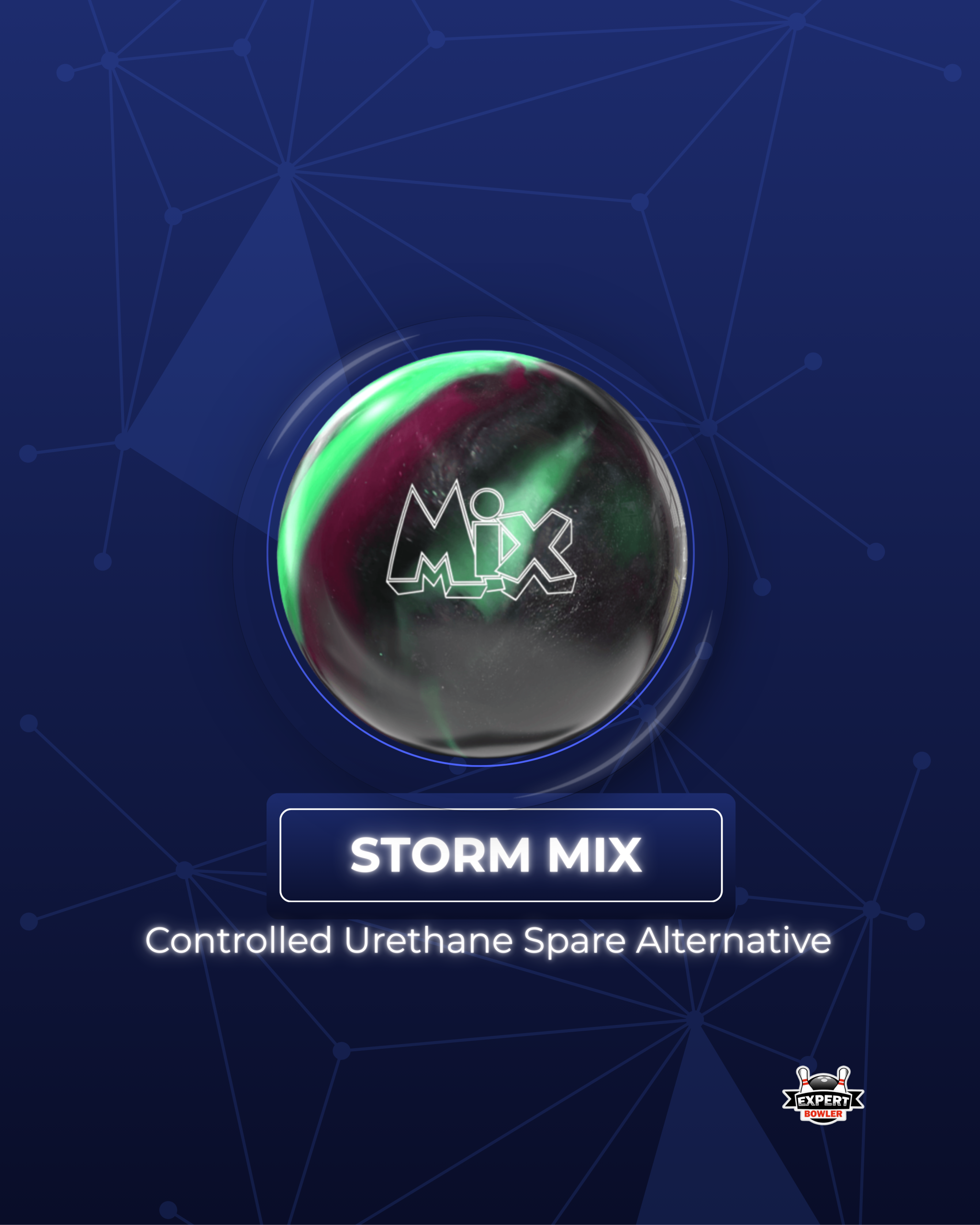
Storm Mix
Who’s This For: Speed-dominant bowlers or players who struggle to feel comfortable with pure polyester and want a controlled urethane alternative.
Why it works: The U1S urethane pearl cover sits between polyester and reactive resin in the friction spectrum. The pearl formulation pushes the transition point further downlane than a solid urethane cover would, so the ball skids longer before engaging.
For speed-dominant bowlers who overwhelm dry friction, that midlane traction feels more like a ball that is actually doing something, compared to a polyester that slides through without reading anything. Urethane also holds up better than polyester under heavy use; the cover is less prone to chipping or cracking over a long season.
Watch-outs: Urethane requires a more deliberate release than polyester. If you mis-deliver the ball still moves enough to miss the pin — not as forgiving as polyester for casual spare lines.
Surface Tip: Let it lane-shine through regular use. Aggressive cleaning strips the lane shine and restores higher friction, which is the opposite of what you want.
View Storm Mix on Amazon →Plastic vs urethane for spares
Polyester (plastic) is the right answer for almost every bowler. The coverstock generates almost no friction with the lane surface, so the ball travels in a near-perfect straight line regardless of oil pattern or lane condition.
Urethane is the exception, not the rule. Speed-dominant players (high ball speed, lower rev rate) sometimes find that polyester glides too much and over-corrects when they try to hit specific spare targets. A urethane spare ball gives them a slight, controlled curve they can use to hit corner pins more reliably.
For 90% of league bowlers, a polyester spare like the Storm Ice Storm, Brunswick TZone, or Ebonite Maxim is the right starting point. Only consider urethane after you’ve bowled a season with a polyester spare and feel the need for slightly more reaction.
Common spare-shooting mistakes
Using a reactive ball for spares and guessing at the hook
The single biggest source of missed spares. A reactive ball’s hook changes as oil moves around the lane through your session, so the line you used in frame two won’t work in frame eight. A polyester spare removes the variable.
Keeping your strike stance for a corner pin
Move your feet. The geometry for converting a 10-pin (right-handed) is completely different from your strike line — you should be standing significantly left of your strike position and throwing the ball cross-lane, straight at the target.
Throwing harder to take out the hook
Adding ball speed doesn’t kill the hook on a reactive ball, it just delays it. You end up with a less consistent release on a shot that already has higher margin for error than your strike shot.
Final picks at a glance
All picks with current prices on Amazon — affiliate links, no extra cost to you.
Frequently asked questions
Final recommendation by scenario
For most bowlers buying their first spare ball, the Storm Ice Storm is the right call. Premium polyester, clean motion, durable shell, available in multiple colorways.
On a tighter budget, the Brunswick TZone or Ebonite Maxim both deliver clean straight motion at the lowest price points in the spare-ball market.
If you bowl a higher ball speed or want a spare with slight controlled curve, the Storm Mix urethane is the only urethane spare ball in our lineup and the right pick for that specific style.
Get our honest 2-page checklist — coverstock, weight, lane oil, and the 5 mistakes that cost most bowlers money. One short email every couple of weeks. No spam.
Edited by Jeroen Kooij
Editor · ExpertBowler
Editor of ExpertBowler. Responsible for editorial standards and methodology compliance. Read more about our editorial process.
Methodology: Picks evaluated against multi-year owner reports and community sentiment. We do not accept paid placements.
Updated: 2026.
Sources consulted
- Manufacturer documentation: official product specifications and technical data
- Community feedback: verified threads on BowlingForums.com and Reddit r/Bowling
- Published reviews: BowlersMart, BowlerX, Amazon multi-year owner aggregations
- USBC equipment specifications: approval lists for league and tournament-grade equipment
Related guides
- Best bowling balls 2026 — full ball category hub
- Best bowling balls for medium oil lanes
- Best bowling shoes 2026
- Best bowling bags 2026
- How to read bowling lane conditions
- Start Here — curated entry point for new visitors