The Bowling Mental Game: How to Stay Consistent Under Pressure
By Jeroen Kooij, Editor · Updated August 2026
Practice scores that vanish in the league are rarely an equipment problem. Most bowlers averaging 170 to 190 already throw the ball well enough to score higher. The gap between what they can do and what the scoresheet says is almost always mental. Pressure tightens the grip. A bad break in the sixth carries into three more frames. The tenth frame turns into a completely different sport.
None of that needs to be permanent. Pre-shot routines, breathing, resetting after bad breaks, handling the tenth frame without falling apart, staying locked in over a long tournament day. Basic bowling psychology, and all of it is trainable. If equipment doubt is part of what is clouding your focus, sort your arsenal first. But if the ball is right and the mechanics are there, the problem is probably not in your bag.
Sometimes that doubt has less to do with nerves than with not fully understanding what your ball is supposed to do. If you are second-guessing reaction shape, motion through the pins, or whether the ball matches the lane in front of you, it helps to understand solid vs pearl vs hybrid coverstocks before you step onto the approach.
What we cover in this guide
What Is the Pre-Shot Routine?
Everything here builds on one foundation, and that is the bowling pre-shot routine. At Team USA Trials, every competitor had a defined routine before each delivery. The routines looked nothing alike, but nobody skipped one.
Why You Need One
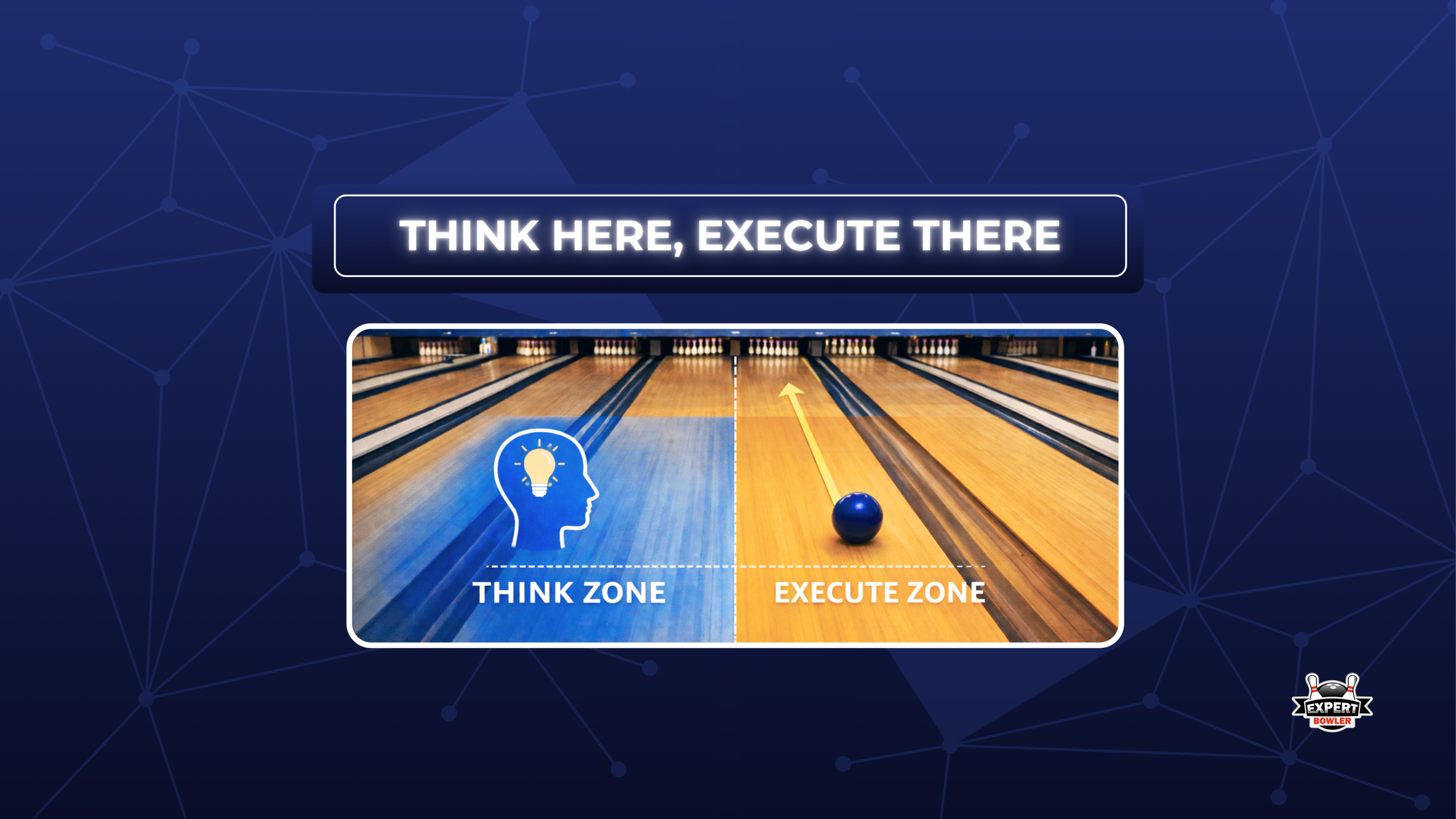
USBC coaching breaks the lane area into two zones:
- The Thinking Box is the settee area where you make decisions about target, feet, ball, and speed.
- The Playing Box is the approach. Once you step onto the approach, the thinking stops, and all that remains is execution.
Without a routine, bowlers second-guess their target mid-approach, rethink their speed halfway through the swing, or adjust their feet after setting them.
A pre-shot routine closes the door on that before the physical motion begins, and when the ninth or tenth frame arrives, it becomes the one familiar thing your nervous system can fall back on.
How to Build One
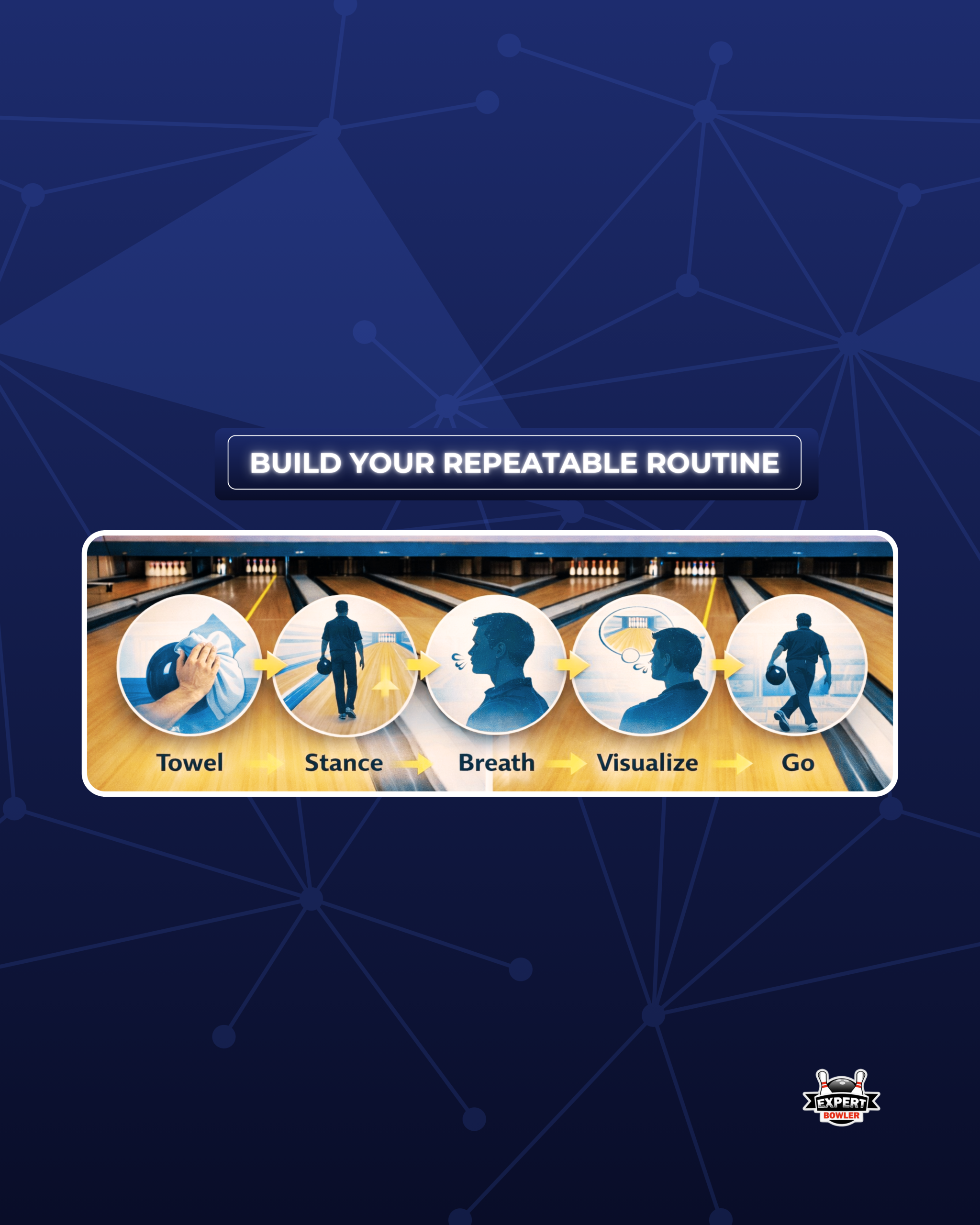
Keep it simple. Ten to fifteen seconds total, so you can repeat it thirty-plus times without it becoming a chore.
- Wipe the ball with your towel while you are still seated. That is your starting signal.
- Step onto the approach and plant your feet on the correct boards.
- One breath. In through the nose, out through the mouth.
- See the ball path for two seconds. Your hand, the breakpoint, the pocket.
- Go
Some bowlers add a hand position check or a small waggle in the stance to release wrist tension. That is fine. The individual steps are less important than doing them the same way every time, from the first ball of warm-ups to the last ball of the tenth.
As USBC coaching puts it, once you step on the approach, the only thing left is to execute.
Handling Pressure: The 10th Frame
The nerves usually start in the ninth, when you realize you are working on something. By the tenth, the pressure is fully loaded.
But nothing about those frames is physically different from the fifth. Same lane, mostly the same oil, same ball, same pocket. The difference is all context, and context is enough to wreck a good bowler’s execution.
Grip gets tight. Feet rush. The armswing shortens because everything from the elbow down is carrying tension that was not there two frames ago.
If part of the problem is uncertainty about where to play, learning how to read lane conditions helps quiet that noise. But pressure shows up even when you have a good read and the right ball in your hand.
Overcoming nerves in bowling is not about eliminating them. It is about having a plan so they do not change your shot.
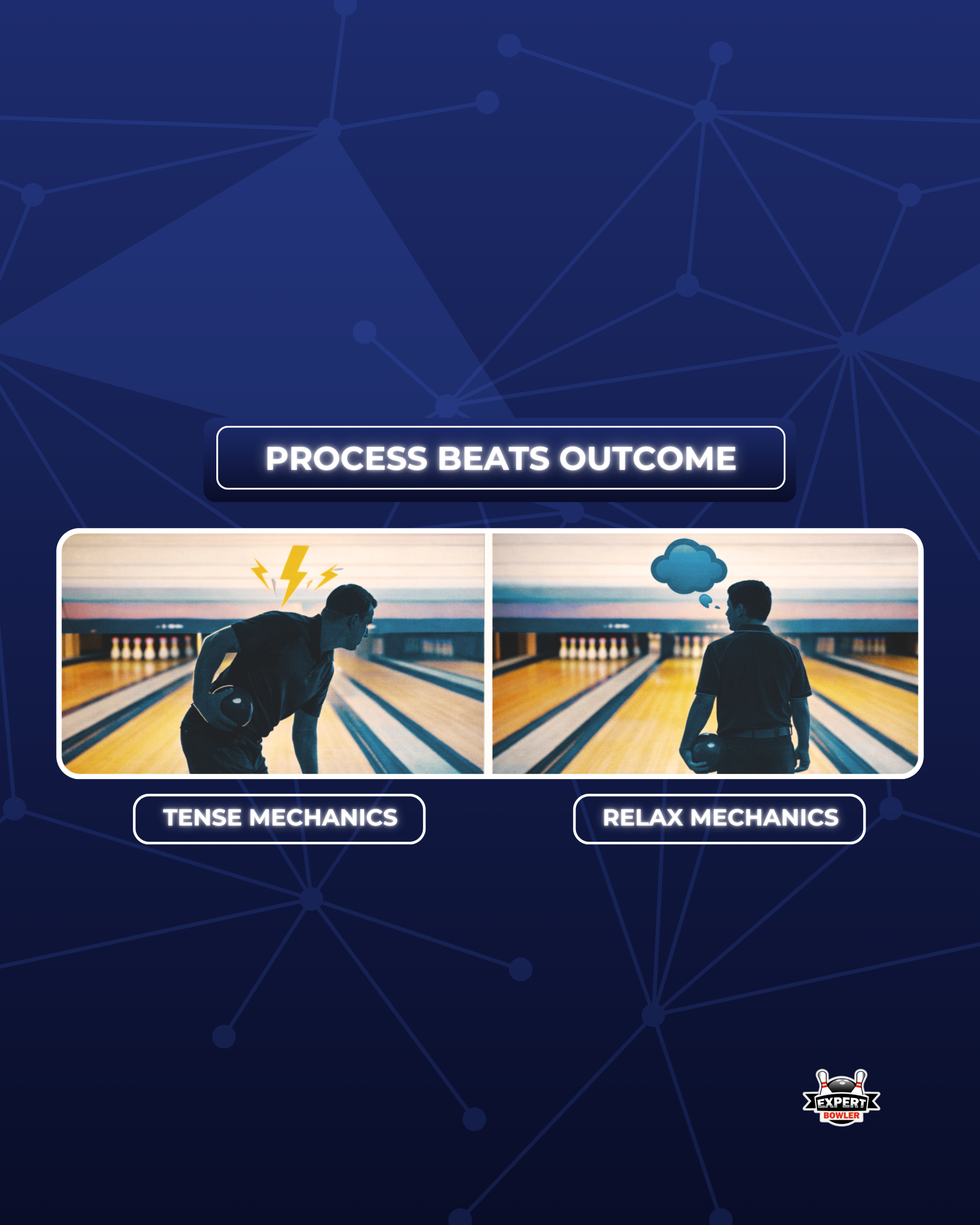
Process vs Outcome Thinking
A 2024 study in the International Review of Sport and Exercise Psychology found that athletes who treat pressure as a challenge rather than a threat perform better when it counts. Bowlers experience this every time they step up in the tenth.
“I need to double, or we lose.” That is outcome thinking. Your body hears it, floods with adrenaline, and everything from the forearm to the fingertips locks up. The shot was over before you started your approach.
“Third arrow, smooth push-away, follow through to the target.” That is process thinking. Same pressure, same tenth frame, completely different physical response.
One reaction pulls you out of your routine, the other keeps you in it. You cannot control what the pins do. You can only control how well you execute.
Try Less, Execute More
The single biggest misconception in high-pressure bowling is that trying harder produces better results. Bowlers who muscle up in the tenth grip tighter and rush the approach, and both reactions change the shot shape compared to what was working earlier.
When grip pressure increases, the armswing shortens, timing shifts, and the ball comes off the hand differently.
The guys who look composed during PBA stepladder finals feel the same nerves as everyone else. They have trained themselves to respond by slowing down. An extra beat in the stance, a deeper exhale, softer fingers on the ball.
The goal is to throw the same shot you threw in the fourth frame, not a bigger one.
Dealing with Bad Breaks: The Stone 8 and Ring 10
Pressure in the tenth is one thing. Bad breaks are a different kind of mental test because the outcome was completely out of your hands.
You throw a quality shot, the ball drives through the pocket, and the 8-pin just sits there. Or the 10-pin wobbles and stands right back up. Flush hit, one pin standing, none of it your fault.
How you respond over the next two or three frames decides whether that costs you one pin or thirty.
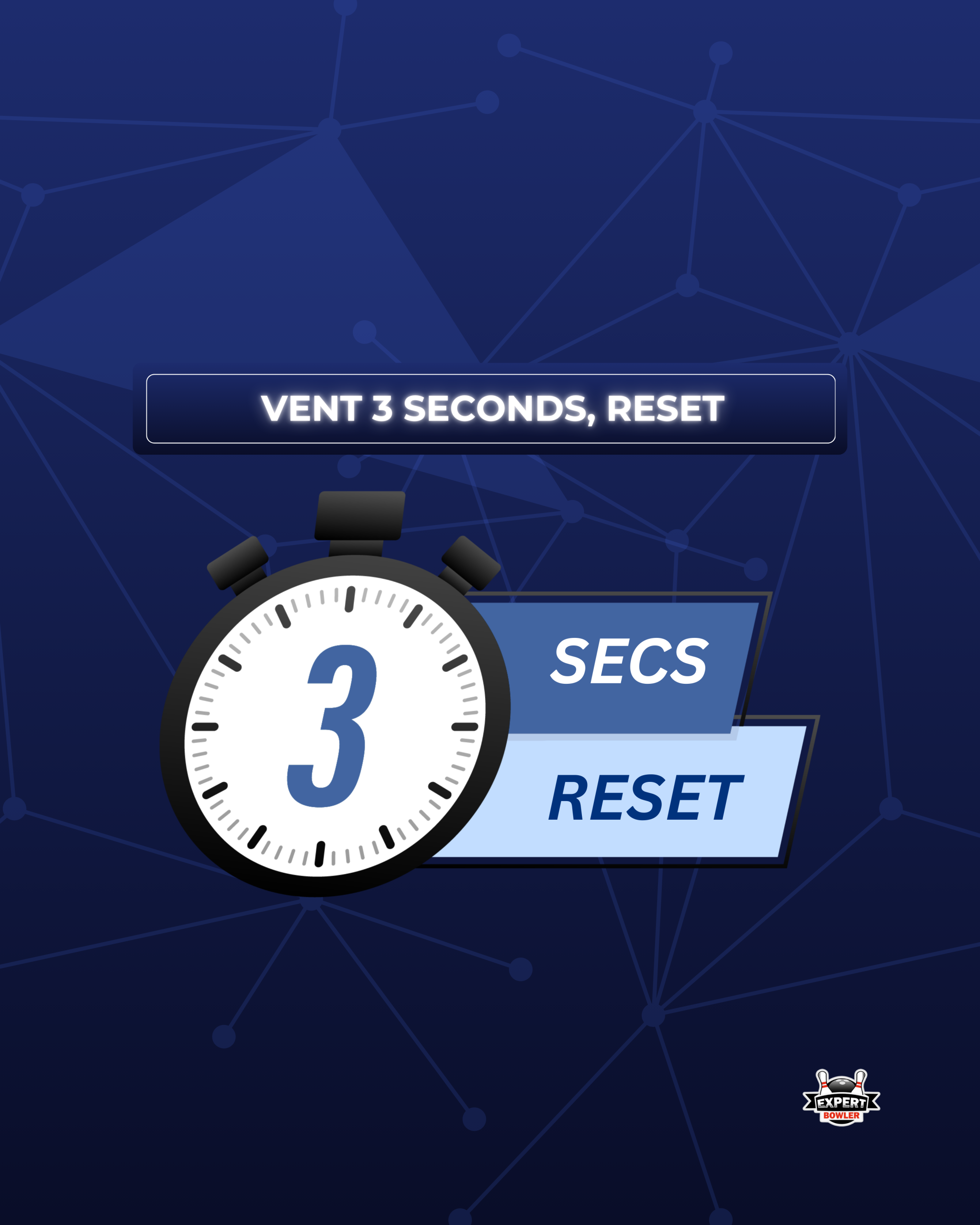
The 3-Second Rule: Vent and Reset
Give yourself three seconds to react. Smack the ball return, shake your head, let the frustration out. Your brain needs that brief release to avoid bottling tension that bleeds into the next shot.
But after three seconds, wipe it. The bad break cost you one pin. The reaction is what turns it into a three-frame problem.
Frustration tightens your hand on the spare shot, which is the one delivery where you need the most control and the softest grip. Miss that spare, and the anger doubles.
Now you are carrying it into the next frame, and suddenly three tight, unfocused shots in a row have cost you twenty or thirty pins.
Avoiding the “Red Mist”
Every bowler knows the red mist. You flush a shot into the pocket, the 8-pin sits there, and suddenly you want to throw the next ball through the back wall. Grip tightens, approach speeds up, and the next shot is all muscle. It never carries.
You have to physically break the cycle. Sit down. Drink some water. Stare at the ceiling for five seconds. Anything that puts a gap between the anger and the next ball. If you step up hot, your body throws an angry shot, and angry shots miss.
Positive self-talk takes longer to build, but it works. “I got robbed” keeps the frustration alive. “Good shot, carry was not there,” lets you move to the next frame.
A 2025 study in Frontiers in Psychology backed this up. Athletes who trained themselves to explain bad outcomes differently showed less fear of failure and stayed more composed when it counted.
Monday night league gives you plenty of reps to practice that.
Best Bowling Shoes 2026
Confidence on the approach starts with proper equipment. See our top shoes.
Focus Strategies for Long Blocks and Tournaments
Three games of managing your emotions is one thing. Tournament bowling stretches over five or six games in a day, and that is where most bowlers run out of gas mentally.
The routine, the breathing, the reset after bad breaks, all still apply. Knowing how to focus on bowling over a full day is its own skill. The trick is knowing when to spend that focus and when to save it.
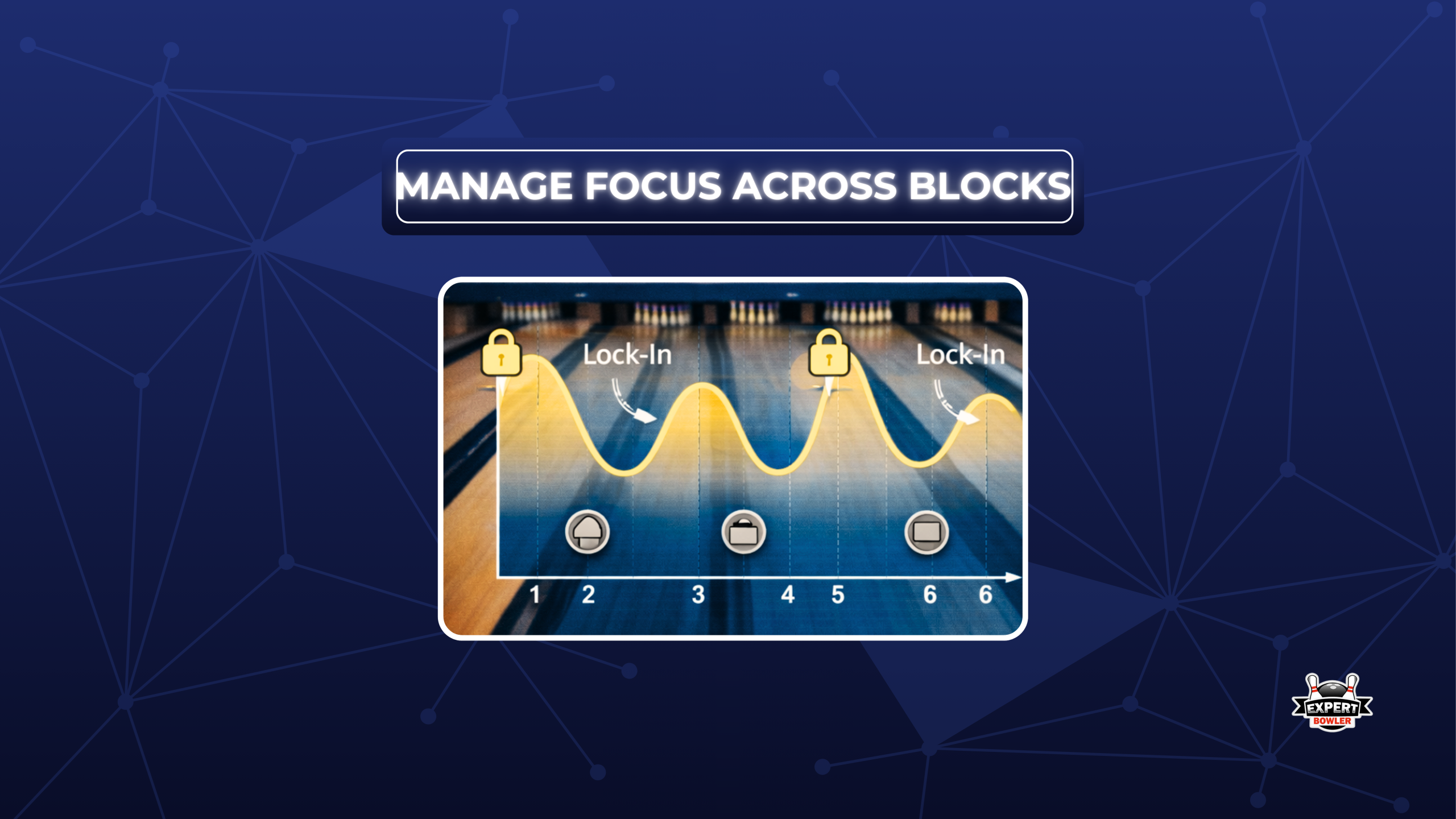
Staying in the Moment
The fastest way to lose focus during a long block is scoreboard math. The moment you start projecting totals or checking what the bowler two lanes over is shooting, you have left the current shot behind. USBC mental performance resources describe this as managing decisions rather than managing outcomes. One shot at a time, one target, one clean execution. Evaluate, then move to the next one.
When to Distract Yourself vs. When to Lock In
Nobody sustains peak concentration for four or six hours, and bowlers who try burn out early. Between shots, give your mind a break. Talk to teammates, eat something, scroll your phone.
The time to lock back in is when you pick up your towel to wipe the ball. That is the on-switch.
Some bowlers need to stay dialed in all day. Others bowl better loose between frames and lock in the moment they stand up. Figure out your pattern before a high-stakes event, not during one.
That matters even more on spare attempts, where rushed decisions and loose routines cost easy pins. If that is the part of your game that tends to break down under pressure, our spare shooting guide can help you build a more repeatable system.
What a Coach Taught Two Beginners About the Mental Game — in the First Hour
Everything above is written for bowlers who already have a physical game and want the mental side to catch up. Our own experience points the other way round, and it is worth putting on this page because it contradicts the usual sequencing.
In July 2026 we started lessons with Jack Edelaar, an NOC*NSF Master Coach and former national coach of the Dutch and Czech teams — two brothers, both complete beginners, neither of us with anything resembling a repeatable shot. The mental game was not saved for later. It arrived in the first hour, before a single word about the swing.
The Thinking Box, Taught on Day One
One of the first three things our coach corrected was this: work out what you intend to do while you are still standing back, picture it, and then stop thinking. On the approach itself, the thinking is already finished.
That is the Thinking Box and the Playing Box described further up this page, handed to two people who had not yet been taught how to hold the ball. It reframes the whole idea. The separation between deciding and executing is not an advanced refinement you add once your physical game is stable — it may be the thing that lets a physical game become stable in the first place. Most beginners do the exact opposite: they step onto the approach and only then start running the checklist, arm straight, don’t drop the shoulder, four steps, where is my mark — while the body is already moving.
The Hardest Instruction Was “Do Less”
The first drill was not a throw at all. We stood at the foul line, held the ball in both hands, and swung it back and forth without releasing it — feeling what the weight does when you stop driving it.
It was harder than it sounds, and not physically. Remco in particular is someone who wants to understand a thing before he does it, and swinging with less tension turned out to be exactly the wrong task for that instinct. Every time he thought about relaxing the swing, he was thinking, and thinking is tension. That is the same trap the “Try Less, Execute More” section above describes in the tenth frame — except it showed up in lesson one, on a drill with no pins involved.
Scoring Every Shot — but Not on Pins
A later session added the drill that has changed how we practise more than anything else. Before each shot you say out loud, as specifically as you can, what you are about to do: the approach, the boards you want to come out on, what happens first and what happens after. Then you throw. Then you score, in a percentage, how closely the execution matched what you said.
The percentage is not about the pins, and that is the whole point. You can strike with a poor match and leave seven pins with a good one. What the number separates is the question every bowler confuses under pressure: was the plan wrong, or the execution? Score yourself high and get a bad result, and the plan needs changing. Score yourself low and you have learned nothing about the plan at all, because you never actually threw it.
It also forces attention, which is the part that belongs on a page about focus. You can only put a number on a shot you actually noticed yourself making. If you cannot score it, you were not there for it — and thirty unnoticed shots is a session that taught you nothing, no matter what the scoresheet says.
If you are earlier in your game than the 170-to-190 bracket this guide is aimed at, that is our honest takeaway: you do not have to earn the mental game by first becoming a decent bowler. Ours started before the technique did. The habits that go with it are in our ten bowling tips guide.
The method our coach uses, in his own words
Everything below was said to us on the lanes rather than written for publication. We have kept the wording and added nothing to it.
On what a bad shot is
“There is no such thing as a mistake. It's only information.”
“Every attempt is information.”
On how to practise
“You can do the same thing sixty times, or you can do something different sixty times. Doing something different sixty times trains your brain enormously. You take in all kinds of variations, and then it becomes far easier to reach for exactly the one variation you want.”
That is not a personal preference. It is an approach to motor learning known as differential learning, developed by Prof. Wolfgang Schöllhorn at Johannes Gutenberg University Mainz, and it runs against the instinct most bowlers have, which is to repeat one shot until it is grooved. He sets out his own reasoning in his article on learning movement (in Dutch).
On saying it out loud first
“Say out loud beforehand what you intend to do. Say it to the other person too, so it's clear. What you're actually doing is programming yourself. You're your own software programmer. And because you've said it out loud, you feel during the execution itself whether it's right.”
On scoring yourself afterwards
“Put a percentage on it: I'd say that came off 80%. But the moment you say 80 out of modesty when it really was 100, you're fooling your own movement brain. And 100 isn't arrogant — if your plan worked, your plan worked. As long as you stay realistic about it.”
“And however much it looks like only 10% of it worked: these are the most instructive moments there are.”
Jack Edelaar — NOC*NSF Master Coach; former national coach of the Dutch youth, junior elite and women's teams and of the Czech national team. All quotes said during coaching sessions with us, August 2026, and reviewed by him before publication.
Put together, those four ideas form a loop you can run on your own: state the shot out loud, throw it, score how much of your own plan you actually executed, and deliberately change something on the next one rather than repeating it. We are running it ourselves at the moment, and the uncomfortable part is the scoring — the temptation to say 80 when it was 100 is real.
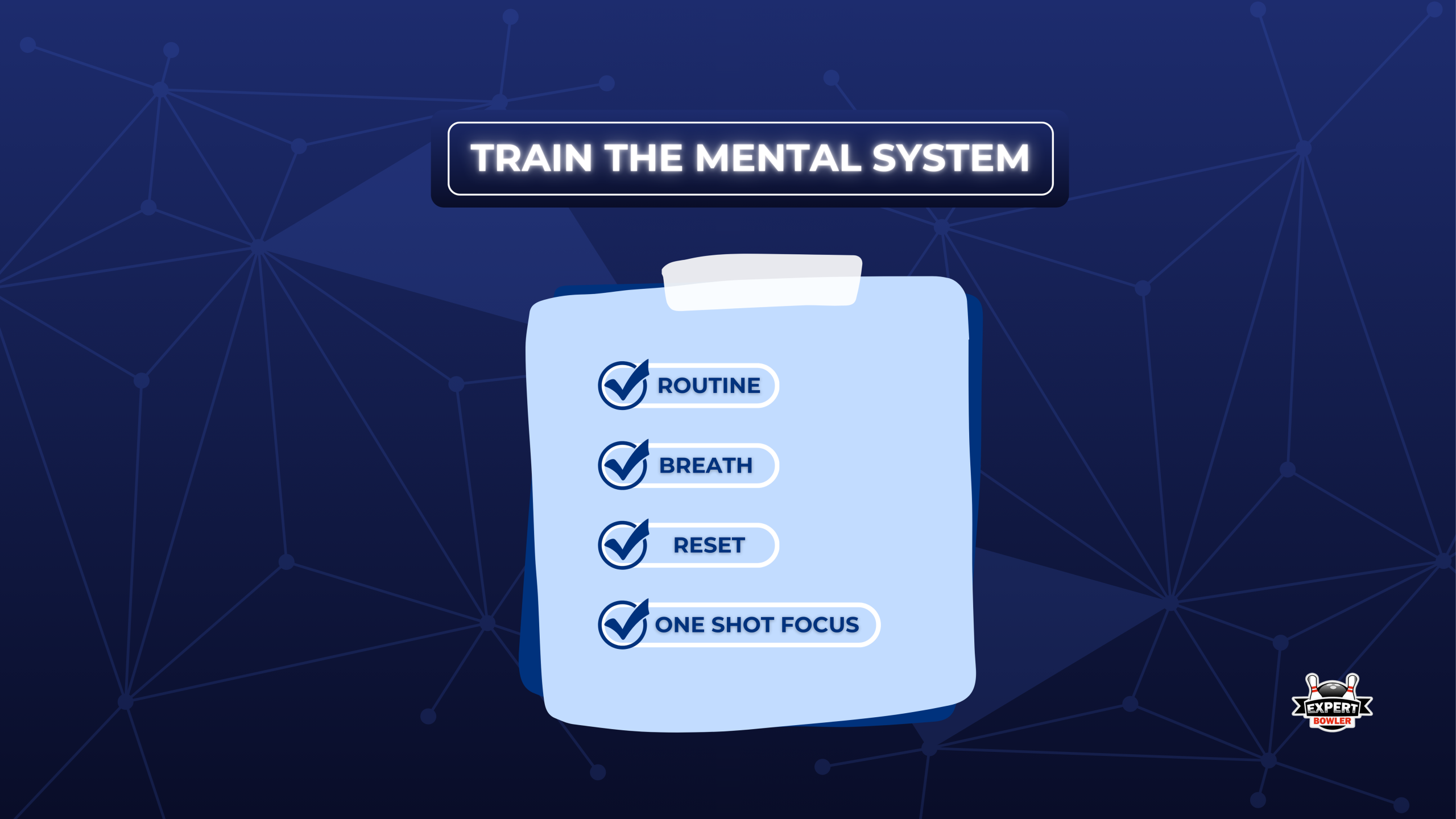
Putting It All Together
None of these bowling mental game tips work if you try to apply them all in one night. Pick one thing and commit to it for a full league set.
The 3-Second Rule is a good starting point because you will get a chance to use it, probably more than once. Give yourself three seconds after a bad break, then move on. If that feels manageable after a few weeks, layer in the pre-shot routine.
Then the breathing. Build it the way you would build your physical game, one piece at a time, until the whole thing runs without thinking about it. And if equipment doubt is part of what is clouding your concentration, sort that out first with our best bowling balls for league bowlers guide. The fewer things your brain has to worry about on the approach, the better your body performs the job it already knows how to do.
Related guides
- Best bowling balls 2026 — expert picks across skill levels
- How to read bowling lane conditions — the foundation of ball selection
- Best bowling shoes 2026 — slide consistency starts with your shoes
- Bowling spare shooting guide — pick up the 7-pin, 10-pin, and tricky splits
- Bowling ball cleaning & maintenance — protect your investment
Get our honest 2-page checklist — coverstock, weight, lane oil, and the 5 mistakes that cost most bowlers money. One short email every couple of weeks. No spam.

Edited by Jeroen Kooij
Editor · ExpertBowler
Editor of ExpertBowler. Responsible for editorial standards and accuracy of bowling technique, equipment, and lane play guidance. Cross-references USBC coaching materials, published bowling instruction, and verified league-bowler feedback. Read more about our editorial process.
Editorial standards: Technique advice cross-referenced with USBC coaching materials and published bowling instruction. We do not accept paid placements.
Updated: August 2026.
Sources & references
- USBC coaching materials: bronze, silver, gold-level coaching curricula for technique fundamentals
- Manufacturer technique guides: official brand instructional resources and equipment documentation
- Community feedback: verified threads on BowlingForums.com and Reddit r/Bowling
- Published bowling instruction: Bowling This Month, Bowl.com instructional resources
- USBC equipment specifications: approval lists for league and tournament-grade equipment