Walk into any bowling center on league night and watch the high-average bowlers. They’re not throwing straight down the middle. Their shots curve and drive into the pocket, and pins explode off the deck. That hook separates recreational players from competitors, and learning it might be the single biggest improvement you can make.
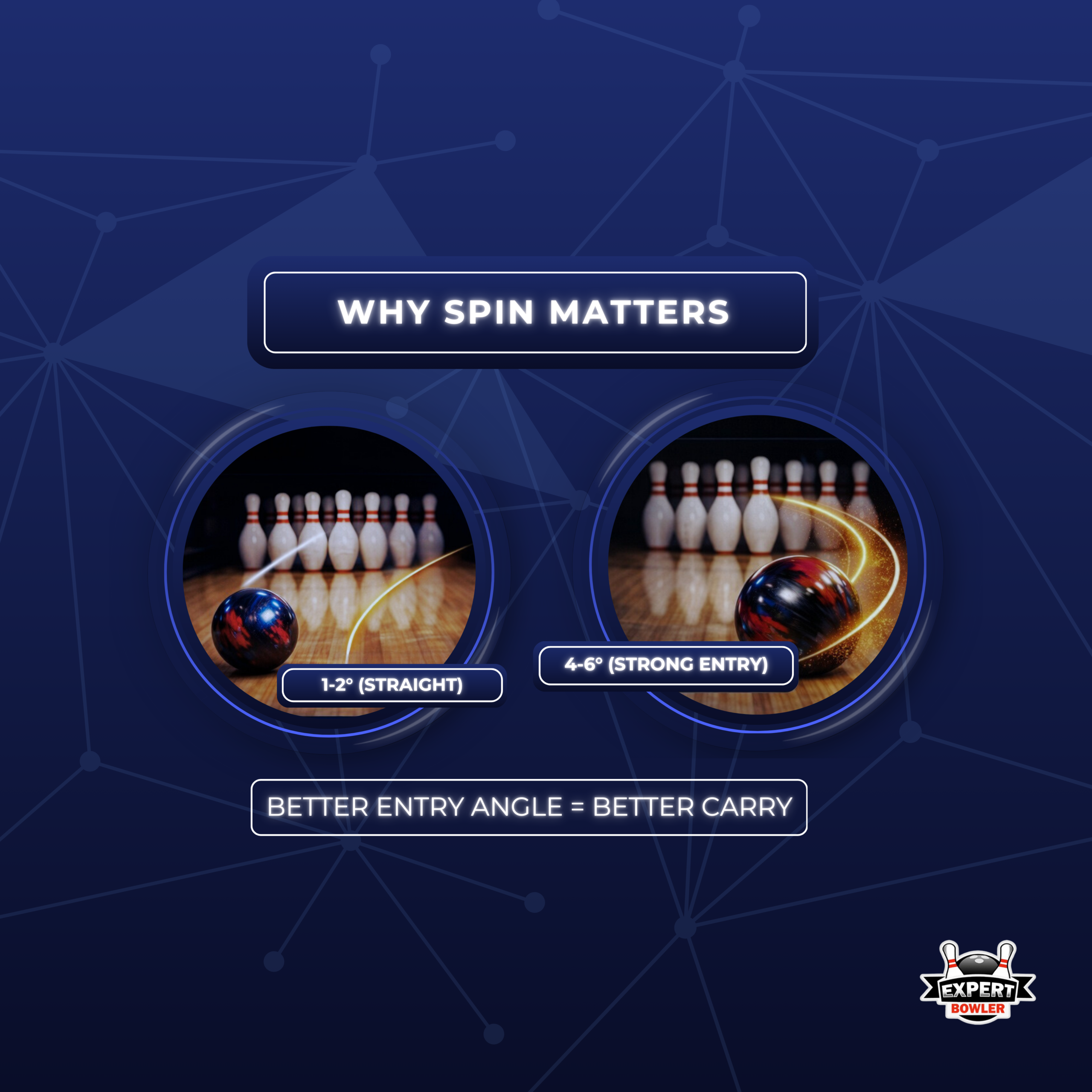
Here’s the thing about spin. A ball entering the pins at 4 to 6 degrees creates far better pin action than a straight shot coming in at 1 or 2 degrees.
When your ball hooks into the pocket (between the 1 and 3 pins for right-handers, or 1 and 2 for lefties), it drives through the pin deck instead of deflecting weakly sideways.
I’ve watched bowlers jump 15 to 20 pins in their average within months of developing a reliable hook. They didn’t get stronger or more athletic. They just learned how to make the ball work for them.
The good news is that the mechanics aren’t complicated. Grip, wrist position, release timing, and follow-through. Get those pieces right, and you’ll know how to spin a bowling ball.
Understanding Bowling Ball Spin: Rev Rate and Axis Rotation
Two terms dominate bowling conversations about spin.
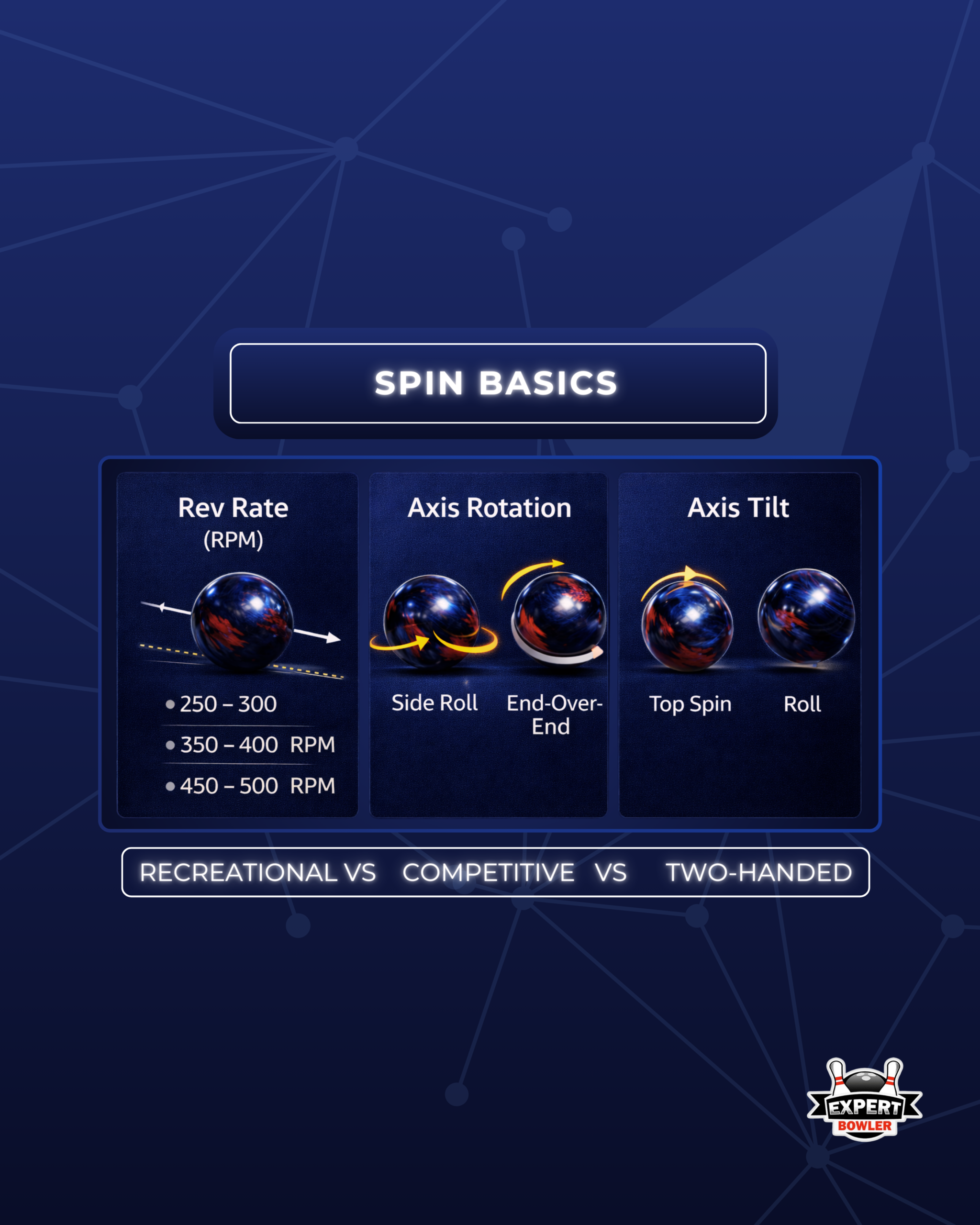
Rev rate measures rotation speed, usually in revolutions per minute. Recreational bowlers average somewhere around 150 to 250 RPM. Competitive league players often hit 300 to 400 RPM. Two-handed bowlers like PBA star Jason Belmonte can exceed 500 RPM. More revolutions generally mean more hook potential, though ball speed and lane conditions factor in heavily.
Axis rotation describes spin direction relative to the ball’s travel path. Picture the Earth spinning on its tilted axis. Releasing with your hand on the side of the ball creates side roll, where the ball spins in a different direction than it’s traveling. This stored energy converts to hook motion once the ball hits the friction in the backend of the lane.
There’s also axis tilt, which refers to the vertical spin angle. This is how much your ball spins like a top versus rolling end over end. Higher tilt creates more skid and a sharper, later break. Lower tilt gets the ball rolling earlier with a smoother arc. Most bowlers naturally fall between 10 and 25 degrees.
The Foundation: Grip and Setup for Spin
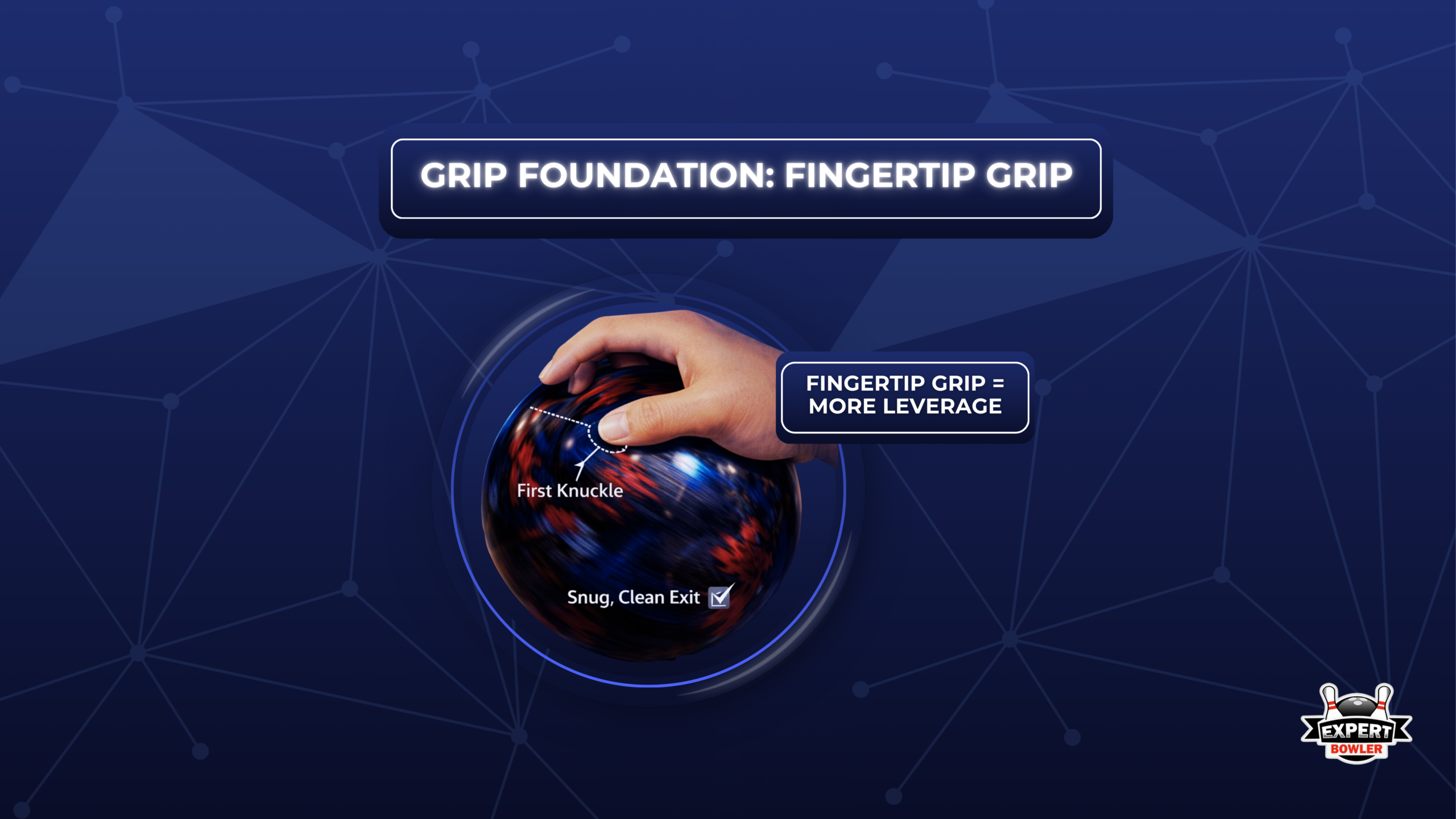
You can practice release drills all day, but without proper grip and stance, you’re fighting uphill. The fingertip grip is essential for generating spin. Your fingers insert only to the first knuckle, not buried to the second like a conventional house ball grip.
This shallow insertion gives your fingers leverage to rotate the ball at release. Your thumb should fit snugly but exit cleanly. Too tight and you’ll hang up. Too loose and you’ll squeeze to compensate.
Professional fitting makes a real difference here. The span between thumb and finger holes, the pitch angles, and the hole sizes all affect your ability to release cleanly. I’ve seen bowlers struggle for months with issues that vanished after a proper pro shop fitting.
For stance, keep feet shoulder-width apart with knees slightly flexed. Lean your upper body forward just a bit. You want an athletic position, not bolt upright. Hold the ball at waist height with your non-bowling hand supporting most of the weight, keeping your bowling arm relaxed before you start the approach.
Mastering the One-Handed Spin: A Step-by-Step Guide
The traditional one-handed release remains the most common bowling ball technique, and for good reason. It offers excellent control and consistency once you develop muscle memory. Breaking it into three parts helps most bowlers learn faster than trying to absorb everything at once.
Wrist Position: Cupped vs. Flat
Your wrist position through the swing determines hook potential. A cupped wrist (palm angled slightly toward your forearm) keeps fingers behind the ball longer, generating more revolutions. A flat or broken wrist reduces hook but can help accuracy on spare shots.
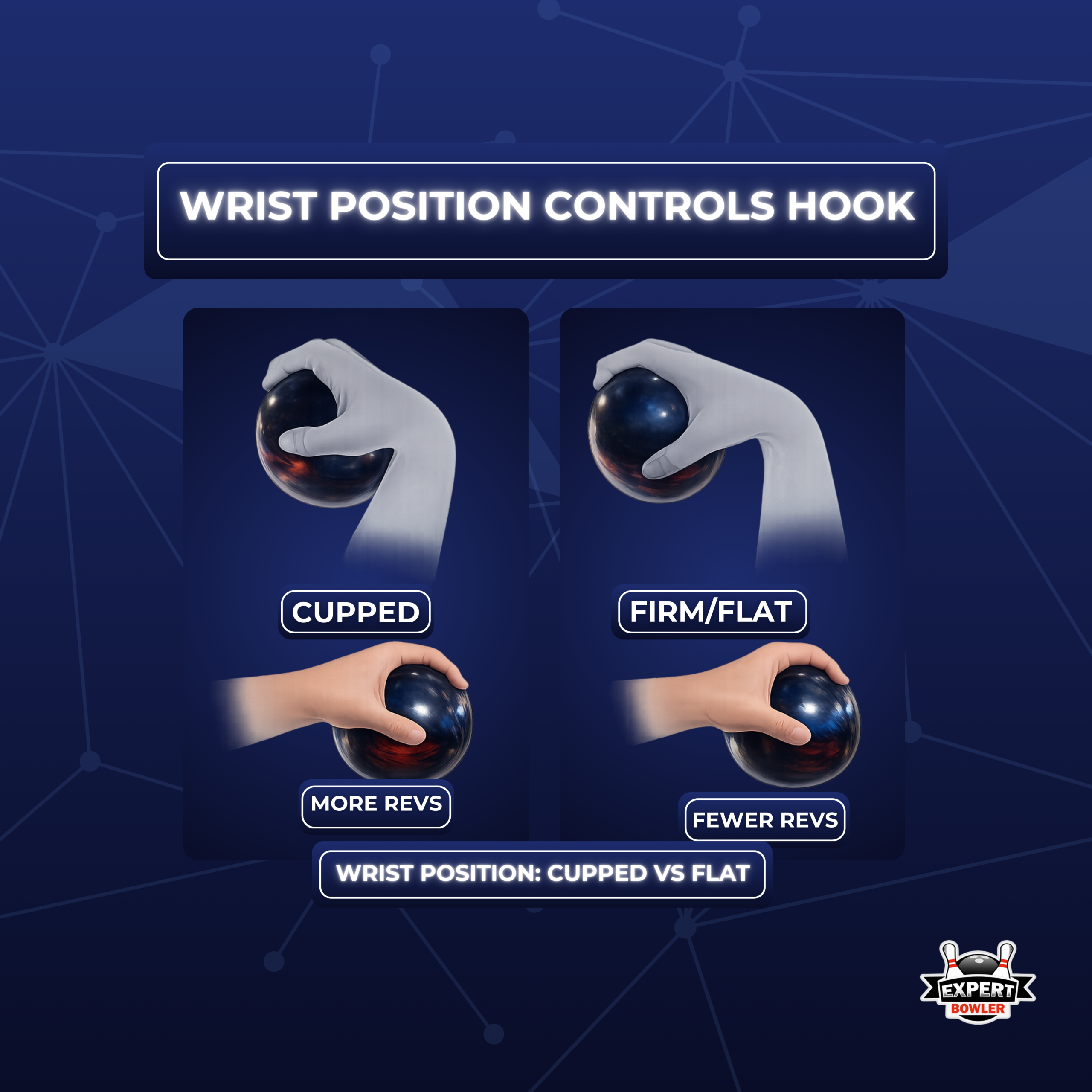
Most bowlers benefit from maintaining at least a firm, flat wrist through the swing. If you struggle to keep yours from breaking back, a wrist support device can help you train in the proper position. You don’t need an extreme cup to hook effectively, but letting your wrist collapse kills rev rate.
The Release: “Shaking Hands” with the Ball
The release happens fast. We’re talking under a second from thumb exit to fingers leaving. One analogy helps most people visualize it. Imagine reaching out to shake someone’s hand. Palm faces inward, thumb on top, fingers on the side. That’s approximately where your hand should be at release. Thumb exits first, then fingers rotate from about 5 o’clock to 3 o’clock as they lift through the ball.
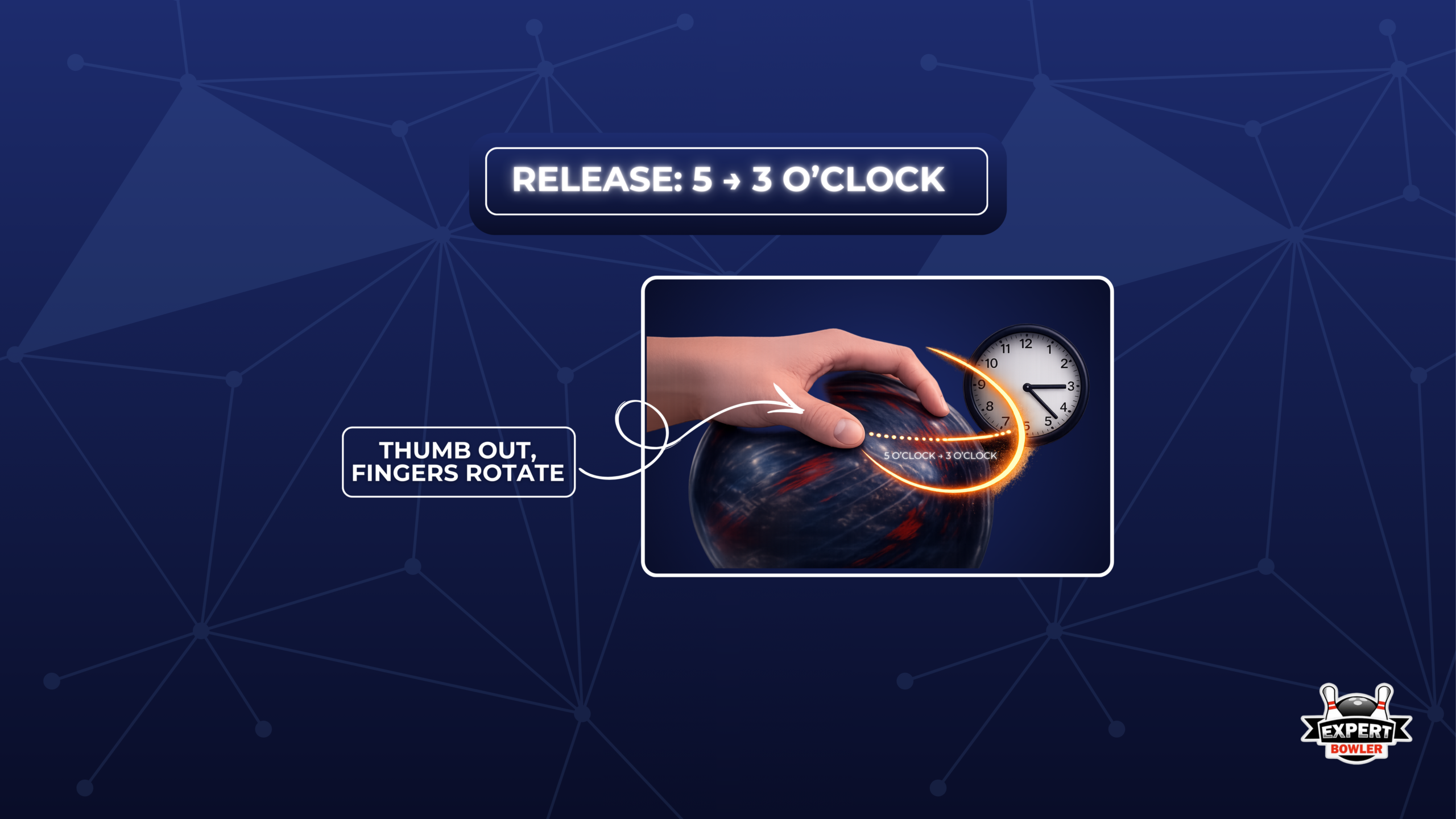
Some coaches describe this as turning a doorknob counterclockwise. Whatever mental image works, the key is that rotation happens at swing bottom, right as the ball passes your slide foot ankle. Release too early, and you pull left. Too late, and you push right.
The Follow-Through: Pointing at the Pins
What happens after release still counts. Your arm should continue in a smooth arc toward your target, finishing around shoulder height. Hold that position until the ball is halfway down the lane. Falling sideways or pulling across your body indicates problems earlier in the delivery. A balanced finish means solid fundamentals throughout.
Mastering the Two-Handed Spin: A Step-by-Step Guide
Twenty years ago, bowling two-handed drew stares. Now it’s everywhere. Jason Belmonte has won over 30 PBA titles using this technique, and the USBC officially recognizes it as legal. If you’re considering the two-handed bowling spin, know that it requires more athleticism but offers serious power potential.
Two-Handed Grip and Ball Position
Most two-handers skip the thumb hole entirely. Your dominant hand goes under with the middle and ring fingers inserted to the first knuckle. The non-dominant hand sits on top toward the front, cradling the ball through the approach. This shared grip actually reduces strain on your bowling arm compared to the one-handed support of 15 pounds.
The Power of the Release: Uncapping the Bottle
The two-handed release helps you generate a rev rate that’s tremendous because both arms contribute. Support hand leaves first, then the dominant hand rotates like uncapping a bottle or revving a motorcycle throttle. Two-handers commonly generate 400 to 500+ RPM. That’s significantly more than most one-handed players. The extra rotation creates an aggressive hook but demands precise timing.
Consistent Follow-Through for Two-Handed Bowlers
This style demands more knee bend and forward lean than traditional approaches. Your body rotates aggressively, requiring real athletic ability for balance. Younger bowlers often pick it up quickly, while those who’ve thrown one-handed for decades may find adjustment challenging. Stay down through release rather than popping up. Your arm should chase the ball toward the target.
Common Mistakes When Trying to Spin a Bowling Ball (and How to Fix Them)
After coaching hundreds of bowlers through their first hook shots, I see the same errors over and over. Recognizing these in your own game speeds up learning.
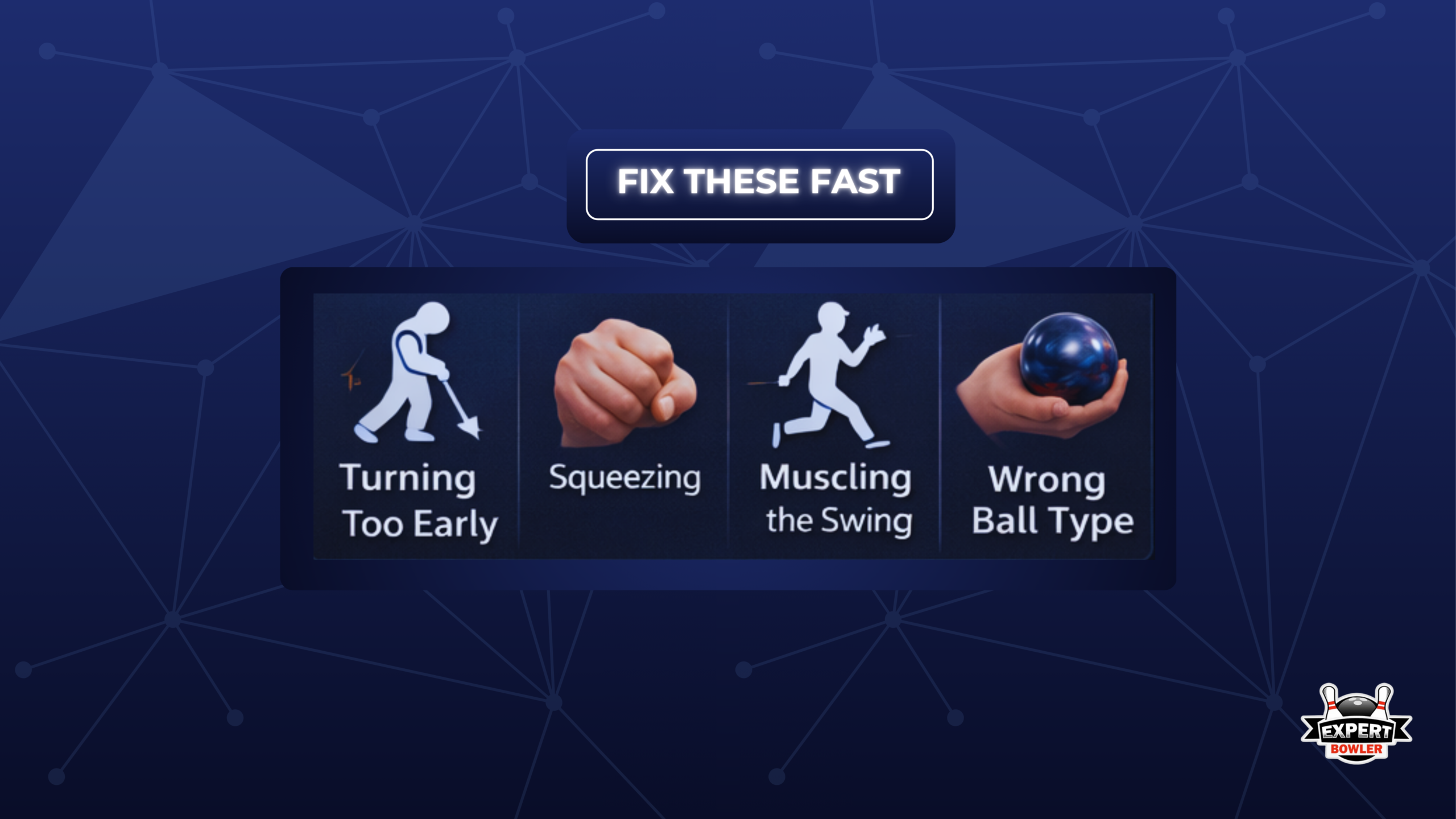
- Turning too early – When you start rotating before the swing bottom, you end up on top of the ball rather than behind it. This creates a weak, spinning release with minimal hook. Keep your hand behind longer and rotate only as your thumb exits.
- Squeezing the ball – Gripping too tightly creates forearm tension and inconsistent releases. The ball should feel secure without white-knuckling it. If you’re squeezing, your thumb probably doesn’t fit correctly.
- Muscling the swing – Your arm should swing freely from the shoulder like a pendulum, not be forced by your bicep. A muscled swing destroys timing and repeatability. Let gravity do the work on the downswing.
- Wrong equipment – Trying to hook a plastic spare ball or using a weight too heavy for you makes learning unnecessarily difficult. Get a reactive resin ball that fits properly at a weight you can control.
Drills to Improve Your Bowling Ball Spin
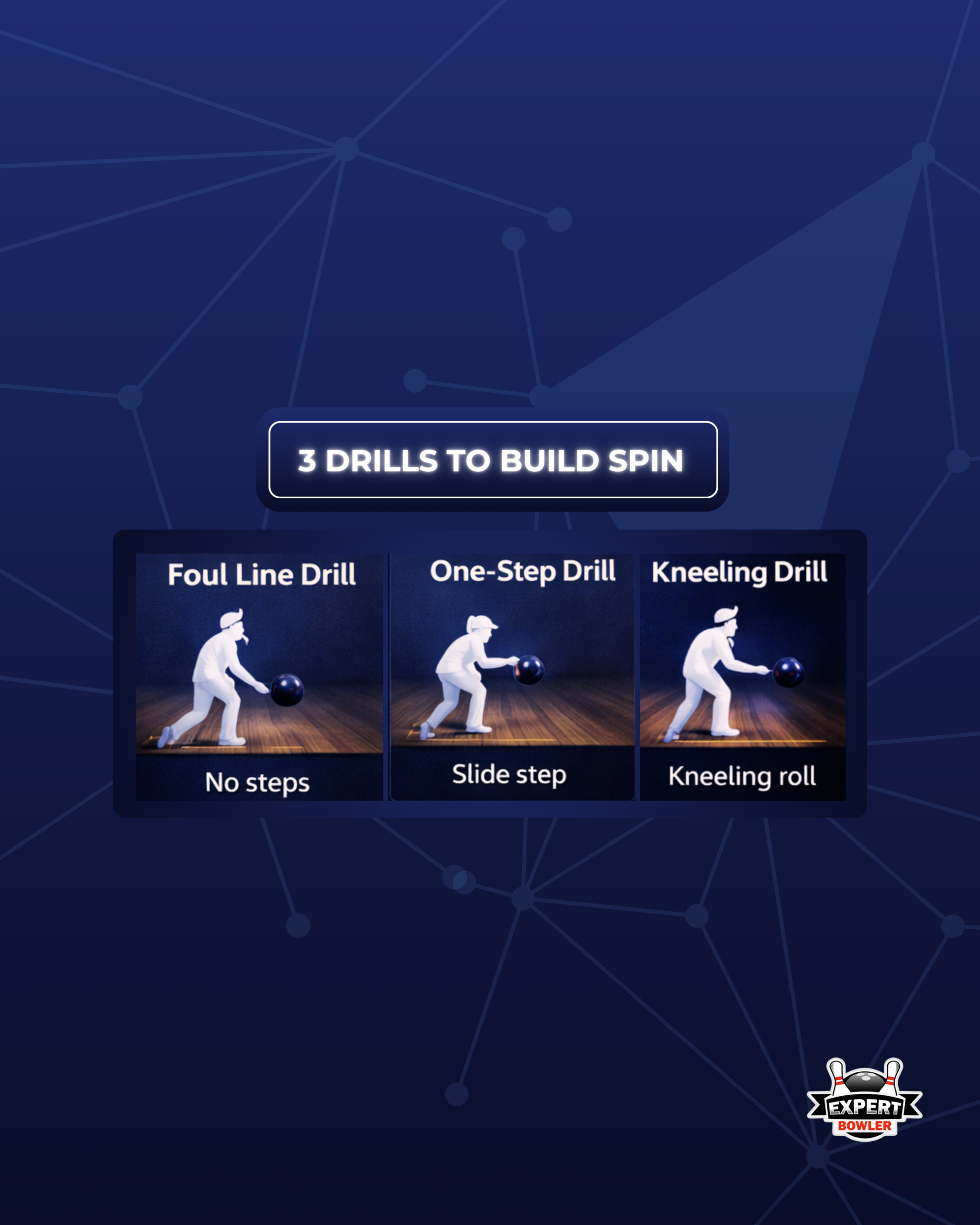
Reading about technique only takes you so far. These drills, used by coaches across the country, develop feel and muscle memory for a reliable hook.
Foul Line Drill
Stand at the foul line with the slide foot forward. Without stepping, push the ball out, let it swing back, and release down the lane. This eliminates approach variables so you focus purely on the release. Use a lighter house ball starting out, and target the arrows rather than worrying about pins.
One-Step Drill
Add a single slide step before release. Start from the fourth-step position with the ball already pushed away. This bridges the gap between stationary practice and full approach, helping you feel how footwork and armswing connect.
Kneeling Drill
Kneel at the foul line with the bowling-side knee down. Swing the ball and release from here. You’ll quickly discover whether your swing travels straight or loops around your body. USBC coaches use this one extensively.
Towel Drill (At Home)
Lay a hand towel on a smooth floor. Practice hand position and release motion across the towel as if releasing a ball. Builds muscle memory without equipment or a trip to the bowling center.
Light Ball Practice
Use a small football or a very light ball to repeat the release rotation. Lighter weight lets you practice many reps without fatigue, grooving the counterclockwise finger turn.
Equipment for More Spin: Choosing the Right Ball & Fit
Technique comes first, but appropriate equipment removes obstacles. The ball you throw has a big effect on hook potential.
Coverstock type is the biggest factor. Reactive resin balls grip the lane and create a hook. Plastic or polyester balls slide much straighter. For learning, choose a reactive resin designed for lighter oil conditions. These are often called entry-level performance balls. Save aggressive equipment until you control a moderate hook.
The core design also affects motion. Symmetric cores, like the Storm Tropical Surge, produce smoother, predictable arcs. Asymmetric cores, like the Hammer Black Widow 3.0, create sharper, more angular movement. For most developing bowlers, symmetric offers forgiveness while learning.
Get drilled by a pro shop operator who measures your hand and discusses your goals. Proper span, pitch angles, and hole sizes make a clean release far easier. This isn’t where to cut corners. If you struggle with maintaining wrist position, consider a wrist support device. Many bowlers use them temporarily while building muscle memory.
Unlock Your Full Potential on the Lanes
Learning to spin takes patience. You won’t nail it in one session or even one month. But every bowler throwing a consistent hook today went through the same awkward learning phase you’re facing.
Start with fundamentals. Get a ball that fits. Learn the grip. Practice your bowling ball release without the complexity of a full approach. Foul line and one-step drills build muscle memory faster than just bowling game after game, hoping something clicks. Film yourself occasionally and compare it to what you’ve learned.
Small improvements add up. That slight wrist adjustment today becomes automatic six months from now. Put in the work, stay patient, and results come. Once you learn how to hook a bowling ball, you’ll have more angles to play, better carry on off-hits, and confidence from actually understanding what your ball is doing down there.
Ready to go deeper? Check out our guides on choosing your first bowling ball and understanding bowling ball oil patterns.