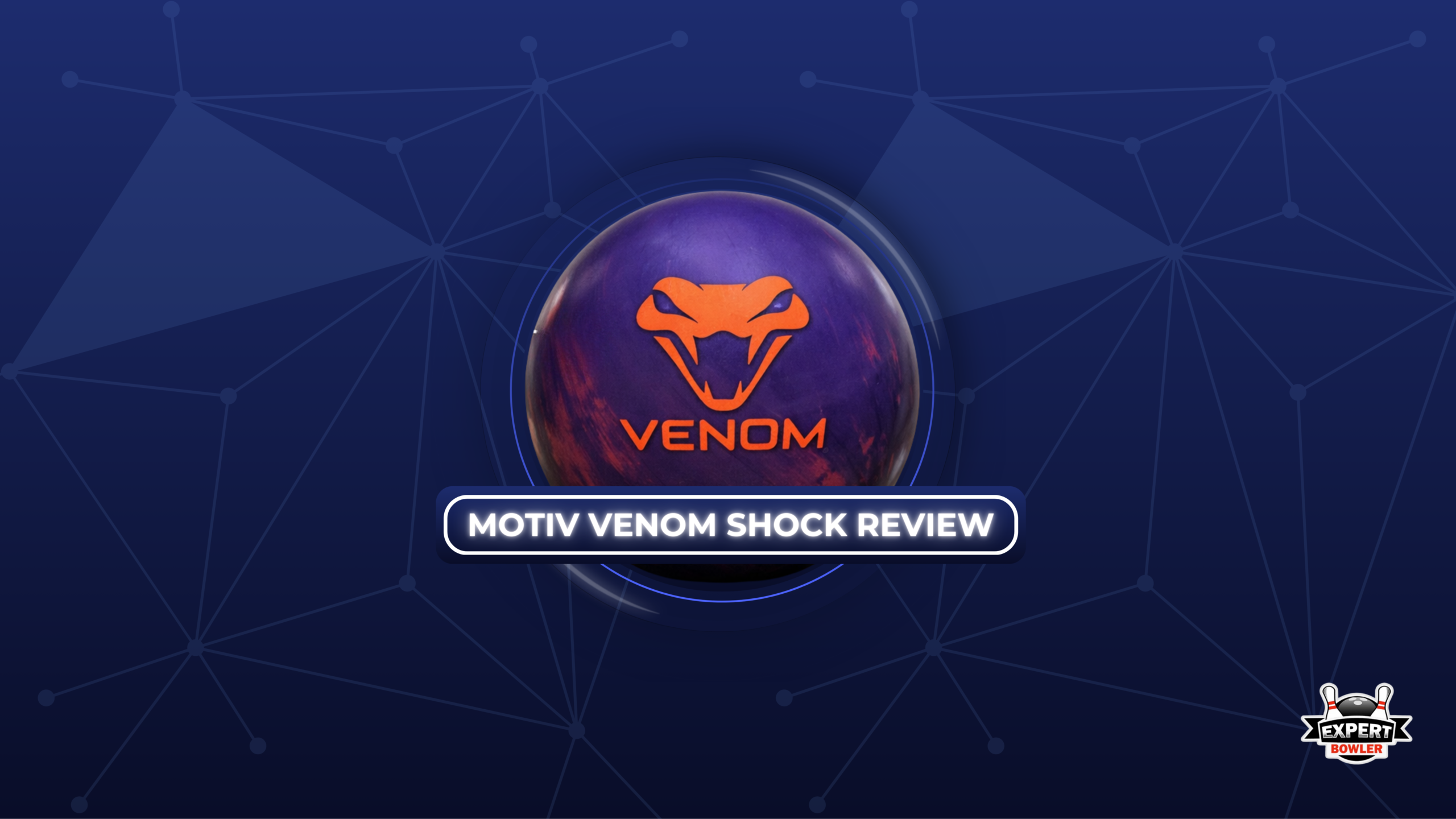
When bowlers talk about a benchmark bowling ball, they mean something specific. It is the ball you pull out first to read the lane. It tells you whether you need something stronger or weaker, something with more angle or more control. The Motiv Venom Shock fills that role better than almost anything else on the market.
I have drilled at least seven or eight of them over the years for myself and the bowlers I coach. Every single one rolled the same. Smooth through the midlane, predictable off the dry, finds the pocket without fighting you.
It is the kind of ball that rewards consistency over power. If you are a league bowler looking for control on medium oil, this one belongs in your bag. But if you need something that snaps hard off the dry, you’ll need to pair Venom Shock with other balls.
The Shock might not always be the ball you finish with, but it is often the one that gets you to the ball you need. And that starts with how Motiv built it.
Unveiling the Technology – Motiv Venom Shock Key Specifications
Motiv Venom Shock
The Motiv Venom Shock is included in the technology and specifications section because it is widely used as a reference point for understanding benchmark ball motion. Its Gear core and Turmoil MFS solid coverstock create a smooth, readable transition that highlights how core numbers, cover strength, and surface finish work together on medium oil conditions.
This ball weight is best suited for league bowlers and competitive players who want early clarity on lane behavior without exaggerated backend motion. It makes the most sense on typical house shots and medium-volume patterns. It may be less effective on very dry lanes, where it can read too early, or on heavier oil where additional traction is required.
Expect a smooth, controlled ball motion that reads the midlane clearly and transitions without sharp direction changes. The Venom Shock is commonly used as a first ball out of the bag on medium oil conditions to evaluate lane friction and guide equipment or alignment adjustments as lanes transition.
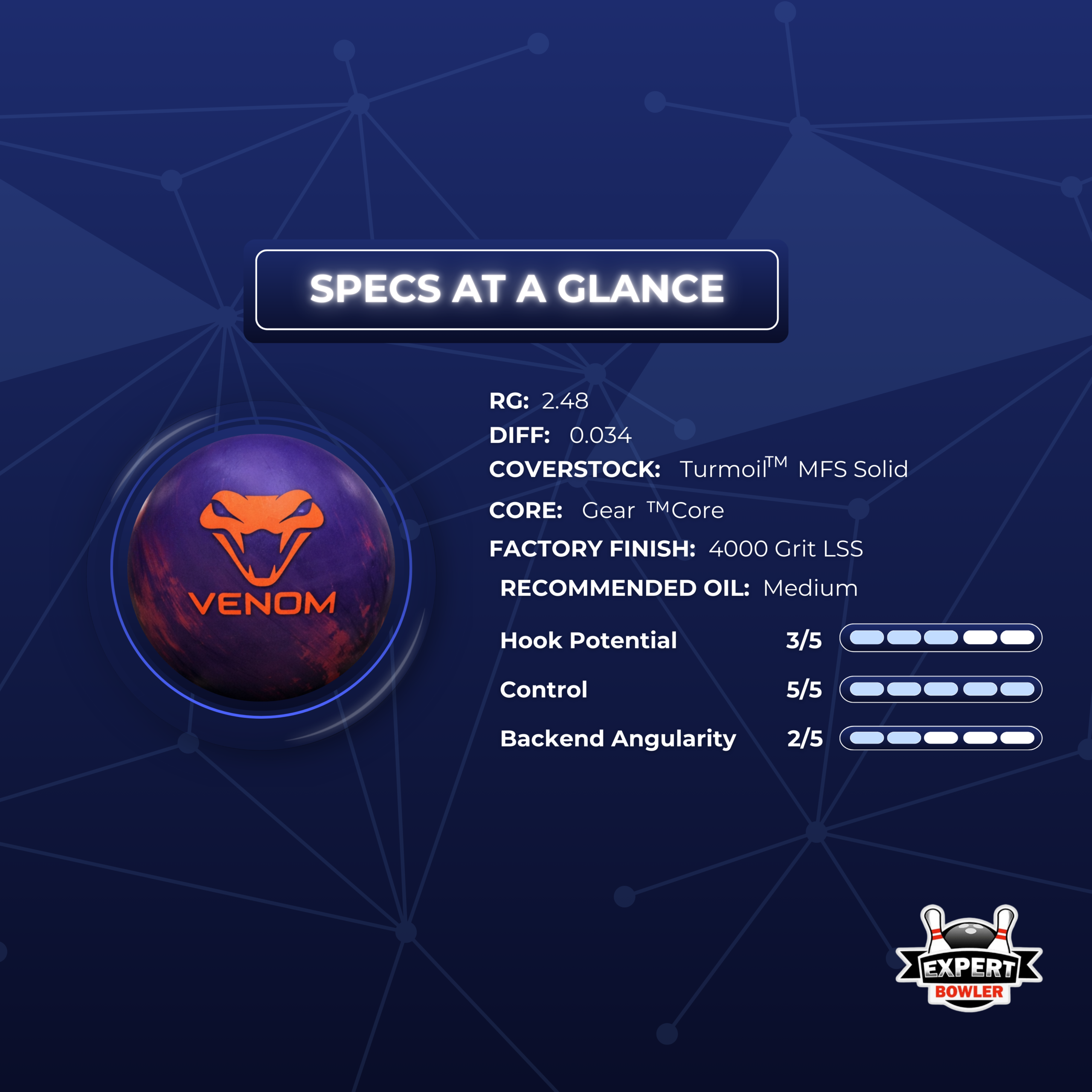
The Venom Shock pairs the Gear core with Motiv’s Turmoil MFS coverstock. That combination influences everything about how the ball moves down the lane.
The Gear Core
At 15 pounds, the Gear core runs a 2.48 RG with a differential of 0.034. Those numbers translate to a low-rolling core with moderate flare potential. The ball gets into an early roll without burning up energy in the midlane. It does not rev up late and snap. Instead, it transitions smoothly from skid to hook to roll.
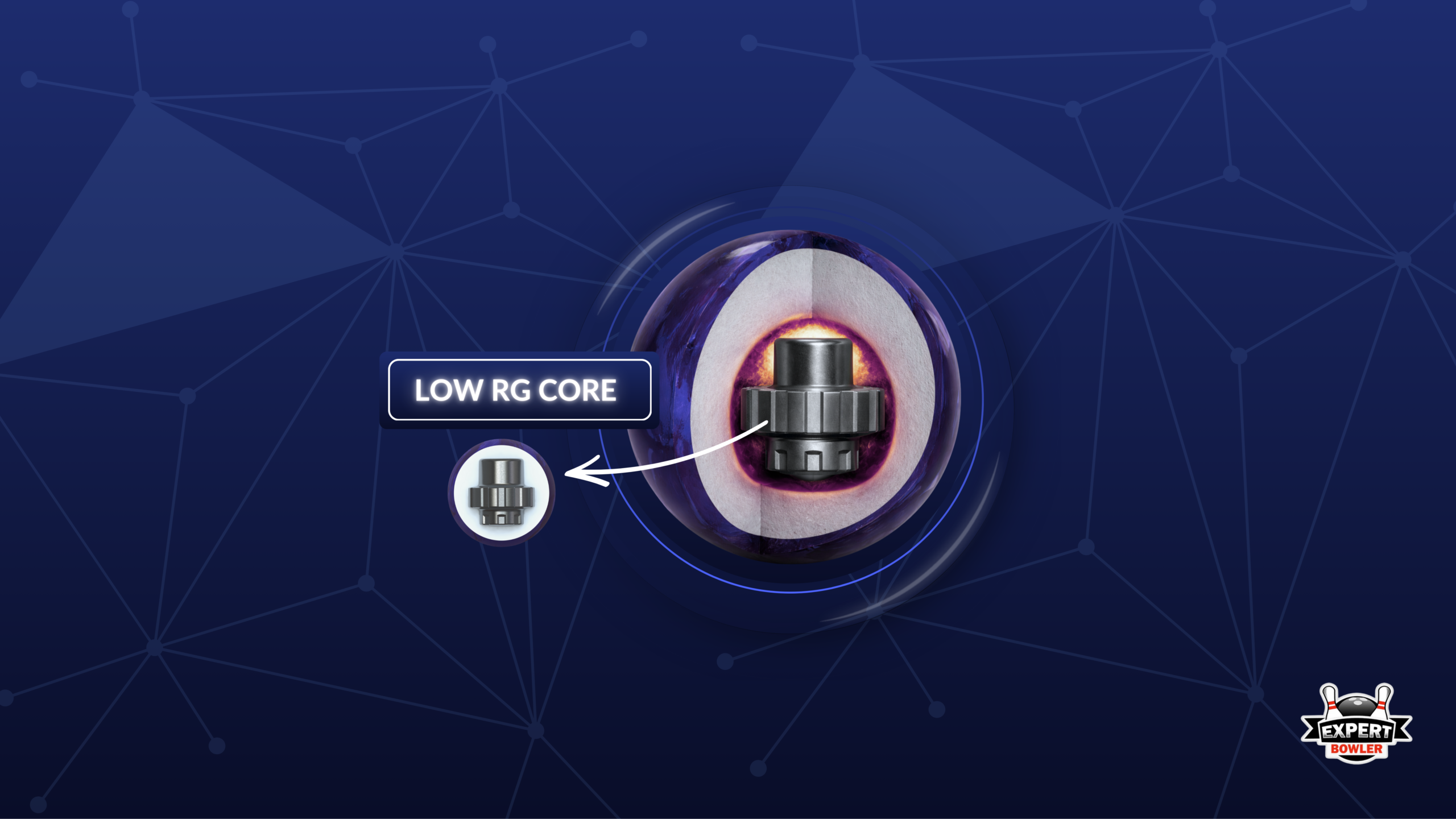
The low RG helps the ball read earlier than high-RG pieces, which is exactly what you want from a benchmark. You are not guessing where the breakpoint is because the ball tells you as it moves through the pattern.
Turmoil MFS Coverstock
MFS stands for Medium Friction Solid. It is a reactive solid cover that creates traction in the midlane without being overly aggressive. The ball reads the friction when it sees it, but it does not overreact. That characteristic defines a benchmark piece.
4000 Grit LSS Finish
Out of the box, the Venom Shock comes at 4000 grit LSS finish. That surface gives you enough texture to grip the lane while still maintaining length through the front. You get a clean look through the heads with a strong, predictable transition downlane.
The combination of core and cover creates what I call honest ball motion. It shows you exactly what the lane is doing without exaggerating or hiding anything. Many coaches, myself included, recommend it as a learning tool as much as a competitive weapon.
Performance on the Lanes – Smooth, Predictable, Forgiving
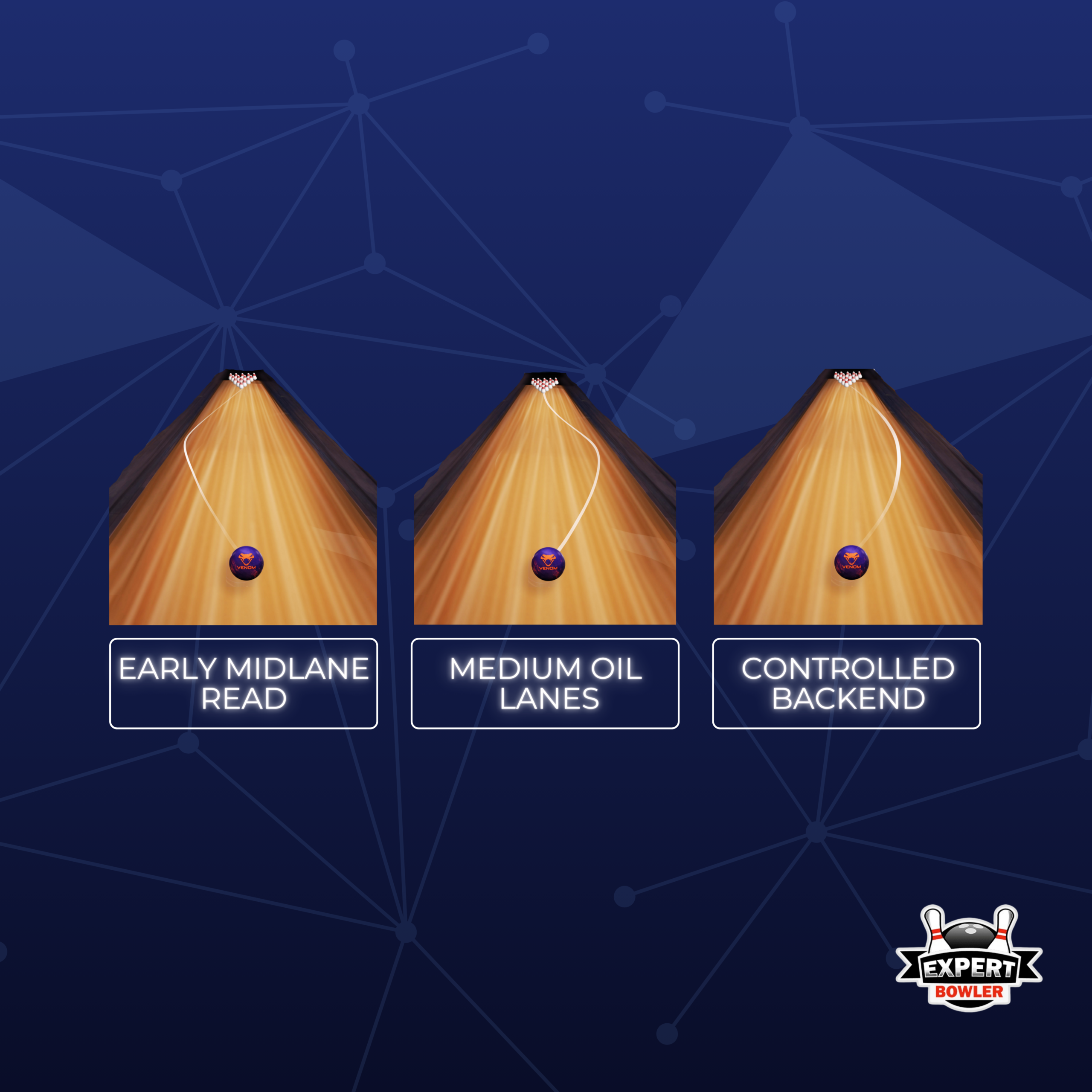
For this Motiv Venom Shock review, I have tested the ball on fresh house shots, broken-down patterns, and everything in between. The motion stays remarkably consistent. Through the front part of the lane, the ball clears the heads cleanly. It does not grab early or skid too long. It just moves through that oil without drama.
The midlane is where the ball shines. The Turmoil cover reads the transition zone and starts its roll without any sudden direction change. You can see the ball begin to hook, which makes targeting so much easier. There is no guessing involved. The ball communicates what it is doing every inch of the way.
The backend is controlled but not weak. You get continuous motion through the pins rather than a violent snap. That arc shape carries better than angular balls on medium conditions because the ball drives through the deck instead of deflecting. I have watched countless bowlers leave fewer corner pins with the Venom Shock simply because of how it finishes.
On medium oil patterns, which cover most league and house conditions, the Venom Shock performs at its best. It has enough surface to handle the volume but enough control to stay in the pocket. When the lanes start to transition, you can move left with it and shape the ball out without losing that predictable reaction.
The ball does have limits. On very dry conditions, it can read too early and lose energy before hitting the pins. On heavy or long oil patterns, it may struggle to make the corner. Understanding what the ball is designed for helps you get the most out of it. It is a medium-oil benchmark, and it excels in that range.
Why Bowlers Trust the Venom Shock – Control and Versatility
The word I hear most from bowlers who throw the Venom Shock is trust. They trust the reaction, they trust the carry, and they trust that it will perform the same way shot after shot. That reliability counts for more than raw hook potential when you are trying to build a good game.
Control is the first thing you notice. The ball does not overreact to friction, which means small misses do not turn into big misses. If you tug one a little inside, the ball recovers. If you leak one out, it comes back. That forgiveness builds confidence, especially for bowlers still developing their consistency.
The ball motion is incredibly easy to read. You can see the entire transition from skid to hook to roll, which helps you make better adjustments. Bowlers who struggle with their timing often find the Venom Shock easier to repeat because they can see exactly what is happening downlane.
It works for multiple styles, too. Strokers appreciate the smooth arc and control. Tweeners get the midlane read they need without fighting over-under reactions. Even higher-rev players use it when they need to tone things down and play straighter lines. That versatility is rare in a single ball.
One bowler I coach always says he can start the night with it and finish with it. That is the definition of a benchmark. It covers enough range that many bowlers do not need to switch balls during a typical league session. For recreational and league bowlers alike, that simplicity has real value.
Motiv Venom Shock – Pros and Cons
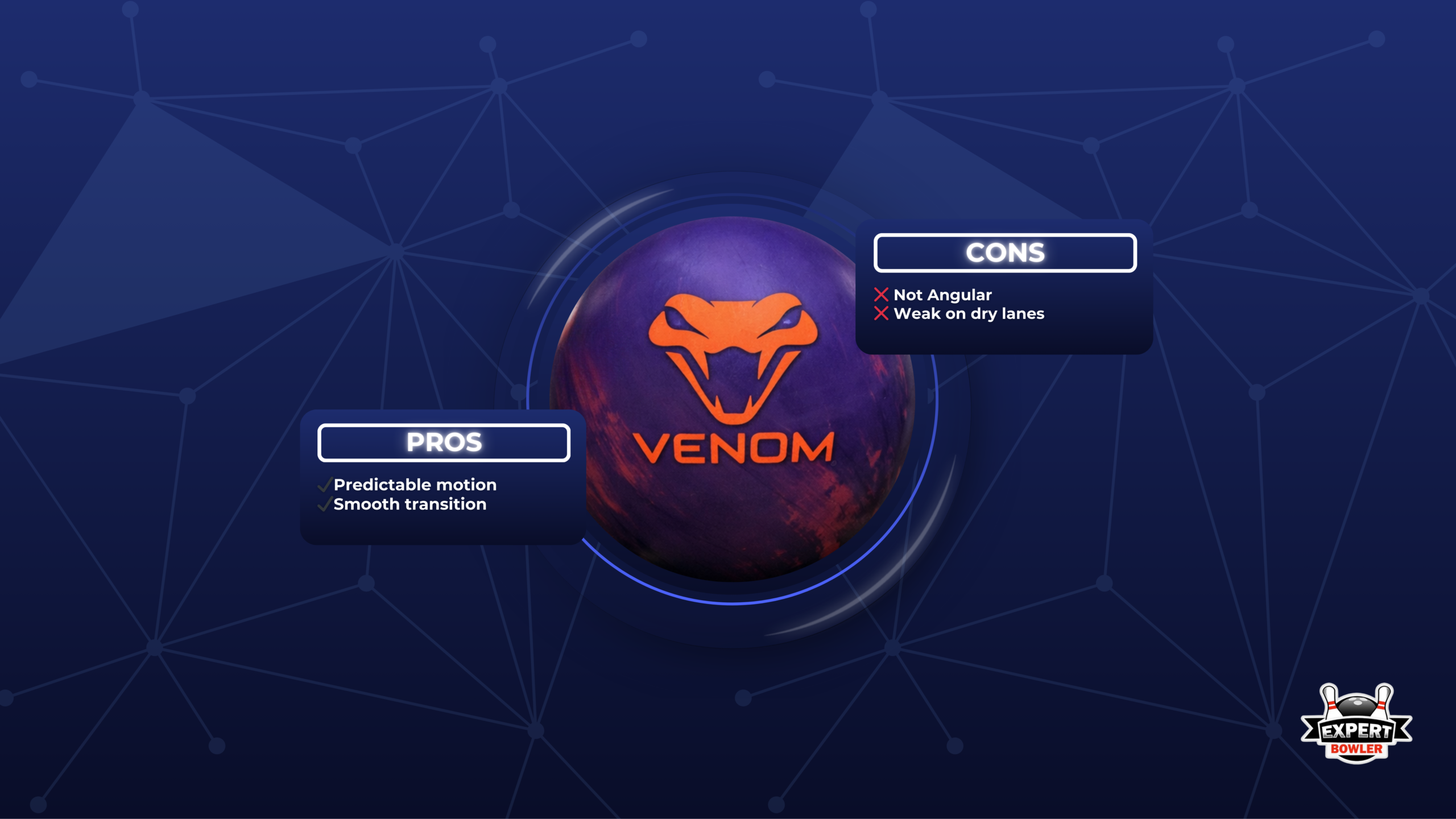
Pros
- Exceptional control and predictability in medium oil conditions
- Strong, readable midlane motion that communicates lane conditions
- Forgiving of small misses and recovers inside and outside
- Works across multiple bowling styles, including stroker, tweener, and power player
- Proven track record as the benchmark standard for years
Cons
- Not ideal on very dry lanes because it reads too early and loses energy
- Less angular than pearl covers and will not create a sharp backend snap
- Not designed for heavy volume or long oil patterns
Drilling and Surface Adjustments for Your Venom Shock
Your Motiv Venom Shock layout influences the shape you see on the lanes, though the ball is forgiving enough that most layouts work well. For testing purposes, I typically use a 30 x 4.5 x 30 layout, which gives a balanced reaction suitable for comparison work.
Pin-down layouts create a rollier motion with an earlier hook and a smoother arc. This works particularly well for bowlers who want maximum control and do not need a lot of length. It is an excellent choice for fresh conditions or heavier patterns where you need the ball to read sooner.
Pin-up layouts add a bit more length with a slightly stronger finish. The ball gets down the lane further before transitioning, which can help on patterns that have already broken down or when you are playing further inside. It creates a cleaner look through the heads with a more defined backend.
Surface adjustments extend the ball’s range significantly. Take it down to 2000 or 3000 grit for more traction on lighter oil. Polish it up for additional length and a cleaner look on heavier patterns. The cover responds well to changes, which adds even more versatility to an already adaptable piece.
Talk with your pro shop operator about your typical lane conditions and bowling style. They can match a layout and surface combination that maximizes what the Venom Shock does well.
Motiv Venom Shock vs Competitors – Finding Your Ideal Match
The benchmark category has several strong options, so here is how to choose the right balls for your style and choose the Venom Shock compares to other popular choices.
Venom Shock vs Motiv Forge Flare
The Forge Flare offers more overall hook potential and a slightly earlier read. It is a step up in aggressiveness, making it better suited for medium-heavy conditions. Bowlers who find the Venom Shock not quite strong enough for their house shot often reach for the Forge Flare instead. The Venom Shock remains the better choice for true medium conditions and as a baseline reference ball.
Motiv Venom Shock vs Phaze II
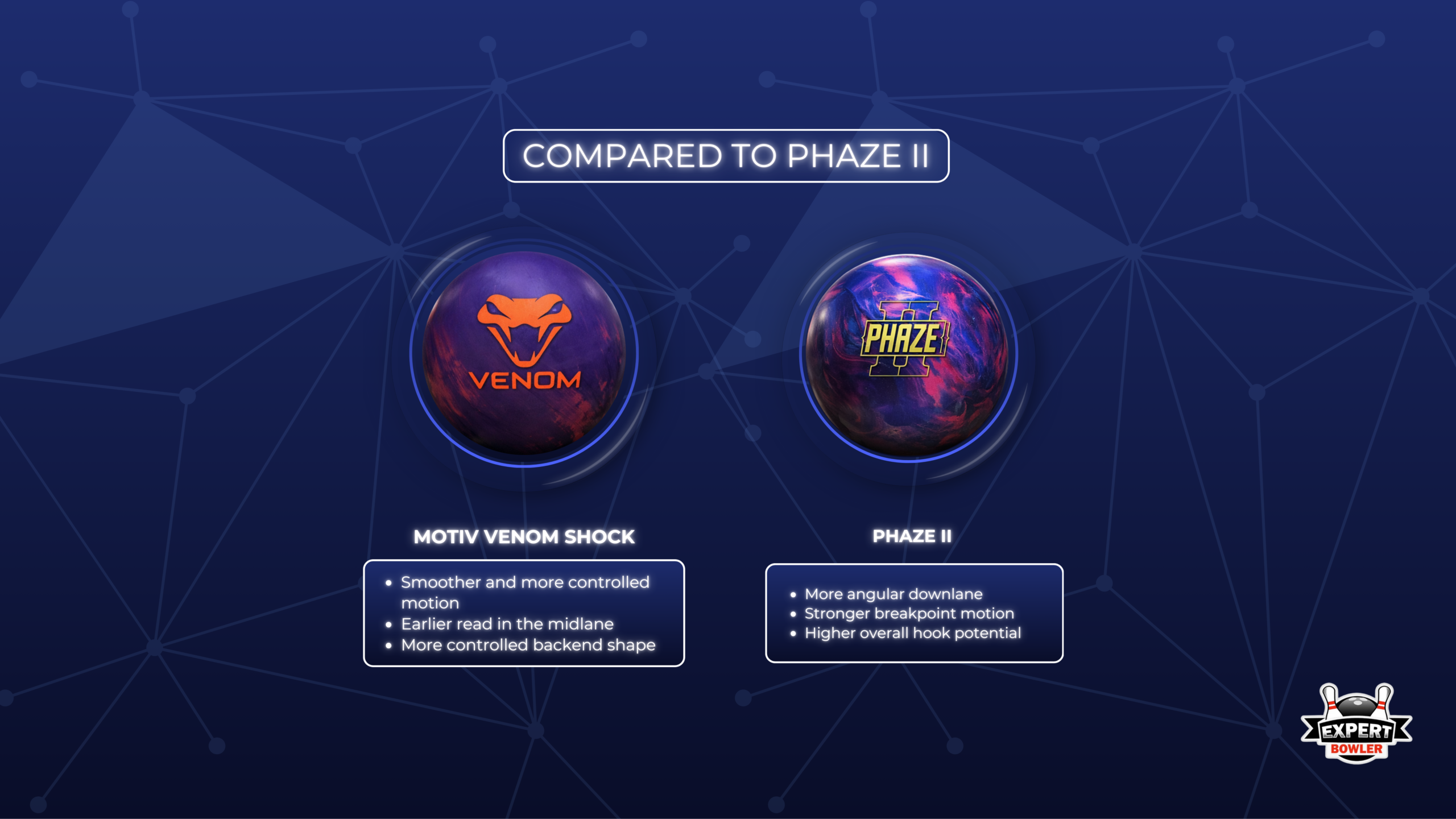
This is the most common comparison in the benchmark conversation. Both balls target similar conditions, but their motions differ. The Phaze II tends to be a touch more angular off the dry, while the Venom Shock offers a smoother, more arcing shape. Bowlers who prefer a continuous roll often gravitate toward the Shock. Those who want a bit more pop at the breakpoint lean toward the Phaze II. Both are excellent choices, and it comes down to motion preference.
Either ball deserves a spot in a serious bowler’s bag. Many competitive players own both and choose based on lane conditions and their approach that day.
Conclusion – The Unwavering Reliability of the Motiv Venom Shock
Motiv Venom Shock
The Motiv Venom Shock is included in the technology and specifications section because it is widely used as a reference point for understanding benchmark ball motion. Its Gear core and Turmoil MFS solid coverstock create a smooth, readable transition that highlights how core numbers, cover strength, and surface finish work together on medium oil conditions.
This ball is best suited for league bowlers and competitive players who want early clarity on lane behavior without exaggerated backend motion. It makes the most sense on typical house shots and medium-volume patterns. It may be less effective on very dry lanes, where it can read too early, or on heavier oil where additional traction is required.
Expect a smooth, controlled ball motion that reads the midlane clearly and transitions without sharp direction changes. The Venom Shock is commonly used as a first ball out of the bag on medium oil conditions to evaluate lane friction and guide equipment or alignment adjustments as lanes transition.
After all the testing, coaching, and real-world league play, my assessment stays the same. The Motiv Venom Shock earns its benchmark reputation. It is not the flashiest ball in any lineup, and it will not give you a highlight-reel hook. What it will do is show up every single time and perform exactly as expected.
League bowlers on typical house conditions should have the Venom Shock in their bag. Bowlers working on their game who need equipment that will not hide their mistakes or exaggerate them will benefit from owning one. Bowlers who want one piece that can handle the widest range of medium conditions should start here.
Bowlers who primarily face heavy oil, long patterns, or extremely dry conditions will want to pair the Venom Shock with something stronger or weaker, respectively. It is a benchmark, not an everything ball. Understanding its range helps you get the most out of it.
The Venom Shock has been around for years and continues to be one of Motiv’s bestselling balls. Many bowlers still consider it the best Motiv bowling ball ever made, and that longevity tells you everything. Bowlers keep coming back to it because it keeps delivering. Some balls earn their reputation through flash. The Venom Shock earned it through consistency.
Last update on 2026-03-22 / Affiliate links / Images from Amazon Product Advertising API