Bowling Ball Cleaning and Maintenance: The Complete Guide to Protecting Performance
By Jeroen Kooij, Editor · Updated August 2026
The ball that used to tear through the pocket is suddenly skating through the heads. The backend has flattened out. You’re wondering if the equipment failed or if you’re just off your game. Nine times out of ten, the culprit is oil saturation. It’s one of the most common issues bowlers run into.
Reactive resin coverstocks absorb oil by design. USBC research showed bowling balls take in 1% to 3% of their weight in lane conditioner within the first 20 hours of oil exposure. The porosity creates friction and generates a hook.
The issue is when absorption goes unchecked. Without consistent maintenance, oil saturates the coverstock, clogs the pores, and changes how the ball reads the lane. Here’s how to clean a bowling ball properly to avoid all these.
What we cover in this guide
- Quick Maintenance Schedule
- Daily Cleaning – Wiping Down After Every Session
- Weekly Cleaning – Deep Cleaning with Approved Cleaners
- Periodic Maintenance: Oil Extraction Methods
- Long-Term Maintenance: Resurfacing & Rejuvenation
- Recommended Cleaning and Maintenance Tools
- Common Bowling Ball Cleaning Mistakes to Avoid
- Protecting Performance Over the Long Haul
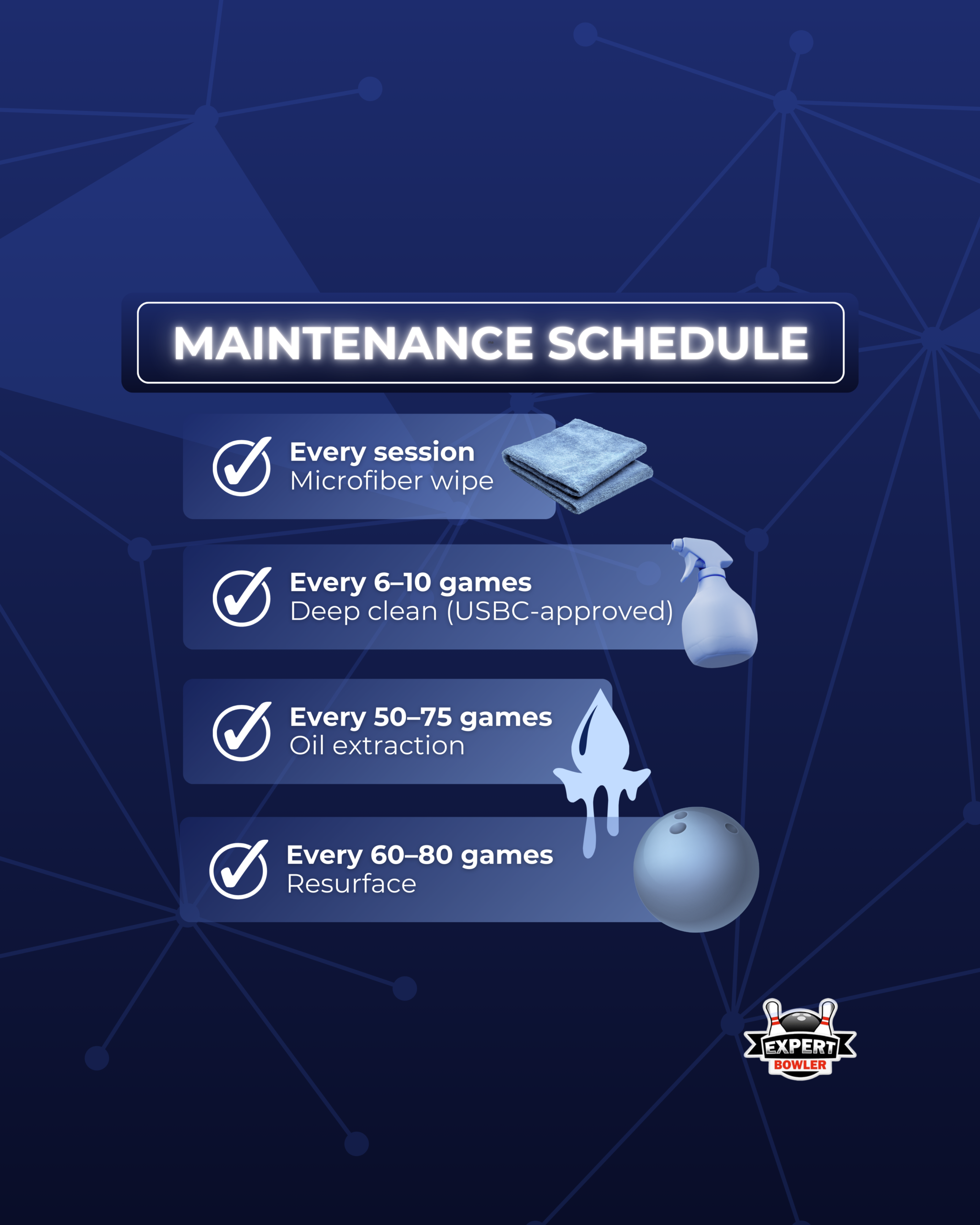
Quick Maintenance Schedule
A consistent maintenance routine is essential for protecting your bowling ball’s coverstock and maximizing lane performance.
- Every session: Microfiber wipe between shots and before bagging
- Every 6–10 games: Deep clean with USBC-approved cleaner
- Every 50–75 games: Oil extraction (pro shop recommended)
- Every 60–80 games: Resurface (adjust based on volume and conditions)
Daily Cleaning – Wiping Down After Every Session
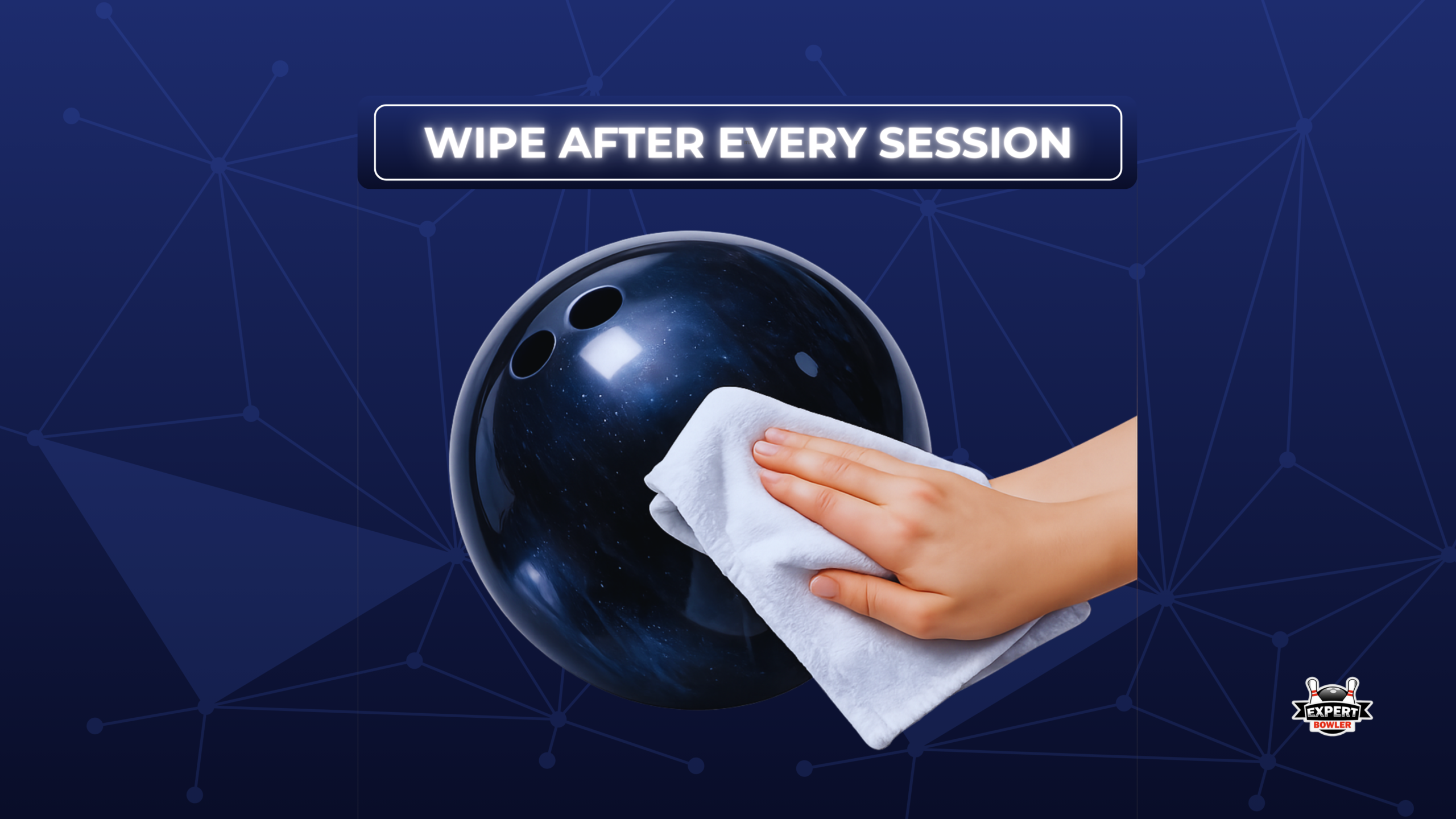
Wiping your ball with a microfiber towel after every shot delays oil penetration and maintains a consistent surface texture throughout a session.
At the end of your set, give the ball a more thorough wipe-down before it goes back in the bag. Don’t let it sit with oil on the surface until next week.
This single habit delivers the highest return of any bowling ball maintenance practice. If there’s one habit worth changing, this is it. If you want the right products for this routine, see our guide to the best bowling ball cleaners
When to Clean: A Coach’s Correction
From our coaching sessions
“Clean the ball before the first shot, not after the last.”
Jack Edelaar — NOC*NSF Master Coach; former national coach of the Dutch youth, junior elite and women's teams and of the Czech national team. Said during a coaching session with us, July 2026.
Everything above treats cleaning as protection for the coverstock, which is why the habit normally lands at the end of a session. Our coach puts it at the start for a different reason: beginning every session from a consistent, clean surface is what makes the ball reaction readable. If the surface condition changes between sessions, the feedback you get from speed, line and target changes with it, and you end up adjusting your game to an equipment variable.
Wiping the ball down before you bag it protects the ball. Wiping it down before your first shot protects your read of what the ball is doing. They are both worth doing and they are not the same habit — and if you only ever do one of them, most bowlers are doing the wrong one.
Cotton smears oil across the surface rather than lifting it. Microfiber’s structure actively absorbs and pulls oil away from the coverstock before it penetrates deeper into the pores. The difference shows up in how long your ball maintains its reaction during a session.
Keep a dedicated towel in your bag and swap it out every couple of months as absorption diminishes. Towels from bowling retailers hold up better through wash cycles than generic alternatives.
What Daily Wipes Actually Accomplish
Daily wiping buys time between deeper cleanings. It won’t prevent absorption entirely and won’t reverse saturation that’s already occurred. When a ball needs a deeper reset, our best bowling ball rejuvenators guide covers the tools that pull oil out of the coverstock instead of just wiping the surface.
But by removing surface oil before it settles into the coverstock, you’re pushing back the interval before weekly cleaning and extraction become necessary.
Weekly Cleaning – Deep Cleaning with Approved Cleaners
Every 6 to 10 games, step up from microfiber wipes to an actual cleaning product. Surface cleaners remove oil, dirt, and lane residue that accumulates despite daily wipes. They don’t extract oil already absorbed into the coverstock, but they prevent additional buildup and maintain the surface texture that drives ball motion.
USBC Approval and the IPA Rule Change
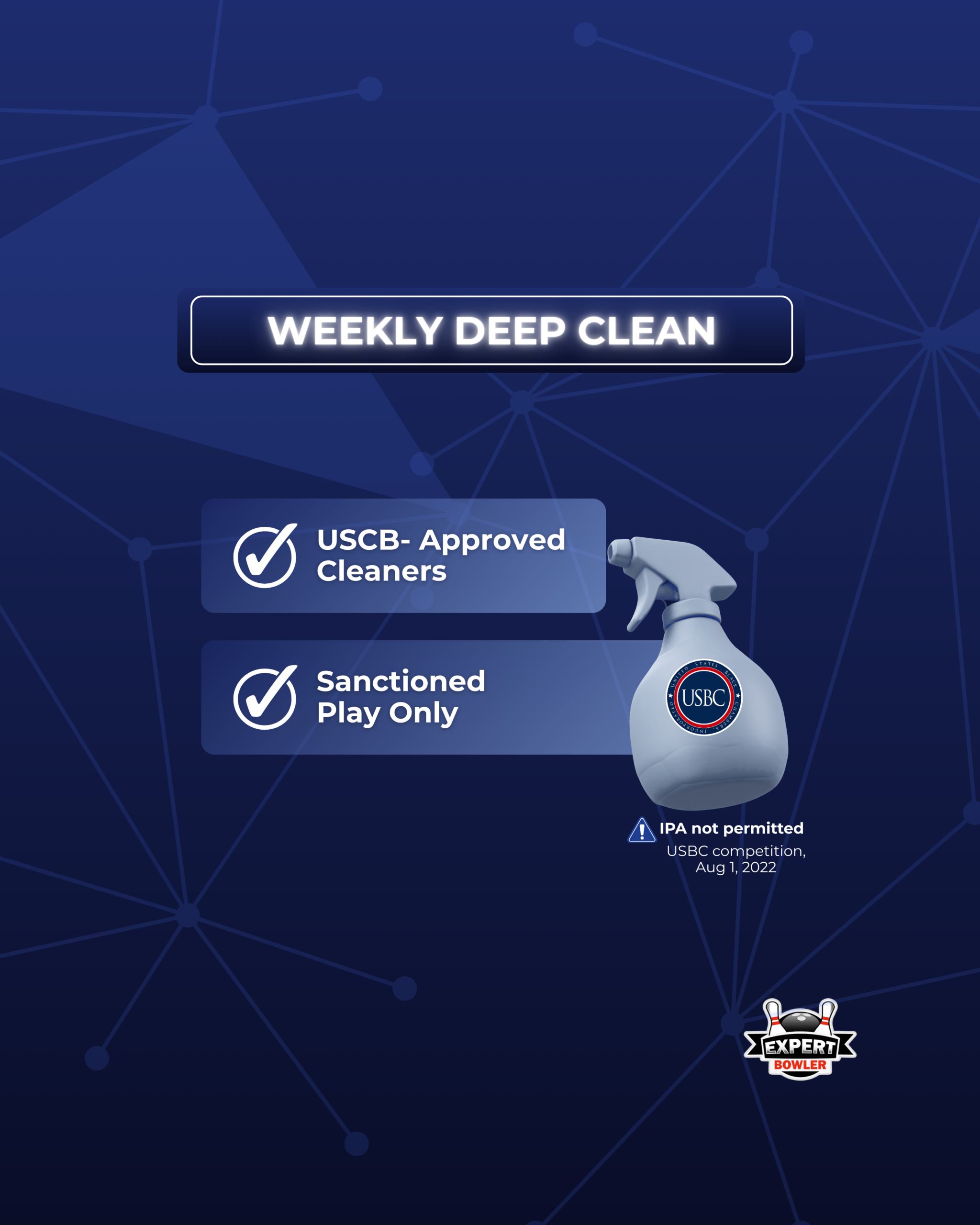
Sanctioned competition requires USBC-approved cleaners. The USBC maintains a list of over 200 approved products, from mainstream brands to bowling-specific formulas. Some are spray-and-wipe convenient. Others are concentrated solutions that require dilution but stretch further per bottle.
As of August 1, 2022, isopropyl alcohol is no longer permitted for ball cleaning during USBC competition. You can still use IPA at home or during practice, but once sanctioned play begins, it’s off limits. IPA was a go-to option for years, so some bowlers still get caught off guard by this one. Check the current approved list before league or tournament bowling to avoid compliance issues.
How to Apply Surface Cleaners
Spray the cleaner across the entire ball surface, let it sit for 10 to 15 seconds, then wipe thoroughly with a clean microfiber towel. Pay extra attention to the track area, which is the ring where the ball contacts the lane. Oil concentrates most heavily there, and incomplete cleaning in that zone shows up as an inconsistent reaction in subsequent sessions.
Best Bowling Ball Cleaners 2026
Regular cleaning extends ball life. Our top picks for cleaners.
Periodic Maintenance: Oil Extraction Methods
Weekly cleaning handles surface contamination, but oil already soaked into the coverstock requires extraction. Most league bowlers should schedule extraction every 50 to 75 games. Bowlers putting in higher volume may need it every 40.
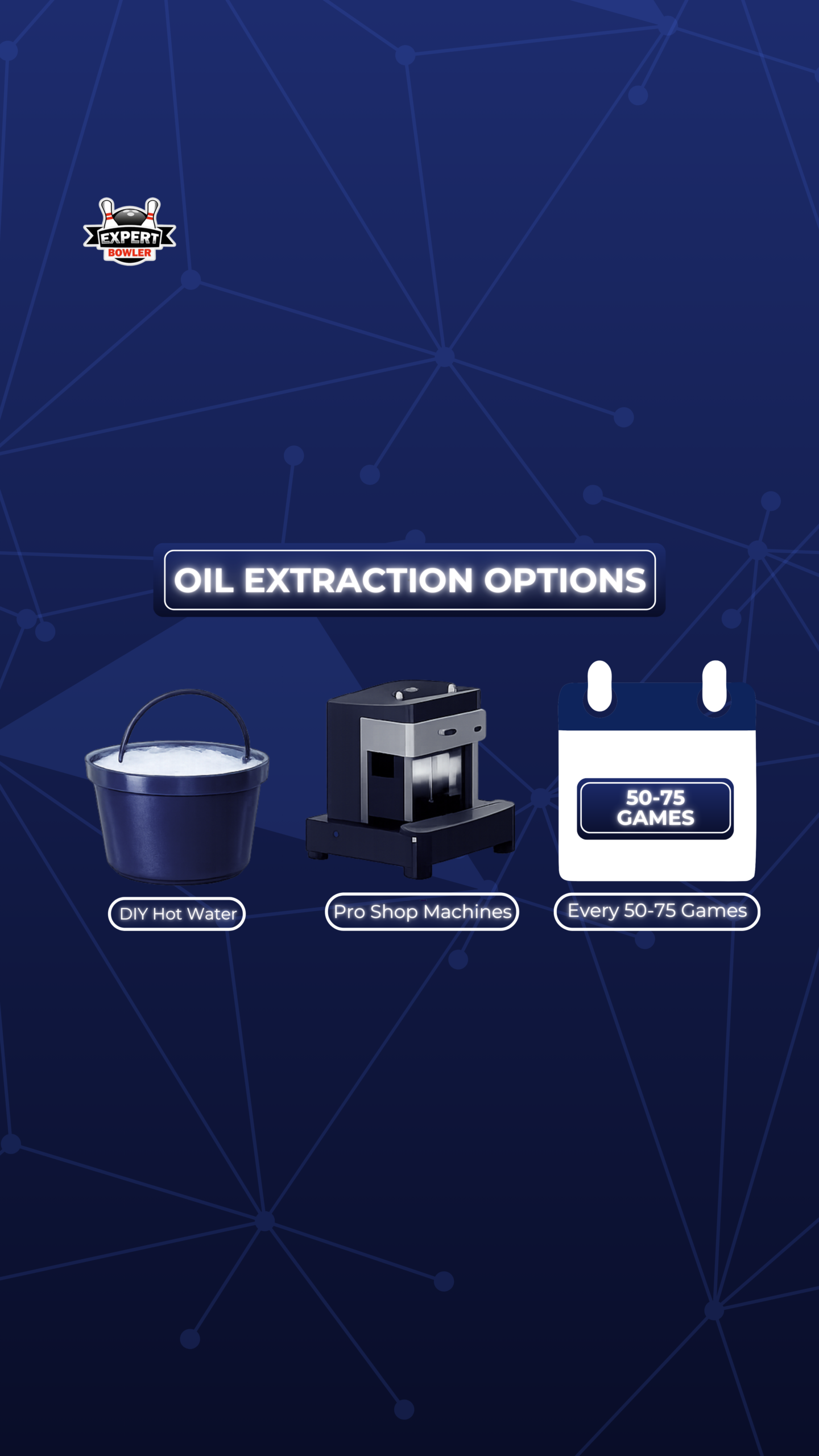
DIY Hot Water Bath
Get a bucket of warm water, somewhere between 85 and 95 degrees Fahrenheit, and mix in a little dish detergent. Put tape over the finger holes so water doesn’t get inside the ball. Submerge it for 20 to 30 minutes and rotate it a few times while it soaks. Rinse and dry it fully before you bowl on it again.
Temperature is where people mess this up. Go past 130 degrees, and you start pulling plasticizers out of the coverstock. Once that happens, the ball is damaged for good. Grab a kitchen thermometer and check. Not worth the risk of guessing.
This method gets maybe 30% to 50% of the absorbed oil out. Good enough to stretch time between pro shop extractions, but don’t expect it to rescue a ball that’s completely loaded with oil.
Professional Extraction Machines
Pro shops run calibrated equipment designed to extract oil without exceeding safe surface temperatures. Even when the machines use higher ambient heat or water temperatures, they’re engineered to control how much heat actually reaches the coverstock.
That’s the difference between professional extraction and a DIY setup where you’re guessing with a bucket.
The technology has evolved over the past decade, and most shops now offer one of three options.
Revivor ovens use dry heat and forced air to pull oil to the surface. The ball rotates inside the unit while absorbent pads collect what comes out. A typical session runs about an hour, sometimes with a wipe-down partway through.
Wave machines submerge the ball in heated water circulating at around 140 degrees. The constant movement helps draw oil out of the coverstock. A full cycle takes about 45 minutes.
Jayhawk Detox machines take a different approach. They use ultrasonic transducers to generate millions of tiny bubbles that penetrate the coverstock pores and release trapped oil. The water stays around 115 to 125 degrees, lower than other methods, which keeps the ball within most manufacturers’ warranty limits. Treatment runs 20 to 60 minutes, depending on how saturated the ball is.
Long-Term Maintenance: Resurfacing & Rejuvenation
Cleaning and oil extraction only go so far. The surface itself wears down no matter what you do.
How Surface Wear Affects Performance
The coverstock is full of microscopic peaks and valleys. That texture grabs the lane and creates a hook. The problem is, every trip down the lane and back through the ball return flattens those peaks a little.
Ball returns cause more wear than most bowlers realize. The belts and lift mechanisms are abrasive, and your ball cycles through them dozens of times per session. Lane friction contributes too.
Older synthetic surfaces with some grit to them accelerate the breakdown. After enough games, the ball reads later and hooks less than it used to.
What Wear Looks Like: Later reaction, weaker hook, and less midlane read are common signs that the surface has broken down.
When to Resurface
Frequency depends on volume. Most bowlers resurface somewhere between 60 and 80 games. High-volume competitive bowlers often do it closer to 50. If you’re bowling one league a week, you can probably stretch to 80 or 100 games before the surface needs attention.
Game count is only one indicator, though. Watch how the ball actually responds. Loss of hook that sticks around, reactions that don’t make sense shot to shot, scratches you can see and feel. Those are signs the surface has worn past what cleaning can fix. When you need to restore or tune the surface, our bowling ball sanding pads guide explains how to make controlled adjustments without overdoing it.
How Resurfacing Restores Reaction
Resurfacing removes that worn layer and puts fresh texture back into the coverstock. The material underneath hasn’t been ground down by ball returns, so it still has the reactivity the manufacturer built in.
If you match the original grit and finish, the ball responds like it did when it was new. Hook potential comes back. The midlane read sharpens up. Backend becomes predictable instead of weak or inconsistent.
Surface Adjustment vs. Full Resurface
A surface adjustment tweaks the grit or finish to change how the ball reacts to specific conditions. Maybe you’re taking a 2000-grit ball down to 500 because the lanes are flooded. Or polishing a dull ball because you’re bowling on a dry house shot.
You’re tuning the ball, not restoring it. These adjustments happen all the time, sometimes between tournament squads, and they barely remove any material.
A full resurface goes deeper. You’re removing enough coverstock to get rid of wear patterns, scratches, and those track grooves that develop over time. It brings the ball back to a baseline before you apply whatever finish you want. Because you’re taking off more material, balls can only handle so many full resurfaces before the coverstock gets too thin.
A simple approach: adjust the surface frequently to match what the lanes are giving you. Resurface fully when the ball needs a reset. It’s like tuning a guitar between songs versus putting on a new set of strings.
Recommended Cleaning and Maintenance Tools
A solid bowling ball cleaning kit covers four categories: towels, cleaners, surface pads, and, optionally, a spinner if you want to handle bowling ball resurfacing yourself.
Core Kit: Every bowler should at least carry microfiber towels and a USBC-approved cleaner.
Microfiber Towels
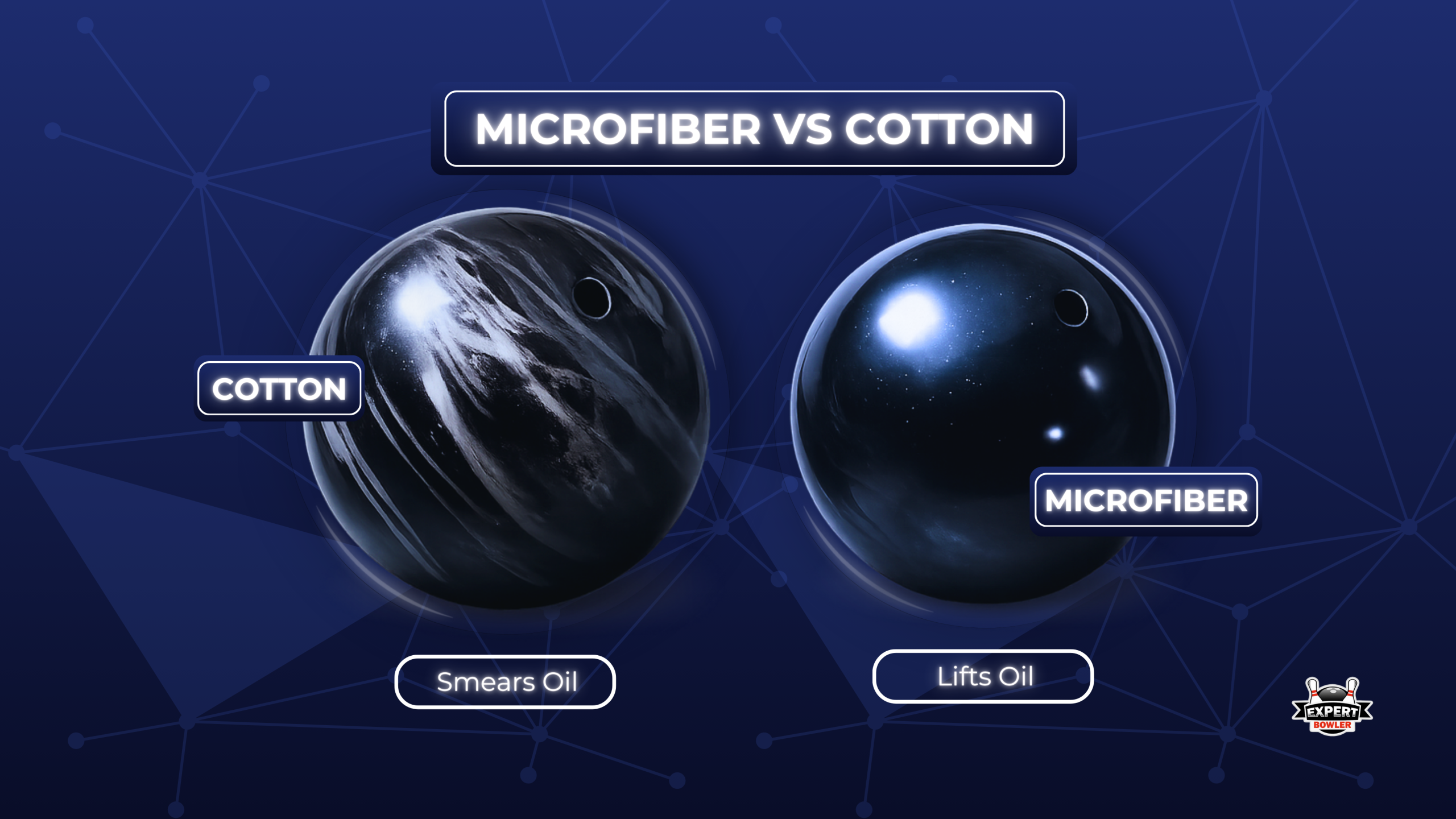
Keep 2 or 3 in your bag. Wash them after a few sessions and replace them every couple of months, when absorption starts to drop. Towels from bowling retailers tend to last longer than generic options, especially after repeated washing.
USBC-Approved Cleaners
Spray bottles work well for quick cleaning between games. Concentrated formulas last longer if you prefer to mix your own. Just remember to pick USBC-approved bowling ball cleaners, especially if you’re going for sanctioned competition.
Abralon Pads
Standard choice for DIY surface work. Start with grits in the 1000 to 3500 range. Test how each grit changes ball reaction during practice before using them ahead of competition.
Ball Spinners
A spinner makes resurfacing faster and more even than doing it by hand. Bowlers maintaining multiple balls or adjusting surfaces regularly get the most value out of one.
Common Bowling Ball Cleaning Mistakes to Avoid
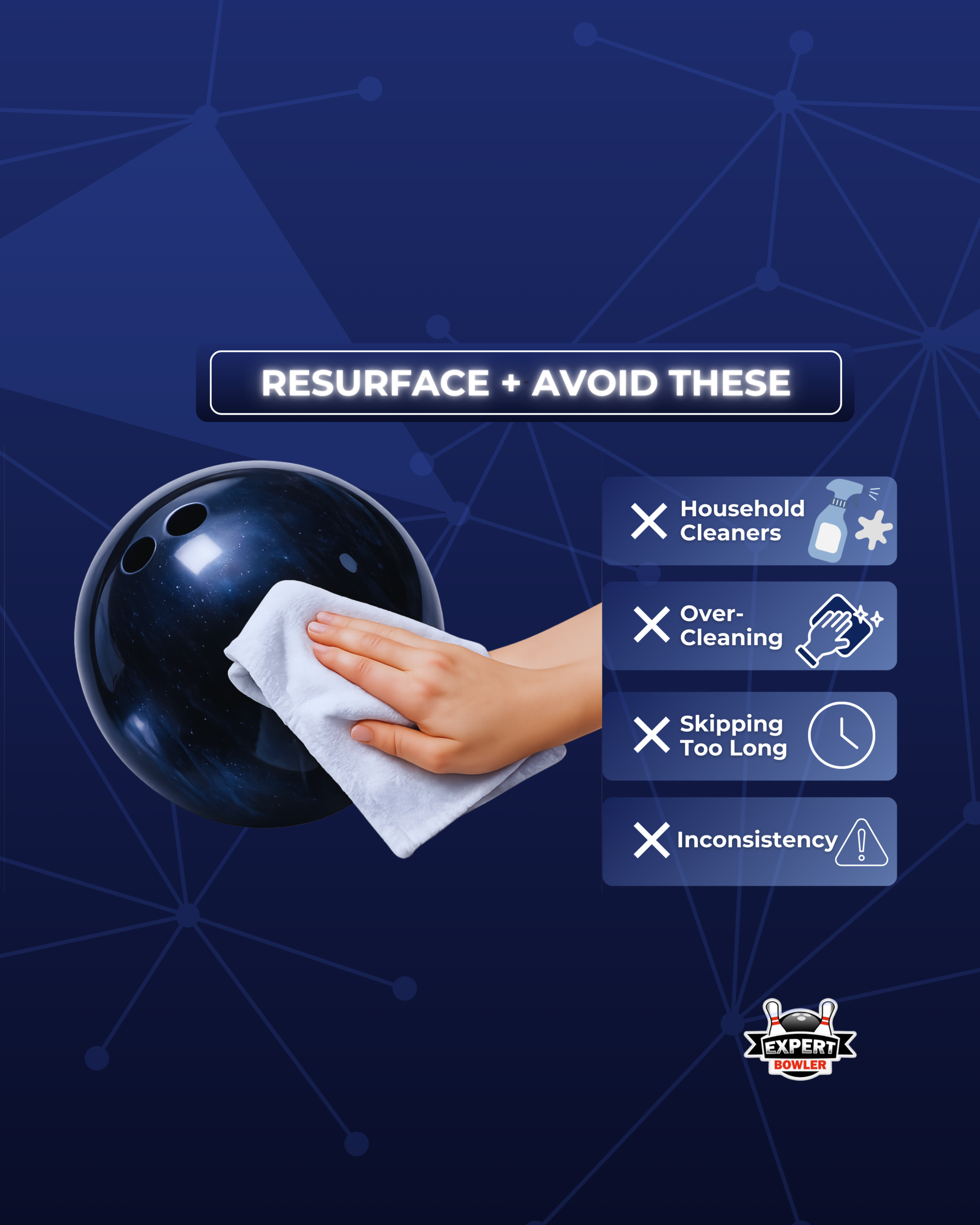
Even experienced bowlers fall into maintenance traps that shorten equipment life or hurt performance. These are the ones I see most often.
Household Cleaners
Goo Gone, WD-40, whatever degreaser is under your sink. Leave it there. These products eat into the coverstock, leave residue that messes with ball reaction, and none of them are approved for sanctioned play.
Plenty of bowlers show up to league with a ball that smells like a garage and wonder why it’s sliding through the heads. Use cleaners made for bowling balls. That’s why the USBC keeps an approved list.
Over-Cleaning
Some bowlers treat their ball like it needs a deep clean after every session. But scrubbing too hard or cleaning too often can strip the coverstock and throw off the surface texture you spent time getting right.
Once a week, with an approved bowling ball cleaner, handle it for most bowlers. If you’re cleaning constantly and still seeing problems, you’re probably dealing with oil that’s soaked deeper into the coverstock. That needs extraction.
Skipping Maintenance Too Long
The opposite problem. Waiting until the ball feels completely dead before doing anything about it means you’re already way behind. Bowling ball oil absorption happens gradually. By the time you actually notice a performance drop, the coverstock has been saturated for a while.
Regular wipes and scheduled cleanings catch it before it gets to that point. Trying to fix a neglected ball takes more work than just staying on top of it from the start.
Don’t Wait for a Dead Reaction: By the time performance drops, the ball has usually been saturated for several sessions.
Inconsistent Routines
Some bowlers clean religiously for a few weeks, then forget about it for a month. That inconsistency shows up on the lanes. Equipment maintained on a regular cycle performs predictably, while equipment addressed only when problems become obvious performs erratically.
Pick a schedule, track your games, and stick to the intervals. Consistency in bowling ball maintenance produces consistency in ball reaction.
Protecting Performance Over the Long Haul
The goal of maintenance isn’t a pristine-looking ball. It’s a consistent, predictable performance. Equipment that behaves the same way week after week lets you focus on your game rather than compensating for equipment variables.
The maintenance tiers build on each other. Daily wipes delay oil penetration. Weekly cleaning prevents surface buildup. Periodic oil extraction every 50 to 75 games addresses deeper saturation. Long-term resurfacing every 60 to 80 games restores the surface profile that generates a hook.
Skip a tier, and the next one has to work harder. Stay consistent across all four, and your equipment lasts longer while performing better.
The numbers tell the story. Well-maintained equipment delivers 200+ games of predictable performance. Neglected equipment declines after 50 to 75 games before replacement becomes necessary. The investment in maintenance pays for itself in equipment longevity before factoring in the competitive advantage of consistent ball motion.
Ball technology continues to evolve with new urethane formulations and advanced coverstock designs. The maintenance fundamentals stay the same. Consistency in maintenance produces consistency on the lanes. Build the habits, stick to the schedule, and your equipment will reward your attention.
If you are still building out your setup, our best bowling balls guide covers the main strike options across lane conditions.
Related guides
- Best bowling balls 2026 — expert picks across skill levels
- How to read bowling lane conditions — the foundation of ball selection
- Best bowling shoes 2026 — slide consistency starts with your shoes
- Bowling spare shooting guide — pick up the 7-pin, 10-pin, and tricky splits
- Best bowling ball cleaners 2026 — what to use, when to use it, what to skip
Edited by Jeroen Kooij
Editor · ExpertBowler
Editor of ExpertBowler. Responsible for editorial standards and accuracy of bowling technique, equipment, and lane play guidance. Cross-references USBC coaching materials, pro shop instructor input, and verified league-bowler feedback. Read more about our editorial process.
Editorial standards: Technique advice cross-referenced with USBC coaching materials and pro shop instructor input. We do not accept paid placements.
Updated: August 2026.
Sources & references
- USBC coaching materials: bronze, silver, gold-level coaching curricula for technique fundamentals
- Pro shop instructor input: aggregated pro shop input on common technique issues and corrections
- Community feedback: verified threads on BowlingForums.com and Reddit r/Bowling
- Published bowling instruction: Bowling This Month, Bowl.com instructional resources
- USBC equipment specifications: approval lists for league and tournament-grade equipment