Best Bowling Ball Cleaners 2026: What to Use, When to Use It, and What to Skip
Oil kills ball reaction. A few sets on a fresh house shot are enough to push oil deeper into the coverstock, and once that happens, the ball starts to lose traction. The midlane read gets weaker, the backend looks flatter, and the motion you trusted a few weeks ago starts to feel less reliable.
Finding the best bowling ball cleaner is really about slowing that drop-off and keeping reaction more consistent from session to session.
The good news is that routine cleaning does not take much. A quick wipe after bowling and a proper cleaner at the right time go a long way.
Below, you will find five cleaners broken out by use case, along with bowling ball maintenance basics and the common mistakes that shorten a ball’s usable life.
Updated: August 2026 · Edited by Jeroen Kooij · See methodology below
Best Quick Cleaner for League Bowlers: Lane Ghost
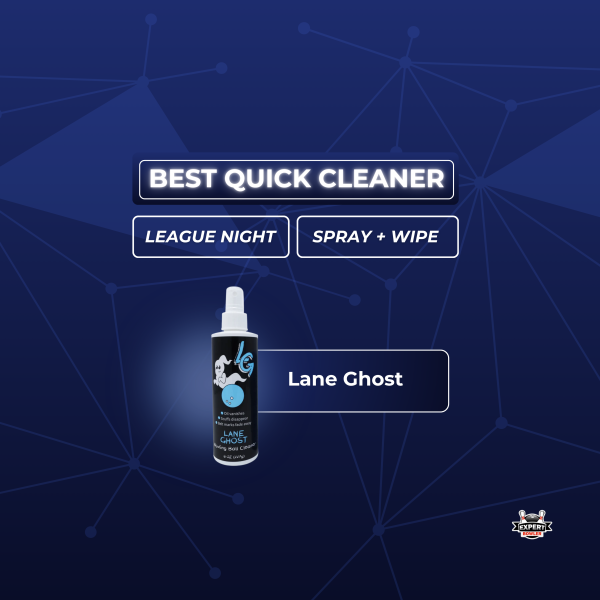
Best for: League bowlers who want a simple spray-and-wipe option for routine cleaning after play.
Check price →Best Overall Cleaner: That Purple Stuff
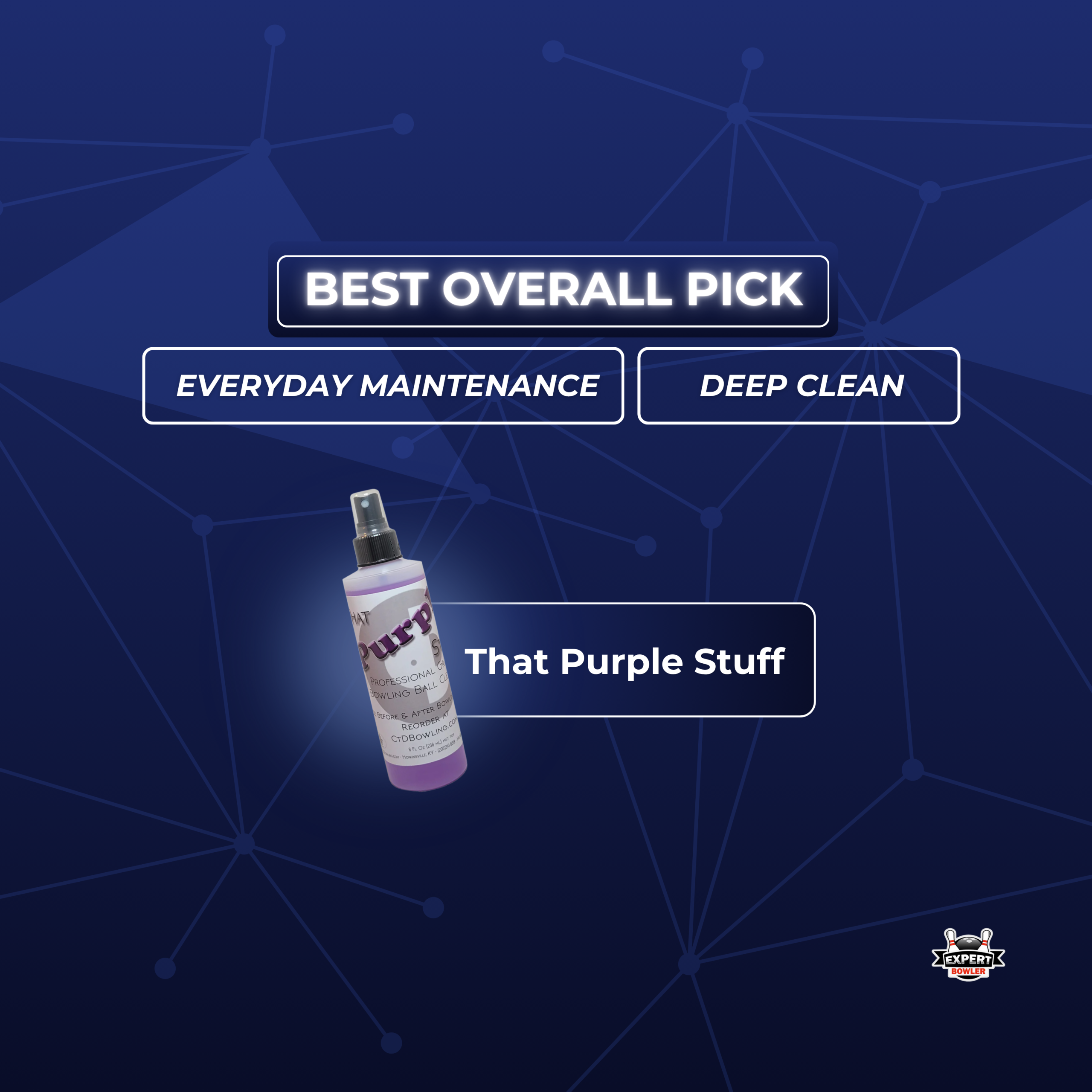
Best for: Bowlers who want one reliable cleaner for regular upkeep across reactive, urethane, and polyester equipment.
Check price →Best Value Cleaner: Monster Tac
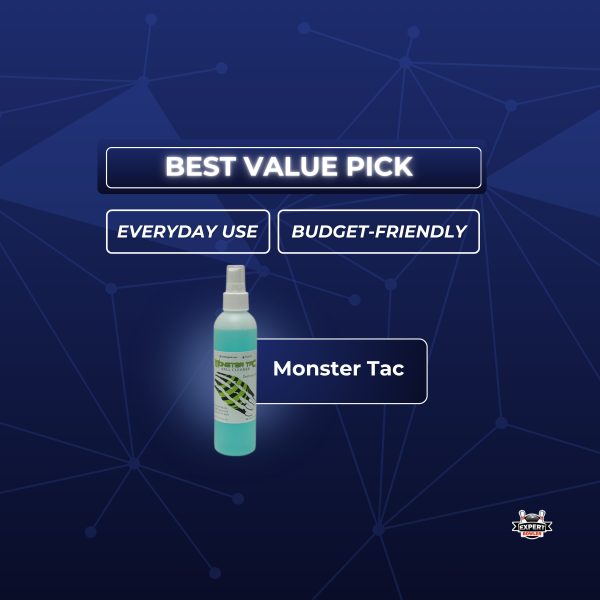
Best for: Bowlers who clean often and want a larger everyday cleaner without overspending.
Check price →Quick picks at a glance
How we evaluated
Our picks come from a structured evaluation process — not marketing claims. We weigh real-world performance and multi-year owner reports to identify the products that actually deliver for bowlers.
Performance criteria
What matters most for this category — hook potential, fit, durability, lane condition match — defined before evaluation begins.
Manufacturer specifications
Published specs and technical data from the brand, read against what owners report over time.
Multi-year owner reports
Cross-referenced long-term reviews from bowlers using these products through full league seasons.
Community sentiment
Verified threads on bowling forums and Reddit — weighted toward bowlers in the target skill range.
We do not test every product ourselves on every lane condition. We rely on published specs and verified owner reports instead.
Paid placements, sponsored rankings, or manufacturer-supplied review samples that come with editorial expectations.
Best Overall Cleaner: That Purple Stuff
Best for: Bowlers who want one reliable cleaner for regular upkeep across reactive, urethane, and polyester equipment.
The formula works below the surface rather than just cleaning what sits on top, pulling absorbed oil back out so it can be wiped away. That helps preserve surface tack after cleaning instead of giving you a ball that feels better for five minutes and then goes flat again.
Created by Creating the Difference, it comes in sizes from 4-oz travel bottles to gallon refills and is safe on reactive resin, urethane, and polyester coverstocks.
The smell is strong and tends to linger. Some bowlers will only use it at home for that reason. Shipping can also be inconsistent, with occasional reports of bottles leaking in transit.
Use it after every session. Apply it to a microfiber pad and wipe the whole surface. The flip-top bottle also gives you better control than a mist sprayer, so less product ends up wasted.
If strong chemical smells bother you, or you bowl in a center with poor ventilation, the odor may be enough to rule it out. Lane Ghost is the easier choice in that case.
View Best Overall Cleaner: That Purple Stuff on Amazon →Best Quick Cleaner for League Bowlers: Lane Ghost
Best for: League bowlers who want a simple spray-and-wipe option for routine cleaning after play.
Lane Ghost works best as a quick-clean product. You spray it on, wipe the ball down, and move on. It handles fresh oil, dust, and light belt marks well enough for regular upkeep, which is the job most league bowlers are trying to cover.
The bottle also comes with a microfiber towel, so there is nothing extra to buy before using it. It is USBC approved, safe for reactive resin, urethane, and polyester, and made in the USA by a family-run company.
This is a maintenance cleaner, not a stronger restoration product. It handles everyday oil and grime well, but it is less suited to deeper buildup or stubborn belt marks than stronger cleaners like That Purple Stuff or Tac Up.
Use it right after your last frame. Spray the ball, wipe it down with the included towel, and put it away. The whole process takes about 30 seconds.
If the ball already feels neglected and needs more than surface cleaning, Lane Ghost will likely be too gentle. Start with Tac Up or That Purple Stuff, then use Lane Ghost to stay on top of routine upkeep.
View Best Quick Cleaner for League Bowlers: Lane Ghost on Amazon →Best Value Cleaner: Monster Tac
Best for: Bowlers who clean often and want a larger everyday cleaner without overspending.
Made by Pyramid Bowling, Monster Tac is a straightforward spray cleaner that removes surface oil, scuffs, and belt marks from all coverstock types. The value play is the 32-oz bottle. It gives frequent bowlers a lower cost per cleaning than most branded alternatives. It is available in 4oz, 8oz, and 32oz sizes, and all are USBC approved.
The spray nozzle is the weak point. Pump failures after a small number of uses come up often enough to take seriously, so keeping a spare bottle around is not a bad idea. The scent is also strong, and too much product can leave the surface feeling slick instead of clean.
Use it after sessions at home when the goal is regular upkeep. Spray it on, let it sit briefly, then wipe with a microfiber towel.
If you need stronger tack restoration or deeper cleaning, Monster Tac sits more in the routine-maintenance category. For heavier buildup, That Purple Stuff or Tac Up makes more sense.
View Best Value Cleaner: Monster Tac on Amazon →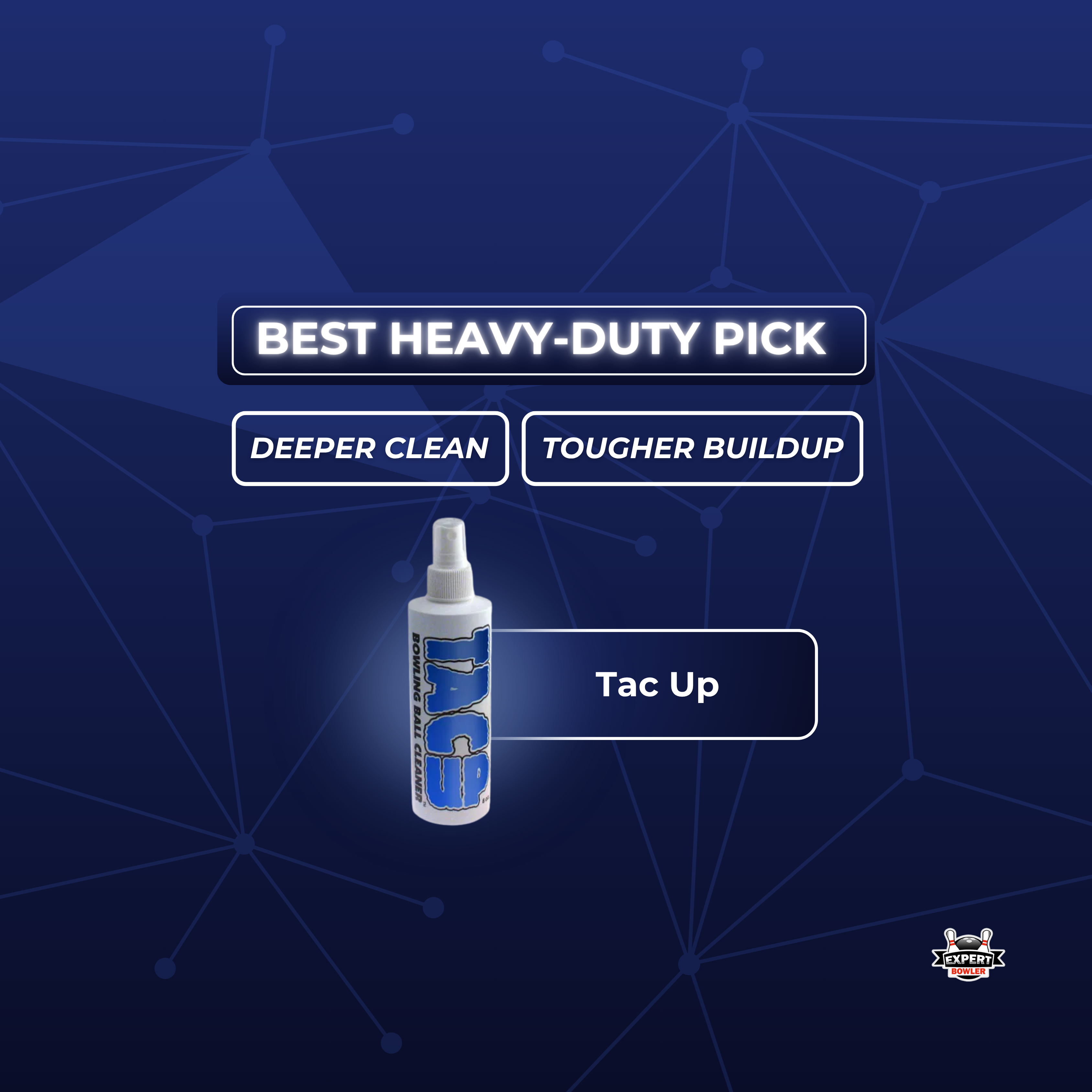
Best Heavy-Duty Cleaner: Tac Up
Best for: Reactive resin users trying to remove heavier oil buildup before the ball starts reading weaker.
Tac Up comes from MSCC, a company with more than 30 years in industrial degreasers and specialty car care products, and that stronger cleaning background shows up here.
The biodegradable formula is built for heavier oil removal and is positioned as a stronger cleaner than a basic spray-and-wipe option.
USBC-approved across all ball surfaces and sold in 8oz and 32oz bottles. The 32oz is worth the upgrade because it comes with a spray nozzle and a foam nozzle, letting you choose your application style without buying a separate product.
Do not just spray and wipe right away. The label calls for 5 to 10 seconds of sit time, and that patience is part of what makes the formula hit harder than a standard cleaner. Keep in mind the scent carries, especially indoors, and depending on where you order it may or may not be in stock.
Use it for weekly deeper cleaning at home, especially after bowling on heavier oil patterns. It also works well on a ball spinner.
If you bowl once or twice a month, this is probably cleaner than you need. A lighter option, like Lane Ghost, will cover routine upkeep without the stronger smell.
View Best Heavy-Duty Cleaner: Tac Up on Amazon →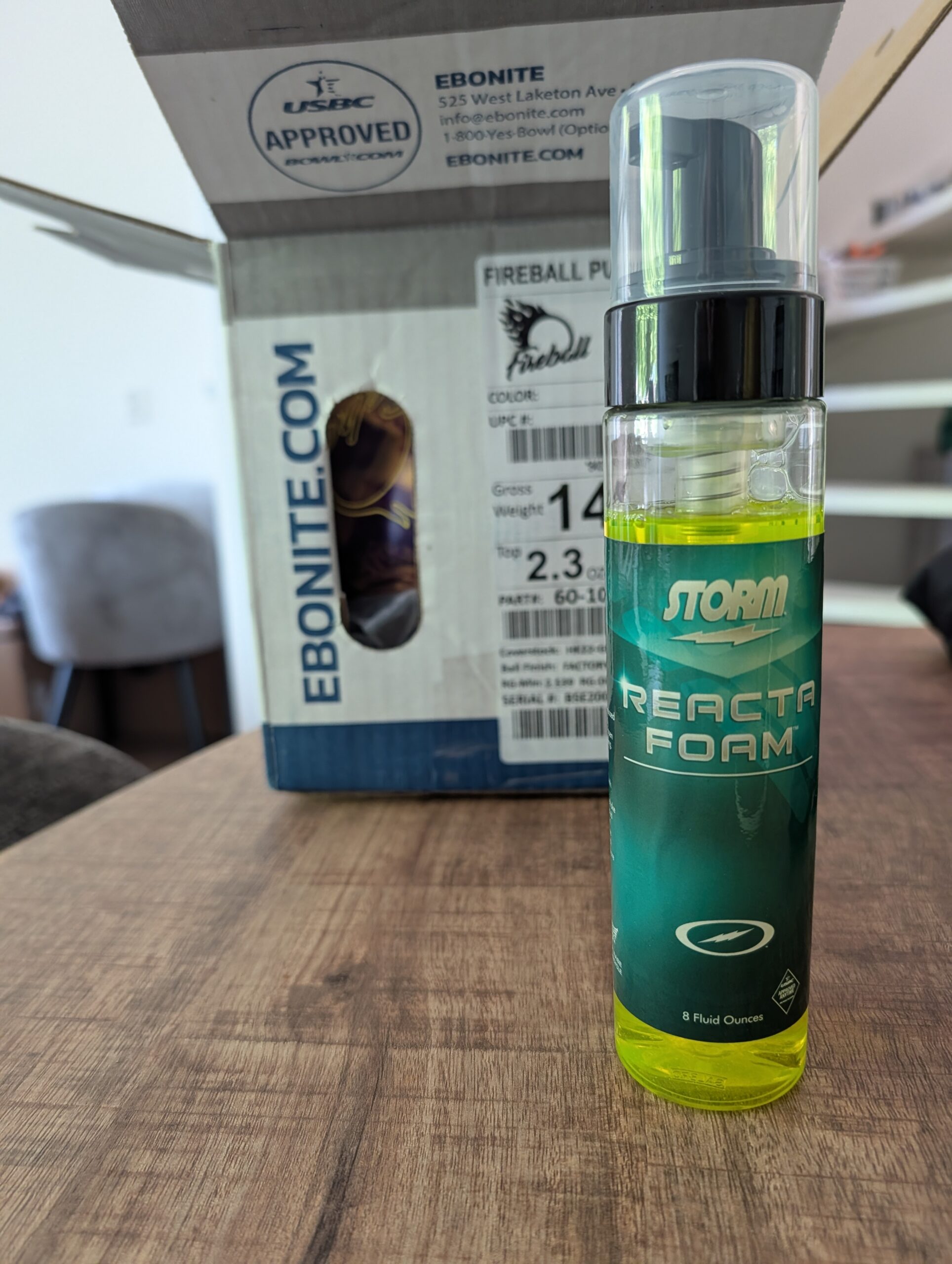
Best Foam Option: Storm Reacta Foam
Best for: Bowlers who prefer foam application and want better control with less dripping during cleanup.
This is the bottle we actually bought and use ourselves, picked up during a pro shop visit in July 2026 — the photo above is our own, not a stock image.
The foam format is what sets Reacta Foam apart. Instead of misting and running, it stays where you put it, which gives the cleaner more contact time and keeps more product on the ball instead of your hands or towel.
It is a one-step cleaner and rejuvenator for reactive bowling balls, and the foam dispenser also makes it easier to work specific areas like the track ring or belt marks.
The cap can pop off in a bowling bag, which is an obvious problem with a foam cleaner. It is also only sold in an 8-oz bottle, so regular users will go through it faster. Storm markets this mainly toward reactive coverstocks, so it makes the most sense for bowlers whose arsenals lean heavily on reactive resin.
Use it after sessions on reactive equipment. Apply a small amount, spread it across the surface, and wipe clean.
If you want one cleaner for a mixed lineup of reactive resin, urethane, and polyester, a universal option like That Purple Stuff is the more practical choice. Reacta Foam makes more sense in reactive-heavy arsenals.
View Best Foam Option: Storm Reacta Foam on Amazon →Frequently asked questions
Get our honest 2-page checklist — coverstock, weight, lane oil, and the 5 mistakes that cost most bowlers money. One short email every couple of weeks. No spam.

Edited by Jeroen Kooij
Editor · ExpertBowler
Editor of ExpertBowler. Responsible for editorial standards and methodology compliance. Read more about our editorial process.
Methodology: Picks evaluated against multi-year owner reports and community sentiment. We do not accept paid placements.
Updated: August 2026.
Sources consulted
- Manufacturer documentation: official product specifications and technical data
- Community feedback: verified threads on BowlingForums.com and Reddit r/Bowling
- Published reviews: BowlersMart, BowlerX, Amazon multi-year owner aggregations
- USBC equipment specifications: approval lists for league and tournament-grade equipment
Related guides
- Best bowling balls 2026 — full ball category hub
- Best bowling balls for medium oil lanes
- Best bowling shoes 2026
- Best bowling bags 2026
- Bowling ball cleaning & maintenance — how often to clean, extract and resurface
- How to read bowling lane conditions
- Start Here — curated entry point for new visitors
I would really like a cleaner that would clean my “Storm Intense Fire”
without altering the balls surface. Any suggestions?
Thank You
I m looking that restores tacky feeling to ball and also is a good cleaner