Best Bowling Ball Brands 2026: What Each Brand Is Actually Known For
By Jeroen Kooij, Publisher & Editorial Director · Beginner Bowler · Updated August 2026
If you ask ten league bowlers which bowling ball brand is the best, you will get ten different answers.
The Storm crowd will point to PBA Tour dominance. Hammer fans will talk about hitting power and durability. Motiv loyalists will tell you their equipment reacts like nothing else on the market. And Brunswick bowlers will remind you that the brand has been around longer than anyone.
They are all right, and they are all wrong.
In practice, the useful question is not which logo is “best” but which specific ball matches your release, lane condition, and the role you need it to fill.
So, here’s what each one tends to do on the lane, so you can choose with a bit more clarity before buying anything.
What we cover in this guide
- What a Bowling Ball Brand Can and Cannot Tell You
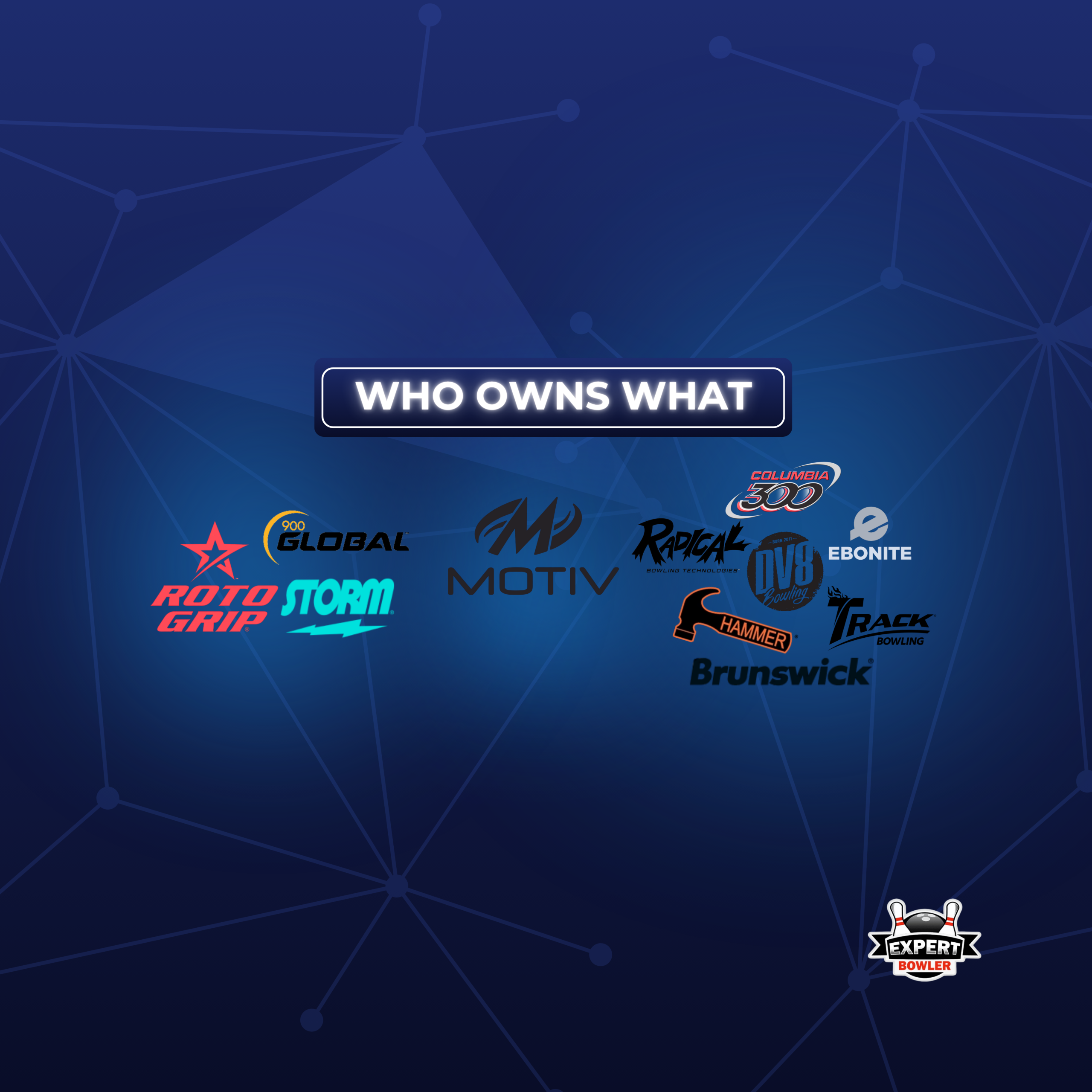
- Who Owns What and Why That Affects Your Bag
- Quick Brand Comparison
- How We Evaluate Brands
- Brand-by-Brand Breakdown
- Best Bowling Brands by Bowler Type
- Common Mistakes When Choosing by Brand
- Frequently Asked Questions
- How to Choose a Brand Without Overthinking It
What a Bowling Ball Brand Can and Cannot Tell You
A bowling ball brand is a design philosophy. It tells you how the manufacturer approaches core geometry, coverstock chemistry, and ball motion shape. Every major brand makes equipment from entry-level polyester to tour-grade reactive resin, so brand alone only narrows the field. The specific ball still has to match your game.
Who Owns What and Why That Affects Your Bag
Much of the current bowling-ball market is concentrated under the Storm Products and Brunswick Bowling Products families, while Motiv operates outside those two groups. Corporate ownership can explain shared manufacturing resources, but it does not make sister-brand balls interchangeable.
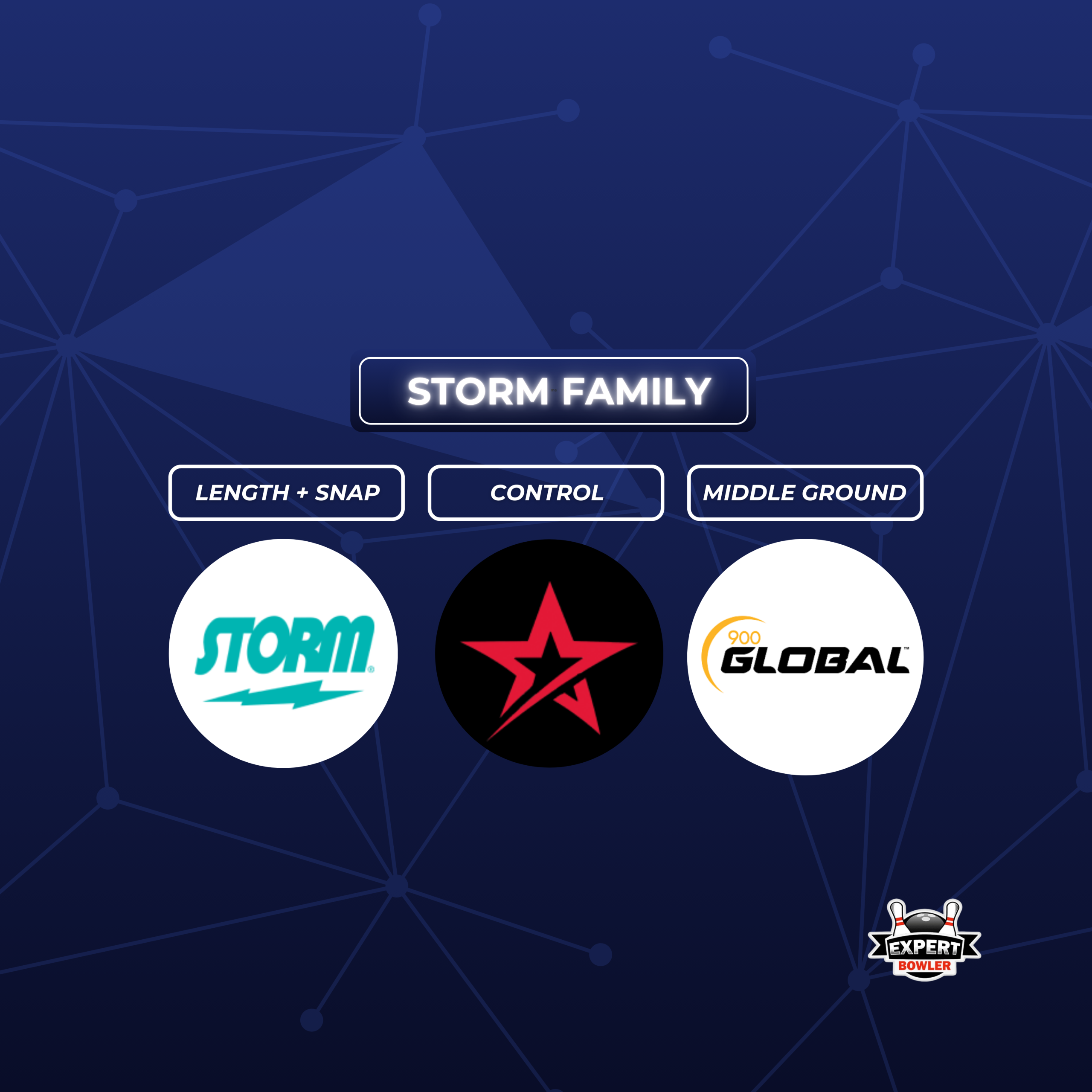
- Storm Products Inc. manufactures Storm, Roto Grip, and 900 Global out of Brigham City, Utah. The brands share corporate and manufacturing resources, but individual balls can still differ substantially in coverstock, core, surface, and intended motion.
- Brunswick Bowling Products owns Brunswick, Hammer, Ebonite, Columbia 300, Track, Radical, and DV8. They acquired the former Ebonite International portfolio in 2020. The HK22 coverstock formula appears across Hammer, Brunswick, and Ebonite lineups in different variations.
- Motiv operates outside the Storm Products and Brunswick Bowling Products brand families, giving bowlers another design ecosystem to compare when building an arsenal.
- When building an arsenal, compare the actual reaction shapes, surfaces, cores, and lane roles of the balls. Mixing corporate families can add variety, but ownership alone does not guarantee a larger reaction gap.
Quick Brand Comparison
These are broad editorial tendencies, not hard rules. Model, coverstock, core, surface, layout, and release usually matter more than the brand name by itself.
Best Bowling Balls 2026
Looking for our top equipment picks? Start with the full ball roundup.
How We Evaluate Brands
Most bowling ball manufacturer reviews rank brands by popularity or tour wins. We take a different approach. To see how these brands fit into the wider buying landscape, check our Best Bowling Balls guide. A strong top-tier ball with a forgettable mid-performance line leaves most bowlers underserved. We evaluate four things
- Ball motion tendencies across the entire range, from entry-level to tour-grade, not just the top-tier flagship
- Performance across different oil volumes and bowler styles. A ball that only works for high-speed crankers on fresh oil has a narrow audience.
- Published technical and owner feedback on durability, surface consistency, and recurring real-world use patterns
- Price-to-role fit at each tier. Higher price does not automatically mean a better match; value depends on whether the ball solves a lane or arsenal need you actually have.
- For long-term care and performance, see our how to Keep a Bowling Ball Performing guide.
Brand-by-Brand Breakdown
Storm
Storm is one of the largest bowling ball manufacturers in the world and has built its reputation around backend motion. Across the lineup, the design philosophy centers on creating length through the front of the lane, followed by a defined move at the breakpoint.
What It’s Known For
Many Storm pearl releases are designed to create cleaner length and a more defined response downlane, but the exact shape varies by coverstock, core, and surface.
Storm solids and hybrids can read earlier or smoother than its pearl options, so it is better to compare individual models than assume one universal Storm shape.
Recent releases also introduce A.I.-assisted core design in parts of the lineup, refining how weight blocks are shaped and how the ball transitions from skid to hook.
Best Fit
Storm is worth comparing when you want a cleaner or more defined downlane shape, but fit depends on the individual model rather than on a fixed speed or rev-rate profile.
Common Watch-outs
A cleaner, more responsive shape can become difficult to control for some releases or on higher-friction lanes. If that happens, compare a smoother option or another ball with an earlier, more blended shape rather than switching brands by rule.
Notable Examples
The Hy-Road series has been a house-shot benchmark for over 15 years and is a good place to see Storm’s design philosophy in action. If you want to see how that plays out on the lane, the Storm Hy-Road review is worth a look.
Newer bowlers should look at the Tropical Surge, which gives you Storm’s motion characteristics in a forgiving, entry-level package. If you’re curious how it behaves on lighter oil, there’s a Tropical Surge review that goes into it.
Newer high-performance releases can broaden the lineup, but this guide does not use tour results as proof that a ball will fit a league bowler.
Hammer
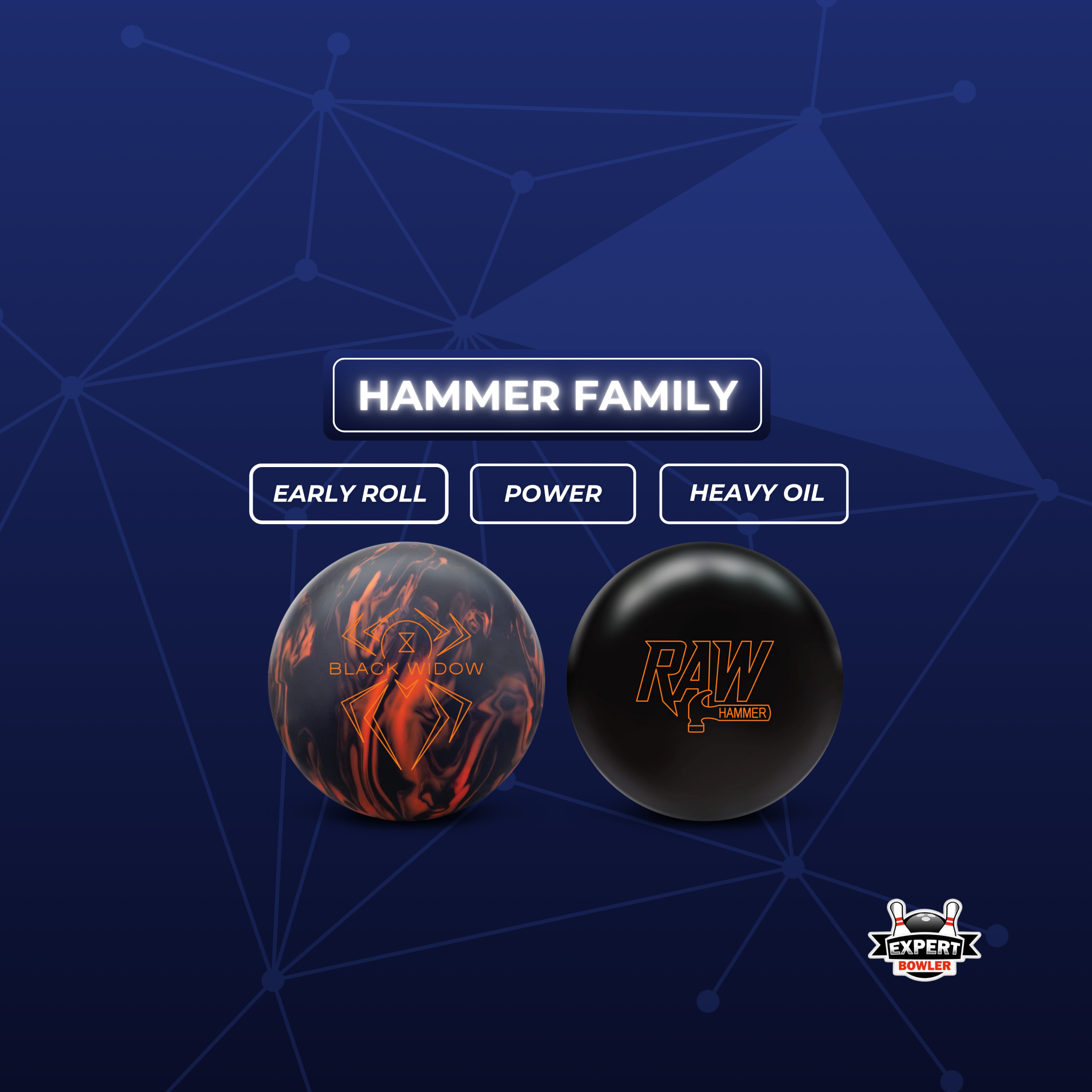
If Storm stores energy for the backend, Hammer uses it earlier. The motion shows up sooner in the lane, builds through the midlane, and carries through the pins with a heavier, rolling shape.
What It’s Known For
Earlier read, stronger midlane, heavier roll. Hammer balls are built to engage the lane sooner, shifting energy use forward and creating a more continuous motion through the pins rather than a late, sharp move.
Asymmetric designs push that even further. Higher intermediate differentials strengthen the midlane read and help the ball stay in its roll phase longer, producing a defined, forward motion instead of a quick direction change.
Some Hammer releases use reinforced outer-core construction marketed around added structural strength. Treat durability as model-specific rather than as a blanket brand advantage.
Best Fit
Hammer is worth comparing when you need earlier traction or a stronger midlane read. Whether that fits depends on the specific ball, oil volume, speed, rev rate, and surface rather than on a bowler-type label.
Common Watch-outs
Earlier traction means earlier energy use. At lower ball speeds or on lighter oil, that can flatten the reaction downlane and reduce carry. When that happens, a cleaner shape with more stored energy and backend motion becomes easier to control.
Notable Examples
The Black Widow 3.0 Dynasty is the flagship for heavy oil and the best example of what Hammer does well. If you want a better sense of how it handles fresh patterns, our Black Widow 3.0 review goes into the details.
The Raw Hammer line gives you that heavy-hitting Hammer feel at a more accessible price.
Brunswick
Brunswick has one of the longest histories in the sport, and that shows up in a product line built around accessibility and versatility. They cover a wide range, from beginner polyester to upper-mid reactive, and they tend to do it without a lot of aggression.
What It’s Known For
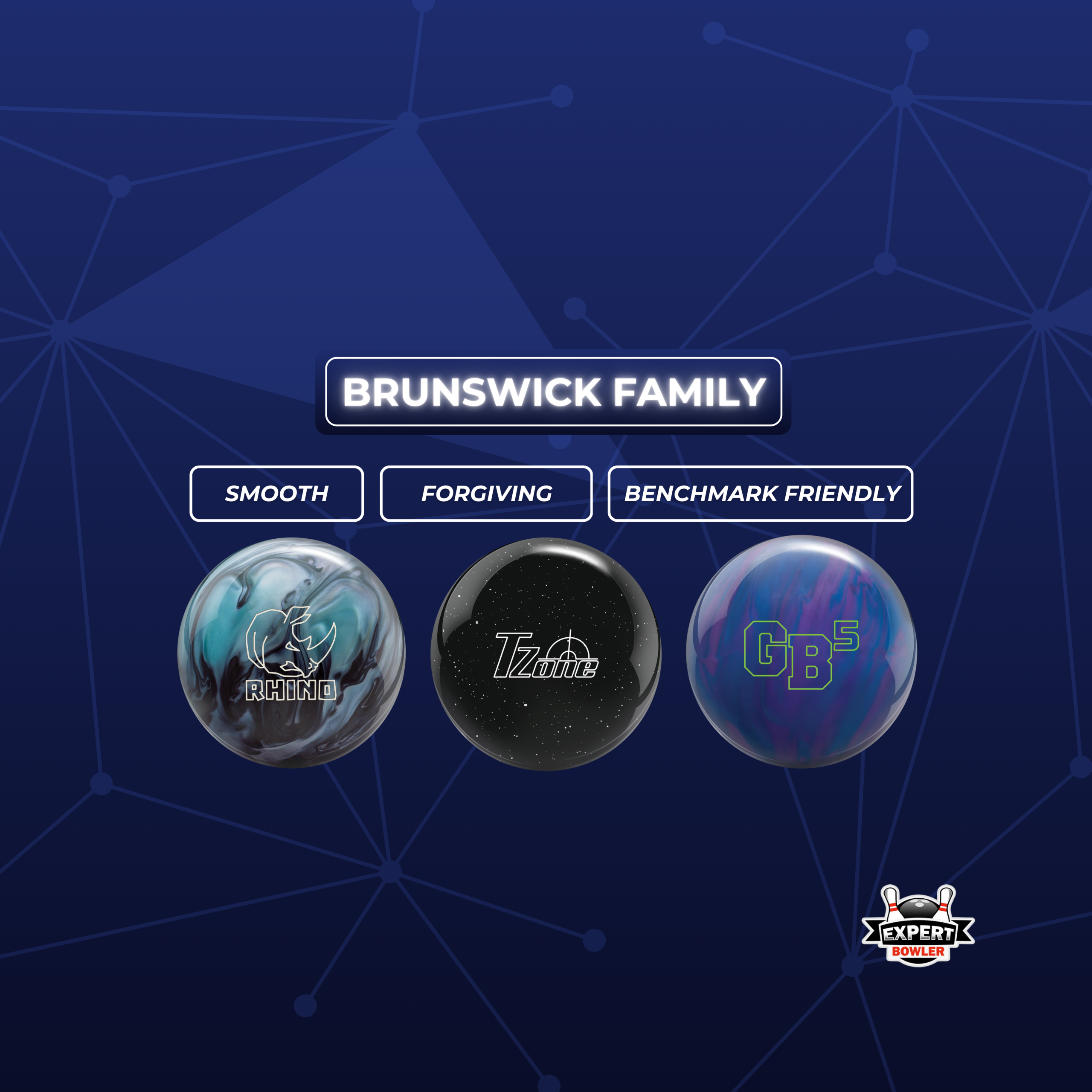
Brunswick balls get through the front part of the lane cleanly, then transition into a controlled hook instead of a sharp move at the breakpoint.
That motion shows up clearly in the Rhino line, where the reaction is defined as a continuous arc and built around control rather than aggressive backend motion.
The defining trait is how the ball handles friction. It doesn’t jump when it sees dry. It blends it. You get a full skid-to-hook-to-roll transition you can follow with your eyes.
Best Fit
Brunswick’s lower-strength lines can be useful for developing bowlers because a smoother, lower-strength reaction can be easier to read.
Common Watch-outs
When more traction or a different downlane shape is needed, compare stronger or differently shaped balls across brands rather than assuming one specific brand is the next step.
Notable Examples
The Rhino is one entry-level reactive option; the TZone is a common polyester spare-ball option. Higher Brunswick lines cover stronger reaction roles.
Motiv
Motiv’s designs tend to produce a different lane reaction profile compared to the Storm and Brunswick families, particularly in how they generate flare and maintain continuation.
What It’s Known For
Flare and continuation. Motiv builds around higher differential cores and aggressive coverstocks, which increase how much the ball migrates across the lane and how long it stays active through the pins.
The ball doesn’t hit the breakpoint and slows down. It keeps driving, even on heavier oil. Strong covers dig in early, but the design still preserves energy for downlane continuation.
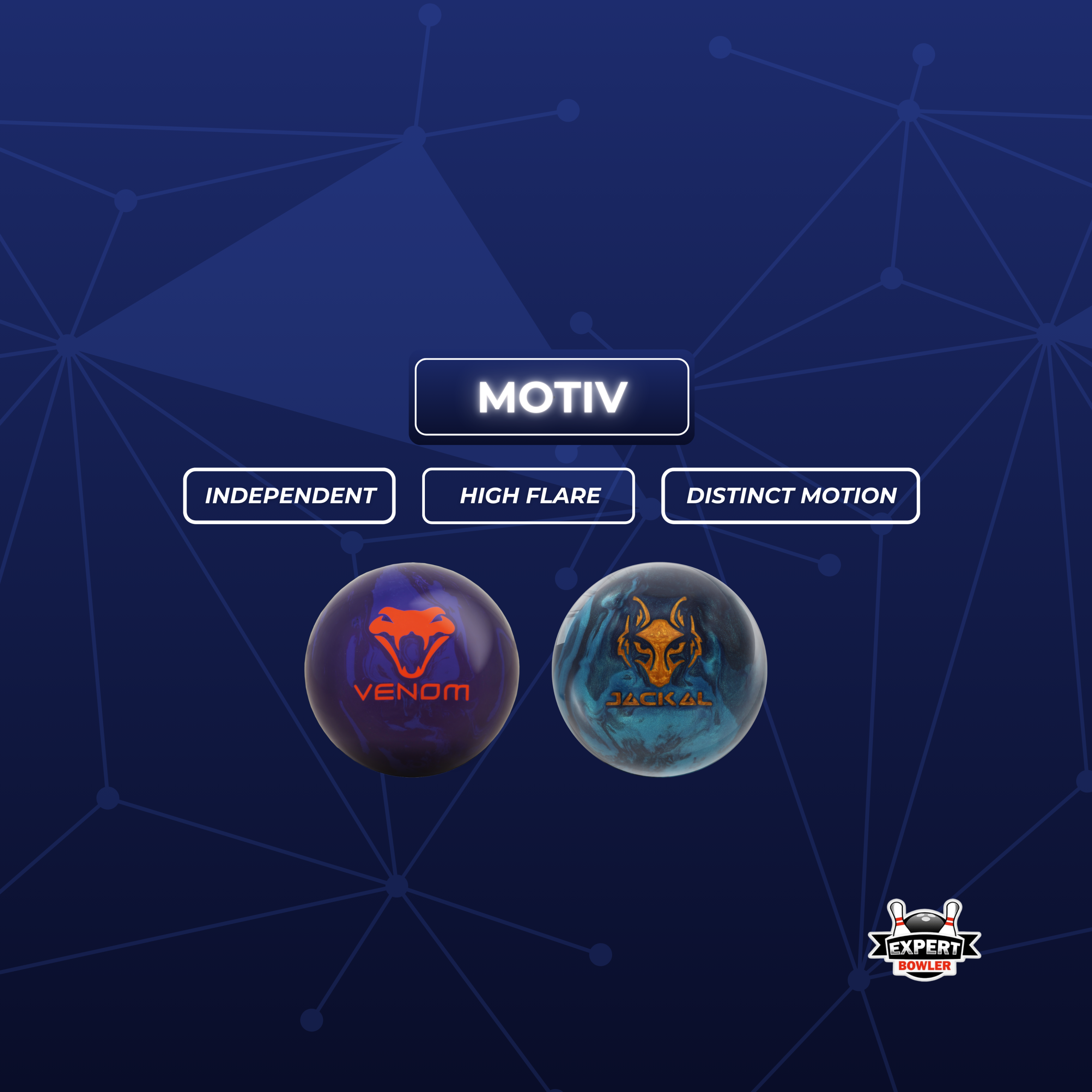
You see it most clearly in lines like the Jackal and Forge series, where traction and continuation are built into the same reaction instead of traded off.
Best Fit
Motiv is worth comparing when you want stronger traction or continuation from a specific model. The Jackal family, for example, targets higher-performance roles, but no single release profile automatically makes Motiv the right brand.
Common Watch-outs
Some higher-performance Motiv balls can be too strong on lighter oil or for releases that already create early traction.
On medium-heavy patterns, that grip is an advantage. On drier backends, the ball burns up energy before it reaches the breakpoint.
A surface change may alter that reaction, but it is not a guaranteed fix; sometimes a weaker ball or different shape is the better choice.
Notable Examples
The Venom Shock fills the same mid-range benchmark role as Storm’s Hy-Road. Our full Venom Shock review covers the hook shape, best lane conditions, and who it fits. The Jackal line handles the heavy-oil, high-rev end of the spectrum.
Roto Grip
The first thing most bowlers ask about Roto Grip is whether it’s basically just Storm. Same parent company, yes. Same factory resources, yes. But the design intent is different on purpose, positioned around versatility and adaptability rather than Storm’s more angular, backend-oriented approach.
What It’s Known For
Many Roto Grip releases lean toward an earlier lane read and a smoother finish. The HP3 and HP4 lines include a mix of coverstock types designed for different lane reactions rather than a single motion signature.
Most of those options are built to engage the lane earlier, depending on surface and finish, which tends to produce a more readable midlane transition and a shape that’s easier to repeat.
Best Fit
If a cleaner pearl is not creating enough traction on your condition, an earlier-reading Roto Grip solid is one option to compare. The model and surface matter more than the sister-brand label.
Common Watch-outs
That earlier read can close down angles. On drier backends or when you need the ball to open up the lane, the motion can feel too forward and too controlled. Instead of creating shape, it blends it. And when you need separation, that becomes a limitation.
Notable Examples
The Halo and Idol series at the upper-mid to high-performance level are well-established within the lineup. The HP3 line offers a range of mid- to high-performance options with balanced motion profiles across different lane conditions.
900 Global
900 Global is another Storm Products brand with its own lineup of cores, covers, and motion options. It is often discussed as a versatile alternative, but it should not be reduced to a fixed midpoint between Storm and Roto Grip.
What It’s Known For
Many 900 Global balls transition gradually from skid to hook to roll, generally staying away from sharp or dramatic moves in any single phase. Across typical league conditions, it produces a continuous, predictable arc that a wide range of bowler types can work with.
Best Fit
League bowlers looking for versatile benchmark or complementary shapes may find useful options in the 900 Global lineup.
Common Watch-outs
Some 900 Global models target balanced shapes while others are stronger or more responsive. Choose by model and lane role rather than assuming the brand cannot cover extremes.
Notable Examples
The Zen and Reality lines for versatile mid-range play. The Altered series, if you want a touch more backend without leaving the 900 Global motion profile.
Ebonite
Ebonite lineup is smaller and more focused than it used to be, but for the right type of league bowler, that’s not a problem.
What It’s Known For
Ebonite’s benchmark-oriented lines are often positioned around controlled, repeatable shapes rather than maximum total hook.
The Game Breaker line shows it best. Symmetrical core, controlled cover, steady hook. The ball transitions cleanly from skid to hook and settles into a predictable roll that holds its shape as conditions break down.
Best Fit
League bowlers looking for a benchmark-style or controlled reaction can compare Ebonite options with similar roles from other brands.
Common Watch-outs
Fewer choices at the high-performance end. Bowlers looking for aggressive asymmetric equipment or heavy-oil anchors will find more of those options under Hammer or Brunswick within the same corporate family.
Notable Examples
The Game Breaker series is the core of the lineup. The Game Breaker 5 Pearl has remained a popular choice since its release, known for its consistent and reliable reaction as conditions transition.
Other Brands Worth Mentioning
A few smaller brands sit under Brunswick Bowling Products. They share manufacturing resources but serve specific niches.
- Columbia 300 has offered a range of league-oriented shapes across different price tiers. Availability should be checked by current model rather than assuming future production or support.
- Track offers model-specific controlled and stronger reaction shapes; compare the actual ball specifications rather than treating “precision” as a universal brand characteristic.
- Radical publishes detailed core and layout information on many releases, which can help a pro shop discuss how a specific model may respond to different drilling choices.
- DV8 spans multiple reaction strengths and often uses bold visual branding. Ball motion should still be judged model by model.
Best Bowling Brands by Bowler Type
The sections above cover what each manufacturer does on the lanes. But the top bowling ball brands serve different types of bowlers, so this section flips the question.
Beginner-Friendly Brands
For a first reactive ball, start with lower-strength options and a proper fit rather than choosing by logo. Brunswick Rhino and Storm Tropical Surge are two examples in that entry-reactive category.
Both lines are designed as lower-strength reactive options, but the exact reaction depends on weight, drilling, release, and lane condition.
Once you know which brand feels right, make sure to take a look at our best bowling balls for beginners guide to compare the models side by side.
League-Friendly Brands
League bowlers can find useful benchmark, stronger, and weaker options across several major brands. The goal is to match a specific model to the lane role you need.
Instead of assigning oil conditions to brands, compare the actual coverstock, surface, core, and intended lane window of each model.
To match a specific ball to your lane conditions, we’ve got a best league bowling balls roundup that breaks down the top-performing options.
Stronger Performance and Higher-End Fit
Higher-performance equipment is useful when the pattern or arsenal gap genuinely calls for more traction, flare, or a different shape. Skill level alone does not determine that need.
Models such as the Hammer Black Widow 3.0 family and Motiv Jackal line target stronger reaction roles, but the right choice still depends on release and condition rather than brand hierarchy.
For that in-between range, you can get a better view by reading our best bowling balls for medium oil lanes guide.
Common Mistakes When Choosing by Brand
These come up repeatedly when bowlers pick equipment based on brand rather than fit.
- Buying sister-brand balls and assuming they will react the same — Shared ownership or manufacturing does not mean two balls have the same cover, core, surface, or lane role. Compare the actual specifications and reaction gap.
- Picking a brand based on what a tour player uses — Tour players choose equipment around their own release, layouts, surfaces, and tournament patterns. Their equipment choice is context, not a shortcut to what will fit your house shot.
- Assuming the most expensive ball in a lineup is the best fit — Price and performance tier do not tell you whether a ball matches your lane condition. A lower- or mid-performance piece can be the better choice when stronger equipment reads too early or overlaps what you already own.
Frequently Asked Questions
How to Choose a Brand Without Overthinking It
Start with your game, but do not convert ball speed or rev rate directly into a brand recommendation. Use those measurements to decide whether you need more or less help creating traction, length, or downlane response.
- Need earlier traction → compare stronger covers, rougher surfaces, and earlier-reading cores across brands.
- Need more length → compare cleaner covers, smoother surfaces, and lower-strength options across brands.
- Need a smoother or more controlled shape → compare benchmark and control-oriented models rather than one logo.
Then match the lane you actually bowl on. Oil volume, friction, pattern shape, and how the lane transitions matter more than brand reputation.
Finally, think in motion rather than in brand loyalty. Two balls from the same manufacturer can be farther apart in reaction than two balls from competing brands.
Pick the reaction role first, then compare the specific models that fill it. A benchmark ball is useful because it gives you a familiar reference shape — not because it comes from a particular manufacturer.
If you want to turn that into actual picks, our best bowling balls break it down by lane condition and bowler type.
Related guides
- Best bowling balls 2026 — researched picks across skill levels
- How to read bowling lane conditions — the foundation of ball selection
- Best bowling shoes 2026 — slide consistency starts with your shoes
- Bowling spare shooting guide — pick up the 7-pin, 10-pin, and tricky splits
- Bowling ball cleaning & maintenance — protect your investment
Get our honest 2-page checklist — coverstock, weight, lane oil, and the 5 mistakes that cost most bowlers money. One short email every couple of weeks. No spam.
Edited by Jeroen Kooij
Publisher & Editorial Director · Beginner Bowler
Jeroen sets ExpertBowler’s editorial standards. This brand guide is research-based and does not claim that Jeroen, a coach, or a pro shop has personally validated every brand-level tendency on this page. Individual ball specifications and lane role take priority over brand stereotypes. Read how we research and update our content.
Editorial standards: Brand-level guidance is cross-checked against manufacturer documentation, published technical sources, and recurring owner/community feedback. Broad brand tendencies are treated as editorial context, not universal rules. We do not accept paid placements.
Updated: 2026.
Sources & references
- Manufacturer documentation: current product families, coverstock/core specifications, factory surfaces, and corporate brand information
- Published technical sources: established bowling reviews and ball-motion references used to compare model-level tendencies
- Owner & community context: recurring real-world themes used as supporting evidence, not as proof of universal brand behaviour
- USBC/Bowl.com: equipment and industry references where directly relevant