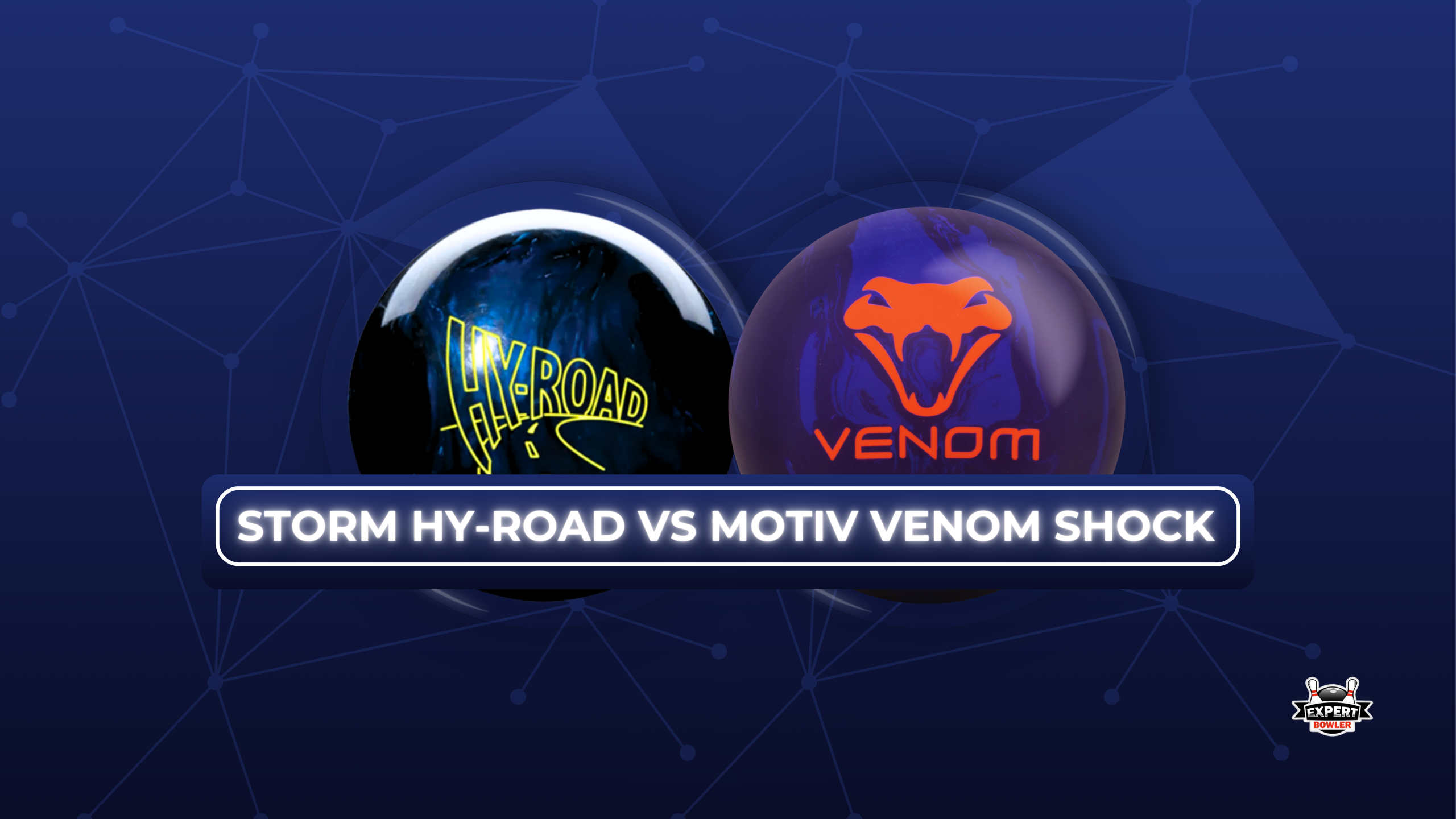
Two balls. Both legendary. Both are called “the benchmark” by bowlers who swear by them. And yet they couldn’t be more different in how they get down the lane.
The Storm Hy-Road vs Motiv Venom Shock decision stumps a lot of intermediate bowlers. On paper, they occupy the same slot in an arsenal. On the lanes, they create opposite shapes. Picking the wrong one means fighting your equipment instead of trusting it.
In this benchmark bowling ball comparison, we get specific about what separates these two balls and which one actually fits your game. If you’ve been scouring every Motiv Venom Shock and Storm Hy-Road review online without getting a clear answer, this breakdown will fix that.
Storm Hy-Road vs. Motiv Venom Shock: A Head-to-Head Benchmark Battle
The Hy-Road launched in 2008 and became Storm’s best-selling ball of all time. Sixteen years later, it’s still in production. That kind of staying power says something.
The Venom Shock followed in 2014 and holds the same status for Motiv. The company calls it “the greatest benchmark ball in the world of bowling.” EJ Tackett, four-time PBA Player of the Year, keeps one in his bag at all times. His words: “I don’t go anywhere without it.”
What defines a benchmark ball? According to USBC’s guide to building an effective arsenal, it’s “your favorite and most predictable tool and is the easiest to understand a lane condition based on your game.”
Both balls qualify. Where they split is how they deliver that predictability.
At a Glance: Comparing the Core Specs
| Specification | Storm Hy-Road | Motiv Venom Shock |
| Coverstock | R2S Hybrid | Turmoil MFS Solid |
| Factory Finish | 1500 Grit Polished | 4000 Grit Sanded |
| Core | Inverted Fe² (Symmetric) | Gear (Symmetric) |
| RG (15 lb) | 2.57 (Higher) | 2.48 (Lower) |
| Differential | 0.046 (Higher) | 0.034 (Lower) |
| Flare Potential | 5-6″ (Medium-High) | 3″+ (Medium-Low) |
| Lane Condition | Medium to Heavy Oil | Light to Medium Oil |
Coverstock Comparison
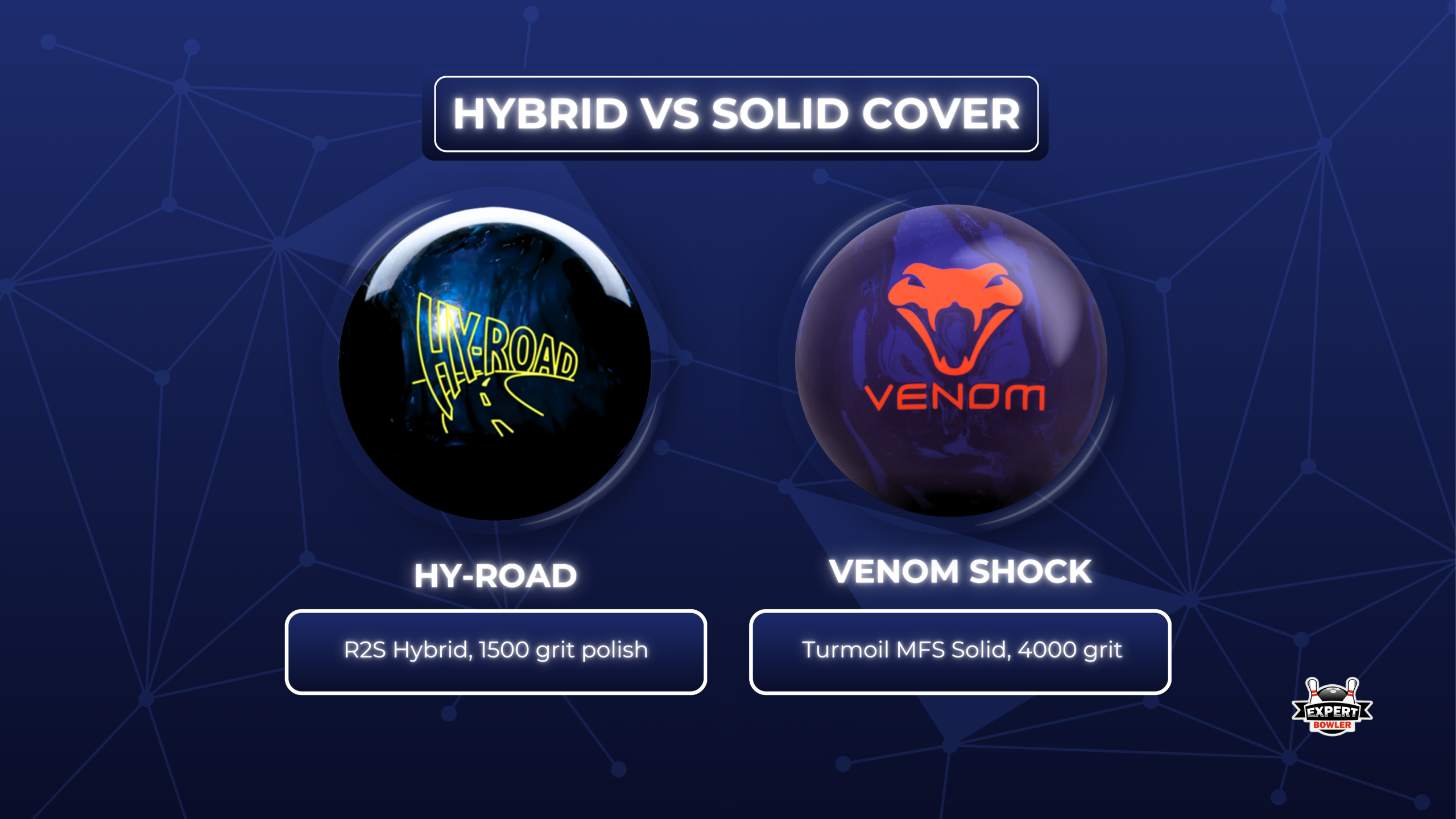
Storm wraps the Hy-Road in their R2S Hybrid formula, polished to 1500 grit. Hybrid means a mix of solid and pearl reactive particles. The solid gives traction, the pearl adds length. On the lane, this translates to a ball that glides through the oil up front, then snaps into an angular move at the breakpoint.
That polished finish is doing a lot of the work, pushing the reaction further down the lane before it kicks in.
The Venom Shock has a completely different story. Motiv uses their Turmoil MFS solid coverstock, sanded to a much duller 4000 grit. Solid covers grab friction earlier. The sanded finish amplifies that. So instead of skating and snapping, the Venom Shock digs in at the midlane and rolls through the breakpoint with a smoother, more gradual arc.
Bottom line: Hy-Road waits, then turns hard. Venom Shock starts working earlier and never stops. Same benchmark category, totally different answers to the same question.
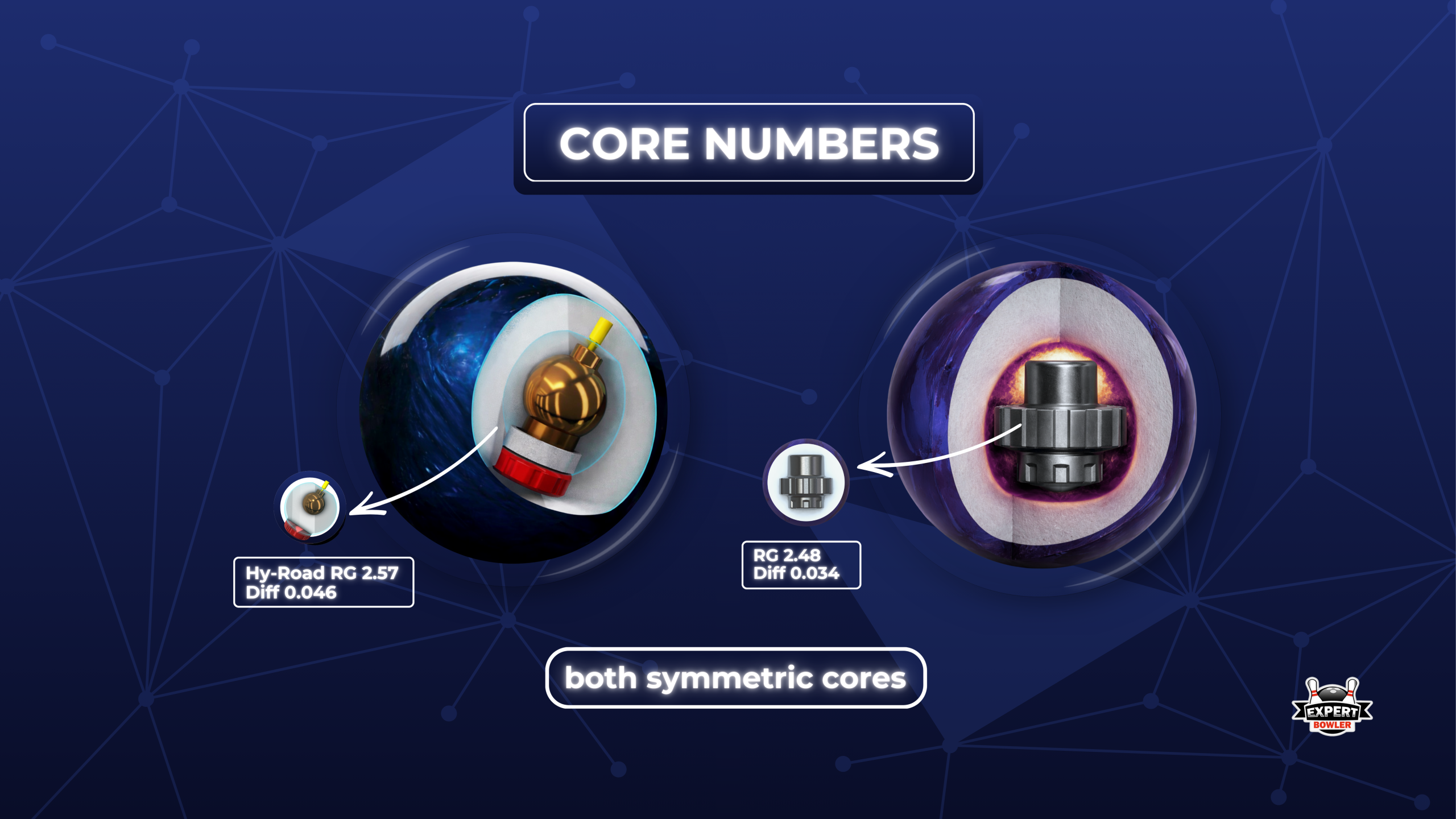
Core Numbers (RG, Differential)
RG stands for Radius of Gyration. Basically, how fast a ball wants to start spinning. Picture a figure skater. Arms stretched out, they rotate slowly. Pull the arms in tight; they spin faster. High RG is arms out. Low RG is arms in.
The Hy-Road sits at 2.57 RG. That’s on the higher end, which means this ball wants to travel before it revs up. The Venom Shock comes in at 2.48, lower, so it gets into its roll earlier and starts reading the lane sooner.
Then there’s differential, which controls flare. Flare is how much the ball’s track shifts as it goes down the lane. More flare usually means more backend motion.
At 0.046 differential, the Hy-Road produces 5-6 inches of flare. That’s where the strong move off the breakpoint comes from. The Venom Shock’s 0.034 differential generates around 3+ inches, less dramatic, but it creates that smoother, more controlled shape the ball is known for.
One thing both balls share: symmetric cores. Asymmetric designs can create more angular, flippy motion. Symmetric cores roll more predictably. That’s a big part of why both of these balls earned their benchmark reputation.
Ball Motion: Where They Differ on the Lane
Numbers only tell part of the story. What matters most is how these bowling balls actually behave when they hit the lane. Any thorough Storm Hy-Road or Motiv Venom Shock review needs to address the actual shape these balls create from release to pins.
The Storm Hy-Road: Smooth, Predictable, and Continuous
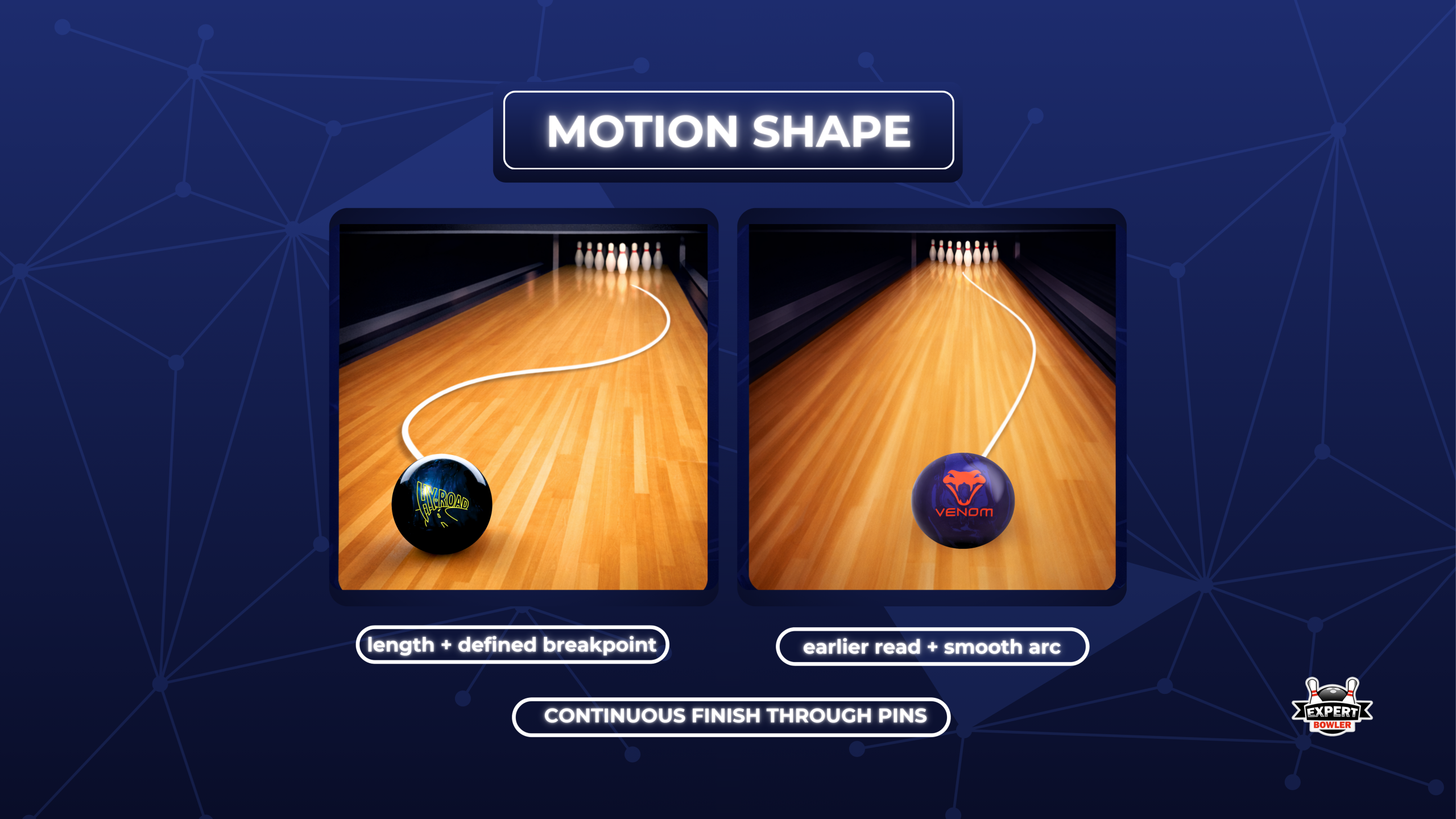
The Hy-Road reads the lane consistently shot after shot, making it one of the most predictable balls in the benchmark category. The polished hybrid cover clears the heads with ease, then the Inverted Fe² core creates a strong, continuous arc at the breakpoint. This isn’t a violent snap; it’s a rounded, powerful move that drives through the pins with authority.
The motion shape favors bowlers who play straighter angles and use the friction at the breakpoint to create their angle into the pocket. Pin carry tends to be excellent because the ball maintains energy deep into the pin deck.
What to expect: Length through the front, a defined breakpoint, and a continuous finish that doesn’t quit at the pins.
The Motiv Venom Shock: Earlier Rolling with Controlled Continuation
The Venom Shock takes a cover-dominant approach. The Turmoil MFS solid picks up the midlane earlier, allowing bowlers to see where the ball is going sooner in its trajectory.
This earlier read doesn’t mean less backend; the Venom Shock still delivers a smooth yet angular finish with what Motiv calls “devastating continuation.”
Where the Hy-Road stores energy for a big move, the Venom Shock distributes that energy more evenly from mid-lane through the pins. This creates a rounder, more predictable arc without the sharper direction change at the breakpoint.
The ball responds remarkably well to surface changes. Adding polish creates more length and angle; adding surface creates earlier reading with more control.
What to expect: Earlier traction, a smooth transition through the breakpoint, and controlled continuation that doesn’t overreact.
Who Should Choose the Storm Hy-Road?
Not every bowler needs the same ball motion. The Hy-Road fits a specific profile. Here’s how to know if it matches yours.
Best for Bowlers Who Value Length and Backend
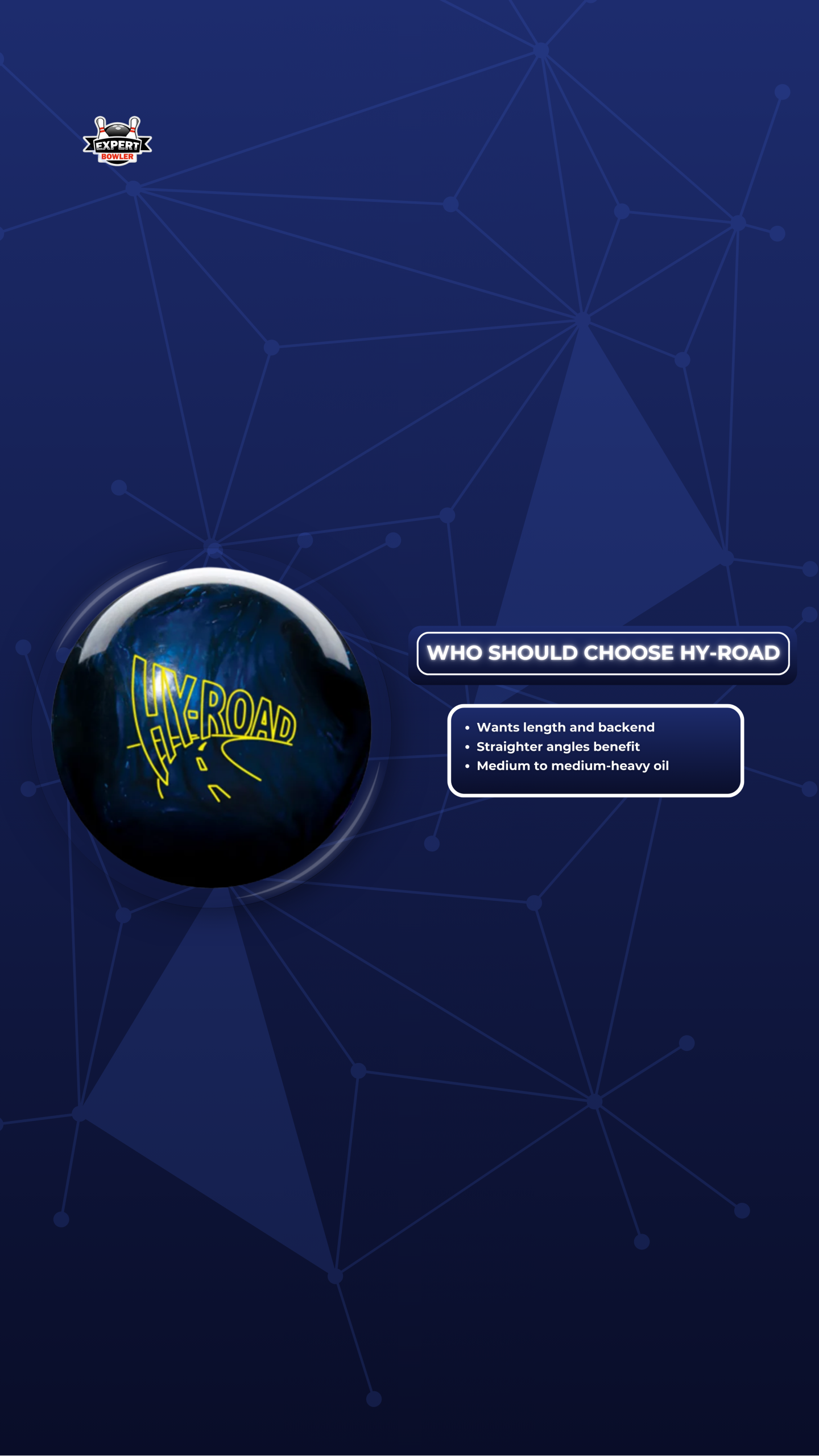
The Hy-Road works best for bowlers who want the ball to get down the lane before making its move. Strokers and tweeners with moderate rev rates benefit most. The higher differential and polished surface store energy and release it at the breakpoint.
Lower rev players especially benefit from the Hy-Road’s willingness to finish. The Inverted Fe² core transfers energy efficiently to the pins, reducing deflection on lighter hits. Coaches often recommend this motion profile for bowlers whose release produces a straighter ball path. The equipment creates an angle that the hand doesn’t.
Storm Hy-Road
The Storm Hy-Road was developed to provide a reliable benchmark reaction by combining a high-RG core with a thin, reactive coverstock. It exists to offer a predictable motion that bridges the gap between aggressive heavy-oil balls and weaker spare or entry-level options. This ball is engineered for medium to light oil lane conditions, where its Inverted Fe² Technology core and R2S Solid Reactive coverstock allow it to maintain energy through the front of the lane before delivering a continuous arc toward the pocket.
- What it helps with: Maintaining a consistent and predictable ball path on broken-down patterns or lighter oil volumes.
- When it works best: Most effective on medium-dry house shots or during later tournament blocks when more aggressive equipment begins to over-react.
- When it’s not ideal: It is generally not intended for heavy oil or long, high-volume patterns, as the high-RG core and polished finish may cause the ball to skid too far past the ideal breakpoint.
Ideal for Playing Straighter Angles
If the typical game plan means playing around the second arrow with a controlled arc to the pocket, the Hy-Road fits that approach. It handles fresh medium to medium-heavy oil well and stays usable as the pattern breaks down.
The hybrid cover adapts to changing conditions, though it truly shines when there’s enough oil to let it travel before turning. Layout changes also work well. Pro shops have the flexibility to match this ball to different styles.
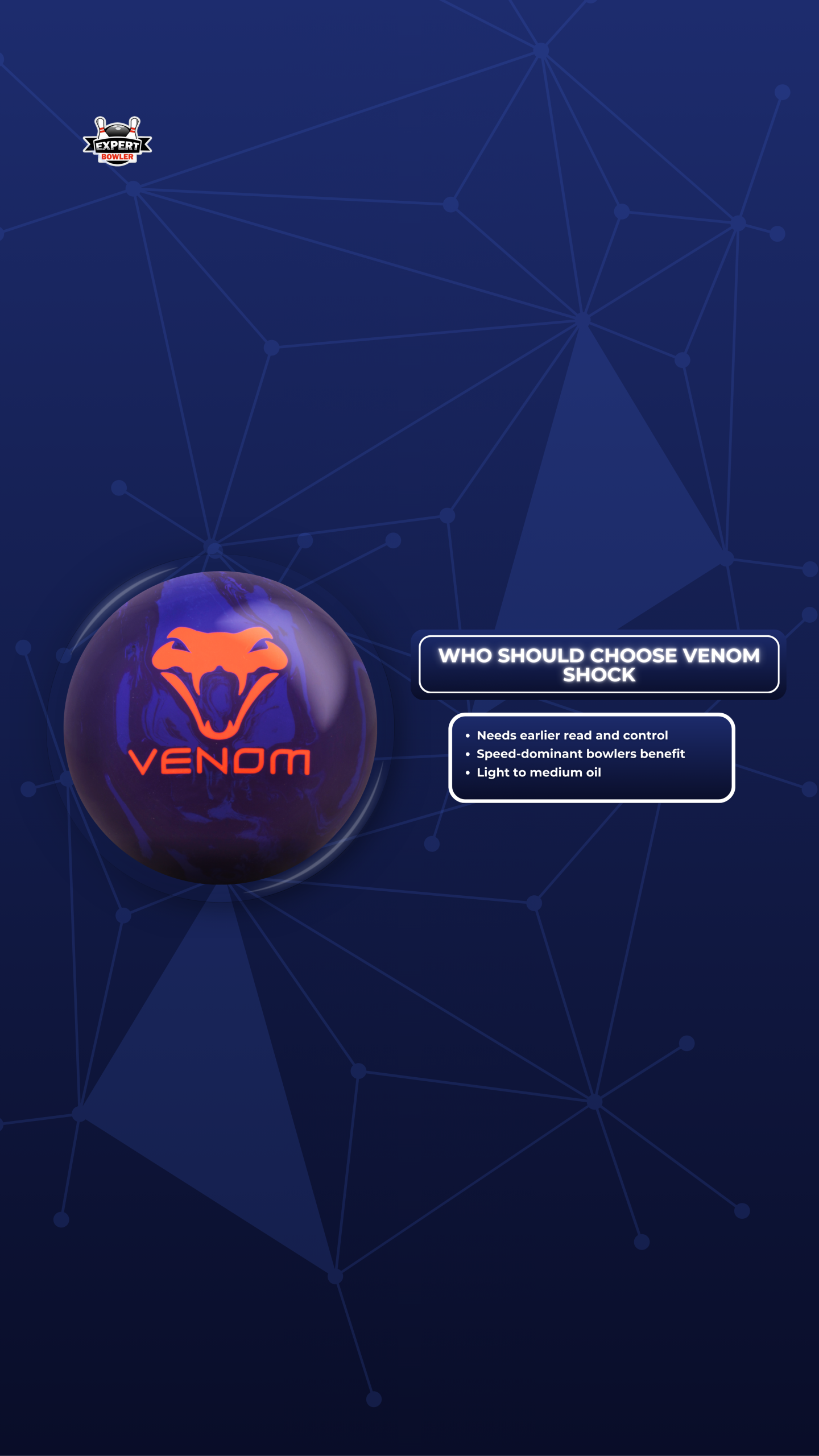
Who Should Choose the Motiv Venom Shock?
The Venom Shock solves a different problem. If you’ve watched your ball skid too long and run out of energy at the pins, this is where to look.
Best for Bowlers Needing an Earlier Lane Read
Speed-dominant bowlers often struggle with equipment that pushes too far before reacting. The Venom Shock’s lower RG and sanded solid cover provide the traction needed to get the ball rolling earlier.
The result is a shape that doesn’t require perfect speed or hand position to find the pocket. From an instructional standpoint, earlier ball motion makes adjustments easier, which means there’s more time to read the reaction before the breakpoint.
Motiv Venom Shock
The Motiv Venom Shock was engineered to provide a smooth yet continuous backend motion by pairing the Gear weight block with the Turmoil MFS Reactive coverstock. It exists to offer a versatile, mid-performance option that remains controllable while still driving through the pins. This ball is specifically designed for light to medium oil lane conditions, where its balanced core and coverstock combination prevent it from over-reacting on drier surfaces.
- What it helps with: Producing a smooth, predictable motion that continues through the pin deck rather than deflecting.
- When it works best: On light to medium oil conditions, where a bowler requires a reliable reaction that is not overly aggressive.
- When it’s not ideal: It may lack the necessary traction and overall hook potential required for heavy oil volumes or long, high-volume patterns.
Ideal for Opening Up the Lane
Higher rev players who prefer to swing the ball will find the Venom Shock offers control without sacrificing angle. The cover-dominant reaction allows for deeper starting positions while maintaining a predictable move to the pocket.
Tournament bowlers often follow this pattern: start with something stronger on fresh oil, then switch to the Venom Shock when the pattern opens, but conditions don’t yet call for a pearl. It fills that transitional slot perfectly.
The Verdict: Which One is Right for Your Bag?
Neither ball is universally “better.” The Storm Hy-Road vs Motiv Venom Shock choice comes down to bowling style, typical lane conditions, and what gap exists in the current arsenal.
Our Recommendation for Strokers
Choose the Storm Hy-Road. The higher differential and polished hybrid cover create angle that lower rev rates sometimes struggle to generate on their own. The Hy-Road’s backend strength compensates for a straighter release, giving strokers that strong finish into the pocket.
Our Recommendation for Tweeners and Crankers
Consider the Motiv Venom Shock. Higher rev rates already produce plenty of backend motion. What many power players need is control and an earlier read. The Venom Shock’s lower differential and sanded solid cover tame the backend while providing exceptional midlane traction.
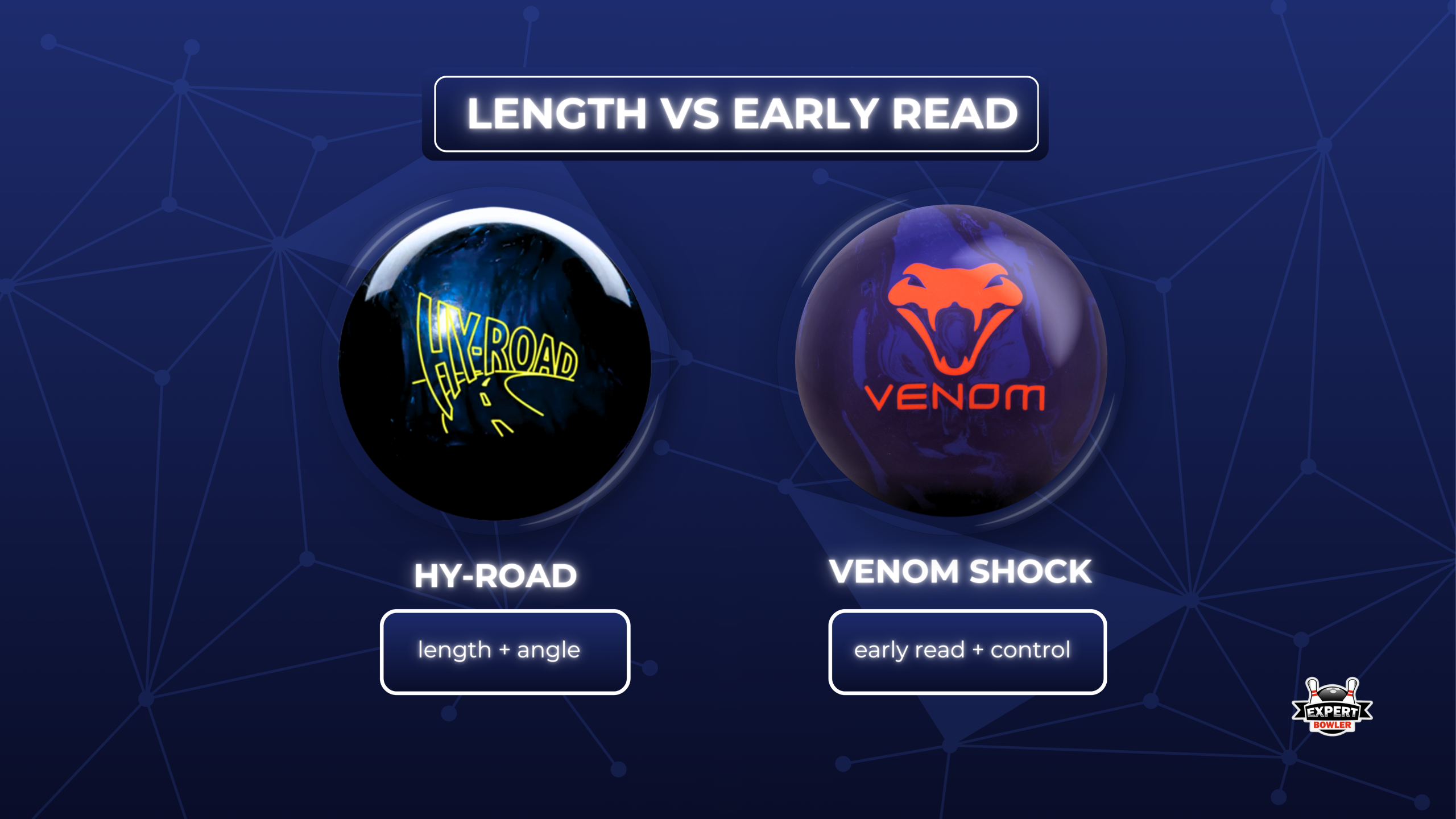
That said, many serious bowlers end up owning both. The Hy-Road and Venom Shock complement each other because they fill the same benchmark slot with opposite shapes. One for length, one for early read.
Product Overviews & Final Thoughts
Both the Storm Hy-Road and Motiv Venom Shock have earned their legendary status through years of proven performance at every level of competition.
Either option represents a smart investment in a benchmark ball that will remain relevant for years to come.
The choice comes down to one question: Do you need more length and backend, or earlier read and control?
Storm Hy-Road
The Storm Hy-Road was developed to provide a reliable benchmark reaction by combining a high-RG core with a thin, reactive coverstock. It exists to offer a predictable motion that bridges the gap between aggressive heavy-oil balls and weaker spare or entry-level options. This ball is engineered for medium to light oil lane conditions, where its Inverted Fe² Technology core and R2S Solid Reactive coverstock allow it to maintain energy through the front of the lane before delivering a continuous arc toward the pocket.
- What it helps with: Maintaining a consistent and predictable ball path on broken-down patterns or lighter oil volumes.
- When it works best: Most effective on medium-dry house shots or during later tournament blocks when more aggressive equipment begins to over-react.
- When it’s not ideal: It is generally not intended for heavy oil or long, high-volume patterns, as the high-RG core and polished finish may cause the ball to skid too far past the ideal breakpoint.
Motiv Venom Shock
The Motiv Venom Shock was engineered to provide a smooth yet continuous backend motion by pairing the Gear weight block with the Turmoil MFS Reactive coverstock. It exists to offer a versatile, mid-performance option that remains controllable while still driving through the pins. This ball is specifically designed for light to medium oil lane conditions, where its balanced core and coverstock combination prevent it from over-reacting on drier surfaces.
- What it helps with: Producing a smooth, predictable motion that continues through the pin deck rather than deflecting.
- When it works best: On light to medium oil conditions, where a bowler requires a reliable reaction that is not overly aggressive.
- When it’s not ideal: It may lack the necessary traction and overall hook potential required for heavy oil volumes or long, high-volume patterns.
Last update on 2026-03-23 / Affiliate links / Images from Amazon Product Advertising API