Storm Hy-Road vs Motiv Venom Shock 2026: Which Benchmark Belongs in Your Bag?
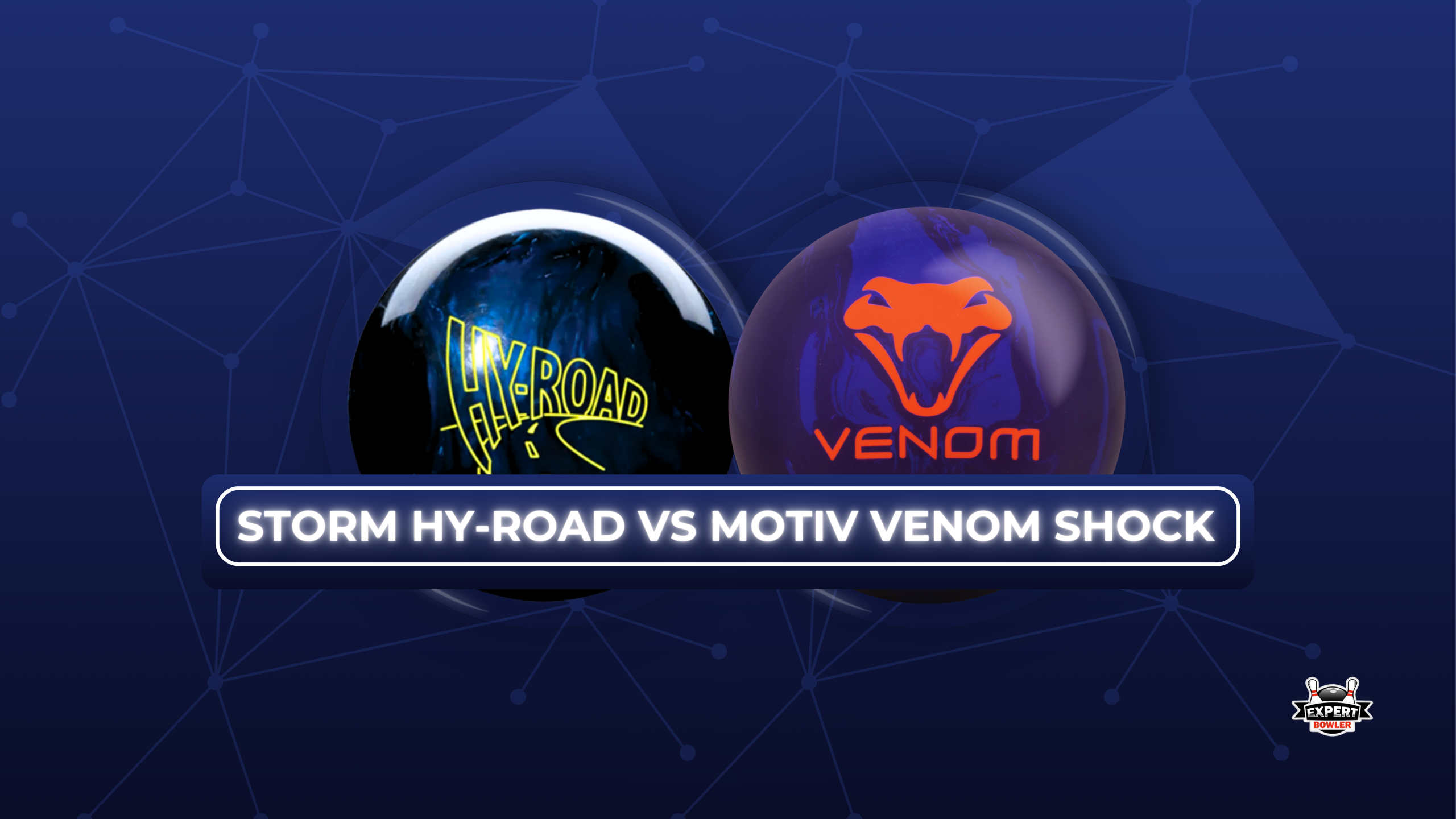
The Storm Hy-Road and the Motiv Venom Shock are both medium-oil benchmark balls that have stayed in production for over a decade — a rare achievement in a sport where most equipment cycles out in two or three years. League bowlers keep buying both. The question is which one belongs in your bag.
This comparison is built from manufacturer specifications, verified community feedback, and verified owner reports. It covers what each ball actually does on the lanes, where the differences matter, and which bowler profile each one suits.
Updated: May 2026 · Reviewed by Jeroen Kooij · See methodology below
Read this before clicking buy
Both balls in this comparison ship undrilled. Before you order, factor in:
- Pro shop drilling cost: a one-time fee of roughly $20–50, mandatory unless you can drill yourself
- Bring your hand to the shop for fit measurements before drilling — mismatched holes mean a ball you cannot use and cannot return
- Weight check: if you are between weights, go up (15 lb) for strikes, down (14 lb) for spares. Wrong weight is the #1 return reason
- Coverstock vs lane condition: match the ball to your typical pattern — check the “who it is for” details below
A correctly drilled ball is a 5-year tool. Ten minutes of weight and fit checks before ordering saves you a return cycle.
Quick comparison
Side-by-side specs
Answer four quick questions and our free Bowling Ball Finder matches you to the right ball for your style, lanes and budget — plus a free buyer’s checklist, instantly.
Take the free Finder →Coverstock comparison
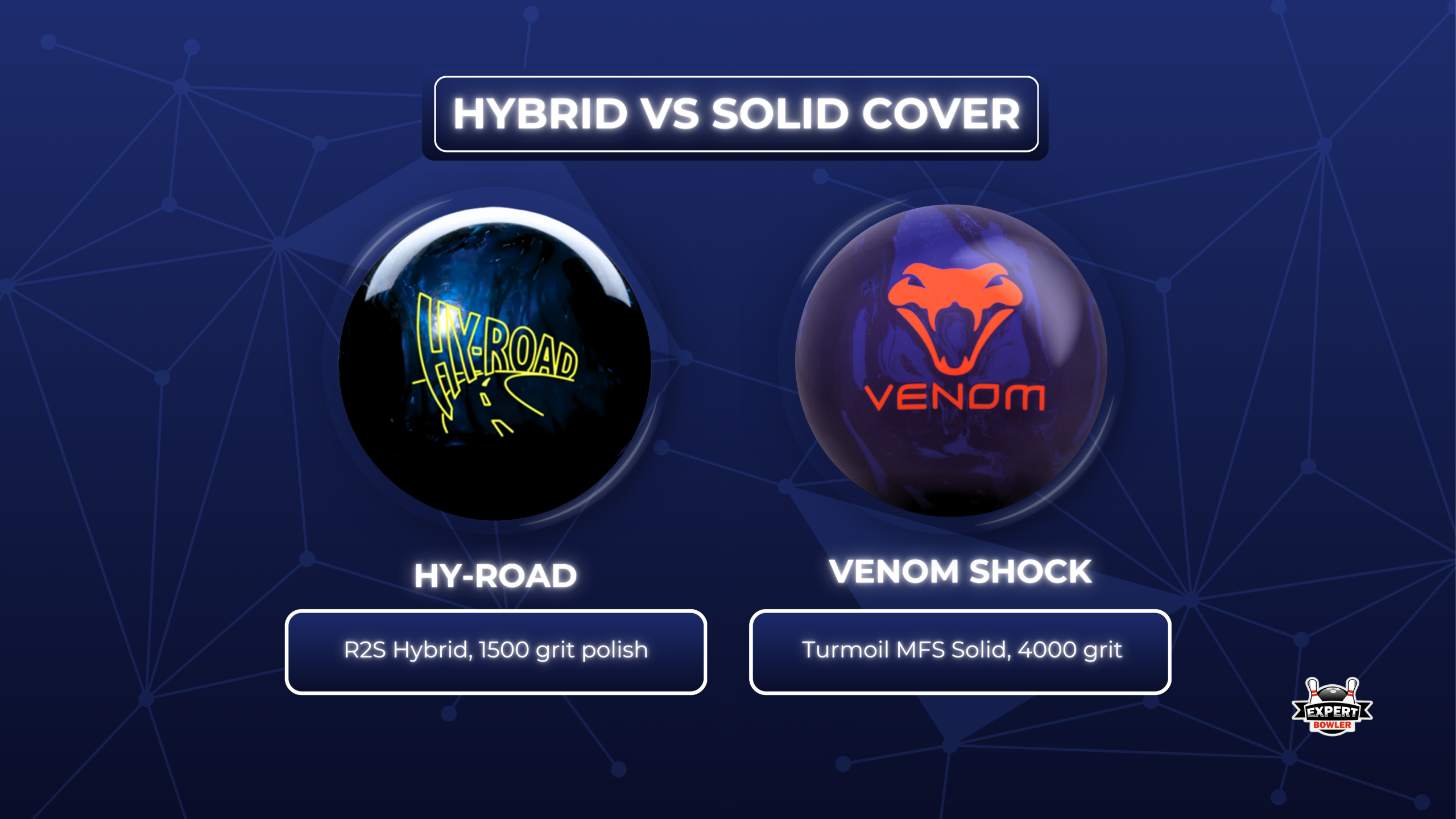
Storm Hy-Road — R2S Pearl Reactive
Pearl reactive cover that pushes through the heads cleanly with relatively low midlane friction. The polished 1500-grit factory finish gets the ball down the lane before it reads, giving the Hy-Road its signature length-and-snap shape. Most effective on medium oil patterns with cleaner heads.
Motiv Venom Shock — Turmoil MFS Solid
Solid reactive cover that reads the midlane earlier with the 4000-grit LSS factory finish. More cover-dominant than the Hy-Road — the cover does most of the work and the core supports it. Best on light-to-medium oil where you want predictable, continuous motion rather than a defined backend snap.
Core comparison
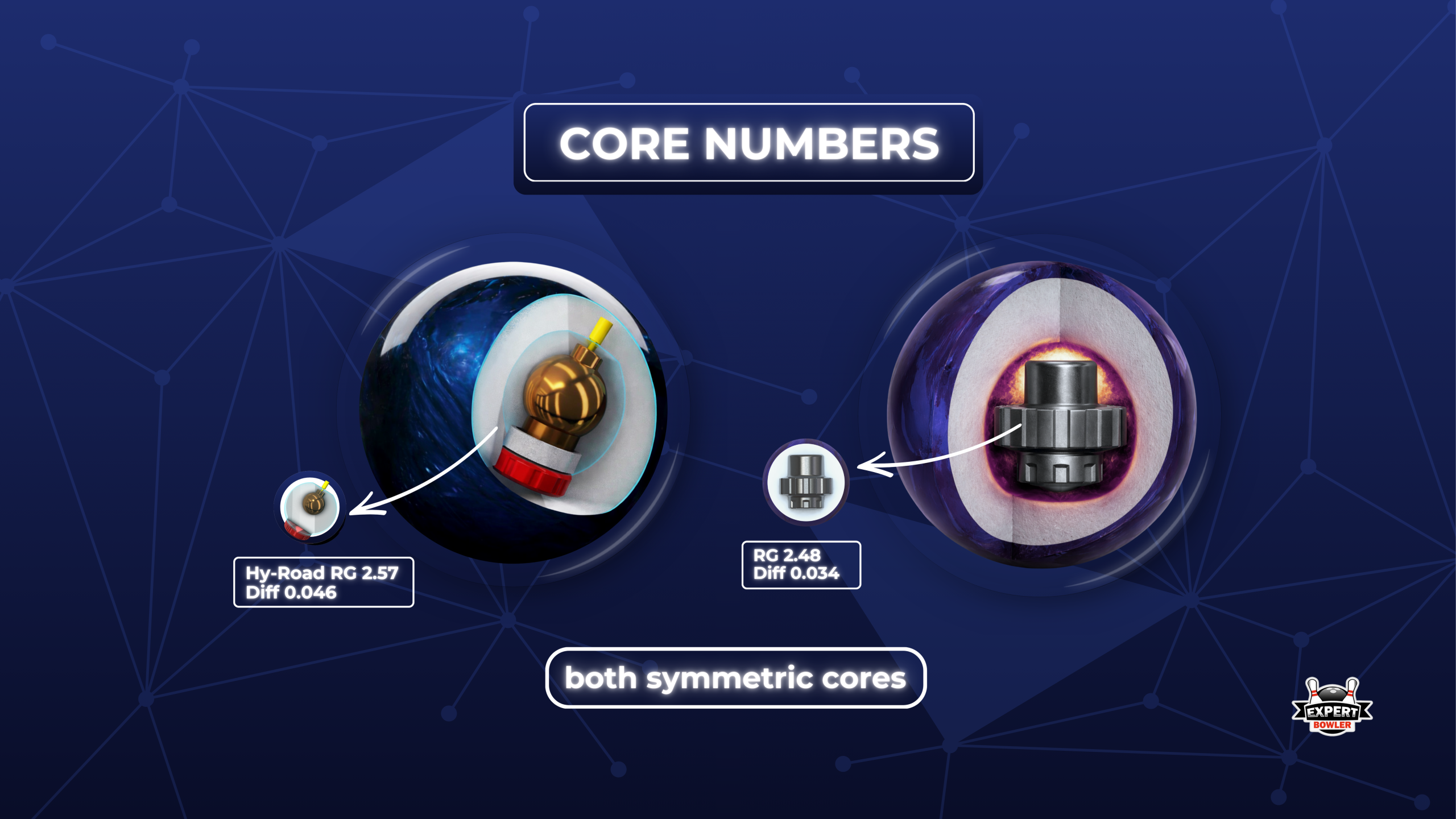
Storm Hy-Road — Inverted Fe2 core
Symmetric core with an RG of 2.57 (medium-high) and a differential of 0.045. The higher RG delays the ball’s roll and helps it conserve energy through the front of the lane. The 0.045 differential gives roughly 4 inches of flare — enough for a defined backend but not so much that it becomes unpredictable.
Motiv Venom Shock — Gear core
Symmetric core with a lower RG of 2.48 and a lower differential of 0.034. The low RG means the ball revs up earlier and reads the midlane sooner. The 0.034 differential produces around 3 inches of flare — a smoother, more controlled transition than the Hy-Road’s sharper shape.
Ball motion: where they differ on the lane
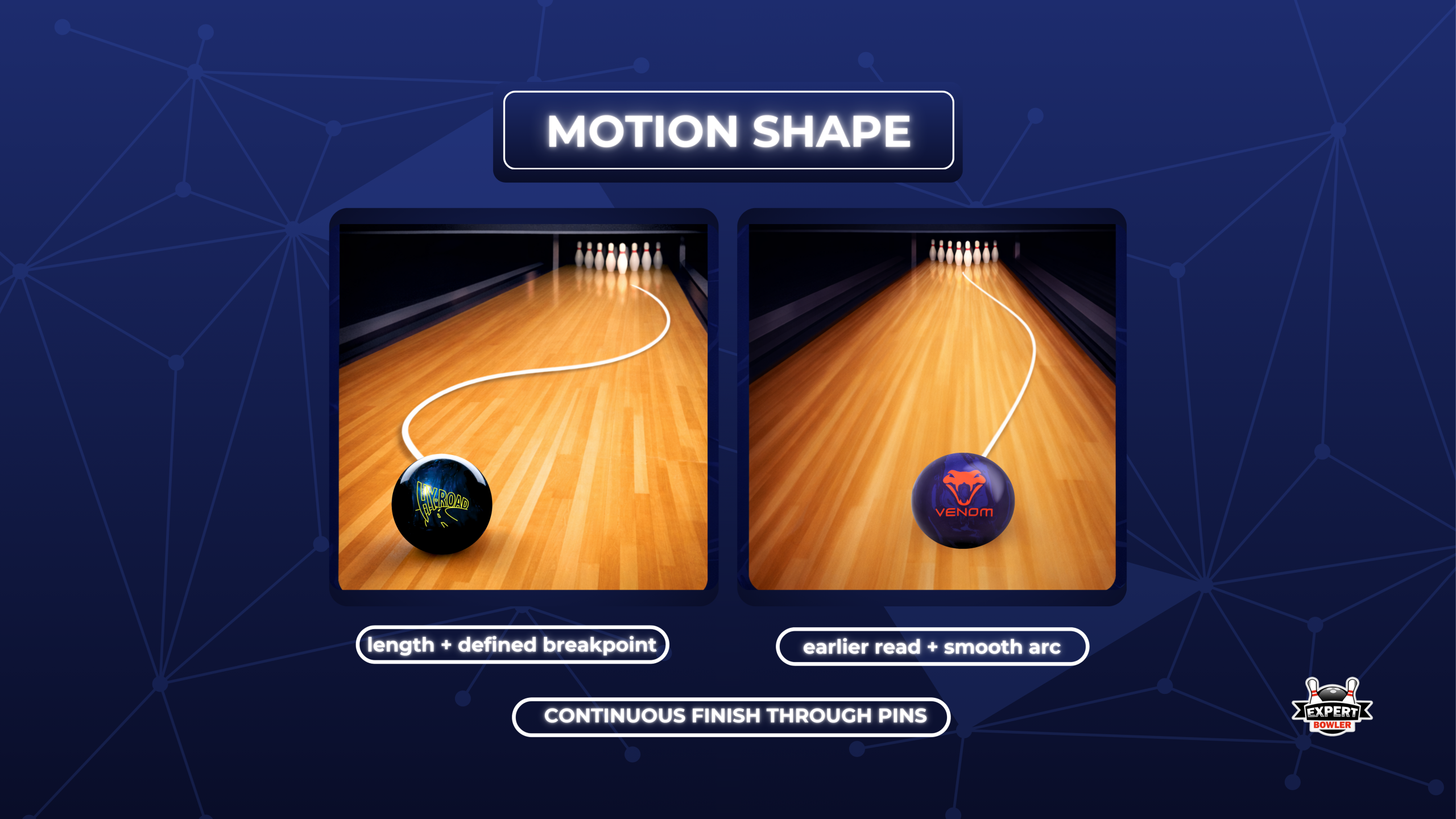
Storm Hy-Road: length and backend snap
The Hy-Road’s combination of higher RG and pearl coverstock produces clean front-end motion followed by a strong, defined backend reaction. On a typical house shot, expect 38-42 feet of clean motion before the ball reads friction and snaps into the pocket. The shape is closer to skid-flip than continuous arc — better for bowlers who like to see the ball move.
Motiv Venom Shock: earlier roll, controlled continuation
The Venom Shock’s lower RG and solid coverstock produce an earlier, more continuous arc. The ball starts reading around 32-36 feet and rolls smoothly through the pins without a violent transition. Less angle than the Hy-Road, but more predictable and easier to repeat shot after shot.
Who should choose which?
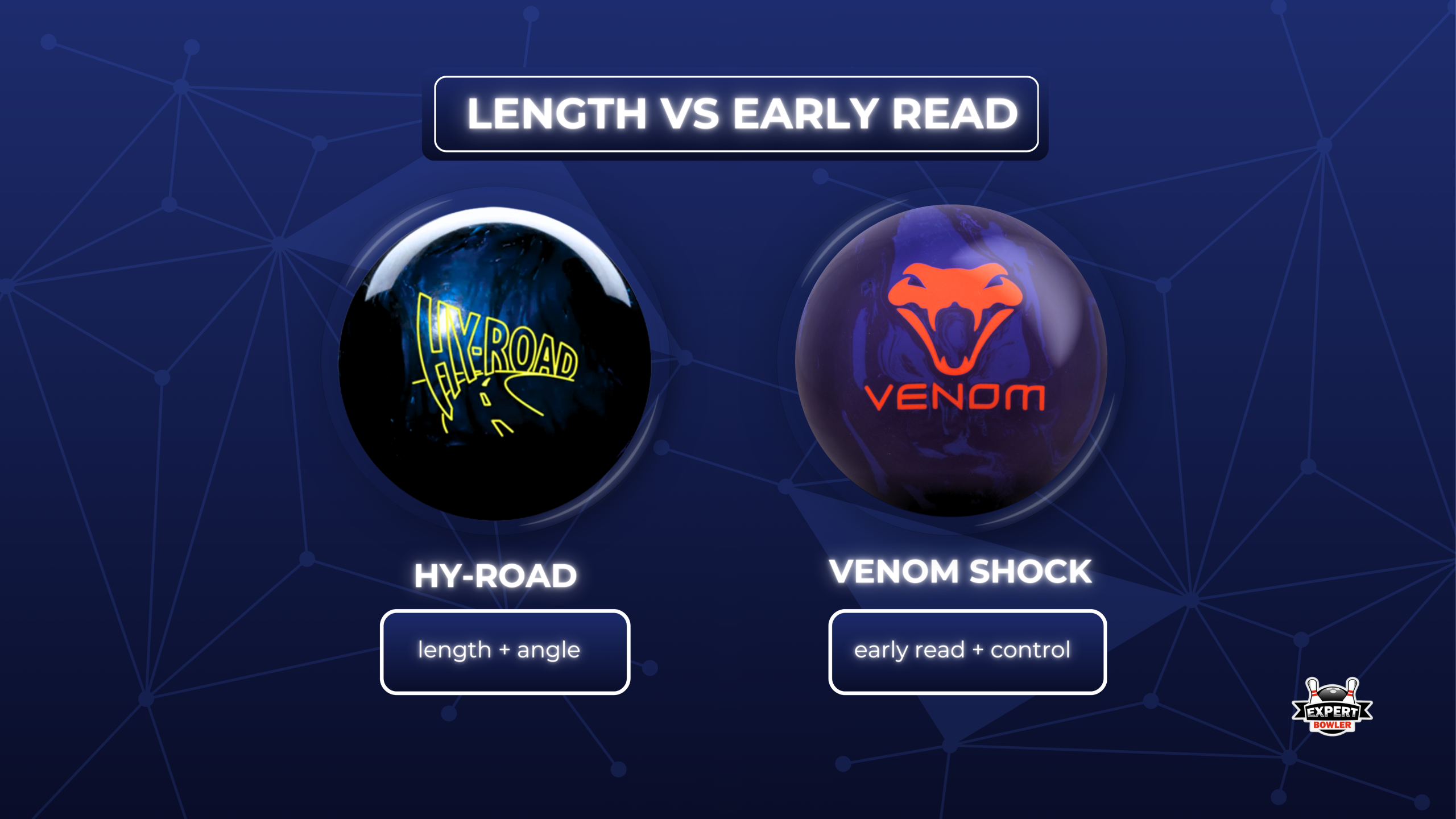
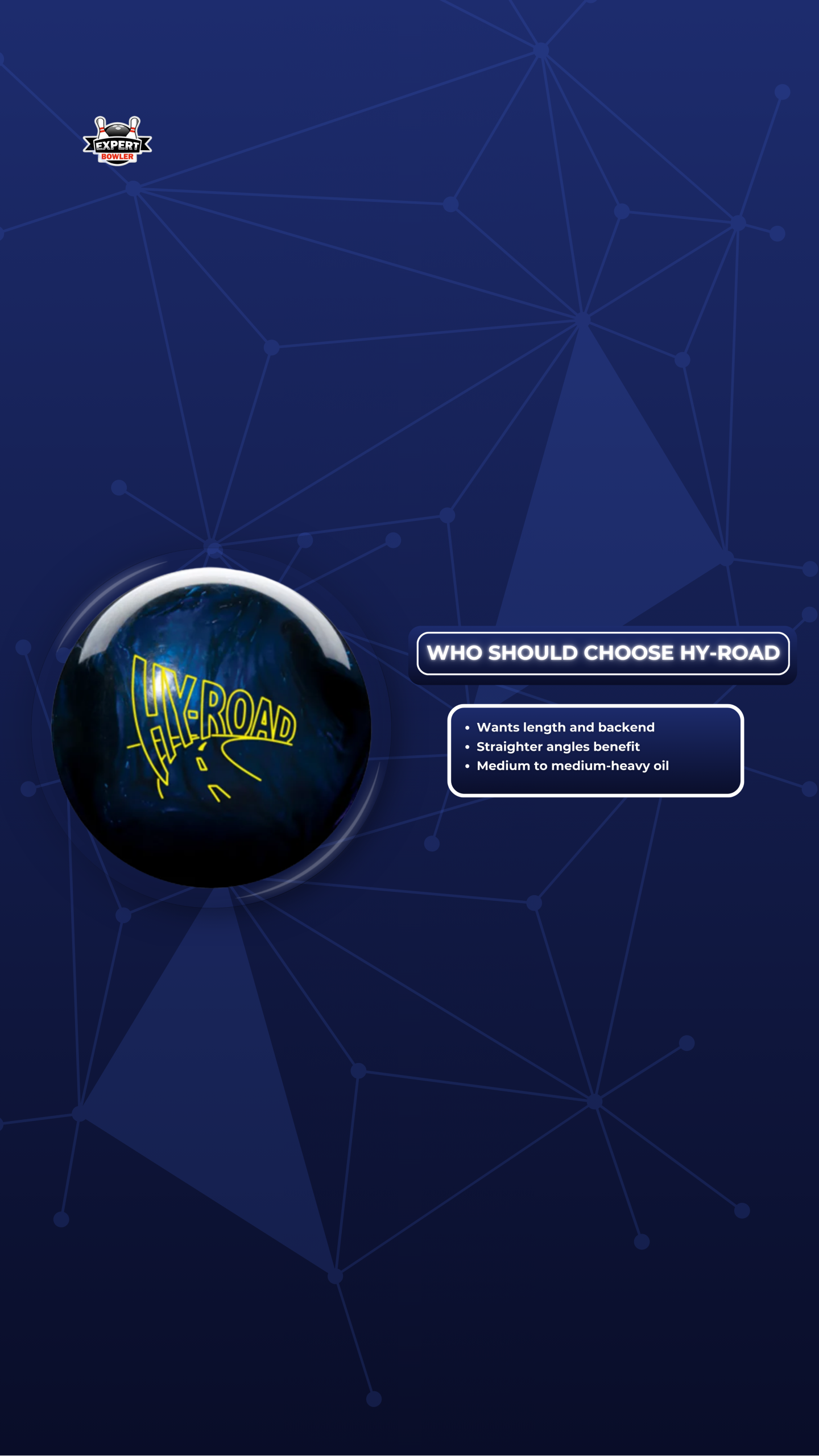
Choose the Storm Hy-Road if…
You bowl on medium oil with longer / cleaner heads, want a sharper backend reaction with more entry angle, prefer playing straighter lines, and have a moderate-to-higher rev rate that can take advantage of the backend snap. Strokers who use the angle to find pocket carry will see the most benefit.
Choose the Motiv Venom Shock if…
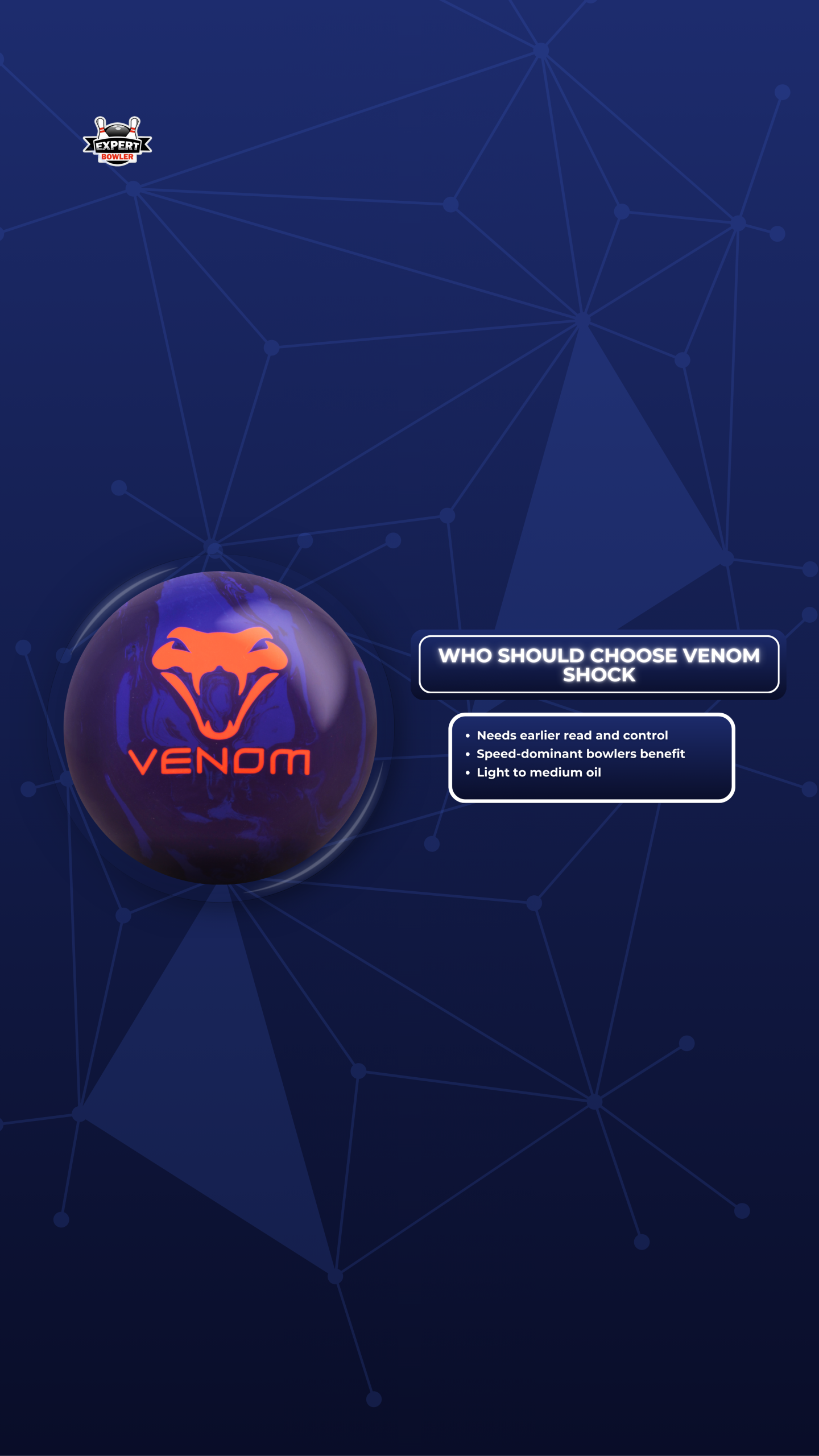
You bowl on light-to-medium oil or shorter patterns, want the most predictable shape you can find in a benchmark, prefer a controlled arc over a defined snap, and have any rev-rate profile (the Venom Shock works across styles). Bowlers fighting over- and under-reaction will land on the Shock first.
Final verdict by bowler type
Strokers
Storm Hy-Road. The pearl cover and stronger backend give strokers the entry angle they need to create pin carry. The Venom Shock can leave too many corners standing for the typical stroker arsenal.
Tweeners and crankers
Either works — choose by lane condition. Tweeners and higher-rev bowlers can use either ball effectively. Match the Hy-Road to fresher conditions and the Venom Shock to drier or transitioned lanes. Many league bowlers carry both as complementary pieces.
First-time benchmark buyer
Motiv Venom Shock. Slightly easier to read and more forgiving on inconsistent releases. The Hy-Road is the step-up once your release is more consistent and you want more backend.
The honest summary
Both balls earn their decade-long reputations. The Storm Hy-Road wins on backend snap and entry angle; the Motiv Venom Shock wins on early roll and predictability. Neither is objectively better — they’re both honest benchmark balls that match different bowling situations.
If you are buying one as your primary strike ball and you bowl typical medium-oil house shots: the Hy-Road has slightly broader applicability and stronger pin carry on cleaner heads. If you want the most predictable, lowest-stress benchmark in your bag: the Venom Shock.
Many serious league bowlers eventually own both — Hy-Road for fresh / clean conditions, Venom Shock for transition. If your arsenal has room, that pairing covers the medium-oil range completely.
Get our honest 2-page checklist — coverstock, weight, lane oil, and the 5 mistakes that cost most bowlers money. One short email every couple of weeks. No spam.
Edited by Jeroen Kooij
Editor · ExpertBowler
Editor of ExpertBowler. Responsible for editorial standards and methodology compliance. Read more about our editorial process.
Methodology: Picks evaluated against multi-year owner reports and community sentiment. We do not accept paid placements.
Updated: 2026.
Sources consulted
- Manufacturer documentation: official product specifications and technical data
- Community feedback: verified threads on BowlingForums.com and Reddit r/Bowling
- Published reviews: BowlersMart, BowlerX, Amazon multi-year owner aggregations
- USBC equipment specifications: approval lists for league and tournament-grade equipment