Best Bowling Balls 2026: Expert Picks by Bowler Type and Lane Condition
By Jeroen Kooij, Editor · Updated 2026
Read this before clicking buy
Most reactive and urethane balls on this list ship undrilled. Before you order, factor in:
- Pro shop drilling cost: a one-time fee of roughly $20–50, mandatory unless you can drill yourself
- Bring your hand to the shop for fit measurements before drilling — mismatched holes mean a ball you cannot use and cannot return
- Weight check: if you are between weights, go up (15 lb) for strikes, down (14 lb) for spares. Wrong weight is the #1 return reason
- Coverstock vs lane condition: match the ball to your typical pattern. A heavy-oil ball on dry lanes does not perform — read the “who it is for” section per pick below
A correctly drilled ball is a 5-year tool. Ten minutes of weight and fit checks before ordering saves you a return cycle.
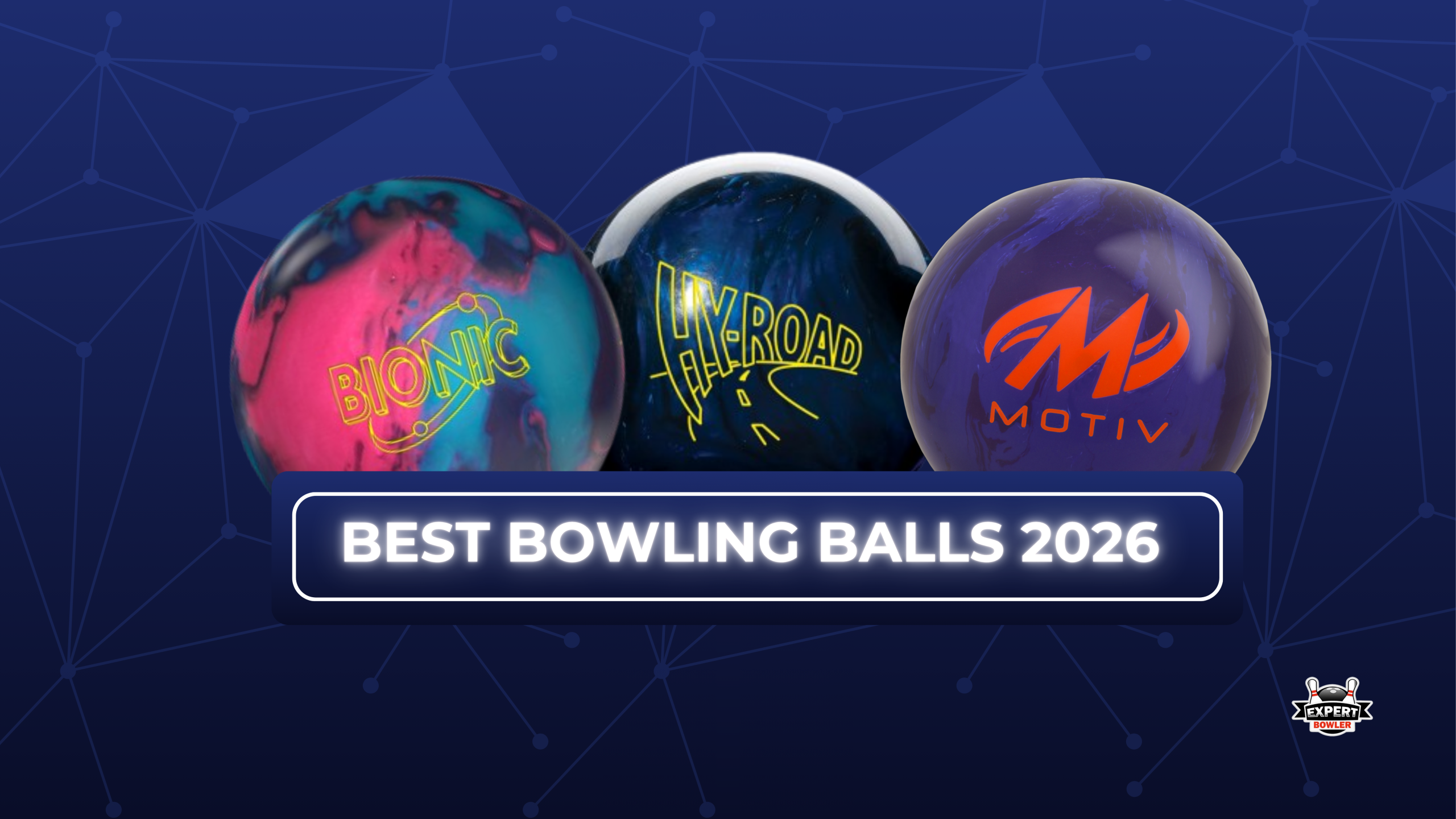
Every year, the best bowling balls list changes. What ranked at the top last season gets replaced by something with a new core design or a different coverstock formula, and the cycle starts over. The question bowlers are really trying to answer, though, has not changed. Which ball is right for me?
It is the most common question in the sport, and after years of watching equipment cycles come and go, the answer has never been a single ball name. It has always been a follow-up question. What do you need the ball to do?
This guide is built around that idea. Six picks for 2026, each one matched to a specific bowler situation, with honest watch-outs and surface tips included.
Quick Comparison of the Best Bowling Balls for 2026
What Makes a Bowling Ball “Best”
There is no single best bowling ball. The right choice depends on three things. Your skill level, the oil pattern you bowl on, and the ball motion that fits your release. A ball built for heavy oil will burn up on dry lanes. A high-performance asymmetric will fight a beginner’s inconsistent hand position. That is why every pick below is tied to a specific bowler situation.
Answer four quick questions and our free Bowling Ball Finder matches you to the right ball for your style, lanes and budget — plus a free buyer’s checklist, instantly.
Take the free Finder →Best Bowling Balls 2026 at a Glance
- The Storm Bionic is the best all-around benchmark for 2026, built to handle fresh oil, transition, and everything in between
- The Motiv Venom Shock is the league bowler’s workhorse, with 12 years of proven reliability on typical house shots
- The Hammer Black Widow 3.0 is the step-up piece when your benchmark starts sliding through the breakpoint on medium oil
For beginner, budget, and spare ball picks, keep reading below.

How We Assess a Bowling Ball
Bowlers tend to shop by specs, and that makes sense up to a point. RG and differential tell you what a ball was designed to do. But those numbers won’t tell you how the cover responds after sixty league games, or how the ball handles a three-game set when the oil has moved. The picks in this guide were chosen with a wider lens.
Here is what separated the recommendations from the rest.
- How the core and coverstock work together on the lane – Not just what each spec says individually, but whether the combination produces a useful, repeatable motion on real conditions.
- Whether it works across different bowler styles – A ball that only suits one speed and rev rate profile is too narrow for a general recommendation.
- How it responds to surface changes – A ball that can only do one thing limits your options as conditions shift.
- Where it falls short – Every ball has conditions and styles where it stops working, and knowing that boundary is as useful as knowing what it does well.
Best Bowling Balls of 2026
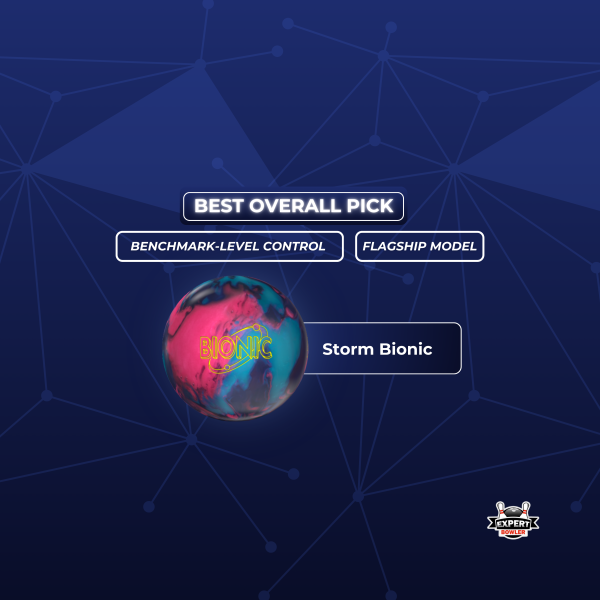
1. Best Overall Bowling Ball: Storm Bionic
Why It Works
The Torsion A.I. core is a symmetric evolution of the Element Max from the Ion Max. Storm revolved that asymmetric stacked-ellipse structure into a symmetric shape, keeping the low RG of 2.47 and a .050 differential.
That low RG means the ball revs up fast and reads the midlane earlier than most symmetrics. The .050 differential creates about 4 to 5 inches of flare, which is substantial for a symmetric core.
Plus, the NRG Hybrid coverstock at 4000 grit Abralon splits the difference between solid and pearl. Enough midlane traction to hold on fresh oil, enough length to stay playable through transition.
The motion is a smooth, continuous arc that builds through the midlane and drives through the pins with forward roll rather than a skid-flip snap.
The ball works across rev rates, speeds, and release styles, which is the definition of a genuine benchmark.
Watch-Outs
The NRG Hybrid absorbs oil aggressively. Without cleaning after every session and refreshing the surface every 20 to 30 games, midlane traction fades. Inside misses get punished with high hits and splits. The Bionic rewards bowlers who project toward the friction.
Surface Tip
Box 4000 grit works for most house shots. Scuff to 2000 or 3000 grit if it starts sliding through the breakpoint. On lighter volume, a light polish extends the length.
Arsenal Fit
In a three-ball bag, the Bionic sits in the middle. A heavier piece like the Ion Max covers a higher volume above it. A polished pearl or weaker symmetric handles transition below it.
The Storm Hy-Road has filled this benchmark role for over a decade. For bowlers who prefer the longer track record, our Storm Hy-Road review breaks down where it fits.
Get our honest 2-page checklist — coverstock, weight, lane oil, and the 5 mistakes that cost most bowlers money. One short email every couple of weeks. No spam.
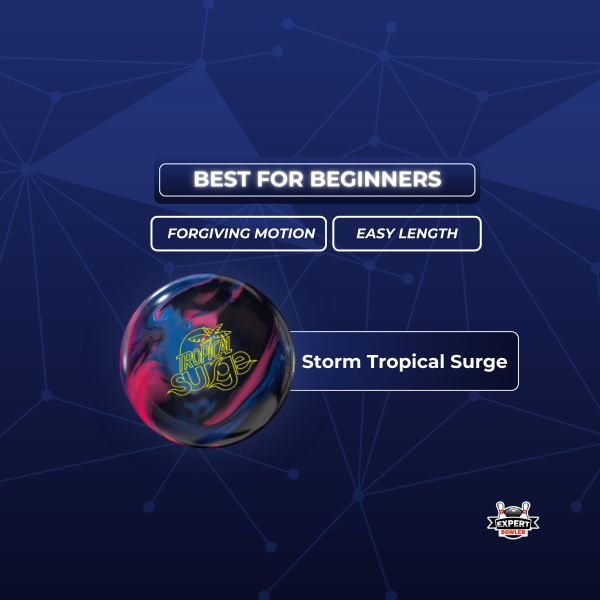
2. Best Bowling Ball for Beginners: Storm Tropical Surge
The Storm Tropical Surge has been in production since 2019 and remains one of the top-selling entry-level balls at major retailers. It comes in over half a dozen colorways, which is unusual for a ball at this performance level.
Why It Works
The Surge symmetric core paired with a Reactor Pearl coverstock gives this ball easy length and a gentle, controlled arc on dry-to-medium lanes.
The RG of 2.58 is higher than most performance balls, which means the ball delays its roll and gets further down the lane before turning. For a bowler still developing release consistency, that extra length is forgiving.
A low-RG ball that reads the midlane immediately would punish every small change in hand position. The Tropical Surge gives you room to learn, with a clean front-of-lane motion and a gradual arc that makes cause and effect easy to recognize.
Watch-Outs
The 10lb and 11lb versions use a generic pancake core, not the Surge. Only 12lb and above gets the performance weight block.
The Tropical Surge is also not built for medium-heavy oil or heavier, and our Tropical Surge review gets into where that ceiling sits.
The signal to move up is when the ball runs out of energy before the breakpoint on a standard house shot.
Surface Tip
The ball comes polished at 1500 grit, and for most beginners, the box finish is the right starting point. If it hooks more than you want on dry backends, a quick re-polish smooths the reaction and adds length.
Choose by Bowler Type
Now that you have seen our best-rated bowling balls in detail, the next step is matching one to where you are in the sport.
Beginner
A newer bowler needs equipment that teaches rather than punishes.
- Start with the Storm Tropical Surge at 12lb or above to get the performance core.
- When the ball runs out of energy before the breakpoint, move up to the Venom Shock or Rhino.
League Bowler
League bowling demands a ball that reads the house shot in game one and still finds the pocket in game three after the oil has moved.
- The Motiv Venom Shock handles that transition without requiring a ball change.
- Pair it with the Bionic for fresh oil and a TZone for spares for a complete three-ball bag
Budget-Conscious Buyer
A lower price point does not automatically mean a weaker ball under the right conditions.
- The Brunswick Rhino provides a controlled, predictable hook on light-to-medium oil.
- Put the savings toward proper drilling at a certified pro shop, which affects performance more than the ball itself.
Choose by Lane Condition
Lane conditions are the other half of the equation.
Fresh Oil
- The Hammer Black Widow 3.0 has the traction to read the midlane when the pattern is intact and weaker equipment slides through.
- The Storm Bionic handles fresh volume as well, with less aggression and more control through the pins.
Transition
- As the oil breaks down, the Motiv Venom Shock and the Bionic both hold their shape longer than most equipment at their performance level.
- A light polish on either ball adds length when the fronts start grabbing
Dry Lanes and Spares
- The Brunswick Rhino is a legitimate option on dry or burned-up conditions where stronger balls overreact
- The Brunswick TZone handles spare shooting on any surface and ignores oil pattern changes entirely.
What to Expect on Fresh Oil vs. Transition
Oil does not stay where the lane machine puts it. Every ball rolled through the pattern pushes oil down the lane and wears it away in the track area. The practical takeaway is simple.
- On a fresh pattern, oil is intact, and the ball gets length through the heads before reacting at the breakpoint.
- As games progress, bowlers carry oil down the lane and wear it away in the track area, so the ball hooks sooner and finishes higher.
- Surface-adjustable equipment like the Bionic or BW 3.0 lets you respond. Scuff to a lower grit for fresh oil, polish when the pattern opens
Maintenance and Surface Basics
Even top-rated bowling balls stop performing if the cover is neglected. Oil soaks into reactive coverstocks and quietly changes the motion. We have a full bowling ball cleaning and maintenance guide here, but the essentials come down to a few habits.
- Wipe with a microfiber towel after every shot and clean with a USBC-approved cleaner after every session.
- Resurface every 50 to 60 games to restore the factory motion
- Lower grit (1000 to 2000) adds friction and creates an earlier midlane read
- Higher grit (3000 to 4000) smooths the reaction and adds length
- Polish pushes the ball further down the lane and increases backend angularity. Not all cleaners are legal during competition, so check the USBC-approved cleaners list before buying
If you want to compare specific cleaner options, our best bowling ball cleaners guide breaks down the best picks
Alternatives for More Hook, More Control, or More Value
If your game or conditions call for something outside the six picks above, here are a few worth looking at.
- More hook or heavy oil – The Storm Ion Max and Hammer Black Widow 3.0 Dynasty both offer stronger midlane reads for demanding volume.
- More control – The Storm Hy-Road remains proven with a decade of competitive results, and the Storm Phaze II continues to be one of the most reliable control symmetrics available.
- More value – The Hammer Raw Hammer line and the Brunswick Twist both offer entry-level reactive performance at a lower investment than the Rhino.
Frequently Asked Questions
Final Recommendation by Scenario
Now that you have seen the top bowling balls for 2026, the final choice comes down to your lane conditions, your skill level, and how much control you want from the ball.
If you are a newer bowler, the Storm Tropical Surge gives you a clean place to start without punishing mistakes. If you bowl league regularly, the Motiv Venom Shock remains one of the safest benchmark choices. If you want the strongest all-around option, the Storm Bionic and Hammer Black Widow 3.0 cover the most demanding conditions in this list. And if budget matters most, the Brunswick Rhino delivers more than its price suggests.
One thing every bowler should keep in mind is spare shooting. If you do not own a dedicated spare ball yet, our best spare bowling balls guide is the next step.
If you are still building your game from the ground up, our best bowling ball for beginners guide is worth reading next.
Our 6 picks — full breakdown
Best Bowling Ball for League Bowlers: Motiv Venom Shock

Motiv’s flagship benchmark since 2014 and still in production. A low-flare symmetric solid built for control and consistency on light-to-medium oil, with a track record few balls in the sport can match.
The Gear symmetric core has a low RG of 2.48 and a differential of .034. That low differential means around three inches of flare, which keeps the transition at the breakpoint smooth rather than violent.
For a league bowler who needs the same shape in frame one and frame thirty, that predictability is the whole point.
The Turmoil MFS solid coverstock reads the midlane with authority and drives through the pins with continuous forward roll rather than sideways deflection.
Twelve years in production and still Motiv’s flagship benchmark. It performs across bowler profiles, from speed-dominant players needing control on high-friction backends to rev-dominant bowlers who polish it up for transition.
View Best Bowling Ball for League Bowlers: Motiv Venom Shock on Amazon →Best Bowling Ball for Medium Oil: Hammer Black Widow 3.0
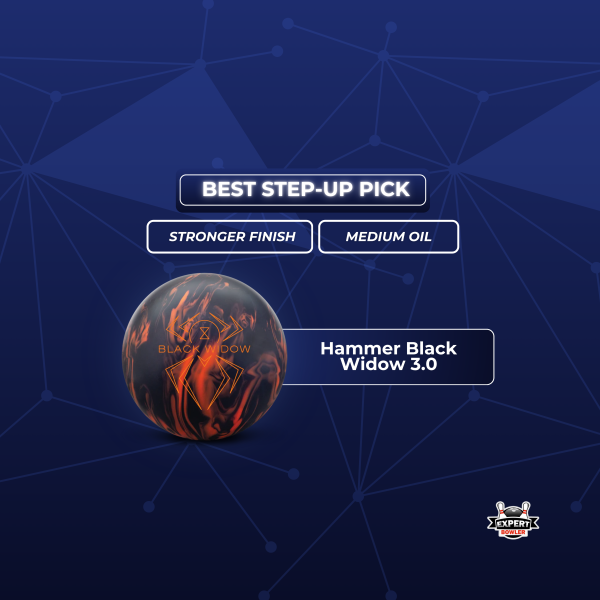
The latest release in Hammer’s Black Widow line carries the same Gas Mask asymmetric core that has been a staple in competitive bags since 2006. Stronger and more angular than a standard benchmark, with an HK22 solid cover designed to grab the midlane where smoother balls slide through.
The RG of 2.50 revs up through the midlane and maintains energy into the pins, while the differential of .058 is significantly higher than a typical benchmark. This means more flare and a more aggressive transition off the breakpoint.
Also, the intermediate differential of .016 adds sharpness to that transition, creating an angular finish that a symmetric core cannot produce.
The HK22 Aggression Solid coverstock is cleaner through the fronts than the older Aggression formula on the 2.0, with a sharper backend snap at the friction. It reads the midlane with authority and powers through the pins rather than rolling out.
The BW 3.0 is a medium-to-heavy ball. Our medium oil bowling ball guide covers the full range of equipment for that lane condition, but the BW 3.0 earns its spot here because it fills the step-up role.
View Best Bowling Ball for Medium Oil: Hammer Black Widow 3.0 on Amazon →Best Budget Bowling Ball: Brunswick Rhino
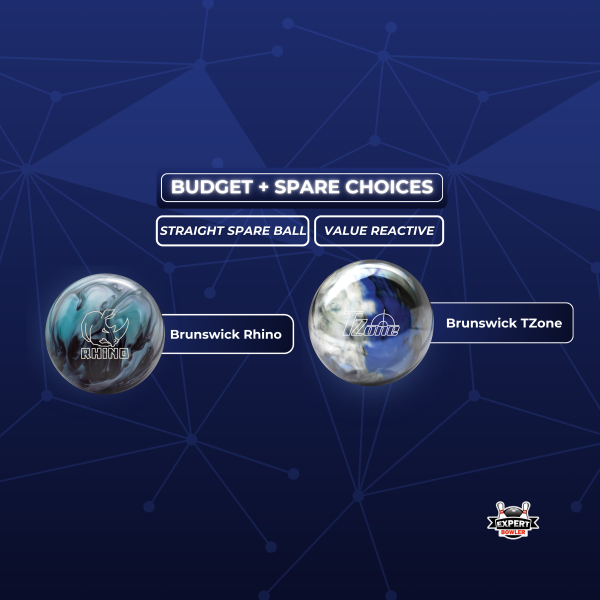
The Brunswick Rhino launched in 2016 as a replacement for the Strike King series. It has stayed in the Brunswick catalog since then, with new colorways added regularly, which is a long run for an entry-level reactive ball.
The R-16 Reactive coverstock paired with the Light Bulb symmetric core gets the ball down the lane without grabbing the fronts, and the core rolls into a smooth arc at the breakpoint instead of snapping.
Forgiving enough for a newer bowler but useful enough that intermediate bowlers keep one in the bag for dry conditions.
Bowlers moving from house balls frequently describe the Rhino as the ball that taught them what a predictable hook looks like. Pearl and solid colorway variants give you some control over the shape without needing a surface change.
The Light Bulb core is a basic two-piece design with limited flare and limited drilling options. What you get out of the box is close to what you get long-term. It won’t handle heavier oil.
View Best Budget Bowling Ball: Brunswick Rhino on Amazon →Best Spare Ball: Brunswick TZone
The Brunswick TZone comes in more color options than almost any other spare ball on the market. Deep Space, Frozen Bliss, Scarlet Shadow, Indigo Swirl, and several others give bowlers a polyester ball with some personality on the rack.
Shooting the 10-pin with a reactive ball means fighting the hook every time. A missed spare because the ball grabbed a dry board and pulled left is an equipment problem, not a technique failure.
The TZone’s polyester coverstock is hard and creates almost no friction with the lane surface. It goes straight and stays straight regardless of the oil pattern.
The shell resists cracking and holds up over hundreds of games. Available from 6 to 16 pounds.
Spare tool only. Zero hook potential by design. Bowlers sometimes buy a TZone expecting an all-purpose starter ball and get frustrated when it won’t curve. The straight-line motion is the whole reason it exists.
View Best Spare Ball: Brunswick TZone on Amazon →Frequently asked questions
Related guides
- Best bowling balls hub — category overview
- All bowling ball guides
- Best spare bowling balls
- Best for medium oil
Edited by Jeroen Kooij
Editor · ExpertBowler
Editor of ExpertBowler, responsible for editorial standards and the accuracy of our bowling ball reviews and buying guides. Every pick is cross-referenced against manufacturer specifications, USBC equipment data, aggregated coaching guidance, and verified league-bowler feedback. Read more about our review process.
Editorial standards: Verdicts are independent and never sold. We do not accept paid placements, and we disclose our affiliate relationships in full.
Last reviewed: 2026.
Sources & references
- Manufacturer specifications: coverstock, core, RG, differential, and USBC approval data
- USBC equipment standards: approval lists for league and tournament-grade equipment
- Published coaching guidance: aggregated drilling, layout, and durability guidance from certified coaches
- Verified community feedback: long-term owner reviews and verified threads on BowlingForums.com and Reddit r/Bowling
- Published bowling instruction: Bowling This Month and Bowl.com instructional resources
I just bought a Brunswick R16 Rhino. I am a new bowler but wanted a ball that could hook and curve. It does but I have a difficult time cleaning up spares. I guess I need to throw this ball straight or use a ball that doesn’t cure for spare chances.
Can you give me some tips on this post.
Thanks,
Mike
Plastic for single pin spares will raise your average.