10 Bowling Tips to Improve Your Score Today
By Jeroen Kooij, Publisher & Editorial Director · Beginner Bowler · Updated August 2026
Across coaching guides, league patterns, and spare-shooting fundamentals, one problem shows up repeatedly: bowlers leave two or three makeable spares every game and struggle to understand why their scores stall.
Or they speed up their approach because they’re staring at the pins instead of staying in their rhythm. It’s not a talent thing. Most of the time, it’s just not being aware of what you’re actually doing out there.
The tips below combine established bowling fundamentals with clearly labelled first-hand lessons from our own coaching where relevant. Some can be tried immediately; others take repetition before they become useful. Treat them as starting points to test in your own game rather than guaranteed ways to add a fixed number of pins.

What we cover in this guide
- Tip 1: Master Your Stance and Approach
- Tip 2: The Perfect Ball Weight and Grip
- Tip 3: Aim for the Arrows, Not the Pins
- Tip 4: Understand Lane Conditions
- Tip 5: Consistent Release and Follow-Through
- Tip 6: Spare Shooting Strategies
- Tip 7: The Power of Practice
- Tip 8: Equipment Maintenance
- Tip 9: Mental Game and Focus
- Tip 10: Learn from the Pros (Observational Learning)
- What a coach corrected before any of these ten tips
- Conclusion: Practice Makes Perfect
Tip 1: Master Your Stance and Approach
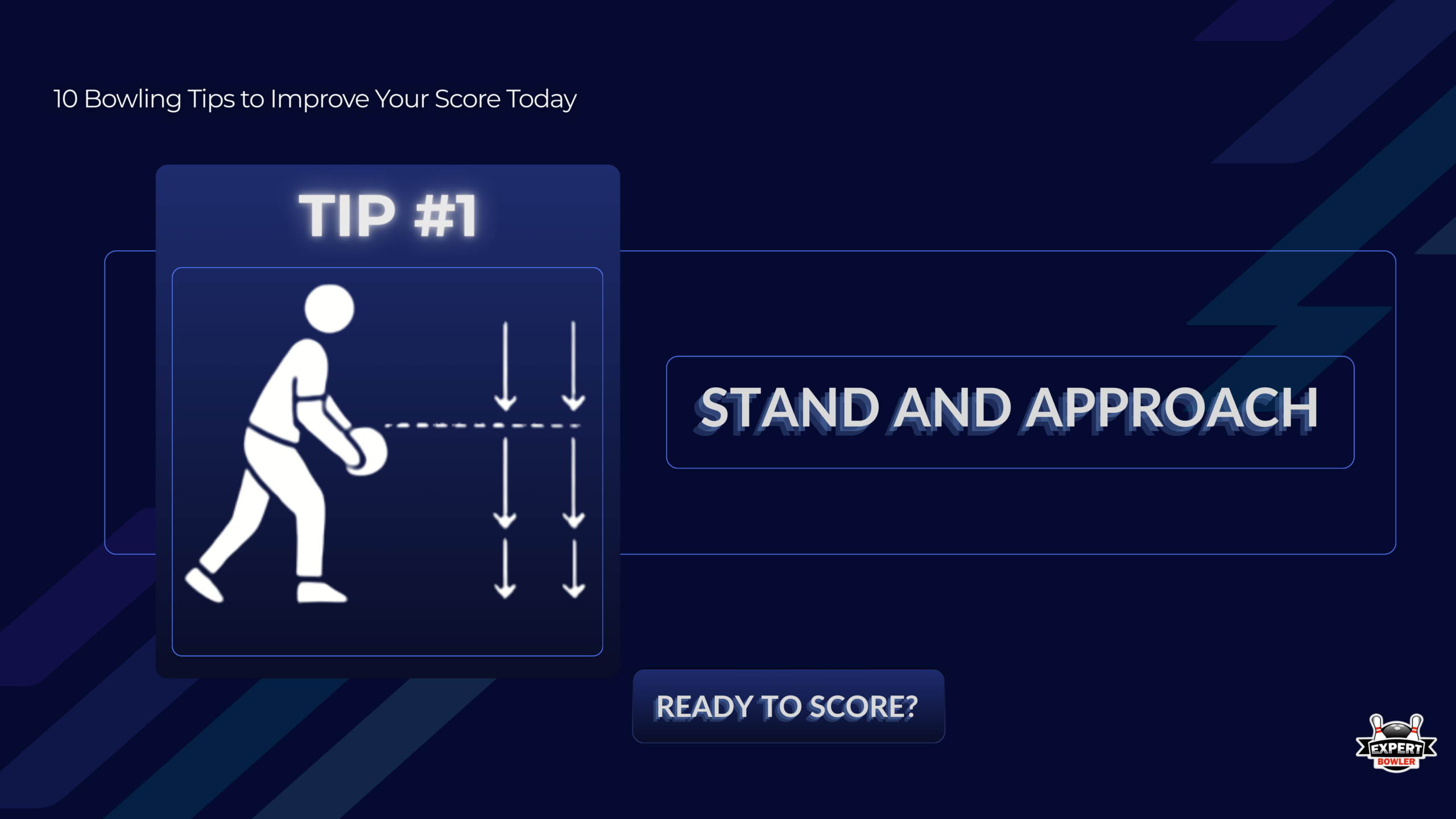
Everything in bowling starts before you even swing the ball. How you set up determines the quality of every shot that follows.
Your feet need a slight stagger. Slide your foot just a bit ahead of the other one. Knees bent, weight balanced on the front part of your feet. Many new bowlers start either bolt upright or hunched way over. Both create problems once you get moving.
Your power comes from your legs, not your arms. The approach builds momentum that transfers through your body into the ball. That’s where the speed actually comes from.
If you’re throwing five steps, your second step should cross over slightly in front of your body. This crossover creates space for the ball to swing freely without clipping your hip on the way down.
Your power step, the second-to-last one, is where you load up. Really bend that knee and feel pressure into the floor. Then slide into your release with your trail leg staying low for balance.
The most common timing issue is rushing that first step. Once you start too fast, you’re fighting your timing the whole way through. Slow down that initial movement. Let the ball’s weight get the swing going naturally instead of forcing it.
Tip 2: The Perfect Ball Weight and Grip
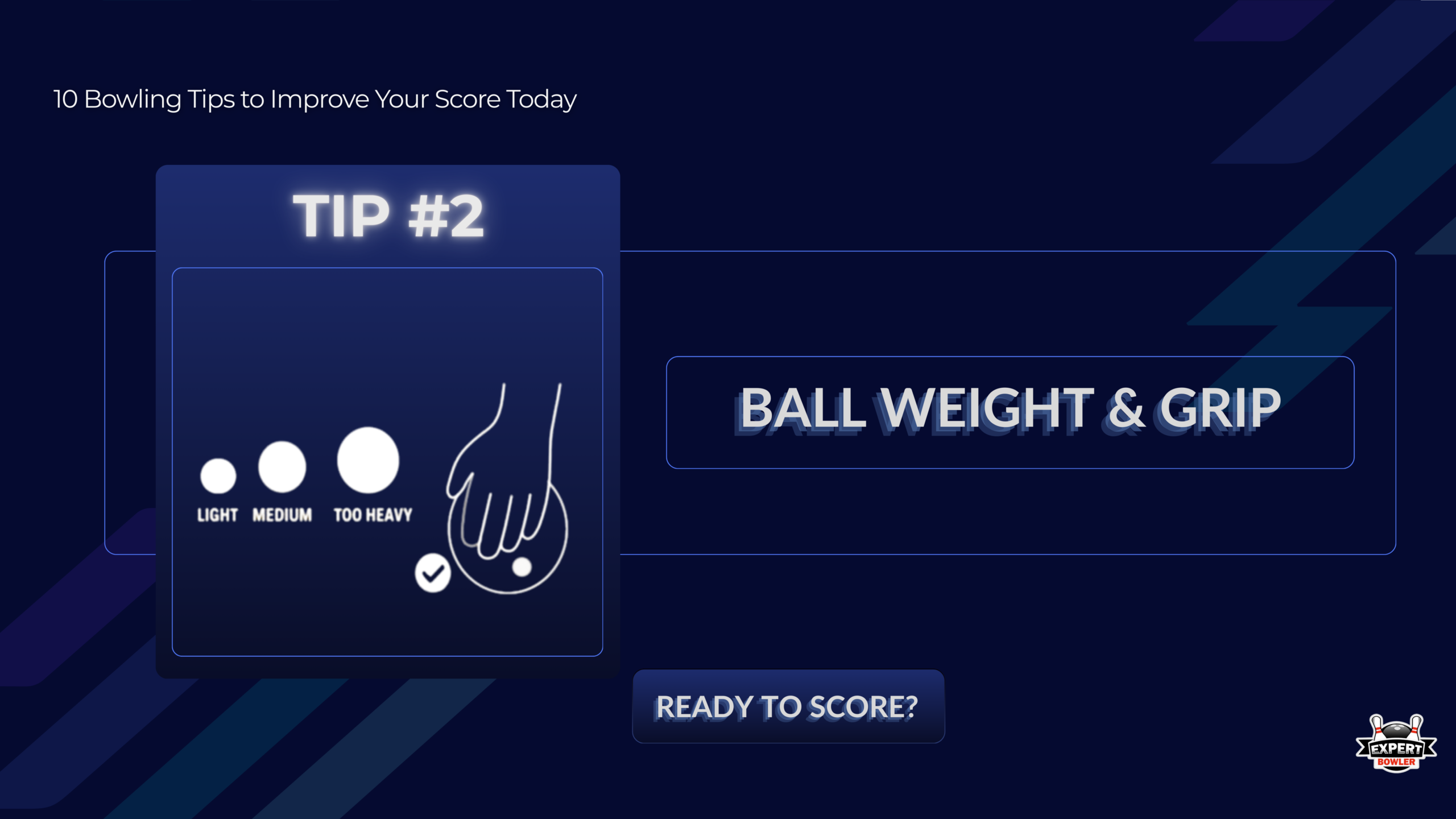
Fit matters before almost anything else. If your hand consistently hurts after bowling, the fit is worth checking rather than assuming discomfort is simply part of the sport.
Many bowlers assume blisters and calluses are just part of the game — but the usual culprit is poorly drilled equipment. A properly fitted bowling ball should feel like an extension of your hand.
I recently read a study on bowling accidents, which said that 30.7% of injuries involve fingers. You should take this seriously.
Another important bowling tip: ball weight matters too. Most adults use equipment in the upper end of the standard weight range, but the right weight is one you can swing smoothly and release without straining or losing control. Dropping weight can help some bowlers if the heavier ball is disrupting timing or causing compensation.
Work with a qualified pro shop operator to get your span, finger holes, and thumb pitch fitted to your hand. A consistent fit removes one equipment variable while you work on technique.
Tip 3: Aim for the Arrows, Not the Pins
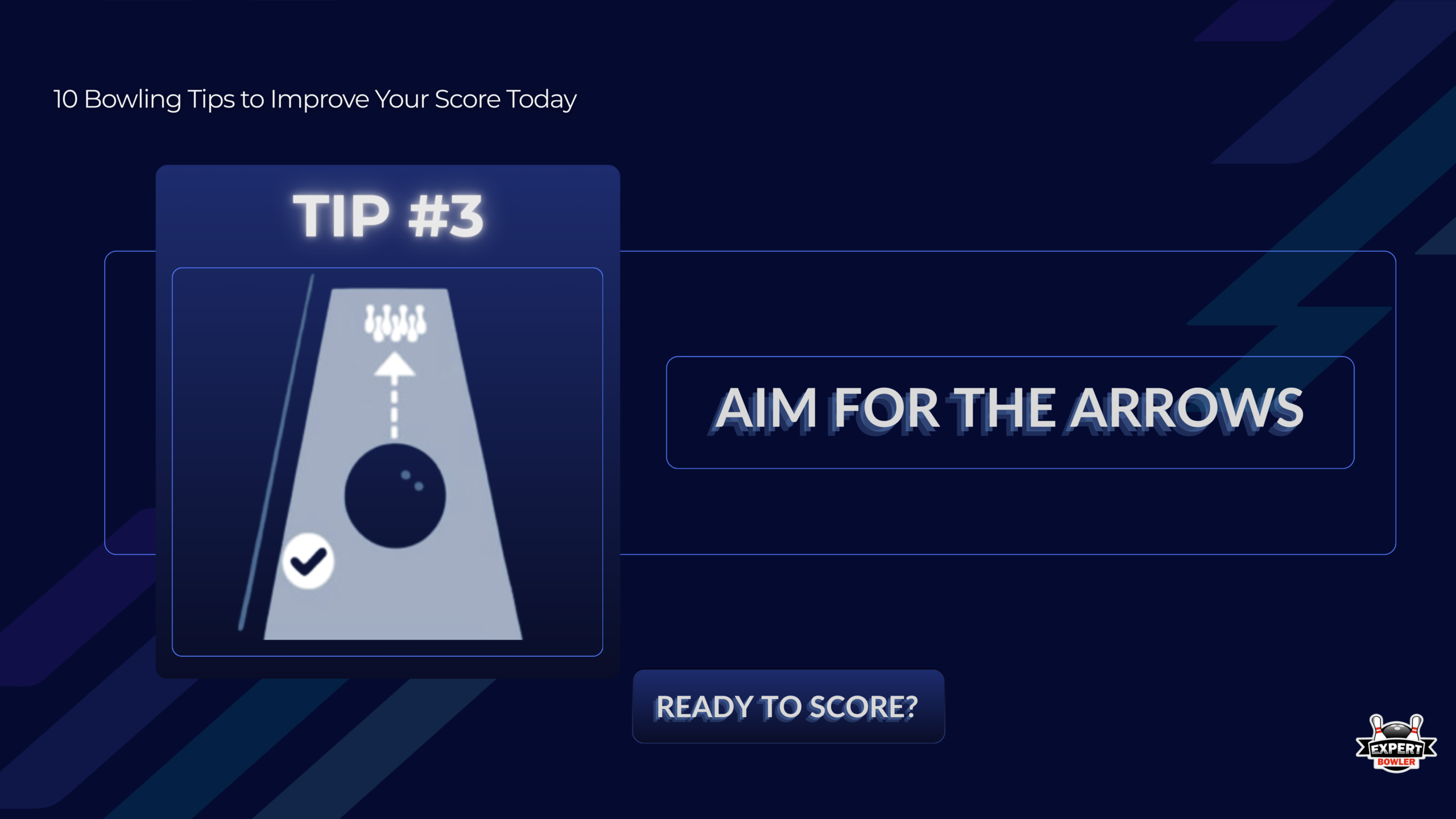
One key habit: stop staring at the pins. Those arrows exist for a reason. Pick one that aligns with your intended ball path and focus there. Your eyes should track your ball over that arrow, not toward the pin deck.
The arrows give you a closer and more repeatable targeting reference than the pins. Many house-shot lines use targets around the second-arrow area, but the right target depends on your starting position, release, ball, and lane condition. Make adjustments based on the ball’s actual path rather than treating one board as universal.
Arrow targeting gives you a consistent close-range reference point to evaluate. The value is not that it guarantees accuracy, but that it makes misses easier to identify and adjustments easier to repeat.
Best Bowling Balls 2026
Most of these tips assume you have a ball that fits your hand. See our top picks.
Tip 4: Understand Lane Conditions
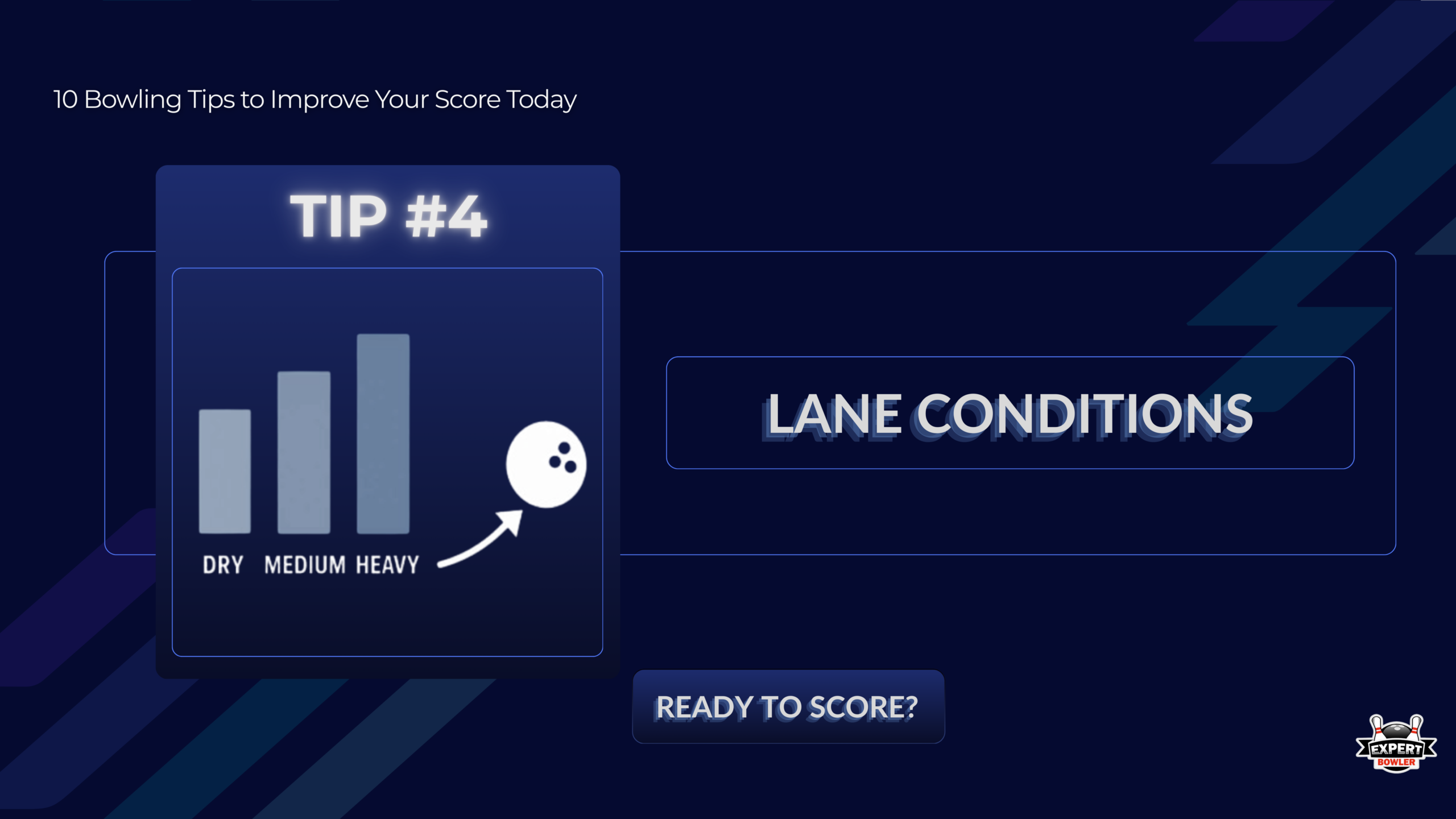
Oil patterns change everything about how your ball behaves. Fresh oil makes the ball skid longer before it starts hooking. As the night goes on and bowlers break down that oil, the lanes get drier, and balls hook earlier and harder.
When the lane transitions and your ball begins reading the lane earlier than intended, several adjustments may be available: change your feet and target to alter the line, change speed or launch characteristics if you can repeat them, or move to equipment that better matches the new friction. Which adjustment is right depends on what the ball is actually doing, not simply on the fact that it hooked more.
Tip 5: Consistent Release and Follow-Through
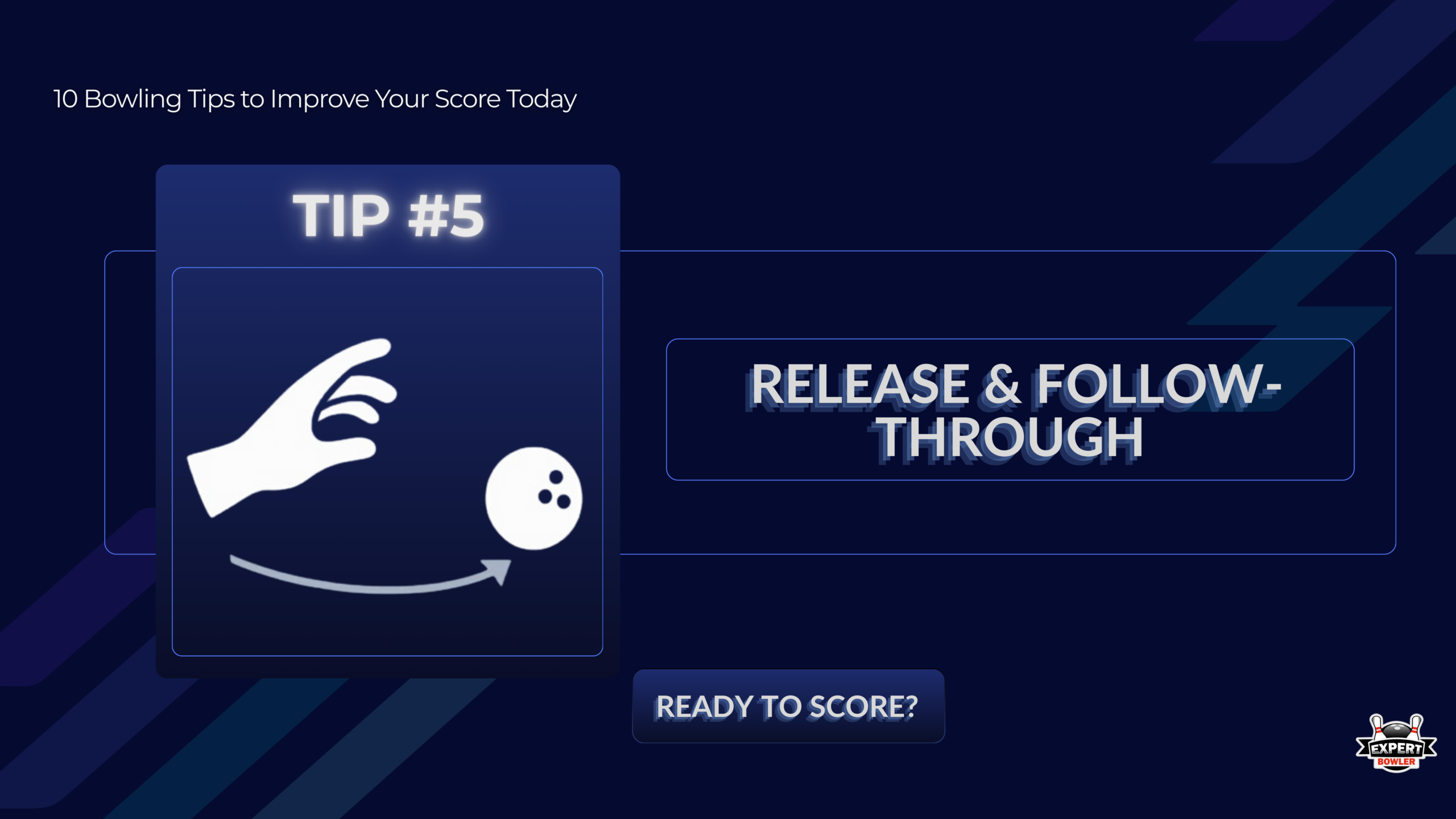
A repeatable swing path matters more than forcing every bowler into one identical shape. In general, the ball should have enough clearance to swing freely without the body steering it around the hip or shoulder. If the swing path changes from shot to shot, accuracy and timing become harder to repeat.
The point is to reduce the number of moving parts so you can feel and repeat the release more clearly.
Use the follow-through as feedback: a balanced finish and repeatable direction can help show whether the delivery matched the shot you intended.
Tip 6: Spare Shooting Strategies
High scores depend on more than striking. Converting makeable spares limits open frames and gives your strike shots more scoring value.
A missed spare costs the pins left standing and also removes the bonus value you would have earned from the next delivery. The exact scoring loss depends on what happens afterward, which is why a few open frames can have an outsized effect on the final score. For many developing bowlers, spare conversion is one of the most controllable places to improve because it depends less on strike carry and more on repeatable targeting and execution.
A plastic spare ball can simplify corner-pin shooting because it reacts much less to lane friction than reactive resin. That is not the only valid spare strategy, but a straighter response can make 7-pins and 10-pins easier to repeat. If you want to compare options, see our spare-ball guide.
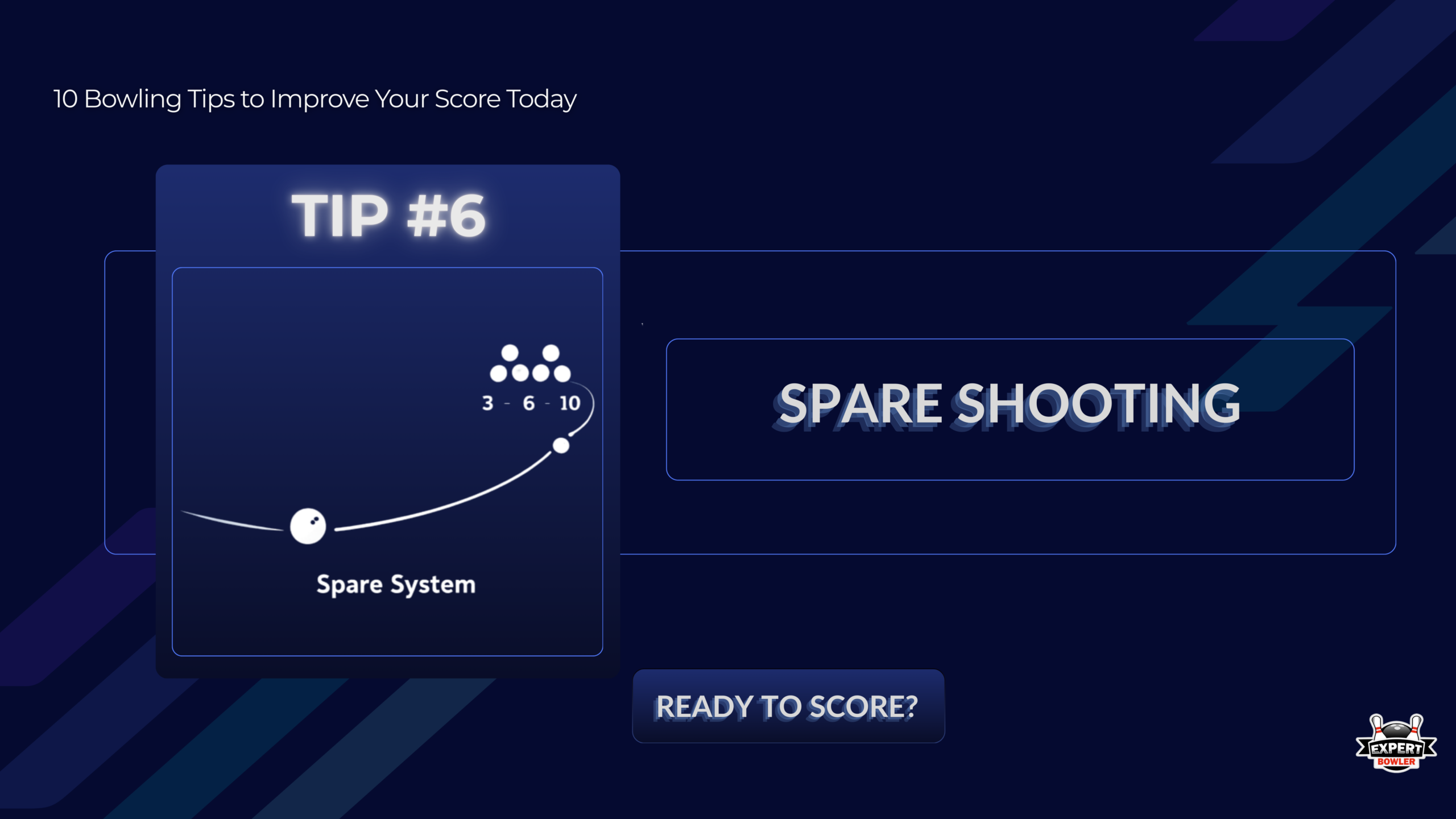
Develop a system where you know exactly where to stand and where to look for every spare. Your 10-pin setup should be automatic. Same with the 7-pin, the 3-6-10, all of them.
Whatever system you use, track your spare percentage rather than relying on memory. A measurable conversion rate gives you a clearer picture of which leaves are costing you frames and what to practise next.
Tip 7: The Power of Practice
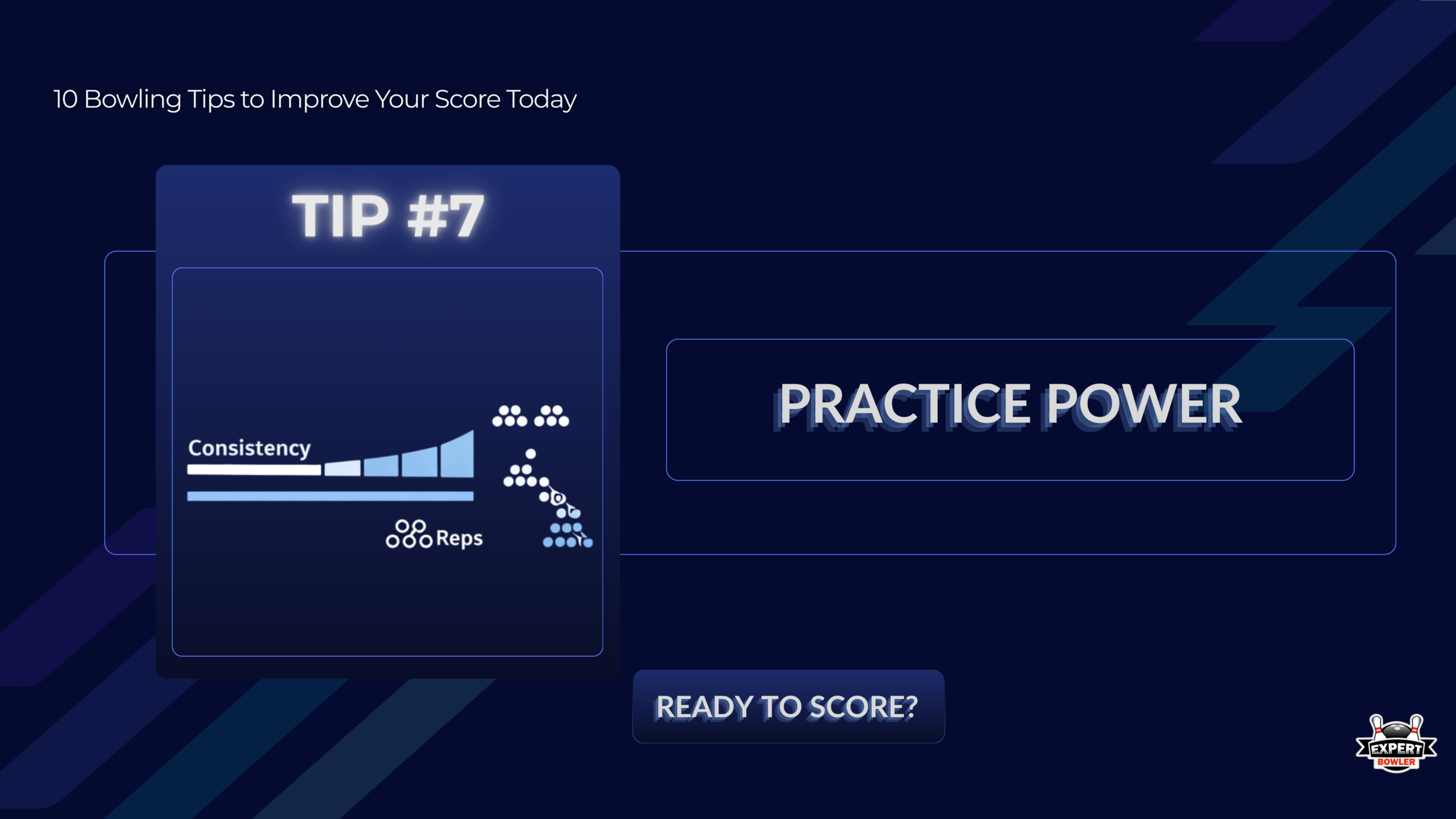
Smart practice means isolating specific skills. Dedicate part of your session to spare shooting only. Throw five balls at the 10-pin. Then five at the 7-pin. Work through your problem spares until the movements become automatic.
Use the one-step drill to connect your footwork and release. Step back from the foul line, swing the ball, and slide into your release. This builds timing without the complexity of a full approach.
Practising controlled variations can help you understand cause and effect, but only if you can still identify what changed. Change one variable at a time so the feedback remains useful.
Tip 8: Equipment Maintenance
Ball surface changes with use, oil exposure, and lane shine. When the surface drifts far enough from its intended condition, the ball can begin reading the lane differently than it did when fresh.
If cleaning no longer restores the reaction you expect, inspect the surface and consider resurfacing or a pro-shop service. The right timing depends on the coverstock, factory finish, lane volume, and how often the ball is used rather than a fixed calendar or game-count rule. Avoid storing bowling balls in extreme heat or rapid temperature swings, which can be hard on the coverstock.
Tip 9: Mental Game and Focus
One bad break can easily affect the next few shots if frustration changes your pace, decision-making, or execution. The useful distinction is between the result you cannot control and the response you can.
What breaks that chain is separating two things a bad break blurs together: was the plan wrong, or was the execution? A flush pocket shot that leaves a 10-pin is a different problem from a shot that missed its mark, and reacting to both the same way is what turns one pin into twenty. Making that distinction while you are still annoyed is close to impossible, which is why it helps to have a habit that does it for you. In our own lessons the coach has us say the shot out loud before we throw it and then score how closely the execution matched what we said — what the pins did is judged separately, and afterwards. We go through that drill in more detail in our bowling mental game guide.
Tip 10: Learn from the Pros (Observational Learning)
You have access to more free coaching content than any generation of bowlers before you. Use it.
Use professional footage to observe decision-making, spare routines, tempo, and how players respond to changing lane conditions. The useful lesson is often the principle behind the action, not copying another bowler’s mechanics exactly.
If you study one professional repeatedly, focus on one observable principle at a time — for example pre-shot routine, tempo, balance, or spare process. Treat it as something to understand and test, not a template your body has to imitate.
What a coach corrected before any of these ten tips
Every tip above is something you do on the lane. In July 2026 we booked our first lessons with a coach — two brothers, both complete beginners — and the striking thing about that first session was that none of the early corrections were on this list. They all happened before we stepped onto the approach.
There were three of them, in order.
“Take the ball off the rack with two hands, every time.”Jack Edelaar · NOC*NSF Master Coach · Recorded coaching session, July 2026
In our first session Jack wanted this to be automatic before we worked on the approach. It reduces unnecessary one-handed lifting and keeps both hands away from the point where returning balls can collide on the rack.
“Clean the ball before the first shot, not after the last.”Jack Edelaar · NOC*NSF Master Coach · Recorded coaching session, July 2026
This one reframes Tip 8 entirely. Maintenance advice often treats cleaning as protection for the coverstock; Jack put it at the start of the session because beginning with a consistent, clean surface makes the ball reaction easier to interpret. If the surface condition changes, the feedback from speed, line, and target changes with it.
“Decide and picture the shot while you are still standing back — then stop thinking.”Jack Edelaar · NOC*NSF Master Coach · Recorded coaching session, July 2026
Most beginners do the reverse: they step onto the approach and only then start running the checklist — arm straight, don’t drop the shoulder, four steps, where is my mark — while the body is already moving. Do the thinking early and the approach has nothing left to do but execute. That is the same idea Tip 9 describes, arriving in a first lesson rather than only at an advanced level.
None of the three are technique. All three are habits — and they were the first thing a coach thought worth fixing in two people who had not yet been told a single thing about how to throw.
Conclusion: Practice Makes Perfect
You’re not going to transform your game in a week. But commit to actually implementing these bowling tips. Track your spare percentage for a few weeks. See if your mental game settles down when you practice staying neutral after bad shots. If you want more structured improvement resources, our pro guides and techniques hub is a useful next step.
If you track a few useful measures — spare percentage, first-ball accuracy, and whether you executed the shot you planned — you will have a much better way to judge improvement than relying on one promised score increase.
A practical place to start is spare shooting. It is measurable, repeatable, and easier to isolate in practice than many strike variables. Improving it gives you a stronger scoring foundation while the rest of your physical game develops.
Looking to build a stronger foundation? Check out our best bowling balls for beginners for deeper dives into ball selection.
Related guides
- Best bowling balls 2026 — researched picks across skill levels
- How to read bowling lane conditions — the foundation of ball selection
- Best bowling shoes 2026 — slide consistency starts with your shoes
- Bowling spare shooting guide — pick up the 7-pin, 10-pin, and tricky splits
- Bowling ball cleaning & maintenance — protect your investment
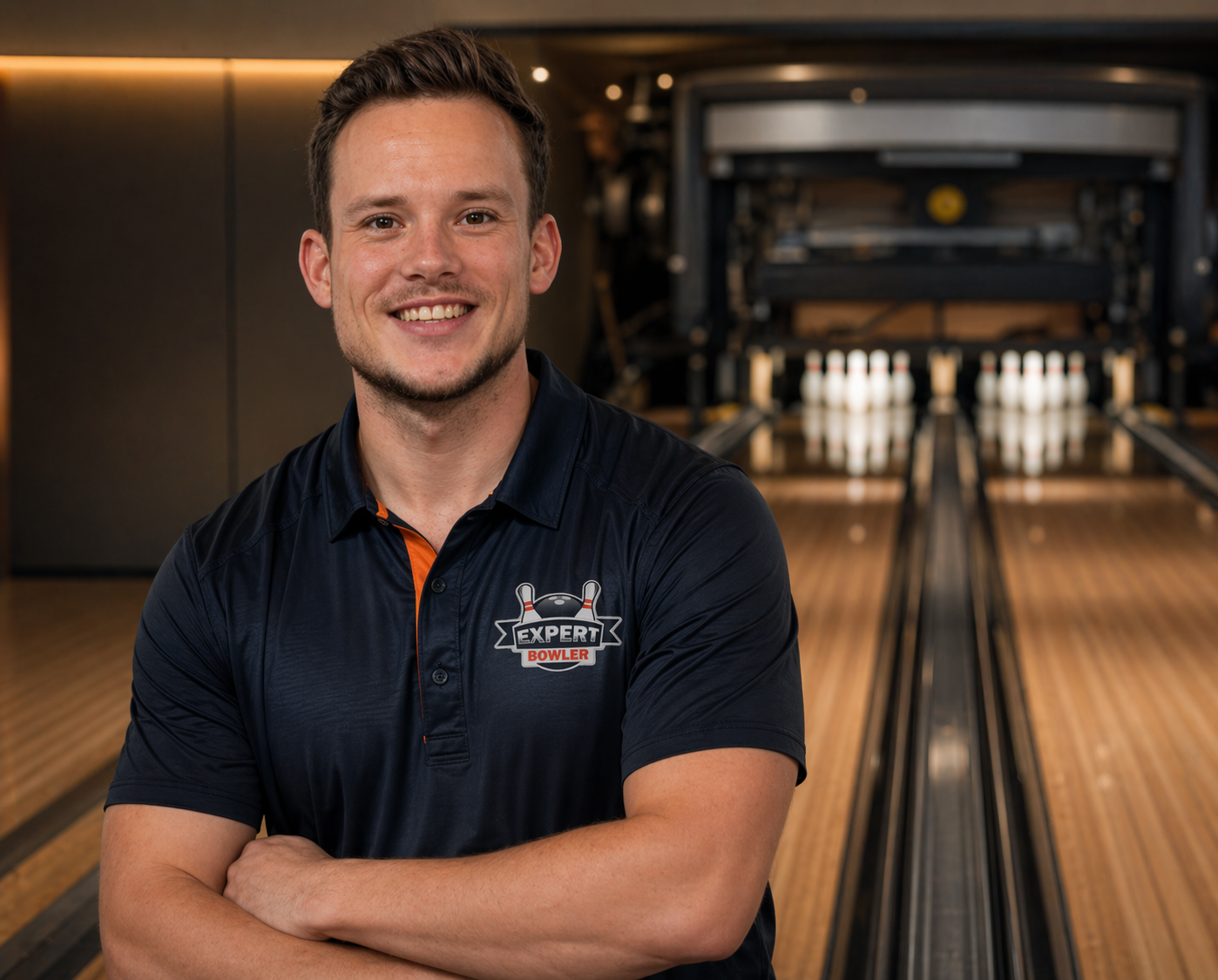
Edited by Jeroen Kooij
Publisher & Editorial Director · Beginner Bowler
Jeroen sets ExpertBowler’s editorial standards and documents his own beginner development through recorded coaching sessions with NOC*NSF Master Coach Jack Edelaar. Technique guidance is separated between published sources, clearly attributed coaching lessons, and Jeroen’s own first-hand experience. Read how we research, learn, and update our content.
Editorial standards: Technique guidance is built from published bowling instruction and technical sources, then updated where clearly attributed lessons from recorded coaching sessions add useful context. We do not accept paid placements.
Updated: August 2026.
Sources & references
- Published bowling instruction: USBC/Bowl.com materials and established bowling technique references used to cross-check fundamentals
- Manufacturer documentation: official equipment specifications and maintenance guidance where equipment is discussed
- Community & owner feedback: recurring themes from bowling forums and long-term bowler reports used as supporting context, not as sole proof
- First-hand coaching: clearly labelled lessons from our recorded coaching sessions with Jack Edelaar where they directly inform the article
- Linked research: external studies are cited directly in the relevant section when used