How to Drill a Bowling Ball: Complete Drilling Guide & Cost 2026
By Jeroen Kooij, Editor · Updated 2026
What we cover in this guide
- How to Drill a Bowling Ball: Step-by-Step Guide for Custom Fitting
- What the box label tells you before a single hole is drilled
- Professional Bowling Ball Drilling: Cost & Benefits
- Bowling Ball Grip Types: Conventional vs Fingertip vs Semi-Fingertip
- DIY Bowling Ball Drilling: Tools & Step-by-Step Guide
- Bowling Ball Drilling Cost Guide
How to Drill a Bowling Ball: Step-by-Step Guide for Custom Fitting
Knowing how to drill a bowling ball is the basic knowledge needed by a bowler, which mostly surprises new bowlers. Most novices would think they will have a perfectly working bowling ball that will be put to immediate use.
But when you buy your first best bowling ball, you are buying a fresh ball without holes in your fingers. A professional drilling or a do-it-yourself drilling process is required to produce the custom-made bowling ball that suits your grip and performance requirements.
In order to guide bowlers at this most important first step, the following is a detailed bowling ball drilling guide that includes all the information on bowling ball drilling cost, in addition to the advanced methods of bowling ball drilling.
What the box label tells you before a single hole is drilled
Most drilling guides, including the rest of this one, start at the measuring stage. In practice the first thing we looked at was the label on the box. When we went to the pro shop in July 2026 with two new balls we photographed both labels and copied the fields down, and afterwards we checked what each of those fields means against the published USBC equipment specifications rather than working it out for ourselves. Below are our two labels, and then what the specifications say about the fields printed on them.
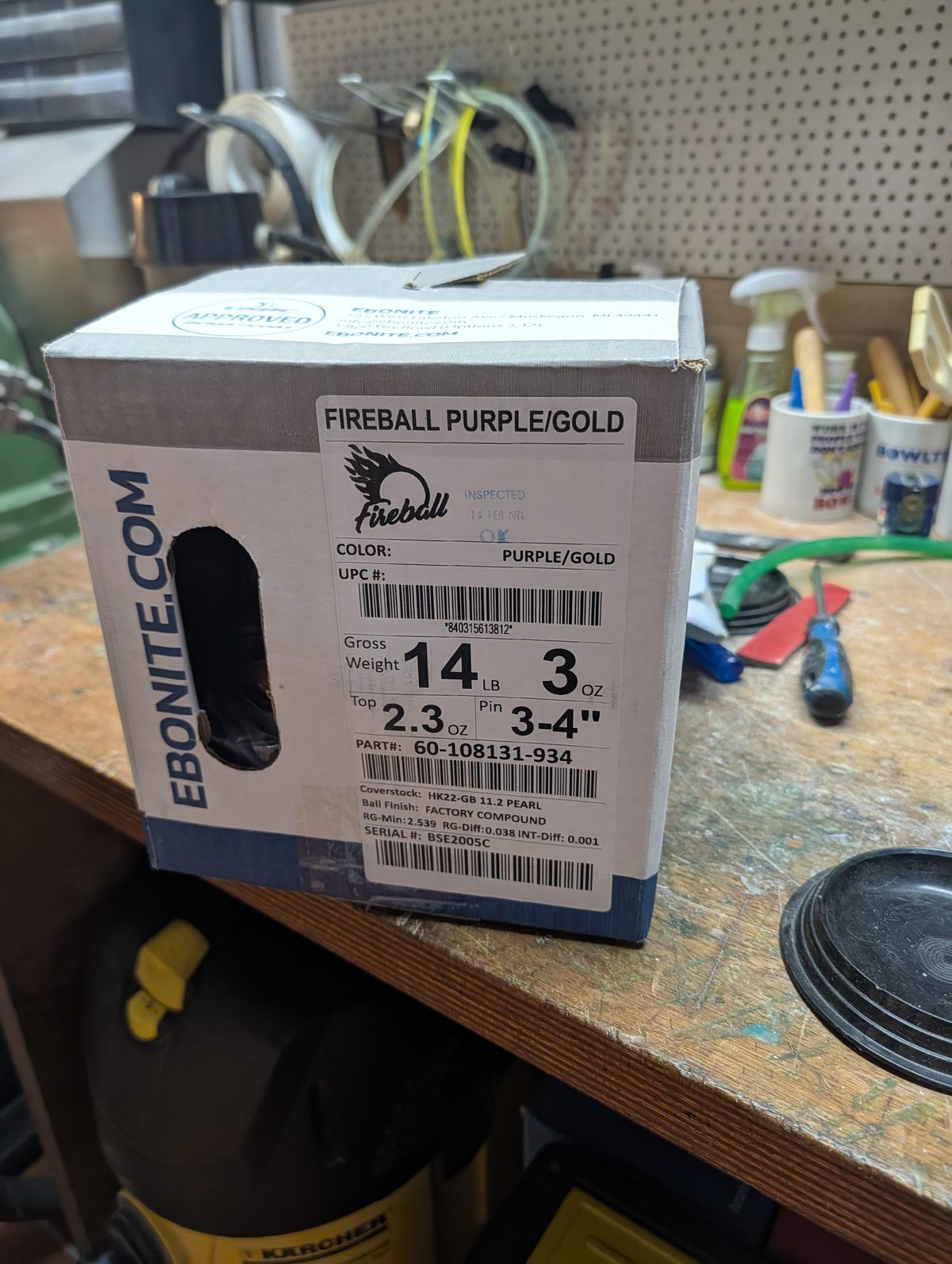
Our two labels, field by field
Two different manufacturers, both nominally 14 lb, bought and drilled on the same afternoon:
What those fields mean, checked against the USBC specifications
Gross weight is not the weight in the shop listing. Both of our balls were sold as 14 lb, and both labels read heavier: 14 lb 4 oz and 14 lb 3 oz. That was the first field we did not expect, so we looked it up instead of guessing. The USBC Equipment Specifications and Certifications Manual sets the ceiling at 16.00 pounds with no minimum, and that limit applies to the finished ball. Drilling removes material, so the gross weight printed on the box is not the weight of the ball you eventually pick up.
Top weight sits inside a published limit. Both of our labels read 2.3 oz. Top weight is the weight difference between the half of the ball containing the pin and the opposite half, measured before any holes are drilled. The USBC manual allows an undrilled ball of 10 pounds or more up to 5 oz of top weight, and limits a drilled ball to a 3 oz difference between top and bottom halves, between left and right halves, and between the thumb side and the finger side. Our two labels at 2.3 oz therefore sit inside the undrilled ceiling with margin left. How much of that margin a particular layout uses is a decision for the person drilling the ball, and not something we are qualified to advise on.
Pin distance is a band, not a single number. Both of our labels read 3-4", meaning the pin is somewhere between three and four inches from the ball's centre of gravity. Manufacturers sell the same model in different pin-distance bands and print the band on the box, so two people ordering what looks like the same ball do not necessarily receive an identical piece of equipment. We did not choose ours: 3-4" is what arrived, on both balls.
RG and differential are printed per weight, and the numbers move. Our 14 lb Rhino label reads RG-Min 2.540 and RG-Diff 0.030. The figure published for the 15 lb Rhino, and repeated across the listings we read before the visit, is 0.045. Same model, same name, a third less differential on the label of the ball we actually own. We are not going to tell you what that does to lane motion, because we have not measured it. What we can say is that a published spec sheet describes one weight of a ball, so it is worth checking which weight before comparing two models on paper.
Coverstock and factory finish are on the label too. Our Rhino reads R-16 Reactive at 500-1500-3000 grit; the Fireball reads HK22-GB 11.2 Pearl at factory compound. That is the surface each ball left the factory with, and it is the reference point any later resurface is measured against. We copied both into our notes before the boxes went out.
The serial number is on the box, not on the ball. BTE1029Q and BSE2005C in our case. It identifies one individual ball rather than the model, which is what a manufacturer warranty claim is tied to. Ours would have gone out with the packaging the same day if we had not photographed the labels first.
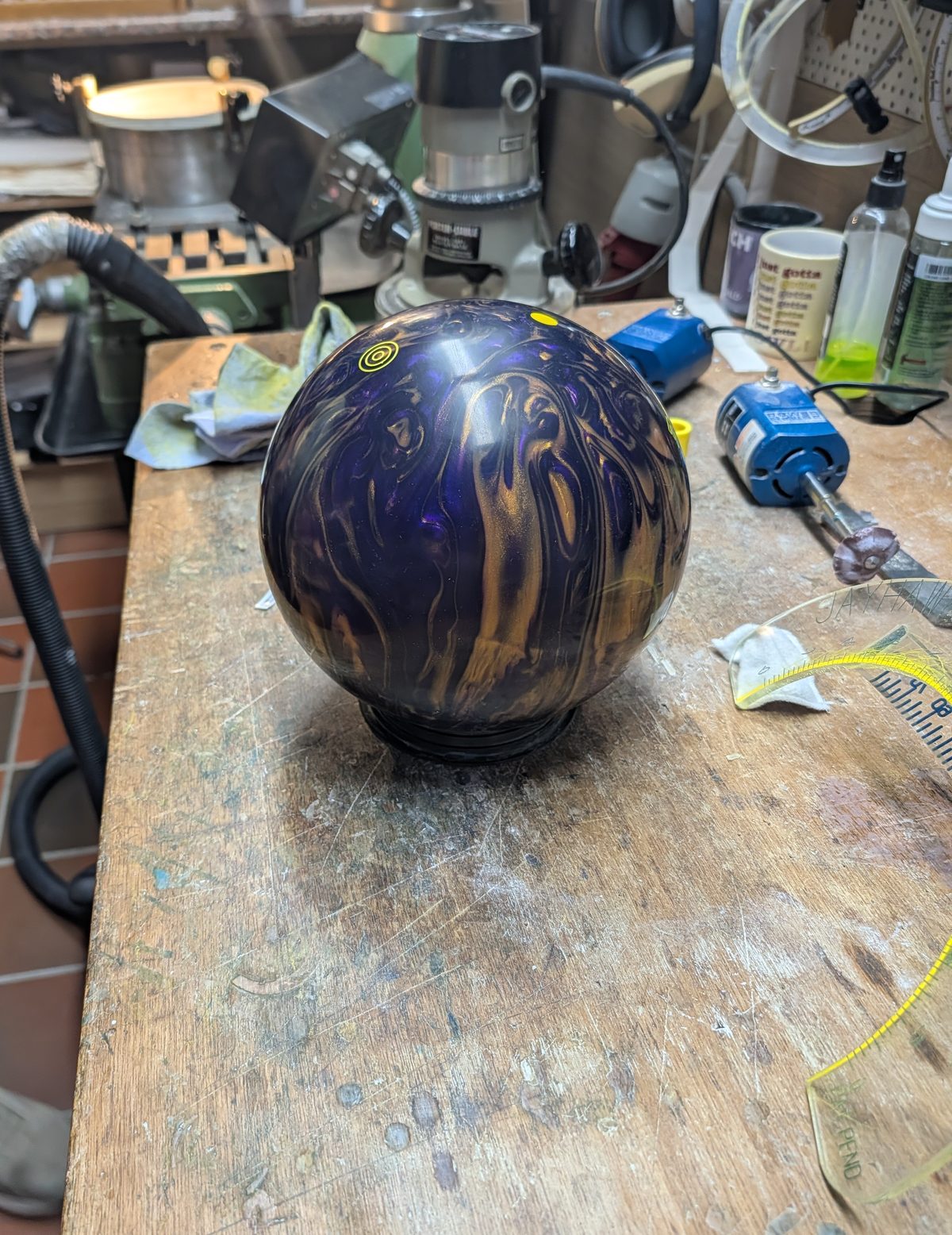
What we do now: photograph the label before the ball goes over the counter. It takes five seconds, and the top weight, pin distance and serial number of that individual ball are printed there rather than on the ball itself. Both of our boxes were gone the same day.
Answer four quick questions and our free Bowling Ball Finder matches you to the right ball for your style, lanes and budget — plus a free buyer’s checklist, instantly.
Take the free Finder →Professional Bowling Ball Drilling: Cost & Benefits
The simplest solution is to rely on a bowling pro shop where one can obtain the services of professional drilling. This service is provided to the customers by most bowling equipment retailers, and the cost of drilling a bowling ball is normally a pro-shop fee of roughly $40–80 that depends on the locality and complexity.
Professional drillers know how to drill a bowling ball to attain maximum hook potential and best performance. And they have high-technology bowling gear and know-how to make custom bowling ball grips that play to your advantage.
Benefits of professional drilling:
- Expert measurement and fitting
- Access to premium drill bits and equipment
- Warranty protection maintained
- Custom bowling ball layouts for specific lane conditions
- Knowledge of bowling ball sizes and weight distribution
From our coaching sessions
“That's called flare. Every revolution the ball picks up a fresh strip of oil, which also means every revolution it rolls on a fresh, dry piece of surface. That's why it grips at the end of the lane. How much flare you get depends on how the ball was drilled. It flares because it isn't in balance — it's looking for balance.”
Jack Edelaar — NOC*NSF Master Coach; former national coach of the Dutch youth, junior elite and women's teams and of the Czech national team. Said during a coaching session with us, August 2026.
This is why a drilling layout is not simply a matter of comfort. The holes decide where the ball's axis sits, the axis decides how far it migrates as the ball travels, and that migration is what keeps presenting clean surface to the lane. Two identical balls with different layouts will not read the same lane the same way. He sets out the geometry behind that in his own article on drilling an angle into the ball.
Bowling Ball Grip Types: Conventional vs Fingertip vs Semi-Fingertip
Understanding bowling ball grips remains crucial for effective drilling. Different grip styles produce varying effects on ball motion and control. It also helps to understand how different coverstock types react before choosing a layout, so see our bowling ball coverstocks explained guide.
Conventional Grip
The most common grip is recommended for beginners and moderate skill levels. Fingers inserted to the second knuckle, providing excellent control for the best ball for bowling performance. This grip offers:
- Easy ball control and release
- Reduced strain on fingers
- Ideal for spare bowling balls and straight shots
Fingertip Grip
A shallow drill allowing fingers to insert only to the first knuckle. While challenging to control, this grip provides:
- Maximum power and lift generation
- Enhanced hook potential for the best bowling ball for hook performance
- Preferred choice when drilling a bowling ball for advanced techniques
Semi-Fingertip Grip
The middle ground between conventional and fingertip grips. Fingers insert between first and second knuckles, offering:
- More power than a conventional grip
- Better control than pure fingertip
- Excellent compromise for intermediate bowlers

Best Bowling Balls 2026
Proper drilling starts with the right ball. Our top picks.
DIY Bowling Ball Drilling: Tools & Step-by-Step Guide
Learning how to drill a bowling ball at home provides maximum customization for your personalized bowling ball needs. However, this approach requires proper bowling equipment and careful preparation.
Essential Equipment Needed
- Bowling ball clamp for stability
- Specialized bowling ball drill (never use regular drills)
- Proper drill bits in various sizes
- Measuring tools (compass and calipers)
- Sanding attachments for finishing
Measuring Your Span
Accurate measurement determines comfortable hole placement. Measure the distance from your thumb base to the middle and ring fingers at their bending points:
- Conventional grip: Second knuckle measurement
- Fingertip grip: First knuckle measurement
- Consider using adjustable measuring balls for precision
Determining Grip Angles
Proper angles affect ball control and the rotation axis. Comfortable angles improve:
- Overall ball control
- Tilt axis optimization
- Hook potential enhancement
- Reduced hand fatigue during extended play
Bowling Ball Drilling Process: Equipment & Techniques
Pre-Drilling Preparation
- Secure the ball firmly in the clamp
- Mark drilling positions clearly
- Important: Avoid drilling into the pin marking to maintain the warranty
- Test drill bit sizes on practice wood blocks first
Drilling Sequence
- Thumb hole first: Drill to the measured depth carefully
- Finger holes: Match predetermined measurements exactly
- Depth control: Avoid removing excessive core material
- Finishing: Sand hole interiors for smooth grip surfaces
Quality Control
- Test fit frequently during the drilling process
- Ensure proper finger comfort and spacing
- Verify the thumb hole allows a clean release
- Check overall balance and weight distribution
Bowling Ball Drilling Cost Guide
Understanding pricing helps budget for your custom bowling ball investment
Frequently Asked Questions About Bowling Ball Drilling
How much does bowling ball drilling cost?
Bowling ball drilling is usually a fee of roughly $40–80 at professional bowling shops. High-quality custom drilling with
sophisticated patterns can be more expensive, roughly $60–100 or more. If you are still choosing the right equipment, check our guide to the best bowling balls
Which is the best bowling ball grip used by beginners?
The traditional grip is best to use when a bowling ball gives the best performance, which permits the beginners to put their fingers to the second knuckle and still have great control over it.
Can I drill my own bowling ball?
Yes, with proper bowling equipment and practice. However, professional drilling ensures optimal results and maintains warranty coverage.
How do I choose the right drilling pattern?
Consider your bowling style, spare bowling ball needs, and lane conditions. If spare conversion is a priority for you, see our best spare bowling balls. You can also consult bowling pro shop professionals for personalized recommendations.
Maximizing Your Custom Bowling Ball Performance
Proper drilling transforms any bowling ball into a personalized bowling ball that complements your unique style. Whether choosing professional services or DIY drilling, understanding bowling ball grips and measurement techniques ensures optimal results.
Remember that drilling significantly impacts your best ball for bowling performance. Take time to research options, practice measurements, and consider professional consultation for your first custom bowling ball project.
*Bowling Wrist support and Gloves(Best Picks)*
*Bowling Ball Cleaning Guide & Towel Reviews*
Related guides
- Best bowling balls 2026 — expert picks across skill levels
- How to read bowling lane conditions — the foundation of ball selection
- Best bowling shoes 2026 — slide consistency starts with your shoes
- Bowling spare shooting guide — pick up the 7-pin, 10-pin, and tricky splits
- Bowling ball cleaning & maintenance — protect your investment
Edited by Jeroen Kooij
Editor · ExpertBowler
Editor of ExpertBowler. Responsible for editorial standards and accuracy of bowling technique, equipment, and lane play guidance. Cross-references USBC coaching materials and verified league-bowler feedback. Read more about our editorial process.
Editorial standards: Technique advice cross-referenced with USBC coaching materials. We do not accept paid placements.
Updated: 2026.
Sources & references
- USBC coaching materials: bronze, silver, gold-level coaching curricula for technique fundamentals
- Community feedback: verified threads on BowlingForums.com and Reddit r/Bowling
- Published bowling instruction: Bowling This Month, Bowl.com instructional resources
- USBC equipment specifications: approval lists plus the Equipment Specifications and Certifications Manual for maximum ball weight and static weight limits
- First-hand pro shop visit (July 2026): two balls of our own fitted and drilled in person; all box-label figures in this guide are transcribed from those two labels and photographed on site

Question: Is it possible to use a recently drilled ball as a measurement for a new ball? Meaning, can you use another ball’s measurements without you being there to drill a new ball? Stupid question, but legitimate reason. Thanks!
This will often be the better choice, given that it allows you to use the ball which fits you the best, when drilling your next addition to your arsenal.
Do you have to have a thum hole.
Do you have to have a thum hole in your ball.
It is almost impossible to drill a ball at home with a straight drill press. Think about it unless you run your finger pitches opposite of each other, a round ball is going to make the finger holes run together causing a thin bridge that will crack.