Roto Grip Hyped UP! Review 2026
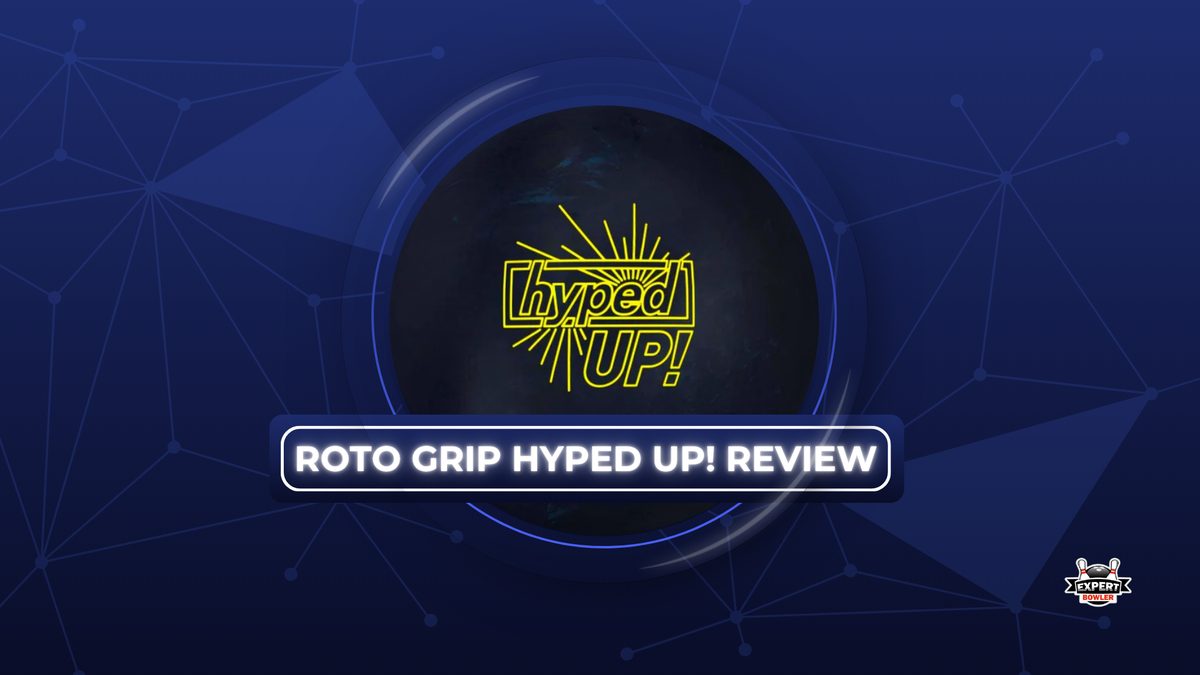
The easiest medium-oil recommendation of 2026 might be a ball nobody has thrown yet. Roto Grip took the Hyped name that built a loyal league following in 2021, packed the core denser and wrapped it in a stronger hybrid shell, and kept it in the mid-price bracket. This review checks whether the specs live up to that billing — before you spend.
The core got denser and a new hybrid shell goes over it. On paper, that adds up to an earlier read and more flare than anything the Hyped line has offered.
Updated: July 2026 · Reviewed by Jeroen Kooij · See methodology below
Roto Grip Hyped UP! Review
A medium-oil workhorse: an earlier, continuous read for league bowlers stepping up, at mid-range money.
Check today's price on Amazon →Prices shift week to week — this opens the live Amazon listing.
Read this before clicking buy
- It ships undrilled. Budget $20-50 one-time for pro-shop drilling.
- Bring your hand to the shop for span, rev-rate and speed measurements before drilling — a mismatched fit cannot be returned.
- Weight check: under 13 lb the core weakens sharply (see the specs) — stay 14-16 lb if you can.
- Medium-oil ball: it wants friction to work against; on heavy volume a stronger solid or asymmetric suits better.
Roto Grip Hyped UP Specs at a Glance
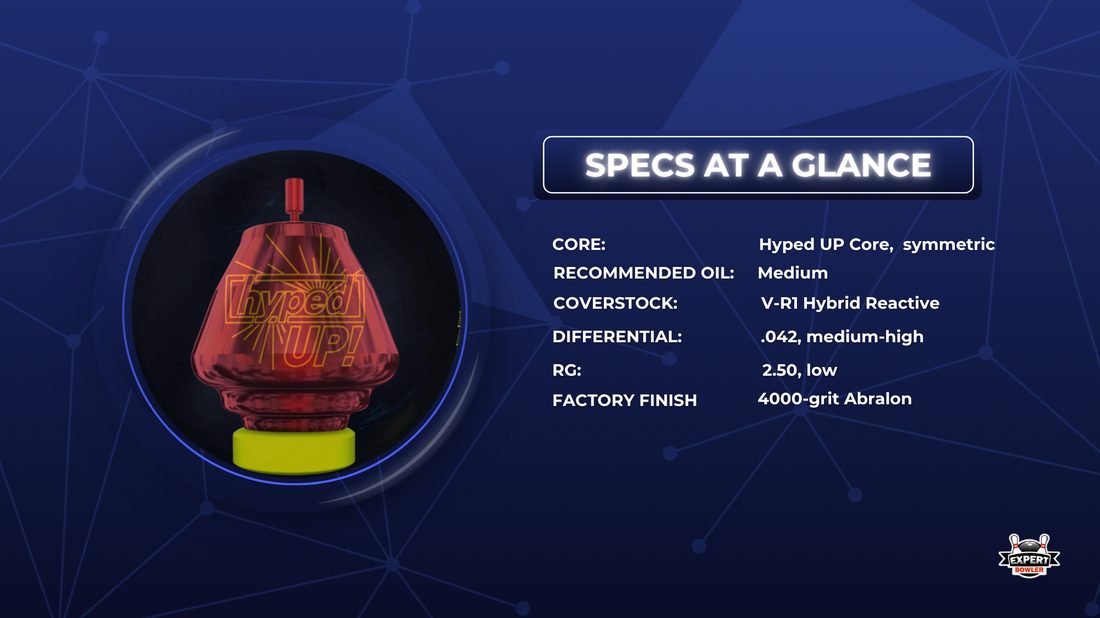
One spec on that sheet is worth a compliance note. The RG sits just above the 2.46 minimum that USBC equipment rules set to keep core strength in check, and the hyped UP! already appears on the USBC approved ball list, so it is legal for sanctioned league and tournament play.
The Technology Behind the hyped UP!
Hyped UP Core
Roto Grip kept the silhouette of the original Hyped core and packed it denser, concentrating more mass toward the center. That lower RG, down from 2.52 to 2.50, gets the ball into a roll sooner, while the higher differential, up from .036 to .042, opens up more flare so a fresh patch of cover keeps meeting the lane. Together they make this version stronger than the original Hyped, which is the whole point of the update.
Because the shape stays symmetric, the motion stays readable, one smooth handoff from skid to hook to roll instead of the touchier move you get from an asymmetric. If repeating shots is your weak spot, that predictability beats extra hook.
V-R1 Hybrid Reactive Coverstock
The V-R1 Hybrid is new to the HP2 line, and Roto Grip describes it as blending the traction of its Transformer solid with the length of its Gremlin pearl.
What is a hybrid reactive bowling ball?
A hybrid reactive bowling ball blends solid and pearl resin in one coverstock. The solid portion grips the midlane earlier while the pearl portion saves length through the front of the lane. The result reads sooner than a pure pearl and travels farther than a pure solid of the same strength.
Hyped Up’s shell is built to clear reasonably dry heads without burning up, then answer friction with a firm, predictable move instead of a snap.
You can learn more about how this type of coverstock reads the lane in our guide to solid, pearl, and hybrid coverstocks.
The 4000-Grit Abralon Finish
The box surface is sanded at 4000 grit rather than polished, so the ball starts reading oil earlier and leaves room to tune either way. Surface remains the cheapest change you can make to ball motion.
On-Lane Read: Midlane, Breakpoint, and Backend
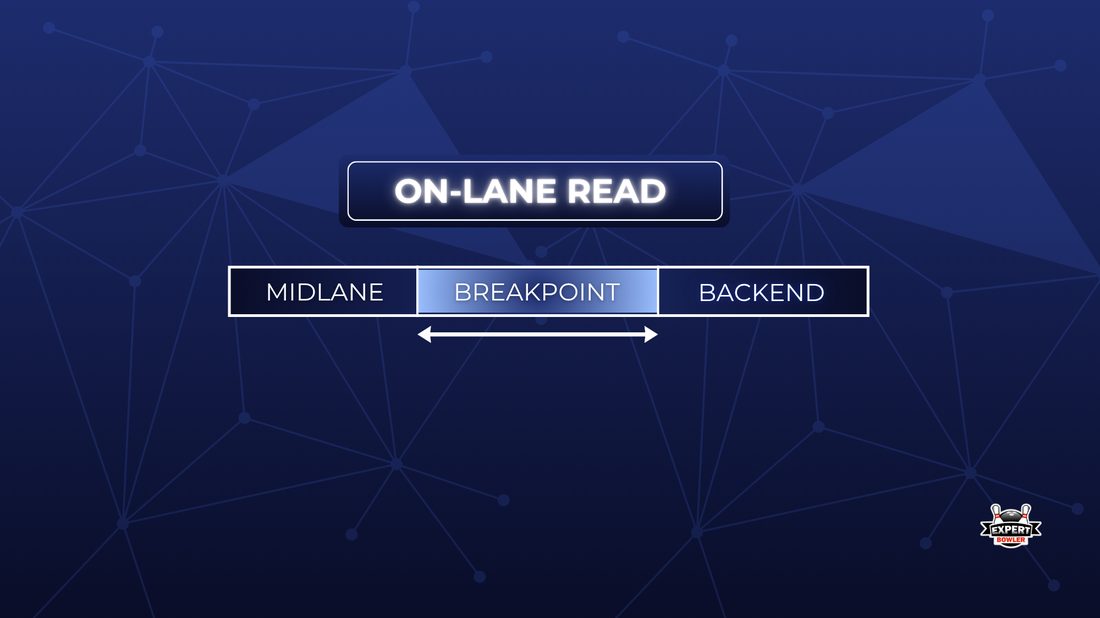
The 2.50 RG and sanded cover point to an early midlane read. Expect it to start rolling in the middle third rather than skidding to the back, so it telegraphs the pattern early enough to adjust.
At the breakpoint, that low RG and sanded cover should give a firm but smooth move, a rounded change of direction rather than a snap. That continuous shape is what the Hyped core has been known for since 2021.
Through the pins, the .042 flare should keep the ball driving through the pocket rather than deflecting.
When it comes to Roto Grip hyped UP hook potential, we should manage expectations a little. The marketing promises the smoothness of a solid with the backend pop of a pearl, and that second half needs a grain of salt.
The numbers point to a strong hook for the bracket, but the shape is forward and continuous, not skid-flip. If your carry depends on steep entry angles, you might do better with a true polished pearl.
On a typical 40-foot house shot, expect a direct-to-slightly-swung line with enough in the tank to hold deep as the heads dry.
Once the volume climbs toward heavy oil, the 4000 finish simply runs out of traction, and nobody can honestly say yet how the cover holds up over a full season.
If your league night sits in that middle range, you’ll find more options for your game among our best bowling balls for medium oil lanes.
Answer four quick questions and our free Bowling Ball Finder matches you to the right ball for your style, lanes and budget — plus a free buyer’s checklist, instantly.
Take the free Finder →Best For and Who Should Skip It
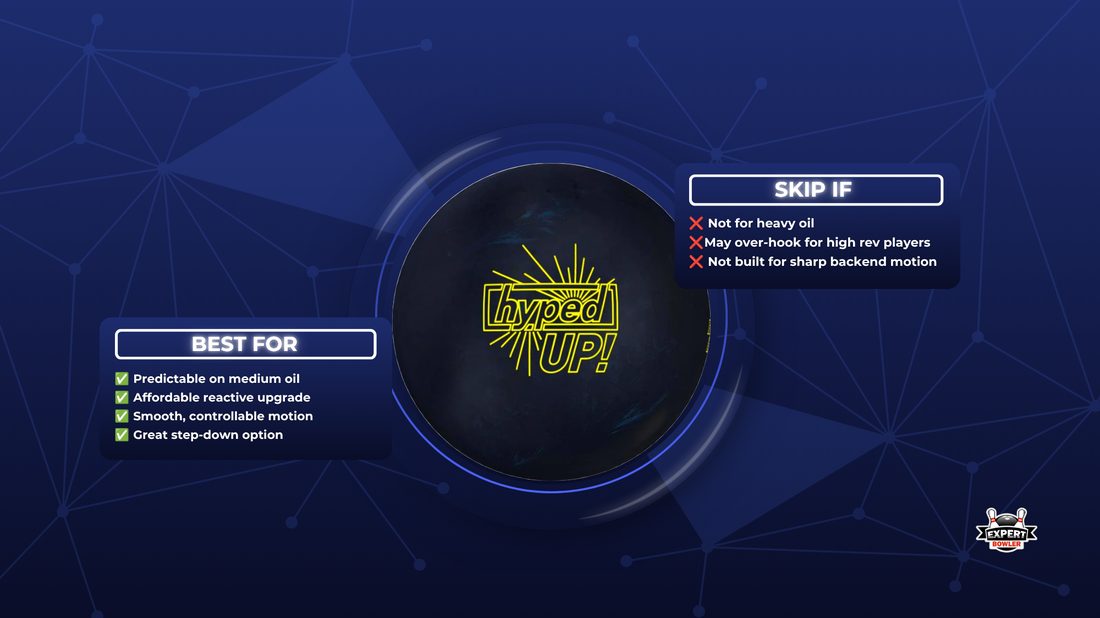
Buy it if this sounds like your game:
- You bowl league on a fresh medium house shot and want a ball that stays predictable through transition.
- You are stepping up from a Hustle or another entry reactive without paying flagship money.
- You are a stroker or tweener who values a repeatable shape over raw backend violence.
- You need a step-down piece for when your stronger asymmetric starts reading too early.
Skip it if any of these fit:
- Your house lays down heavy volume, where a duller solid or an asymmetric core is the better tool.
- You throw high revs at low speed and already over-hook medium patterns.
- You want the sharpest possible backend, since this ball trades snap for continuation.
If you are a rev-dominant cranker you can still make it work by leaving the surface at box and opening your angles. If your speed outruns your revs, you stand to gain the most, since the early rev cycle recovers energy your release leaves behind.
Bowling league every week? See where it slots among the staples in our best bowling balls for league bowlers roundup.
Surface, Lane Conditions, and a Starting Layout
Treat the 4000 Abralon box finish as the neutral setting. A 2000 pad pulls the read earlier for longer or heavier patterns, while polish pushes the breakpoint down the lane once the heads are fried.
Pattern shape and topography change ball motion from house to house, so read the lane conditions each session and let them pick the direction.
A sensible starting Roto Grip hyped UP layout for right-handed bowlers lands near pin-up 4.5 x 4 x 2.5, which keeps the early rev without killing length.
Pro shops favor pin-up layouts on low RG symmetric balls to keep the shape smooth and the flare usable. Go longer pin to PAP if you already rev the ball hard, shorter if you need the earliest possible roll. Fitting belongs at the pro shop counter, where span, rev rate, and speed get measured, not guessed.
Roto Grip Hyped UP vs Storm Hy-Road
The Hy-Road is the ball this release has to beat, the hybrid symmetric benchmark most buyers cross-shop since 2009.
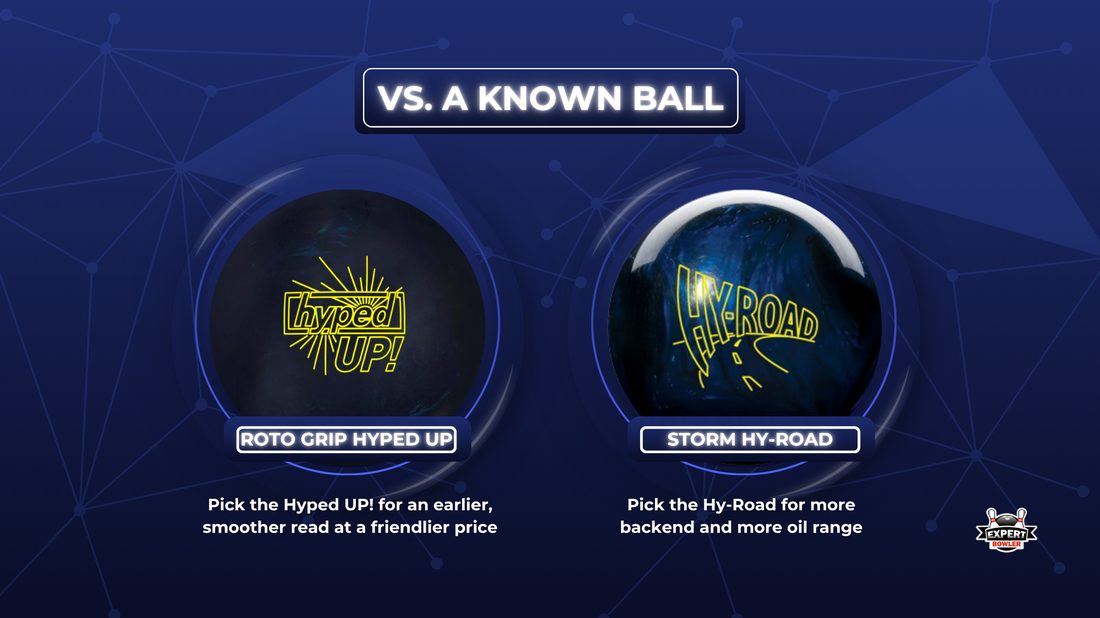
The lower RG and sanded cover give the hyped UP! the earlier read of the two, and the lower price adds the value edge. The Hy-Road stores more energy through the fronts, flares harder, and reaches into heavier volume than the hyped UP! covers at box surface.
Take the hyped UP! for a smooth, controllable read on a medium house shot at the friendlier price. The Hy-Road earns its spot when you want the proven shape with more backend and more oil range.
If you own a Hy-Road that still reads well, keep it. This one is a sidegrade, not an upgrade. If you are leaning toward the veteran, you’ll get the full case in our Storm Hy-Road review.
Storm and Roto Grip share a parent company but chase different shapes, Storm going for an angular backend and Roto Grip for the earlier read you get here. If you are still sorting out which maker fits your game, our guide to what each bowling ball brand is known for lays out where each one shines.
Pros and Cons
Pros
- Core numbers usually reserved for a tier up, at mid-range money
- Symmetric core keeps the motion readable at any skill level
- Sanded hybrid cover handles fresh medium oil and transition without surface work
- USBC approved, available from 10 to 16 pounds
Cons
- Continuous backend by design rather than the angular snap the marketing suggests
- Box finish gives up traction once the oil gets heavy
- Too new for multi-season durability reports
- Weights under 13 pounds get a much weaker core profile
Is the Roto Grip Hyped UP Worth It?
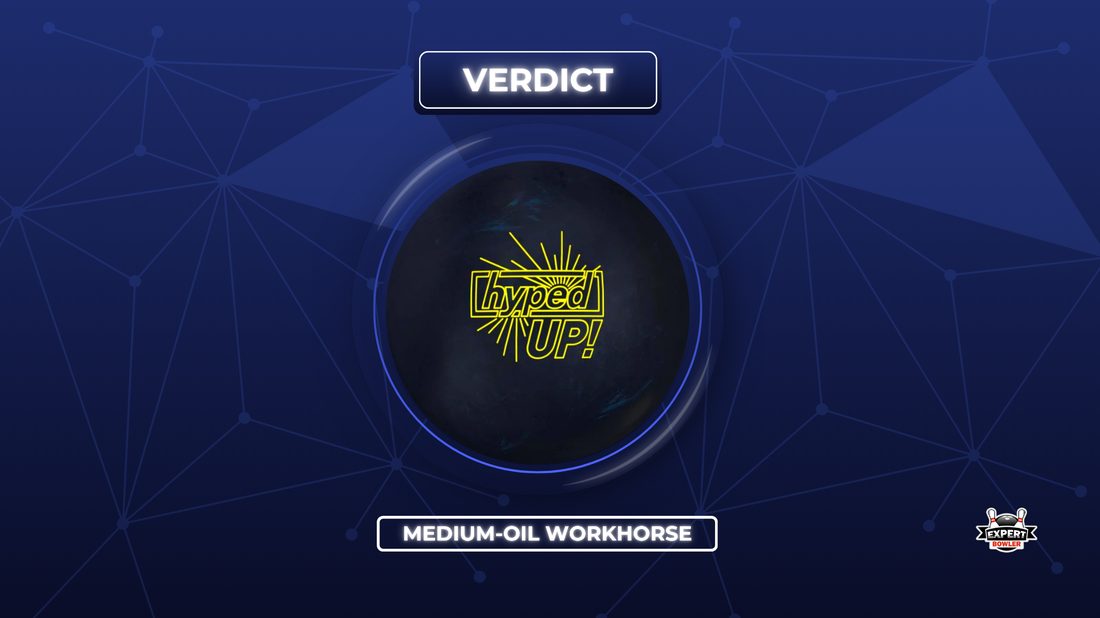
Buy it if you bowl medium-oil house shots and want the most usable core numbers for the money — as a first serious ball or the middle of a three-ball bag. Skip it if your league runs heavy oil, your carry depends on maximum backend angle, or you would rather wait for a season of owner reports.
Yes, if you bowl medium oil house shots and want the most usable core numbers for the money, as a first serious ball or the middle of a three-ball bag.
No, if your league runs heavy oil, your carry depends on maximum backend angle, or you would rather wait for a season of owner reports before spending. If that group is you, you’ll find the full lineup in our best bowling balls hub.
Put it all together and the hyped UP! strengthens a proven, well-liked shape in the two places that count, rev-up and flare, and keeps the forgiving, readable motion that made the Hyped name a league fixture.
It will not out-hook flagship equipment, and it was never built to. As a medium-oil workhorse in the mid-price bracket, it is one of the easier recommendations of the 2026 season.
Frequently Asked Questions
Is the Roto Grip hyped UP! good for beginners?
It can be, with a caveat. The symmetric core reads forgivingly and the price is fair for a first serious ball. But it is built for medium oil, so if you still throw fairly straight, a lighter entry reactive suits you better.
Roto Grip hyped UP! vs Storm Phaze II?
The Phaze II is the stronger ball, a solid Master-line cover with a higher .051 differential for medium-heavy oil. The hyped UP! is the lighter-oil, cleaner hybrid at a friendlier price. Pick the Phaze II for heavier volume, the hyped UP! for medium control.
Do the hyped UP! specs change at lighter weights?
Yes, sharply at the bottom. The 14 and 16 pound balls track the 15 pound numbers closely, but at 12 pounds the RG climbs to 2.65, and the 10 and 11 pound balls run above 2.7 with almost no flare. Below 13 pounds you are buying the cover rather than the core.
How should the hyped UP! cover be maintained?
Hybrid shells absorb oil, and a soaked cover loses its read. Wipe it during play, clean it after every session, refresh the surface every 20 games and plan a full resurface near 50 to 60.
Does the hyped UP! replace the original Hyped balls?
It takes over the HP2 slot while the original Hyped Pearl, Hybrid, and Solid move into closeout. If you own one of the originals, expect it to read earlier and hit stronger, closest in character to the Hybrid.
Related guides
- How to spin a bowling ball — release, timing, and drills for a cleaner hook
- Bowling ball cleaning & maintenance — protect your investment and hold the reaction
- How to resurface a bowling ball — grit ranges and when to change surface
- How much a bowling ball should weigh — dial in weight before you get it drilled
Sources & references
- Manufacturer specifications: Roto Grip official product and spec data for the hyped UP!
- USBC equipment specifications: approved ball list and RG minimum for league and tournament-grade equipment
- Comparison ball data: Storm Hy-Road and Storm Phaze II official specifications
- Bowling ball technology references: coverstock, core, RG, and differential fundamentals
Not sure the Hyped UP! is your match? Take the free 60-second Ball Finder — it picks the right ball for your lanes, rev rate and budget, and sends you the buyer's checklist that stops you buying the wrong one.
Get our honest 2-page checklist — coverstock, weight, lane oil, and the 5 mistakes that cost most bowlers money. One short email every couple of weeks. No spam.
Edited by Jeroen Kooij
Editor · ExpertBowler
Editor of ExpertBowler. Responsible for editorial standards and methodology compliance. Read more about our editorial process.
Methodology: A pre-release, specs-and-comparison analysis — evaluated against manufacturer specifications, the USBC approved-ball list, a benchmark comparison, and verified pro-shop and owner input where it exists. We do not accept paid placements.
Updated: July 2026.